KINGDOMS OF HORROR:
The Fourth Runner-Up in the Seven Wonders of Barsoom
by
Woodrow Edgar Nichols, Jr.

INTRODUCTION
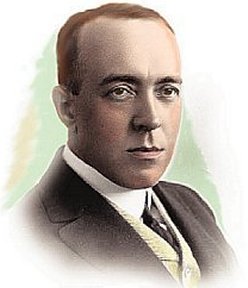 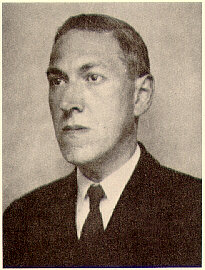
ERB was a pioneer in horror fiction, even though he seldom
gets credit for it. In fact, he was a major influence on H.P. Lovecraft,
regarded by most critics as one of the greatest writers of horror fiction
in history for his creation of the Cthulhu Mythos. This fact is documented
by Darrell C. Richardson in “The E.R. Burroughs – H.P. Lovecraft Connection,”
(ERBzine #1137), where
a March, 1914, letter to the editor of All-Story magazine is reprinted,
in which H.P. Lovecraft wrote:
“At or near the head of
your list of writers Edgar Rice Burroughs undoubtedly stands. I have read
very few recent novels by others wherein is displayed an equal ingenuity
in plot, and verisimilitude in treatment. His only fault seems to be a
tendency toward scientific inaccuracy and slight inconsistencies.”
L. Sprague de Camp confirms this in his H.P. Lovecraft:
a Biography, where he notes with mistaken insight:
“An avid reader of Burroughs’s
when they appeared in the Munsey magazines, young Lovecraft praised them
highly. When he was older and more sophisticated, he changed his mind,
dismissing Burroughs’s work as ‘cheap pulp stuff.’ He missed the point
of Burroughs’s fiction. The stories were excellent in their way – but as
juvenile, not adult, fiction.” (Barnes & Noble: New York, 1975; p.
63.)
One can equally say that L. Sprague de Camp missed the point
as well, since ERB wrote soft pornography for discerning adults in the
Barsoom series, especially in his Kingdoms of Horror. One can also say
that his criticism is somewhat diminished in light of the fact that Lovecraft
was 24 years old when he wrote his letter to All-Story praising ERB, long
after he was a juvenile.
ERB's first Kingdom of Horror, the one of the Bantoomian
Swarms, is documented in The
Chessmen of Mars, which was written in 1921, the same year as Lovecraft’s
“The Nameless City”, and well before the next stories in the Cthulhu Mythos
appeared: “The Hound” (1924); “The Festival” (1925) “The Colour out of
Space” (1927; this one is controversial – although I place it within the
Mythos, many do not); “The Call of Cthulhu” (1928); and “The Dunwich Horror”
(1929).
ERB’s Spider Kingdom of Ghasta, documented in A Fighting
Man of Mars, was published in 1930, before the bulk of Lovecraft’s
Mythos: “The Whisperer in the Darkness” (1931); “The Dreams in the Witch-House”
(1933); “At the Mountains of Madness” (1936); “The Shadow over Innsmouth”
(1936); “The Haunter of the Dark” (1936); his finest work, “The Shadow
out of Time” (1936); “The Thing on the Doorstep” (1937); and because it
contains references to the Necronomicon, “The Case of Charles Dexter Ward,”
published in 1941, after Lovecraft’s death in 1937.
ERB was the King of Pulp Fiction because he was a master
of many genres, and the creation of horror was one of his many specialties.
DATA
A. The Kingdom of the Bantoomian Swarms.
Tara of Helium has just gone through a sexual awakening
with her encounter with Gahan of Gathol. As she awakes the next morning,
the greatest storm in recorded Barsoomian history is raging outside, mirroring
her own emotions, and out of a whim, she decides to go flying. She is captured
by the storm for two days and is carried thousands of miles away. Starving
and thirsty she lands her flier near a valley after seeing a dome-capped
tower.
She hides the flier beneath some trees and scouts out
the valley from a hill, coming upon a most unusual sight:
“She came at last to the
summit, where, from the concealment of a low bush, she could see what lay
beyond. Beneath her spread a beautiful valley surrounded by low hills.
Dotting it were numerous circular towers, domedcapped, and surrounding
each tower was a stone wall enclosing several acres of ground. The valley
appeared to be in a high state of cultivation. Upon the opposite side of
the hill and just beneath her was a tower and enclosure. In all resepects
it seemed identical in construction with those further out in the valley
– a high, plastered wall of massive construction surrounding a similarly
constructed tower, upon whose gray surface was painted in vivid colors
a strange device. The towers were about forty sofads in diameter, approximately
forty earth-feet, and about sixty in height to the base of the dome. To
an Earth man they would have immediately suggested the silos in which dairy
farmers store ensilage for their herds; but closer scrutiny, revealing
an occasional embrasured opening together with the strange construction
of the domes, would have altered such a conclusion. Tara of Helium
saw that the domes seemed to be faced with innumerable prisms of glass,
those that were exposed to the declining sun scintilllated so gorgeously
as to remind her suddenly of the magnificent trappings of Gahan of Gathol.”
(CMM/3.)
The thought angers her, but her mind is soon brought back
to harsh reality when she sees what is inside the enclosure:
“As Tara of Helium looked
down into the enclosure surrounding the nearest tower, her brows contracted
momentarily in frowning surprise, and then her eyes went wide in an expression
of incredulity tinged with horror, for what she saw was a score or two
of human bodies – naked and headless. For a long moment she watched, breathless;
unable to believe the evidence of her own eyes – that these gruesome things
moved and had life! She saw them crawling about on hands and knees over
and across one another, searching about with their fingers. And she saw
some of them at troughs, for which the others seemed to be searching, and
those at the troughs were taking something from these receptacles and apparently
putting it into a hole where their necks should have been. They were not
far beneath her – she could see them distinctly and she saw that there
were the bodies of both men and women, and that they were beautifully proportioned,
and that their skin was similar to hers, but of a slightly lighter red.
At first she had thought that she was looking upon a shambles and that
the bodies, but recently decapitated, were moving under the impulse of
muscular reaction; but presently she realized that this was their normal
condition. The horror of them fascinated her, so that she could scarce
take her eyes from them. It was evident from their groping hands that they
were eyeless, and their sluggish movements suggested a rudimentary nervous
system and a correspondingly minute brain.” (CMM/3.)
She later discovers that there is more to the headless creatures
when she stumbles upon a work party while hiding in some tall weeds:
“After a while she gained
sufficient command of herself to raise her head and look about. To her
horror she discovered that everywhere she looked she saw people working
in the fields or preparing to do so. Workmen were coming from other towers.
Little bands were passing to this field and that. There were even some
already at work within thirty ads of her – about a hundred yards. There
were ten, perhaps, in the party nearest her, both men and women, and all
were beautiful of form and grotesque of face. So meager were their trappings
that they were practically naked; a fact that was in no way remarkable
among the tillers of the fields of Mars. Each wore the peculiar, high leather
collar that completely hid the neck, and each wore sufficient other leather
to support a single sword and a pocket-pouch. The leather was very old
and worn, showing long, hard service, and was absolutely plain with the
exception of a single device upon the left shoulder. The heads, however,
were covered with ornaments of precious metals and jewels, so that little
more than eyes, noses, and mouth were discernible. These were hideously
inhuman and yet grotesquely human at the same time. The eyes were far apart
and protruding, the nose scarce more than two small, parallel slits set
vertically above a round hole that was the mouth. The heads were peculiarly
repulsive – so much so that it seemed unbelievable to the girl that they
formed an integral part of the beautiful bodies below them.” (CMM/4.)
Tara spends too much time looking at the strange creatures
and one of them sees her and calls an alarm. Tara runs for her life but
one catches up to her:
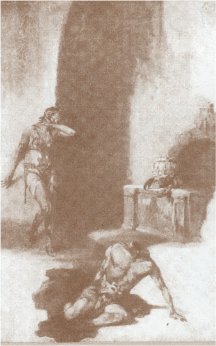 “Straight
for the beautiful body she sprang and in the instant that the arms closed
to seize her her sharp blade drove deep into the naked chest. The impact
hurled them both to the ground and as Tara of Helium sprang to her feet
again she saw, to her horror, that the loathsome head had rolled from the
body and was now crawling away from her on six short, spider-like legs.
The body struggled spasmodically and lay still. “Straight
for the beautiful body she sprang and in the instant that the arms closed
to seize her her sharp blade drove deep into the naked chest. The impact
hurled them both to the ground and as Tara of Helium sprang to her feet
again she saw, to her horror, that the loathsome head had rolled from the
body and was now crawling away from her on six short, spider-like legs.
The body struggled spasmodically and lay still.
As brief as had been the delay caused
by the encounter, it still had been of sufficient duration to undo her,
for even as she rose two more of the things fell upon her and instantly
thereafter she was surrounded. Her blade sunk once more into naked flesh
and once more a head rolled free and crawled away.
Then they overpowered her and in
another moment she was surrounded by fully a hundred of the creatures,
all seeking to lay hands upon her. At first she thought that they wished
to tear her to pieces in revenge for having slain two of their fellows,
but presently she realized that they were prompted more by curiosity than
by any sinister motive.” (CMM/4.)
This is – when you remember that everyone is naked on Mars
(see ERBzine # 3177)
– a very sexual scene. But this is only a warm-up of what is to come. Two
rival factions – Luud (“lewd”) and Moak – argue over who is to take possession
of the captive, and the problem is solved when the leader of Luud’s faction
takes decisive action after the leader of Moak’s faction
threatens to cut Tara in half:
“‘Rather will I cut her
in twain and take my half to Moak than to relinguish her all to Luud,’
and he drew his sword, or rather he laid his hand upon its hilt in a threatening
gesture; but before ever he could draw it the Luud had whipped his out
and with a fearful blow cut deep into the head of his adversary. Instantly
the big, round head collapsed, almost as a punctured balloon collapses,
as a grayish, semi-fluid matter spurted from it. The protruding eyes, apparently
lidless, merely stared, the phincter-like muscle of the mouth opened and
closed, and then the head toppled from the body to the ground. The body
stood dully for a moment and then slowly started to wander aimlessly about
until one of the others seized it by the arm.
“One of the two heads crawling about
on the ground now approached. ‘This rykor belongs to Moak,’ it said. ‘I
am a Moak. I will take it,’ and without further discussion it commenced
to crawl up the front of the headless body, using its six short, spider-like
legs and two stout chelae which grew just in front of its legs and strongly
resembled those of an Earthly lobster, except that they were both of the
same size.” (CMM/4.)
The Luud then takes Tara into one of the enclosures where
she sees many headless bodies:
“The girl was given but
brief opportunity for further observation of the pitiful creatures in the
enclosure as her captor, after having directed the others to return to
the fields, led her toward the tower, which they entered, passing into
an apartment about ten feet wide and twenty long, in one end of which was
a stairway leading to an upper level and in the other an opening to a similar
stairway leading downward. The chamber, though on a level with the ground,
was brilliantly lighted by windows in its inner wall, the light coming
from a circular court in the center of the tower. The walls of this court
appeared to be faced with what resembled glazed, white tile and the whole
interior of it was flooded with dazzling light, a fact which immediately
explained to the girl the purpose of the glass prisms of which the domes
were constructed. The stairways themselves were sufficient to cause remark,
since in nearly all Barsoomian architecture inclined runways are utilized
for purposes of communication between different levels, and especially
is this true of the more ancient forms and of those of remote districts
where fewer changes have come to alter the customs of antiquity.
“Down the stairway her captor led
Tara of Helium. Down and down through chambers still lighted from the brilliant
well.” (CMM/4.)
They run into others occasionally and each time Ghek explains
how he captured Tara without emotion:
“Presently they reached
a room from which a circular tunnel led away from the tower, and into this
the creature conducted her. The tunnel was some seven feet in diameter
and flattened on the bottom to form a walk. For a hundred feet from the
tower it was lined with the same tile-like material of the light well and
amply illuminated by reflected light from that source. Beyond it was faced
with stone of various shapes and sizes, neatly cut and fitted together
– a very fine mosaic without a pattern. There were branches, too, and other
tunnels which crossed this, and occasionally openings of not more than
a foot in diameter; these latter being usually close to the floor. Above
each of these smaller openings was painted a different device, while upon
the walls of the larger tunnels at all intersections and points of convergence
hieroglyphics appeared. These the girl could not read though she guessed
that they were the names of the tunnels, or notices indicating the points
to which they led.” (CMM/4.)
Tara begins humming a tune, then breaks into song to keep
her spirits up. Ghek is fascinated by the sound of music:
“At his request she sang
again as they continued their way along the winding tunnel, which was now
lighted by occasional bulbs with which she was familiar and which were
common to all the nations of Barsoom, insofar as she knew, having been
perfected at so remote a period that their very origin was lost in antiquity.
They consist, usually, of a hemispherical bowl of heavy glass in which
is packed a compound what, according to John Carter, must be radium. The
bowl is then cemented into a metal plate with a heavily insulated back
and the whole affair set in the masonry of the wall or ceiling as desired,
where it gives off light of greater or less intensity, according to the
composition of the filling material, for an almost incalcuable period of
time.” (CMM/4.)
The song quickly fades as they enter another chamber:
“The song that had been
upon her lips as she entered died there – frozen by the sight of horror
that met her eyes. In the center of the chamber a headless body lay upon
the floor – a body that had been partially devoured – while over and upon
it crawled a half dozen heads upon their short, spider legs, and they tore
at the flesh of the woman with their chelae and carried the bits to their
awful mouths. They were eating human flesh – and eating it raw!
“Tara of Helium gasped in horror
and turning away covered her eyes with her palms.
“‘Come!’ said her captor. ‘What
is the matter?’
“‘They are eating the flesh of the
woman,’ she whispered in tones of horror.
“‘Why not?’ he inquired. ‘Did you
suppose that we kept the rykor for labor alone? Ah, no. They are delicious
when kept and fattened. Fortunate, too, are those that are bred for food,
since they are never called upon to do aught but
eat.’ “‘It is hideous!’ she cried.”
(CMM/5.)
They proceed into another room where a group of the creatures,
now attached to their bodies, examine Tara’s flesh:
“They passed through another
corridor and then into a second chamber, larger than the first and more
brilliantly illuminated. Within were several of the creatures with head
and bodies assembled, while many headless bodies lay about near the walls.
Here her captor halted and spoke to one of the occupants of the chamber.
“‘I seek Luud,’ he said. ‘I bring
to Luud a creature that I captured in the fields above.’
“The others crowded about to examine
Tara of Helium. One of them whistled, whereupon the girl learned something
of the smaller openings in the walls, for almost immediately there crawled
from them, like giant spiders, a score or more of the hideous heads. Each
sought one of the recumbent bodies and fastened itself in place. Immediately
the bodies reacted to the intelligent direction of the heads. They arose,
the hands adjusted the leather collars and put the balance of the harness
in order, then the creatures crossed the room to where Tara of Helium stood....
“Several of those who examined her
felt her flesh, pinching it gently between thumb and forefinger, a familiarity
that the girl resented. She struck down their hands. ‘Do not touch me!’
she cried, imperiously, for was she not a princess of Helium? The expression
on those terrible faces did not change. She could not tell whether they
were angry or amused, whether her action had filled them with respect for
her, or contempt. One of them spoke immediately.
“‘She will have to be fattened more,’
he said.
“The girl’s eyes went wide with
horror. She turned upon her captor. ‘Do these frightful creatures intend
to devour me?’ she cried.
“‘That is for Luud to say,’ he replied,
and then he leaned closer so that his mouth was near her ear. ‘That noise
you made which you called song pleased me,’ he whispered, ‘and I will repay
you by warning you not to antagonize these kaldanes. They are very powerful.
Luud listens to them. Do not call them frightful. They are very handsome.
Look at their wonderful trappings, their gold, their jewels.’ “‘Thank you,’
she said. ‘You called them kaldanes – what does that mean?’
“We are all kaldanes,’ he replied.
“‘You, too?’ she pointed at him,
her slim finger directed toward his chest.
“‘No, not this,’ he explained, touching
his body; ‘this is a rykor; but this,’ and he touched his head, ‘is a kaldane.
It is the brain, the intellect, the power that directs all things. The
rykor,’ he indicated his body, ‘is nothing. It is not so much even as the
jewels upon our harness; no, not so much as the harness itself. It carries
us about. It is true that we would find difficulty getting along without
it; but it has less value than harness or jewels because it is less difficult
to reproduce.” (CMM/5.)
As they wait for Luud to receive them, she learns that her
kaldane captor is named Ghek and that her position as a princess of Helium
means nothing to them. The head guard, Sept, and Ghek take her by the arm
and lead her on:
“They led her through a
short, S-shaped passageway into a chamber entirely lined with the white,
tile-like material with which the interior of the light well was faced.
Close to the base of the walls were numerous smaller apertures, circular
in shape, but larger than those of similar aspect that she had noted elsewhere.
The majority of these apertures were sealed. Directly opposite the entrance
was one framed in gold, and above it a peculiar device was inlaid in the
same precious metal.
“Sept and Ghek halted just within
the room, the girl between them, and all three stood silently facing the
opening in the opposite wall. On the floor beside the aperture lay a headless
male body of almost heroic proportions, and on either side of this stood
a heavily armed warrior, with drawn sword. For perhaps five minutes the
three waited and then something appeared in the opening. It was a pair
of large chelae and immediately thereafter there crawled forth a hideous
kaldane of enormous proportions. He was half again as large as any that
Tara of Helium had yet seen and his whole aspect infinitely more terrible.
The skin of the others was a bluish gray – this one was of a little bluer
tinge and the eyes were ringed with bands of white and scarlet, as was
its mouth. From each nostril a band of white and one of scarlet extended
outward horizontally the width of the face.” (CMM/5.)
Luud examines Ghek as to how he captured Tara, then addresses
her for an explanation as to how she came into their valley. Tara relates
her case, asking Luud to let her go in peace, but Luud tells her that none
who enters Bantoom ever leaves. Tara protests that her people are not at
war with his kind.
“‘None who enters Bantoom
ever leaves,’ repeated the creature without expression. ‘I know nothing
of the lesser creatures of Barsoom, of whom you speak. There is but one
high race – the race of Bantoomians. All nature exists to serve them. You
shall do your share, but not yet – you are too skinny. We shall have to
put some fat upon it, Sept. I tire of rykor. Perhaps this will have a different
flavor. The banths are too rank and it is seldom that any other creature
enters the valley. And you, Ghek, you shall be rewarded. I shall promote
you from the fields to the burrows. Hereafter you shall remain underground
as every Bantoomian longs to. No more shall you be forced to endure the
hated sun, or look upon the hideous sky, or the hateful growing things
that defile the surface. For the present you shall look after this thing
that you have brought me, seeing that it sleeps and eats – and does nothing
else. You understand me, Ghek; nothing else!’” (CMM/5.)
Ghek takes Tara away, and they engage in conversation about
his kind after he asks Tara to sing for him and she is not in the mood:
“‘Luud is king. He is larger
and more gorgeously marked; but otherwise he and I are identical, and why
not? Did not Luud produce the egg from which I hatched?’
“‘What?’ queried the girl; ‘I do
not understand you.’
“‘Yes,’ explained Ghek, ‘all of
us are from Luud’s eggs, just as all the swarm of Moak are from Moak’s
eggs.’
“‘Oh!’ exclaimed Tara of Helium
understandingly; ‘you mean Luud has many wives and that you are the offspring
of one of them.’
“‘No, not at all,’ replied Ghek.
‘Luud has no wife. He lays the eggs himself. You do not understand.’
“Tara of Helium admitted that she
did not.
“‘I will try to explain, then,’
said Ghek, ‘if you will promise to sing to me later.’
“‘I promise,’ she said.
“‘We are not like the rykors,’ he
began. ‘They are creatures of a low order, like yourself and the banths
and such things. We have no sex – not one of us except our king, who is
bi-sexual. He produces many eggs from which we, the workers and the warriors,
are hatched; and one in every thousand eggs is another king egg, from which
a king is hatched. Did you notice the sealed openings in the room where
you saw Luud? Sealed in each of those is another king. If one of them escaped
he would fall upon Luud and try to kill him and if he succeeded we should
have a new king; but there would be no difference. His name would be Luud
and all would go on as before, for are we not all alike? Luud has lived
a long time and has produced many kings, so he lets only a few live that
there may be a successor to him when he dies. The others he kills.’
“‘Why does he keep more than one?’
queried the girl.
“‘Sometimes accidents occur,’ replied
Ghek, ‘and all the kings that a swarm has saved are killed. When this happens
the swarm comes and obtains another king from a neighboring swarm.’
“‘Are all of you the children of
Luud?’ she asked.
“‘All but a few, who are from the
eggs of the preceeding king, as was Luud; but Luud has lived a long time
and not many of the others are left.’
“‘You live a long time, or short?’
Tara asked.
“‘A very long time.’
“‘And the rykors, too; they live
a long time?’
“‘No; the rykors live for ten years,
perhaps,’ he said, ‘if they remain strong and useful. When they can no
longer be of service to us, either through age or sickness, we leave them
in the fields and the banths come at night and get them.’
“‘How horrible!’ she exclaimed.
“‘Horrible?’ he repeated. ‘I see
nothing horrible about that. The rykors are but brainless flesh. They neither
see, nor feel, nor hear. They can scarce move but for us. If we did not
bring them food they would starve to death. They are less deserving of
thought than our leather. All that they can do for themselves is take food
from a trough and put it in their mouths, but with us – look at them!’
and he proudly exhibited the noble figure he surmounted, palpitant with
life and energy and feeling.
“‘How do you do it?’ asked Tara
of Helium. ‘I do not understand it at all.’
“‘I will show you,’ he said, and
lay down upon the floor. Then he detached himself from the body, which
lay as a thing dead. On his spider legs he walked toward the girl. ‘Now
look,’ he admonished her. ‘Do you see this thing?’ and he extended what
appeared to be a bundle of tentacles from the posterior part of his head.
‘There is an aperture just back of the rykor’s mouth and directly over
the upper end of his spinal column. Into this aperture I insert my tentacles
and seize the spinal cord. Immediately I control every muscle of the rykor’s
body – it becomes my own, just as you direct the movement of the muscles
of your body. I feel what the rykor would feel if he had a head and brain.
If he is hurt, I would suffer if I remained connnected with him; but the
instant one of them is injured or becomes sick we desert it for another.
As we would suffer the pains of their physical injuries, similarly do we
enjoy the physical pleasure of the rykors.’” (CMM/5.)
This is a key point in the story for both Ghek and Luud will
desire Tara physically as the story progresses. But back to Tara’s education:
“‘With us brain is everything.
Ninety per centum of our volume is brain. We have only the simplest of
vital organs and they are very small for they do not have to assist in
the support of a complicated system of nerves, muscles, flesh and bone.
We have no lungs, for we do not require air. Far below the levels to which
we can take the rykors is a vast network of burrows where the real life
of the kaldanes is lived. There the air-breathing rykor would perish as
you would perish. There we have stored vast quantities of food in hermetically
sealed chambers. It will last forever. Far beneath the surface is water
that will flow for countless ages after the surface water is exhausted.
We are preparing for the time we know must come – the time when the last
vestige of Barsoomian atmosphere is spent – when the waters and the food
are gone. For this purpose were we created, that there might not perish
from the planet Natures divinest creation – the perfect brain.”
“‘But what purpose can you serve
when that time comes?’ asked the girl.
“‘You do not understand,’ he said.
‘It is too big for you to grasp, but I will try to explain it. Barsoom,
the moons, the sun, the stars, were created for a single purpose. From
the beginning of time Nature has labored arduously toward the consummation
of this purpose. At the very beginning things existed with life, but with
no brain. Gradually rudimentary nervous systems and minute brains evolved.
Evolution proceeded. The brains became larger and more powerful. In us
you see the highest development; but there are those of us who believe
that there is another step – that some time in the far future our race
shall develop into the super-thing – just brain. The incubus of legs and
chelae and vital organs will be removed. The future kaldane will be nothing
but a great brain. Deaf, dumb, and blind it will lie sealed in its buried
vault far beneath the surface of Barsoom – just a great, wonderful, beautiful
brain with nothing to distract it from eternal thought.’
“‘You mean it will just lie there
and think?’cried Tara of Helium.
“‘Just that!’ he exclaimed. ‘Could
aught be more wonderful?’
“‘Yes,’ replied the girl, ‘I can
think of a number of things that would be infinitely more wonderful.’”
(CMM/5.)
Ghek pleads for her to sing again and the topic turns inevitably
to what gives humans pleasure. He asks her if all humans sing:
“Nearly all, a little,’
she said; ‘but we do many other interesting and enjoyable things. We dance
and play and work and love and sometimes we fight, for we are a race of
warriors.’
“‘Love!’ said the kaldane. ‘I think
I know what you mean; but we, fortunately, are above sentiment – when we
are detached. But when we dominate the rykor – ah, that is different, and
when I hear you sing and look at your beautiful body I know what you mean
by love. I could love you.’ “The girl shrank from him.” (CMM/6.)
With all this talk about domination and fleshly love, to
wit, lust, we can fully imagine that Ghek, turned on by Tara’s beautiful
body, is in a high state of arousal, causing Tara to shrink from him and
change the subject. This is pioneer horror fiction for the fact that it
is erotic horror, a concept to which Lovecraft appeared immune. Tara reminds
Ghek that he promised to tell her about the origin of the rykors and he
proceeds to do so:
“‘Ages ago,’ he commenced,
‘our bodies were larger and our heads smaller. Our legs were very weak
and we could not travel fast or far. There was a stupid creature that went
upon four legs. It lived in a hole in the ground, to which it brought its
food, so we ran our burrows into this hole and ate the food it brought;
but it did not bring enough for all – for itself and all the kaldanes that
lived upon it, so we had also to go abroad and get food. This was hard
work for our weak legs. Then it was that we commenced to ride upon the
backs of these primitive rykors. It took many ages, undoubtedly, but at
last came the time when the kaldane had found means to guide the rykor,
until presently the latter depended entirely upon the superior brain of
his master to guide him to food. The brain of the rykor grew smaller as
time went on. His ears went and his eyes, for he no longer had use for
them – the kaldane saw and heard for him. By similar steps the rykor came
to go upon its hind feet that the kaldane might be able to see farther.
As the brain shrank, so did the head. The mouth was the only feature of
the head that was used and so the mouth alone remains. Members of the red
race fell into the hands of our ancestors from time to time. They saw the
beauties and the advantages of the form that nature had given the red race
over that which the rykor was developing into. By intelligent crossing
the present rykor was achieved. He is really solely the product of the
super-intelligence of the kaldane – he is our body, to do with as we see
fit, just as you do what you see fit with your body, only we have the advantage
of possessing an unlimited supply of bodies. Do you not wish that you were
a kaldane?’” (CMM/6.)
Tara is kept underground for a long time and she grows pale
and even thinner, since she refuses to eat so she can be fattened. She
convinces Ghek that her kind needs the outdoors and sun to live, and Ghek
gets permission to let her roam for a few hours above ground out in the
open. She takes advantage of one of these times to attempt escape and is
quickly captured, to the anger of Luud who demotes Ghek and has Tara sent
to him.
“When she was conducted
into his presence he was squatting in a corner of the chamber upon his
six spidery legs. Near the opposite wall lay his rykor, its beautiful form
trapped in gorgeous harness – a dead thing without a guiding kaldane. Luud
dismissed the warriors who had accompanied the prisoner. Then he sat with
his terrible eyes fixed upon her and without speaking for some time. Tara
of Helium could but wait. What was to come she could only guess. When it
came would be sufficiently the time to meet it. There was no necessity
for anticipating the end. Presently Luud spoke:
“‘You think to escape,’ he said,
in the deadly, expressionless monotone of his kind – the only possible
result of orally expressing reason uninfluenced by sentiment. ‘You will
not escape. You are merely the embodiment of two imperfect things – an
imperfect brain and an imperfect body. The two cannot exist together in
perfection. There you see a perfect body.’ He pointed to the rykor. ‘It
has no brain. Here,’ and he raised one of his chelae to his head, ‘is the
perfect brain. It needs no body to function perfectly and properly as a
brain. You will pit your feeble intellect against mine! Even now you are
planning to slay me. If you are thwarted in that you expect to slay yourself.
You will learn the power of mind over matter. I am the mind. You are the
matter. What brain you have is too weak and ill-developed to deserve the
name of brain. You have permitted it to be weakened by impulsive acts dictated
by sentiment. It has no value. It has practically no control over your
existence. You will not kill me. You will not kill yourself. When I am
through with you you shall be killed if it seems the logical thing to do.’”
(CMM/6.)
As a practical demonstration of his mental power, Luud directs
his gaze at the rykor; it rises, walks to him, places him over the collar
on its neck:
“‘What chance have you
against such power?’ asked Luud. ‘As I did with the rykor so can I do with
you.’
“Tara of Helium made no reply. Evidently
no vocal reply was necessary.
“‘You doubt my ability!’ stated
Luud, which was precisely the fact, though the girl had only thought it
– she had not said it.
“Luud crossed the room and lay down.
Then he detached himself from the body and crawled across the floor until
he stood directly in front of the circular opening through which she had
seen him emerge the day that she had first been brought to his presence.
He stopped there and fastened his terrible eyes upon her. He did not speak,
but his eyes seemed to be boring straight to the center of her brain. She
felt almost an irresistible force urging her toward the kaldane. She fought
to resist it; she tried to turn away her eyes, but she could not. They
were held as in a horrid fascination upon the glittering, lidless orbs
of the great brain that faced her. Slowly, every step a painful struggle
of resistance, she moved toward the horrible monster. She tried to cry
aloud in an effort to awaken her numbing faculties, but no sound passed
her lips. If those eyes would but turn away, just for an instant, she felt
that she might regain the power to control her steps; but the eyes never
left hers. They seemed but to burn deeper and deeper, gathering up every
vestige of control of her entire nervous system.
“As she approached the thing it
backed slowly away upon its spider legs. She noticed that its chelae waved
slowly to and fro before it as it backed, backed, backed, through the round
aperture in the wall. Must she follow it there, too? What new and nameless
horror lay concealed in that hidden chamber? No! she would not do it. Yet
before she reached the wall she found herself down and crawling upon her
hands and knees straight toward the hole from which the two eyes still
clung to hers. At the very threshold of the opening she made a last, heroic,
stand, battling against the force that drew her on; but in the end she
succumbed. With a gasp that ended in a sob, Tara of Helium passed through
the aperture into the chamber beyond.
“The opening was but barely large
enough to admit her. Upon the opposite side she found herself in a small
chamber. Before her squatted Luud. Against the opposite wall lay a large
and beautiful male rykor. He was without harness or other trappings.
“‘You see now,’ said Luud, ‘the
futililty of revolt.’
“The words seemed to release her
momentarily from the spell. Quickly she turned away her eyes.
“‘Look at me!’ commanded Luud.
“Tara of Helium kept her eyes averted.
She felt a new strength, or at least a diminution of the creature’s power
over her. Had she stumbled upon the secret of its uncanny domination over
her will? She dared not hope. With eyes averted she turned toward the aperture
through which those baleful eyes had drawn her. Again Luud commanded her
to stop, but the voice alone lacked all authority to influence her. It
was not like the eyes. She heard the creature whistle and knew that it
was summoning assistance; but because she did not dare look toward it she
did not see it turn and concentrate its gaze upon the great, headless body
lying by the further wall.’” (CMM/6.)
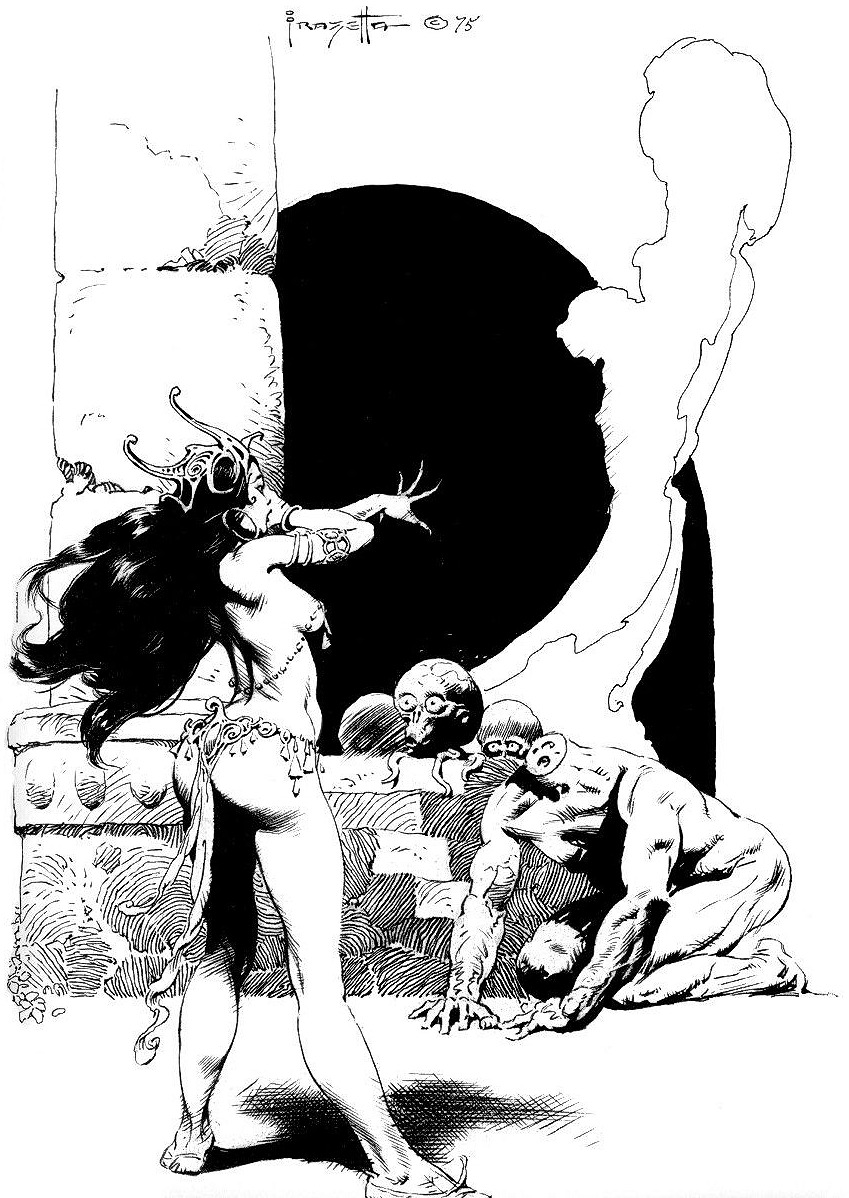
This scene is wonderfully captured by Frank Franzetta and
can be viewed at ERBzine
#0426, although Franzetta fails to capture Luud’s chelae; a fact depicted
in J. Allen St. John’s version, which also can be viewed at the same sight,
although, because of the censorship of the time, he has both Tara and the
rykor clothed. (I saw a depiction some place, although for the life of
me, I can’t recall, where the St. John version can be made full screen.)
As you have probably guessed by now, things are about to get quite voyeuristic
and kinky:
“The girl was still slightly
under the spell of the creature’s influence – she had not regained full
and independent domination of her powers. She moved as one in the throes
of some hideous nightmare – slowly, painfully, as though each limb was
hampered by a great weight, or as she was dragging her body through a viscous
fluid. The aperture was close, ah, so close, yet, struggle as she would,
she seemed to making no appreciable progress toward it.
“Behind her, urged on by the malevolent
power of the great brain, the headless body crawled upon all-fours toward
her. At last she had reached the aperture. Something seemed to tell her
that once beyond it the domination of the kaldane would be broken. She
was almost through into the adjoining chamber when she felt a heavy hand
close upon her ankle. The rykor had reached forth and seized her, and though
she struggled the thing dragged her back into the room with Luud. It held
her tight and drew her close, and then, to her horror, it commenced to
caress her.
“‘You see now,’ she heard Luud’s
dull voice, ‘the futility of revolt – and its punishment.’” (CMM/6.)
It is left up to the reader’s imagination how far these caresses
advanced before Gahan of Gathol and Ghek arrive to save her from Luud.
This is rape scene, where Luud is both able to experience the physical
sensations of the rykor as well a watch it perform in voyeuristic lust.
To do this scene justice, one should imagine the rykor fully aroused.
After Ghek dispatches Luud with his dagger, he decides
to adopt the molesting rykor for his own, since it is a king’s rykor, and
obviously chosen for its sexual prowess over the one of heroic proportions
on the other side of the chamber, which was chosen for its physical strength.
We are not told how Gahan or Tara took this at the time,
for the rykor had experienced at least some carnal knowledge of Tara during
the molest, a fact that Ghek may have enjoyed vicariously after the fact
if there was any body memory left. Ghek, of course, goes on to be quite
the dashing hero on his own, causing havoc in Manator with his mental games.
Thus, the first act of pioneer erotic horror comes to a close. Behold,
act two!
B. The Spider Kingdom of Ghasta.
Hadron of Hastor and Nur An of Jahar are both sentenced
to die “The Death” in Tjanath, which is an unknown fate to all sentenced
to it, as the story progresses in A Fighting Man of Mars. Hadron
bids farewell to Tavia, whom he had rescued from the Green Hordes in his
search for his lost love, Sanoma Tora, and on whose advice he had journeyed
to Tjanath to begin with.
Both men are then lowered in a cage through a trap door
in the pits, and discover that The Death is merely an underground river,
the Syl, a tributary of the River Iss. The cage dumps them into the river,
they are at the mercy of the current for awhile, but manage to emerge,
after a few strange adventures underground, into a strange land:
“Emerging, as we had, from
the dark and gloomy bowels of the earth, the scene before us presented
a view of wondrous beauty, and, while doubtless enhanced by contrast, it
was nevertheless such an aspect as is seldom given to the eyes of a Barsoomian
of to-day to view. To me it seemed a little garden spot upon a dying world
preserved from an ancient era when Barsoom was young and meteorological
conditions were such as to favor the growth of vegetation that has long
since become extinct over practically the entire surface of the planet.
In this deep valley, surrounded by lofty cliffs, the atmosphere doubtless
was considerably denser than upon the surface of the planet above. The
sun’s rays were reflected by the lofty escarpment, which must also hold
the heat during the colder periods of the night, and, in addition to this,
there was ample water for irrigation which nature might easily have achieved
through percolation of the waters.
“For several minutes Nur An and
I stood spellbound by the bewitching view, and then, espying luscious fruit
hanging in great clusters from some of the trees, and bushes loaded with
berries, we subordinated the aesthetic to the corporeal and set forth to
supplement our meal of raw fish with the exquisite offerings which hung
so temptingly before us.
“As we started to move through the
vegetation we became aware of thin threads of a gossamer-like substance
festooned from tree to tree and bush to bush. So fine as to be almost invisible,
they were yet so strong as to impede our progress. It was surprisingly
difficult to break them, and when there were a dozen or more at a time
barring our way, we found it necessary to use our daggers to cut a way
through them.
“We had taken only a few steps into
the deeper vegetation, cutting our way through the gossamer strands, when
we were confronted by a new and surprising obstacle to our advance – a
large, venomous-looking spider that scurried towards
us in an inverted position, clinging
with a dozen legs to one of the gossamer strands, which served both as
its support and its pathway, and if its appearance was any index to its
venomousness it must, indeed, have been a deadly insect.” (FMM/7.)
This scene is captured by Gino D’Achille in the cover art
gallery at ERBzine #0735.
They fight off a swarm of the spiders and escape through the vegetation
into a forest on a trail that appears to have been made by men. After following
the winding trail, they come out into a opening in the forest:
“Looming in front of us
at a distance of perhaps less than a haad was a towering pile of masonry.
It was a gloomy pile, apparently built of black volcanic rock. For some
thirty feet above the ground there was a blank wall, pierced by but a single
opening – a small doorway almost directly in front of us. This part of
the structure appeared to be a wall, beyond it rose buildings of weird
and grotesque outlines, and dominating all was a lofty tower, from the
summit of which a wisp of smoke curled upward into the quiet air.
“From this new vantage-point we
had a better view of the valley than had at first had been accorded us,
and now more marked than ever were the indications that it was the crater
of some gigantic and long-extinct volcano. Between us and the buildings,
which suggested a small walled city, the clearing contained a few scattered
trees, but most of the ground was given over to cultivation, being traversed
by irrigation ditches of an archaic type which had been abandoned upon
the surface for many ages, having been superseded by a system of sub-irrigation
when the diminishing waster supply necessitated the adoption of conservation
measures.” (FMM/7.)
They proceed toward the city while Nur An expresses his opinion
that he finds the whole place depressing.
“We had traversed about
two-thirds of the distance across the clearing towards the city before
we saw any signs of life, and then a few figures appeared at the top of
the wall above the entrance. They carried long, thin scarfs, which they
seemed to be waving in greeting to us, and when we had come yet closer
I saw that they were young women. They leaned over the parapet and smiled
and beckoned to us.
“As we came within speaking distance
below the wall, I halted. ‘What city is this?’ I asked, ‘and who is Jed
here?’
“‘Enter, warriors,’ cried one of
the girls, ‘and we will lead you to the Jed.’ She was very pretty and she
was smiling sweetly, as were her companions.
“‘This is not such a depressing
a place as you thought,’ I said in a low voice to Nur An.
“‘I was mistaken,’ said Nur An.
‘They seem to be a kindly, hospitable people. Shall we enter?’
“‘Come,’ called another of the girls;
‘behind these gloomy walls lie food and wine and love.’
“Food! I would have entered a far
more forbidding place than this for food.
“As Nur An and I strode towards
the small door, it slowly withdrew to one side. Beyond, across a black-paved
avenue, rose buildings of black volcanic rock. The avenue seemed deserted
as we stepped within. We heard the faint click of a lock as the door slid
into its place behind us and I had a sudden foreboding of ill that made
my right hand seek the hilt of my long sword.” (FMM/7.)
Most readers must have had a feeling of foreboding before
they entered, but such is the nature of the cliff-hanger. Six beautiful
girls in beautifully wrought harnesses enriched by many a sparkling jewel
– which accentuated the loveliness of their faultless figures – descend
from the height above them:
“‘Welcome, warriors,’ cried
one, ‘to happy Ghasta. After your long journey you must be hungry. Come
with us and you shall be fed, but first the great Jed will wish to greet
you to our city, for visitors to Ghasta are few.’
“As they led us along the avenues
I could not but note the deserted appearance of the city. There was no
sign of life about any of the buildings that we passed nor did we see another
human being until we had come to an open plaza, in the center of which
rose a mighty building surmounted by the lofty tower that we had seen when
we first emerged from the forest. Here we saw a number of people, both
men and women – sad, dejected-looking people, who moved with bent shoulders
and downcast eyes. There was no animation in their step and their whole
demeanor seemed that of utter hopelessness. What a contrast they presented
to the gay and happy girls who so joyously conducted us towards the main
entrance of what I assumed to be the palace of the Jed! Here, burly warriors
were on guard – fat, oily-looking fellows, whose appearance was not all
to my liking. As we approached them an officer emerged from the interior
of the building. If possible, he was even fatter and more greasy-looking
than his men,
but he smiled and bowed as he welcomed
us.” (FMM/8.)
The officer greets them and one of the girls bids him to
notify Ghron the great Jed of their arrival so that they can partake in
the hospitality of Ghasta.
“As the officer dispatched
a warrior to notify the Jed of our coming, we were escorted into the interior
of the palace. The furnishings were striking, but extremely fantastic in
design and execution. The native wood of the forests had been used to fine
advantage in the construction of numerous of pieces of beautifully carved
furniture, the grain of the woods showing lustrously in their various natural
colors, the beauties of which were sometimes accentuated by delicate stain
and by high polishes, but perhaps the most striking feature of the interior
decorations was the gorgeously painted fabric that covered the walls and
ceilings. It was a fabric of unbelievable lightness, which gave the impression
of spun silver. So closely woven was it that, as I was to learn later,
it would hold water and of such great strength that it was almost impossible
to tear it.
“Upon it were painted in brilliant
colors the most fantastic scenes that imagination might conceive. There
were spiders with the heads of beautiful women, and women with the heads
of spiders. There were flowers and trees that danced beneath a great red
sun, and great lizards, such as we had passed within the gloomy cavern
on our journey down from Tjanath. In all the figures that were depicted
there was nothing represented as nature had created it. It was as though
some mad mind had conceived the whole. “As we waited in the great entrance
hall of the palace of the Jed, four of the girls danced for our entertainment
– a strange dance such as I had never before seen upon Barsoom. Its steps
and movements were as weird and fantastic as the mural decorations in the
room in which it was executed, and yet with all there was a certain rhythm
and suggestiveness in the undulations of those lithe bodies that imparted
to us a feeling of well-being and content.” (FMM/8.)
Ah, the suggestiveness of the undulations of four lithe bodies....yes,
we can imagine the feelings that Hadron and Nur An were having at this
point in the story – or, as the Rolling Stones put it: “My, my, my, said
the spider to the fly, jump right ahead in my web.” They are notified that
Ghron the Jed will see them and are ushered into the reception room:
“The room in which the
Jed received us was upon the second level of the palace. It was a large
room, even more grotesquely decorated than those through which we had passed.
The furniture was of weird shapes and sizes, nothing harmonized with anything
else and yet the result was a harmony of discord that was not at all unpleasing.
“The Jed sat upon a perfectly enormous
throne of volcanic glass. It was perhaps the most ornate and remarkable
piece of furniture that I have ever seen and was the outstanding specimen
of craftsmanship in the entire city of Ghasta, but if it caught my eye
at the time it was only for an instant, as nothing could for long distract
one’s attention from the Jed himself. In the first glance he looked more
like an hairy ape than a man. He was massively built with great, heavy,
stooping shoulders and long arms covered with shaggy black hair, the more
remarkable, perhaps, because there is no race of hairy men upon Barsoom.
His face was broad and flat and his eyes were so far apart that they seemed
literally to be set in the corners of his face. As we were halted before
him, he twisted his mouth into what I imagined at the time was intended
for a smile, but which only succeeded in making him look more horrible
than before.” (FMM/8.)
They exchange greetings and Ghron asks them about the outside
world and Hadron observes that most of the people in the room are young
and beautiful women, but that the men are gross-looking, fat, and oily,
with certain lines of cruelty about their eyes and mouths.
“When we had finished our
recitals, Ghron announced that a banquet had been prepared in our honor,
and in person he led the procession down a long corridor to a mighty banquet
room, in the center of which stood a great marble table, down the entire
length of which was a magnificent decoration consisting entirely of the
fruits and flowers of the forest through which we had passed. At one end
of the table was the Jed’s throne and at the other were smaller thrones,
one for Nur An and one for me. Seated on either side of us were the girls
who had welcomed us to the city and whose business, it seemed, now was
to entertain us.
“The design of the dishes with which
the table was set was quite in keeping with all the other mad designs of
the palace of Ghron. No two plates or goblets or platters were of the same
shape or size or design and nothing seemed suited to the purpose for which
it was intended. My wine was served in a shallow, triangular-shaped saucer,
while my meat was crammed into a tall, slenderstemmed goblet. However,
I was too hungry to be particular, and, I hoped, too well conversant with
the amenities of polite society to reveal the astonishment that I felt.
“Here, as in other parts of the
palace, the wall coverings were of the gossamer-like silver fabric that
had attracted my attention and admiration the moment I had entered the
building, and so fascinated was I by it that I could not refrain from mentioning
it to the girl who sat at my side.
“‘There is no such fabric anywhere
else in Barsoom,’ she said. ‘It is made here and only here.’
“‘It is very beautiful,’ I said.
‘Other nations would pay well for it.’
“‘If we could get it to them,’ she
said, ‘but we have no intercourse with the world above us.’
“‘Of what is it woven?’ I asked.
“‘When you entered the valley Hohr
[“whore”],’ she said, ‘you saw a beautiful forest, running down to the
banks of the river Syl. Doubtless you saw fruit in the forest and, being
hungry, you sought to gather it, but you were set upon by huge spiders
that sped along silver threads, finer than a woman’s hair.’
“‘Yes,’ I said, ‘that is just what
happened.’
“‘It is from this web, spun by those
hideous spiders, that we weave our fabric. It is as strong as leather and
as enduring as the rocks of which Ghasta is built.’
“‘Do women of Ghasta spin this wonderful
fabric?’ I asked.
“‘The slaves,’ she said, ‘both men
and women.’
“‘And from whence come your slaves,’
I asked, ‘if you have no intercourse with the upper world?’
“‘Many of them come down the river
from Tjanath, where they have died The Death, and there are others who
come from further up the river, but why they come or from whence we never
know. They are silent people, who will not tell us, and sometimes they
come from down the river; but these are few and usually are so crazed by
the horrors of their journey that we can glean no knowledge from them.’
“‘And do any ever go on down the
river from Ghasta? I asked; for it was in that direction that Nur An and
I hoped to make our way in search of liberty, as deep within me was the
hope that we might reach the valley Dor and the lost sea of Korus, from
which I was convinced I could escape, as did John Carter and Tars Tarkas.
“‘A few perhaps,’ she said, ‘but
we never know what becomes of these, for none returns.’” (FMM/8.)
They all eat and joke and have a jolly good time, and sit
back and try to enjoy the entertainment to come:
“Towards the end of the
meal a troupe of dancers entered the apartment. My first view of them almost
took my breath away, for, with but a single exception, they were all horribly
deformed. That one exception was the most beautiful girl I had ever seen
– the most beautiful girl I had ever seen with the saddest face that I
had ever seen. She danced divinely and about her hopped and crawled the
poor, unhappy creatures whose sad afflictions should have made them the
objects of sympathy rather than ridicule, and yet it was obvious that they
had been selected for their part for the sole purpose of giving the audience
the opportunity to vent its ridicule upon them. The sight of them seemed
to incite Ghron to a pitch of frenzied mirth, and, to add to his own pleasure
and to the discomforts of the poor, pathetic performers, he hurled food
and plates at them as they dance about the banquet table.
“I tried not to look at them, but
there was a fascination in their deformities which attracted my gaze, and
presently it became apparent to me that the majority of them were artificially
deformed, that they had been thus broken and bent at the behest of some
malign mind, and as I looked down the long board at the horrid face of
Ghron, distorted by maniacal laughter, I could not but guess the author
of their disfigurement.” (FMM/8.)
Three large goblets of wine are then brought in and Ghron
and his guests drink, but the wine is drugged and they pass out, to awaken
later in another place:
“When I regained consciousness
I found myself lying on the bare floor of a room of a peculiar shape that
suggested it was the portion of the arc of a circle lying between the peripheries
of two concentric circles. The narrow end of the room curved inward, the
wider end outward. In the latter was a single grated window; no door or
other openings appeared in any of the walls, which were covered with the
same silver fabric that I had noticed upon the walls and ceilings of the
palace of the Jed. Near me lay Nur An, evidently under the influence of
the opiate that had been administerd to us in the wine.
“Again I looked about the room.
I arose and went to the window. Far below me I saw the roofs of the city.
Evidently we were imprisoned in the lofty tower that rose from the center
of the palace of the Jed, but how had we been brought into the room? Certainly
not through the window, which must have been fully two hundred feet above
the city.” (FMM/8.)
Nur An wakes up and they agree they are the palace of a maniac
and that everyone lives in fear of the Jed. Nur An remarks:
“‘Those girls were so beautiful,’
he said after a moment’s silence. ‘I could not believe that such beauty
and such duplicity could exist together.’
“‘Perhaps they were the unwilling
tools of a cruel master,’ I suggested.
“‘I shall always like to think so,’
he said.” (FMM/8.)
Hadron discovers that one of the walls of the room is hot
and deduces that the flue of the chimney from which they saw the smoke
passes on the other side of it. After hours in gloomy silence, they hear
footsteps approaching from below.
“They came nearer and nearer
until finally they ceased in an adjoining apartment, seemingly the one
next to ours. A moment later there was a scraping sound and a line of light
appeared at the bottom of one of the side walls. It kept growing in width
until I finally realized that the entire partition wall was rising. In
the opening we saw at first the sandalled feet of warriors, and finally,
little by little, their entire bodies were revealed – two stalwart, brawny
men, heavily armed. They carried manacles, and with them they fastened
our wrists behind our backs. They did not speak, but with a gesture one
of them directed us to follow him, and, as we filed out of the room, the
second warrior fell in behind us. In silence we entered a steep, spiral
ramp, which we descended to the main body of the palace, but yet our escorts
conducted us still lower until I knew we must be in the pits beneath the
palace....
“The ramp ended in a gorgeously
decorated apartment in which was assembled about the same company of men
and women that had partaken of the banquet with us earlier in the day.
Here, too, was Ghron upon a throne. This time he did not smile as we entered
the room. He did not seem to realize our presence. He was sitting, leaning
forward, his eyes fixed upon something at the far end of the room, over
which hung a deadly silence that was suddenly shattered by a piercing scream
of anguish. The scream was but a prelude to a series of similar cries of
agony.
“I looked quickly in the direction
from which the screams came, the direction in which Ghron’s gaze was fastened.
I saw a naked woman chained to a grill before a hot fire. Evidently they
had just placed her there as I had entered the room, and it was her first
shrill scream of agony that had attracted my attention.
“The grill was mounted upon wheels
so that it could be removed to any distance from the fire that the torturer
chose, or completely turned about presenting the other side of the victim
to the blaze.
“As my eyes wandered back to the
audience I saw that most of the girls sat there glaring straight ahead,
their eyes fixed with horror upon the horrid scene. I do not believe that
they enjoyed it; I know that they did not. They were equally the unwilling
victims of the cruel vagaries of Ghron’s diseased mind, but like the poor
creature upon the grill they were helpless.” (FMM/8.)
Hadron turns his eyes away, but has to endure the poor girl’s
shrieks and moans as she is roasted over the fire. Yes, there is a scene
for the juvenile mind. The guards lead them into another apartment where
they are subjected to a scene straight out of Dante’s Inferno:
“He led us from this apartment
to another, and there we witnessed a scene infinitely more terrible than
the grilling of the human victim. I cannot describe it; it tortures my
memory even to think of it. Long before we reached that hideous apartment
we heard the screams and curses of its inmates. In utter silence our guard
ushered us within. It was the chamber of horrors in which the Jed of Ghasta
was creating the abnormal deformities for his cruel dance of the cripples.
“Still in silence we were led from
this horrid place, and now our guide conducted us upward to a luxuriously
furnished apartment. Upon divans lay two of the beautiful girls who had
welcomed us to Ghasta.” (FMM/8.)
The girl who had sat next to Hadron at the banquet explains
to them that they have three choices: the grill, the chamber of horrors,
or the luxurious apartment and the girls. If they choose the latter they
will become officers in the palace of the Jed and will conduct similar
tortures and will be guided by whatever whim may possess Ghron. They choose
the fire, which pleases the
girl, because she likes Hadron and wishes she had the
courage to warn him when she led him into the spider’s web of deceit.
They are left alone and plan a desperate escape. They
dig away at the mortar holding one of the bars in the window, but are thwarted
in their attempts to make rope out of the silver fabric.
Hadron decides to climb out of the window to the top of
the tower instead. With the help of Nur An, he manages to climb over the
eave of the roof and gain the top of the tower.
“Resting a few moments,
I arose to my feet. Mad, passionate Thuria raced across the cloudless sky;
Cluros, her cold spouse, swung his aloof circle in splendid isolation;
below me lay the valley of Hohr like some enchanted fairyland of ancient
lore; above me frowned the beetling cliff that hemmed in this madman’s
world.
“A puff of hot air struck me suddenly
in the face, recalling to my mind that far below in the pits of Ghasta
an orgy of torture was occurring. Faintly a scream arose from the
black mouth of the flue behind me. I shuddered, but my attention was centered
upon the yawning opening now and I approached it. Almost unbearable waves
of heat were billowing upward from the mouth of the chimney. There was
little smoke, so perfect was the combustion. It almost seemed that were
I to cast myself upon it I should be carried far aloft.” (FMM/9.)
This gives Hadron a new idea and as he lowers himself back
into the room, the partition wall is raised again, and the girl enters.
Her name is Sharu and she is in love with Hadron, but has come for their
decision for Ghron is anxious to know. Hadron asks her for a dagger and
a needle and she fetches them for him.
He cuts away the fabric from the walls and ceiling and
makes and sews them into a balloon, with which he escapes with Nur An by
letting it fill up with hot air at the chimney and they float away to freedom.
Sharu is left to her fate.
ANALYSIS
Compared to Stephen King, this may seem mild, but for
the time it must have had the same effect as the works of the modern horror
master. ERB’s Kingdoms of Horror were no less frightening than Lovecraft’s
first story in the Cthulhu Mythos, “The Nameless City.” After he finished
it, he sent a copy of it to Frank Belknap Long with this note:
“At the risk of boring
you, I will enclose my latest – just finished and typed – The Nameless
City. This had its basis in a dream, which in turn was probably caused
by contemplation of the peculiar suggestiveness of a phrase in Dunsany’s
Book of Wonder – ‘the unreverberate blackness of the abyss.’ The character
of the ‘mad Arab Al-hazred’ is fictitious. The lines are mine – written
especially for this story – and Abdul Alhazred is a pseudonym I took when
I was about five years old and crazy about the Arabian Nights. I hardly
know yet what to think of this story – you are the first to see it – but
I certainly put enough work into it. I tore up two beginnings, only hitting
the right atmosphere the third time, and destroyed (or rearranged) one
conclusion. I aim at a cumulative succession of horrors – thrill upon thrill
and each one worse!” (The Doom that Came to Sarnath and Other Stories [Ballantine
Books: New York, 1971; p. 105].)
The same can be equally said about the cumulative effect
of ERB’s Kingdoms of Horror. Of course, whether horror has its desired
effect is often in the mind of the audience. I can remember when I was
ten years old watching King Kong for the first time. When Kong breaks through
the gate, beating his chest and roaring, I literally shook I was so terrified.
Yet my daughters – after being hardened by watching Poltergeist over and
over on the cable movie channels (for the first twenty times they were
unable to make it past the scene where the tree comes crashing inside the
kid’s room before running from the room screaming) – when I showed them
King Kong for the first time, sure, they were thrilled, but didn’t even
come close to being scared like I was the first time.
The fact is that most people enjoy a good scare, as long
as it is not the kind of scare engendered by a 9/11 act of terrorism.
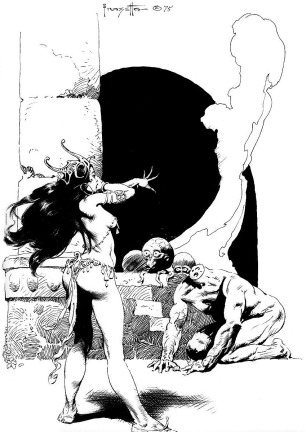
Chessmen Art by Frank Frazetta
To Tara's horror, the headless body moved,
took the hideous head in its hands and set it on its
shoulders.
And there you have it,
ERB’s Kingdoms of Horror: the Fourth Runner-Up in
the Seven Wonders of Barsoom!
|