July
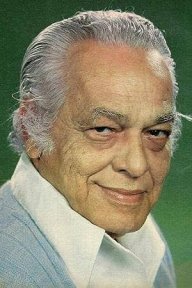
16: On this day in 1911,
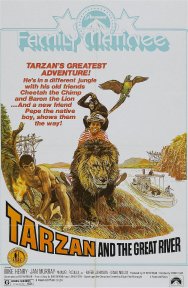
actor Paulo Gracindo, who played the professor in the film, “Tarzan and
the Great River,” was born in Rio de Janeiro. The story takes place in
South America and features the evil Jaguar Cult, which is not much
different from the Leopard Men cult of Africa. Gracindo’s fifty plus
film credits are almost exclusively for non- English-speaking films.
Decathlete and one of the men who wrestled Sirhan Sirhan to the ground
after he shot Robert Kennady, Rafer Johnson, played the megalomanic
ruler of the Jaguar Cult, Barcuna
The
Professor’s best line is “Tarzan, here we are, surrounded by the fruits
of man's progress, a modern civilization capable of sending man out
into space, and, yet, out there in the jungle people still live as
their ancestors did.”
The
one hundred word fictional drabble for today, “Better Nature,” was
inspired by the film. It does seem like an oxymoron to call a drabble
fictional, when it references a conversation between fictional
characters, but what the devil, let’s go with that.
BETTER NATURE
Tarzan said, “Professor, Barcuna, the leader of the Jaguar Cult, seems like an unstable and misguided individual.”
“Unstable? You think?. He has a messianic complex. Such men are dangerous. He’s already tried to kill you three times.”
“He’s
only lashing out. We should make peace with him and appeal to his
better nature. By giving him another chance, I intend to help him find
his good side and become a productive member of the human race.”
The professor shook his
head. “You know where good intentions lead. Burcuma is the devil
incarnate and the devil doesn’t have a better nature.”
PROFESSION OR HOBBY

July
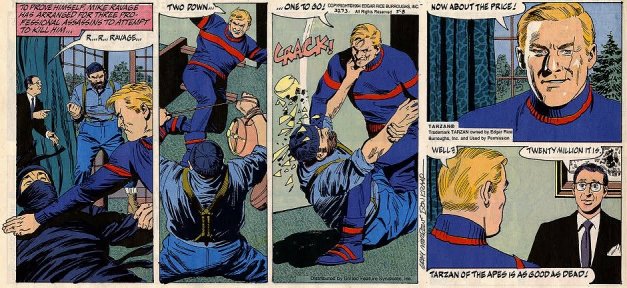
17: On this day in 1994, the Gray Morrow
illustrated and Don Kraar scripted Tarzan Sunday newspaper story arc,
“A Man Called Ravage,” concluded after a run of fourteen episodes.
During this period, the fourteen-episode story arc was almost a given.
Ravage is professional assassin who is hired to kill Tarzan. The price
is twenty million dollars. Ravage suffers a head injury, but regains
his memory and kidnaps Jane. Things rarely go well for people who
kidnap Jane and this is no exception. As always, with this production
team, the art is excellent and the storyline compelling and consistent
with Burroughs’ original books. Check it out.
The drabble for today, “Profession or Hobby,” was inspired by the Sunday Tarzan story arc, “A Man Called Savage.”
PROFESSION OR HOBBY
Ravage,
a professional assassin had been hired to kill Tarzan, but he suffered
a head injury and was rescued by Tarzan. Jane was nursing him back to
health when he regained his memory and kidnaped her.
Jane said, “We were helping you.”
“Thank
you, but I’ve regained my memory. I have a job to do. I’m being paid to
kill your husband. I’m not being paid to hurt you, but you’ll serve as
bait.”
“Kill Tarzan? Are you an assassin?”
“You kill people for money?”
“Of course. If I didn’t get paid, I’d just be a serial killer.”
SMILE WHEN YOU SAY THAT
July
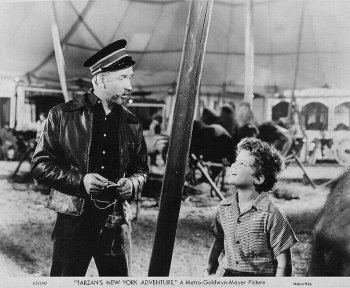
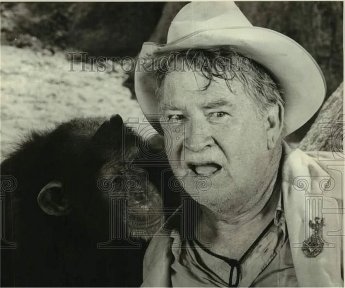
18: On this day in 1902,
actor Theodore Childress Wills (Chill Wills), who portrayed Manchester
Montford in Tarzan’s New York Adventure and as Ronald Monrose inS02E20,
End of a Challenge, of the Ron Ely Tarzan TV series, was born in the
Dallas suburb, Seagoville, Texas. Wills was a member of the quartet,
The Avalon Boys, and voiced Francis the Talking Mule. His 130
film and television credits, mostly westerns, include, THE ALAMO,
MCLINTOCK, and GIANT.
The drabble for today, “Smile When You Say That,” was inspired by Wills’ career and Tarzan film and television appearances.
SMILE WHEN YOU SAY THAT
Johnny Weissmuller said, “Mr. Wills, I thought you only made westerns.”
“Mr.
Wills was my pa and he kicked me out years ago. The only thing he
taught me was to stay behind the bull and in front of a mule. As for
Westerns, New York is West if you live in Africa.”
“You and Cheetah seem to have a beautiful friendship.”
“We have. The babes love him. That chimp is a free drink and a chick magnet in every bar in Manhattan.”
“How can you go barhopping with a chimpanzee?”
“I have to drive. He doesn’t have a license.”
BARE NECESSITIES
July
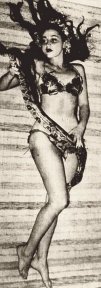
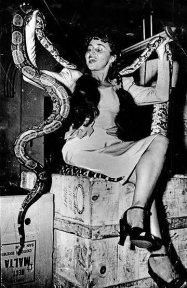
19: On this day in 1967, actress Luz del
Fuego, Tarzan and the Great River, died. Luz del Fuego, was murdered.
Born as Dora Vivacqua, she first used the stage name, Luz Divina and
was a Brazilian feminist, ballerina, naturist, and striptease artist
who performed with live snakes. Comfortable with nudity, she wrapped
pythons around her body and became famous in her time. An ardent
protector of the rain forest and the rivers, she was murdered by
fishermen less than a year after her role in Tarzan and the Great
River, fishermen she threatened to report for overfishing.
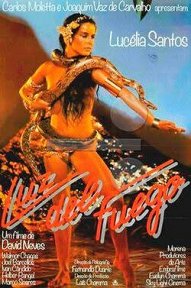
Lucélia Santos played Luz on screen in the 1982 biopic, LUZ DE FUEGO.
The
drabble for today, Bare Necessities, inspired by her life and by Baloo,
the Bear. Luz del Fuego, a woman who was murdered for her beliefs.
BARE NECESSITIES
The bees are buzzin' in the tree
Making honey for me and you.
Look underneath the rocks and plants
The forest’s alive with spiders and ants
Animals don’t belong in a zoo!
Take just the bare necessities, protect the bare necessities
Forget about your greed and your strife
When you kill the trees, overfish a lake
Your greed is more than mother nature can take.
Don't cut down the forest, don’t dam up the river,
Nature hates takers, but she gives to a giver.
Take what you need, take only your share
Listen to me, I’m a wise old bear.
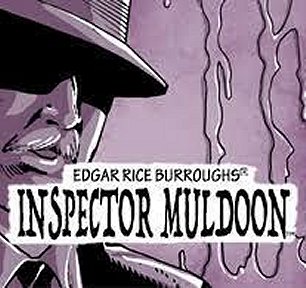
MEET MULDOON
July
20: On this day in 1942, Rob Wagner, the
editor and publisher Script Magazine died. Script Magazine published a
number of articles by Edgar Rice Burroughs, including three of the
Inspector Muldoon puzzles. The format was for the murder mystery puzzle
to appear in one issue and the solution in the following issue.
The
100-word drabble for today, “Meet Muldoon,” was written by Edgar Rice
Burroughs as an introduction to the first Muldoon puzzle. It has been
slightly edited to fit the 100-word format.
MEET MULDOON
I’ve known Inspector Muldoon
for over twenty years. When I met him he was a flat-foot pounding a
beat -- a great big, good-natured, Irish cop; a good cop. Muldoon was a
child prodigy who turned his remarkable ability to practical use. At
nine, he could mentally multiply six or seven digit numbers, or extract
square or cube root, almost instantaneously. He still can and he has a
most uncanny memory. His crime solving technique usually relies on his
ability to carry complicated figures in his mind and correlate them
instantly and accurately, but he’s equally adept in sifting other
evidence
COMPARATIVE PRICING
July
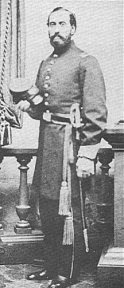
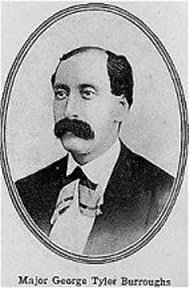
21: On this day in 1861,
following the first Battle of Bull Run, ERB’s father, Major George T.
Burroughs and the rest of the Union Army retreated toward Washington.
The battle had resulted in a major victory for the Confederacy.
Receiving no further assignment, George returned to his position at
Bliss, Wheelock and Kelley's. He was mustered out at New York City on
July 31, 1861, but on December 16 reentered service with a commission
as First Lieutenant, 43rd New York Volunteer Infantry, "Albany &
Yates Rifles." He served as acting regimental quartermaster from
December 1861 to September 1862. After various battle campaigns, he was
detached from his regiment and assigned to duty as acting commissary of
subsistence on the staff of General F. L. Vinton and then, with a
commission from President Lincoln, was made captain and commissary of
subsistence on February 19, 1863. He remained throughout the war and
was present in numerous campaigns.
It
has always been a source of amusement and frustration to me that EBB
has been accused of racism because one of his characters was a
Confederate officer, when the reality is that his father was an officer
in the Union Army. A story is a story, but most folks are unfortunately
inclined to ignore reality when it doesn’t align with what they want to
believe. George T. Burroughs, we thank you for your service.
The drabble for today, “Comparative Pricing,” was inspired by Major Burroughs’ military service.
COMPARATIVE PRICING
Major Burroughs said, “Excuse me, sir. Is this your hog farm?”
The farmer put down the swill bucket and wiped his brow. "Yessir. I sure wouldn’t be sloppin’ no one else’s pigs, would I?”
“I’ll buy the lot for the army. Gold coin. I’ll pay a dollar a pig.”
“Nope, these here pigs is two dollars each.”
“The farmer across the creek says his pigs are only a dollar each.”
“Buy your hogs from him.”
“He’s out of pigs. He doesn’t have any for sale?”
“Well, if I was fresh out of pigs to sale, they’d only cost a dollar.
MAN ON THE MENU
July
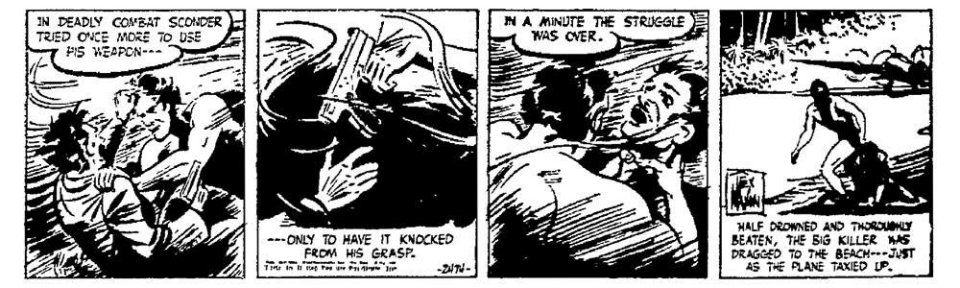
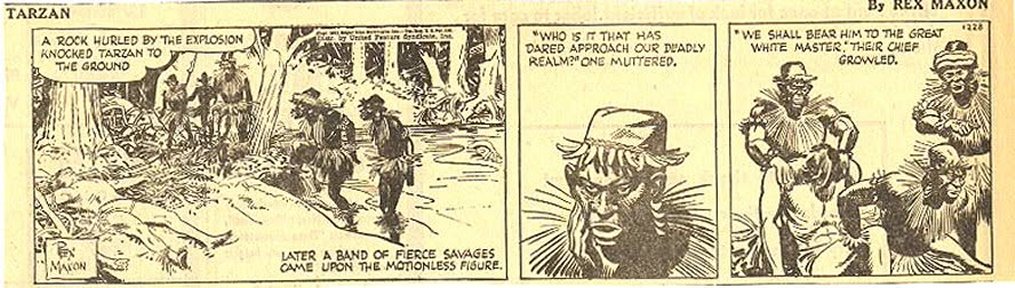
22: On this day in 1947, Rex Maxon
scripted and illustrated Tarzan daily newspaper story arc, THE
IMPOSTER, concluded. The ninety-six-episode story was the penultimate
Rex Maxon Tarzan daily newspaper adventure. THE IMPOSTER was followed
by PRISONER OF THE GREAT APES, the August 30, 1947 conclusion of which
would mark the end of Rex Maxon’s Tarzan dailies. His first was on June
10, 1929, he missed 685 days from Jue 1936 to May 1938. That means the
man produced 5,970 daily episodes. The
story features a skimpily dressed Jane, a young hunter, Big Louis
Sconder, who is a swindler/murderer, the airline stewardess, Deane, her
pilot paramour, Randy, an airplane crash, Molat the ape, a tramp
steamship and its motley crew, and Tarzan.
The drabble for today, “Man on the Menu,” was inspired by THE IMPOSTER.
MAN ON THE MENU
Tarzan
rescued Deane from a lion near the airplane crash. She said, “Thank
God. That Mr. Sconder was in 12B. We saw a lion, Sconder kicked my
ankle so I couldn’t run. He left me to the lion.”
Tarzan wrapped her injured ankle. “The man absconded?”
“He did. That’s not funny.
Tarzan smiled, “Yes, it is.”
“The man’s a silver-tongued fraud, a confidence man, a trickster. You have to stop him.”
“I don’t. the jungle will.
No matter how smoothly he talks or what he pretends to be, the jungle
beasts will know the truth. He’s lunch. They dine alfresco.”
DAMN THE CONSEQUENCES, FULL SPEED AHEAD
July
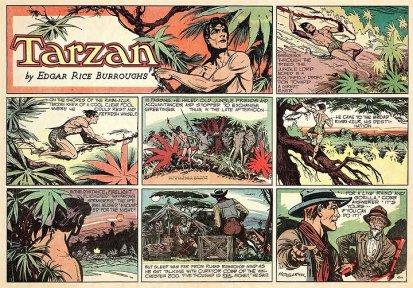
23: On this day in 1950, the Tarzan
Sunday newspaper story arc, Tarzan and the Wild Game Hunter began in
American newspapers. The story would be the last Hogarth Sunday story.
Hogarth scripted and illustrated the story until August 20th. Bob
Lubbers joined him on the story until September 17th. Hogarth continued
“Wild Game Hunter’ alone until his last Sunday Page on October 1, 1950.
The next Sunday feature the debut of the team of Bob Lubbers ad Dick
Van Buren, who would create the strip until Valentine’s day 1954. John
Celardo began illustrations the next week.
The
story is beautifully illustrated, but somewhat predictable. A Wild Game
Hunter in Africa gets in trouble by his ruthless behavior and his
disregard for the natural order. Tarzan has to intervene.
The
one-hundred-word drabble for today is, “Damn the Consequences, Full
Speed Ahead,” inspired by the story. Credit for the last line of the
drabble goes to Robert A. Heinlein, who used it in his story, “Logic of
Empire.” Others credit the observation to Robert J. Hanlan, who
contribute a variation to a book on Murphy’s Law in 1981. Heinlein’s
story was published 40 years earlier. Just saying. I reread my drabble
for today and realized that I have to reconsider my opinions of some
people, people both famous and some not so much. Behavior that I’ve
considered evil and villainous, may simply be stupidity. I’m not sure
which is worse.
DAMN THE CONSEQUENCES, FULL SPEED AHEAD
Tarzan
saved Wild Game Hunter from the hippopotamus. Upon returning to the
hunter’s camp, Tarzan discovered dozens of caged animals.
Jane
helped Tarzan free the animals and confronted the hunter. “You are a
bad man. If you capture or kill too many, the animals won’t survive. It
they don’t survive, you’re out of a job. Hunt, but be judicious.”
The hunter laughed. “I’ll capture or kill as I wish. The future’s problems aren’t mine.”
Jane scowled. “Kill him, Tarzan. He’s evil.”
“No. We’ll cancel his visa and deport him. You have attributed behavior to villainy that simply result from stupidity.”
MALARANG'S ISLE
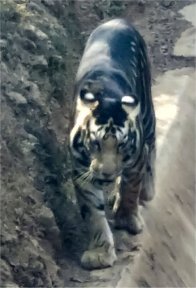
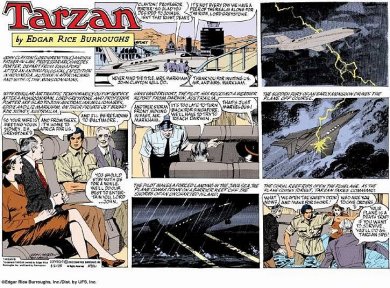
July 24: On this day in 1983, the Gray Morrow illustrated and Don Kraar scripted Tarzan Sunday newspaper story arc, “The Black Tigers of Malarang,”
began. Isn’t that a great title for the story line. I wondered if Black
Tigers are real. They are, but they are not a separate species. They
are standard Bengal tigers with a rare genetic mutation called
pseudo-melanism, which causes their black stripes to be so thick and
wide that they merge together, largely obscuring their orange coat. The
largest—and often considered the only—wild population of these rare big
cats lives exclusively in the Similipal Tiger Reserve located in
Odisha, India. The black tigers appear in the story along with
orangutangs, who live exclusively in the tropical rainforests of two
Southeast Asian islands: Borneo and Sumatra.
Animals seemingly out of place, The story includes an airplane crash,
sharks, a rich passenger, his wife, the crew, Tarzan, and native
pirates. Fun stuff. The cast made me think of Gilligan’s Island on
steroids. Fun survival story. You can read it at: https://www.erbzine.com/mag35/3504.html The drabble for today, “Malarang’s Isle,”
was inspired by the story arc and the theme t Gilligan’s Island. Great
art, good story. I suppose that the reader could assign the Gilligan
role to the orangutang, but that wouldn’t be fair to the orangutang. I
really wish I hadn’t thought about Gilligan’s Isle when I read this – I
won’t get the song out of my head for a few days.
MALARANG'S ISLE
Just sit right back and you'll hear a tale,
A tale of storms and rain
That started from an airport
Aboard a private plane.
The weather started getting rough,
The tiny plane was tossed,
If not for the skill of the pilot and crew
The aircraft would be lost.
The airplane crashed on Malarang isle
With Tarzan,
the pilot,
a millionaire and his wife,
and Professor Porter too,
Here on Malarang Isle.
This is the tale of the crashaways,
Tigers and pirates and sharks
Tarzan can make sure they all survive,
But it won’t be a day in the park.
PERHAPS, EVEN TIME ITSELF
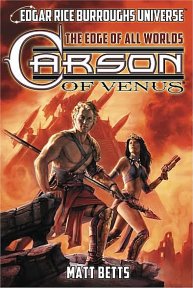
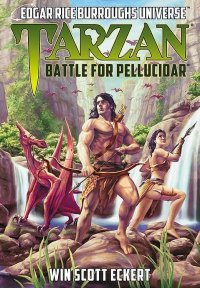
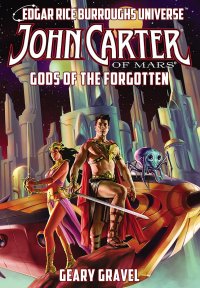
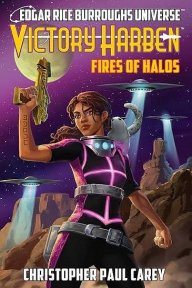
July 25: On this day in 2019 , a press release from ERB, Inc. announced The Edgar Rice Burroughs Universe novels. The first wave of novels in the Edgar Rice Burroughs Universe were “Carson of Venus: The Edge of All Worlds” by Matt Betts, “Tarzan: Battle for Pellucidar” by Win Scott Eckert, "John Carter of Mars: Gods of the Forgotten” by Geary Gravel, and “Victory Harben: Fires of Halos” by Christopher Paul Carey.
The drabble for today, “Perhaps, Even Time Itself,”
is an excerpt from that press release, edited for length to be exactly
100 words long. The title of the drabble is from a line in the Rocky
Horror Picture Show. If you don’t know the entire quotation, it’s time
to put on the popcorn and crank up the television Madness takes its
toll.
PERHAPS, EVEN TIME ITSELF
When a mysterious force catapults
Jason Gridley and Victory Harben from their home in Pellucidar,
separating them and flinging them across space and time, they embark on
a tour of strange, wondrous worlds. Their search for one another leads
to the realms of Amtor, Barsoom, and other worlds more distant and
outlandish, Jason and Victory meet heroes and heroines of unparalleled
courage and ability: Carson Napier, Tarzan, John Carter, and more. With
the help of their intrepid allies, Jason and Victory uncover a plot
both insidious and unthinkable—one that threatens to tear apart the
very fabric of the universe!
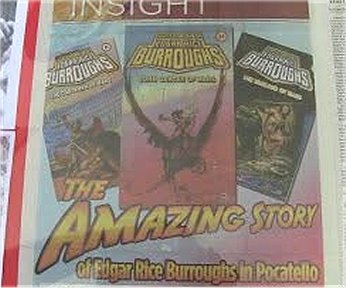
CIGARS, NEWSPAPERS, PHOTOGRAPHS
The
drabble for today, “Cigars, Newspapers, Photgraphs,” is 100 words
excerpted from that newspaper article. It has been slightly edited to
fit the 100-word drabble format. I’d never heard the comment in the last
sentence, that says ERB wrote notes about the story that would
several years later become The Princess of Mars. Can’t say that the
statement is accurate or not. But it’s in the newspaper so …
CIGARS, NEWSPAPERS, PHOTOGRAPHS
Edgar
advertised that he could supply Pocatello readers with any periodical
from America, or elsewhere. He sold several varieties of cigars,
including Cuban. He delivered out-of-town newspapers to local patrons on
his black horse, “Crow.” His store was probably one of the few places
in town where photographs were developed. Edgar had a supply of photo
bills printed for the store. His first major work “Minidoka,” was later
written on those bills, but it was promptly stored away and wouldn’t see
publication for more than five decades. He also wrote notes about a
young cavalry officer mysteriously transported to Mars.
DIRTY
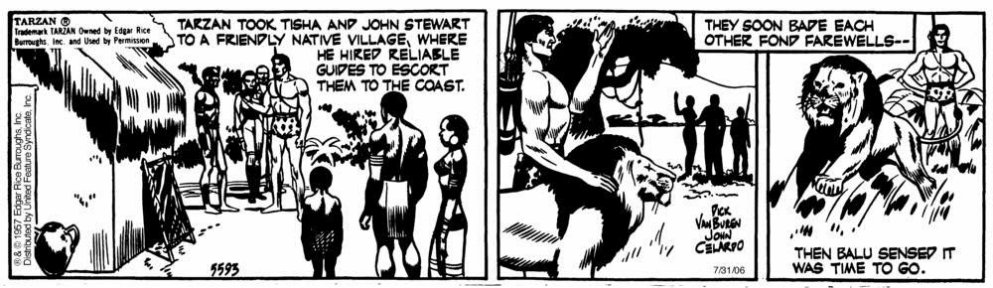
July 27: On this day in 1957, the John Celardo illustrated and Dick Van Buren scripted Tarzan Daily newspaper comic story arc, “Tarzan and the Lion Emperor,”
concluded after fifty-five daily episodes. This isn’t to be confused
with the Bob Lubbers illustrated Sunday story arc of the same name that
appeared from July 1951 through October 1951. The John Celardo story
has a young American boy and girl who are captured and taken to a
golden city where they are to be fed to the lions, the leader of the
lions is the “Lion Emperor.” Tarzan has help from another lion which
Tarzan has saved from its injuries, named Balu of all things. Balu is
the ape language name for baby.
The100-wood drabble, “Baby,” for today was inspired by the story arc and the film “Dirty Dancing.”
DIRTY
Tarzan
and some children were forced into the Golden City’s arena. Two lions
were released to kill them. Tarzan said, “Stay behind me.”
Tarzan
had saved one of the lions, Balu... Balu recognized Tarzan and kept
positioning himself between the larger lion and its victims. Balu never
fought, he just blocked the other lion.
The
crowd jeered and screamed and finally the large lion backed Balu into a
corner. Balu roared, attacked, and killed the other lion.”
Tisha, a child, asked, “Why did the lion decide to fight?”
Tarzan smiled, “Balu means baby and nobody puts baby in the corner.”
FINDERS KEEPERS
July 28: On this day in 1897, Actor Clive Morgan, who appeared as Philip Annersley, Tarzan’s cousin, in the film serial, “Tarzan the Tiger,”
was born in Lewes, Sussex, United Kingdom. His sixty-eight film credits
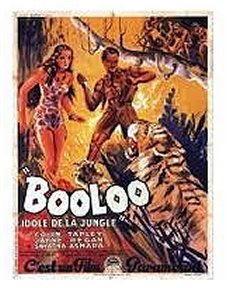
include ‘Gunga Din,” “Booloo,” “Around the World in 80 Days,” “Young
Bess,” “Joan of Arc,” and “Dracula’s Daughter.”
Tarzan the Tiger was
a transitional film with one version released as a silent and the other
with a partial soundtrack with music, jungle and background noise, and
Tarzan's yell for the first time. For many years the film was thought
lost but a version, with soundtrack, was discovered in recent times.
For more information about the film, visit https://www.erbzine.com/mag5/0593.html I couldn’t find much information about the actor except for his film roles and that he died in Santa Monica, California. In Tarzan the Tiger,
Clive’s character is Tarzan’s cousin and in episode #12, he goes to
Africa to find his semi-simian relative. While Tarzan is away from his
estate, Annersley takes over and assumes the title of Lord Greystoke.
That doesn’t work out well when Tarzan returns.
The drabble for today, “Finders Keepers,” was inspired by Clive Morgan’s role in TARZAN THE TIGER.
FINDERS KEEPERS
Philip
Annersley pointed his firearm at Tarzan. “Cousin, I found your title
and estate abandoned and I am now the rightful Lord Greystoke. You
can’t be the King of the Jungle and Lord Greystoke at the same time. I
rule here.”
“Cousin Philip, you can’t take my title while I was defending our homeland.”
“The title and estate were lost and I’ve claimed them. Finders keepers!”
“Are you ten years old? The world doesn’t work that way.”
“What are you going to do about it, apeman?”
“You’ve heard the expression, over my dead body. Today it will be over yours”
HERE WE GO AGAIN
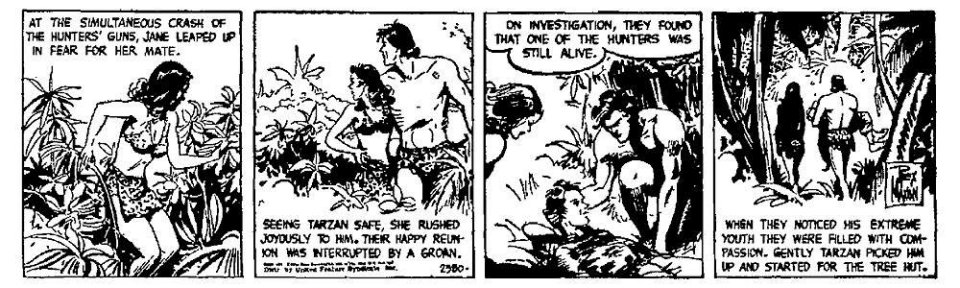
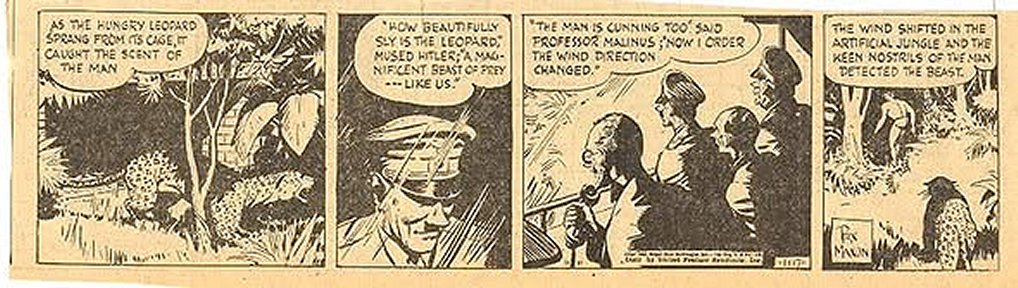
July 29: On this day in 1943, the Rex Maxon illustrated and Don Garden scripted Tarzan daily newspaper story arc, Tarzan Against Hitler,
concluded after 114 daily episodes. The first strip and the last are
included with this article. The story arc ended on a cliffhanger.
America was involved in WW2 and pro-America, anti-Hitler stories were
in the comics, magazines, films, and radio. There might even have been
a couple of songs. Jane is dressed like Zeela, the Wild Girl in the
episodes.
The drabble for today, “Here We Go Again,” was inspired by the story arc, World War II, and by history itself.
HERE WE GO AGAIN
Jane
hugged Tarzan after the jungle lord defeated the tribe that had agreed
to help Hitler conquer Africa. “My love, we’re safe from the Nazis for
now. How soon do you think they and their sympathizers will launch
another attack?”
“Don’t worry about it. I think that we’re safe in Africa. He’s invaded Russia. He’ll be busy.”
“Why Russia? I learned in school that invading Russia never works out well for the invader.”
“Napoleon would tell him not to do that.”
“Tarzan, I read that history repeats itself.”
“Jane, I’d have to disagree. History doesn’t repeat itself, but stupidity does.”
[
GET ALONG
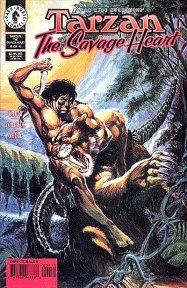
July 30: On this day in 1999, Dark Horse Comics published issue #4, “Tarzan: The Savage Heart.”
Details about all Dark Horse ERB comics may be found in an excellent
serries of articles by Bill Ross on ERBzine. For this one go to: https://www.erbzine.com/mag11/1156.htmlAllan Gross wrote the comic. Pencils were by Chrisopher Schenck and Mike Grell, Shenck did the inking. Steve Dutro lettered, and Perry McNamee colored the issue. Mike Grell was the cove artist and the issue gave special thanks to Danton Burroughs, among others.
Driven
by grief and wanting vengeance after being told that Jane is dead,
Tarzan travels to Pellucidar, where he encounters Abner Perrry, battles
hostile tribes, and eventually discovers the truth. The miniseries
concludes on a notably bittersweet, unconventional note for a Tarzan
story. During the final confrontation, Tarzan discovers that the
villain lied to him and that Jane is actually alive and well back on
the surface. Despite learning the truth, Tarzan is so psychologically
altered and deep in his regression that he refuses to return to the
surface world to find her. This will be addressed in a future Dark
Horse Tarzan comics story.
The drabble for today, “Get Along,”
is a filk song based on “Got Along Without You, originally recorded in
1951 by Roy Hogsed, but more famously by Skeeter Davis and Viola Mills.
GET ALONG
Living alone in the jungle, I was doing just fine
Jane came along and I gave up life on the vine
Empty treehouse this morning, she wasn’t around
She’d left while I slept, not making a sound.
I got along without her before I met her,
I’m gonna get along without her now.
I heard she was taken, but that wasn’t right
She snuck away silently sometime last night.
I searched for a year, but gone underground
Obviously she didn’t want to be found.
I got along without her before I met her
I’m gonna get along without her now.
WELCOME BACK, KORAK
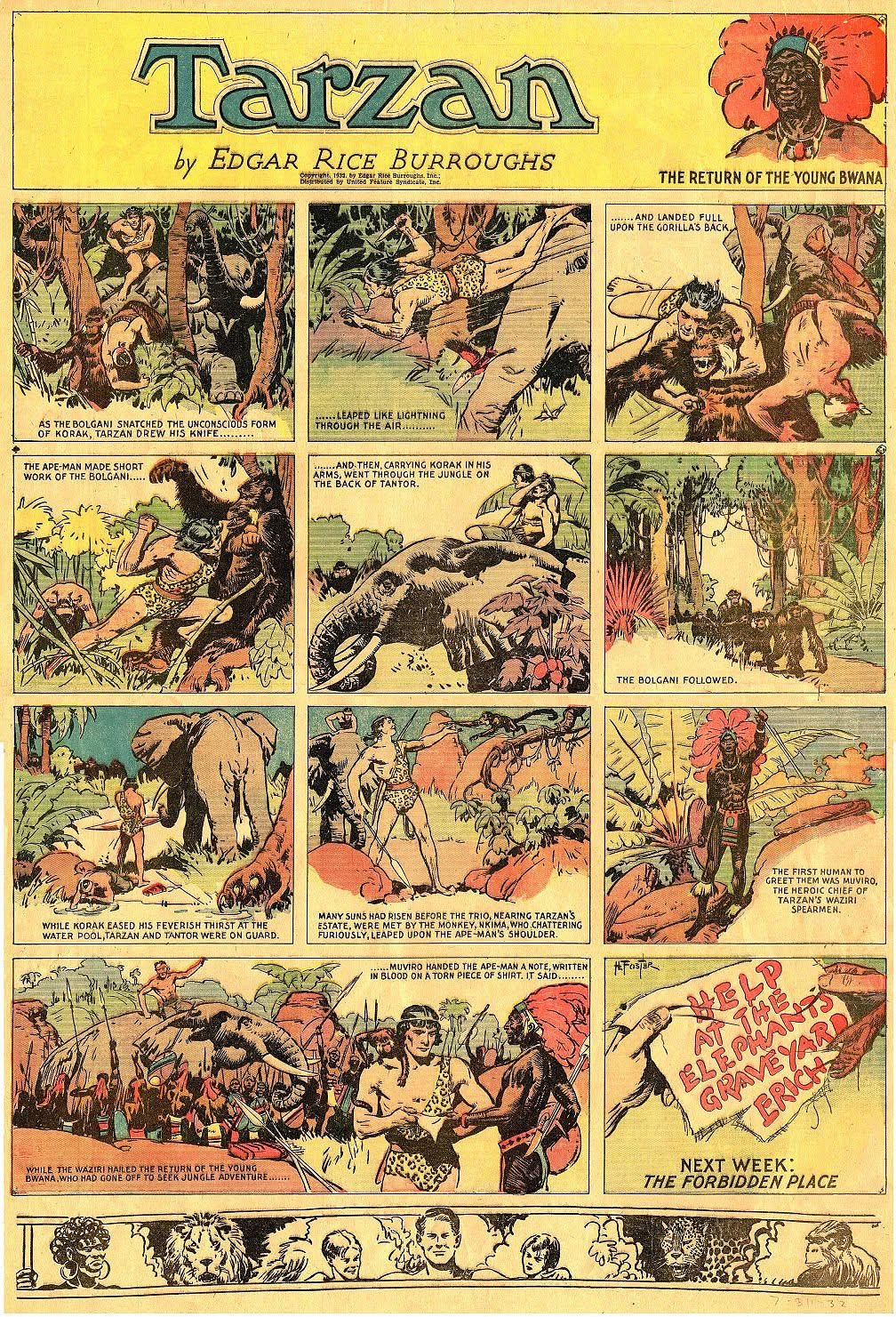
July 31: On this day in 1932, the Hal Foster illustrated and George Carlin scripted Tarzan Sunday daily story arc, The Return of Korak, concluded. The page was titled, “The Return of the Young Bwana.
The Sunday pages had titles in those days. The story arc concluded with
on a cliffhanger. The Hal Foster pages have been reprinted in a
beautiful hard bound book, available at; https://www.taschen.com/.../hal-foster-s-tarzan-the.../... They are ALL featured in ERBzine.com at https://www.ERBzine.com/foster
The drabble for today, “Welcome Back, Korak,”
not to be confused with “Welcome Back, Kotter. There’s not a sweat hog
to be found. The drabble for today was excerpted from the summary of
the page on ERBzine.
WELCOME BACK, KORAK
While
Korak eased his feverish thirst at the water pool, Tarzan and Tantor
were on guard. Many suns had risen before the trio, nearing Tarzan's
estate, were met by the monkey, Nkima, who chattered furiously. He
leaped upon the ape-man's shoulder. The first human to greet them was
Muviro, the heroic chief of Tarzan's Waziri supermen.'
While
the Waziri hailed the young Bwana’s safe return, he who had gone off
seeking jungle adventure, Muviro handed the ape-man a note, written in
blood on a torn piece of shirt. It said:
“HELP. . . AT THE ELEPHANTS GRAVEYARD. . . ERICH.”