ERB 100-Word Drabbles &
Events OCTOBER VIII Edition :: Days 16-31
by Robert Allen Lupton Back To Days 1-15at
ERBzine 8351
With Collations, Web Page Layout and ERBzine
Illustrations
and References by Bill Hillman/ERBzine
LEADING THE GOOD LIFE
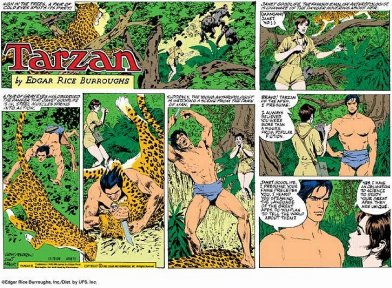
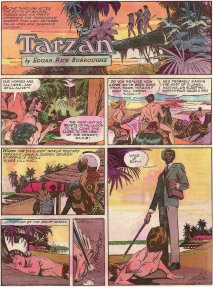
October 16: On this day in 1983 the Gray Morrow illustrated and Don Kraar scripted Tarzan Sunday newspaper comic, In the Forests of Night,
began. The story features a woman named Janet Goodlife, who speaks
Mangani. The name and her study of the great apes her a thinly
disguised Jane Goodall. Let’s call it a tribute to the twice married
Jane Goodall, a woman who said, “Tarzan married the wrong Jane.”
Tarzan
and Janet are attacked by Arab poachers. Tarzan is temporarily blinded.
The two bond as Janet guides Tarzan through the jungle. Justice
prevails. One semi-snarky comment, “I doubt that Jane Goodall wore
daisy dukes in the jungle, but hey, what do I know.
The 100-word drabble for today is, “Leading the Good Life,” was inspired by the story arc, “In the Forests of Night,” and of course, the real-life heroine, Jane Goodall.
LEADING THE GOOD LIFE
A poacher’s rifle shot gave Tarzan a scalp wound. The Lord of the Jungle stumbled backward off a cliff.
A
primatologist, Janet Goodlife, climbed down the escarpment to save
Tarzan. He was blinded and she guided him through the jungle. The
poachers recaptured them and forced Tarzan and a friend to fight to the
death. During the battle, a great ape killed the leader of the poachers.
Janet said, “Tarzan, we make a good team. We’d make a good life together.”
“Janet, I’m married. It’s not a good life, it’s a great life. Even a blind man can see that.
PART OF THE SCENERY
October 17: On this day in 1967, Actor Ray Beltram, who appeared in three Tarzan films, Tarzan’s Magic Fountain, Tarzan and the She-Devil, and Tarzan and the Slave Girl,
died in Los Angeles, California.. He worked extensively in Hollywood
from the 1941 film, “This Woman Is Mine,: through the early 1962 film,”
Lonely are the Brave.” He frequently appeared as an uncredited
character actor, townsman, or extra in classic Westerns, dramas, and
television series. IMBD lists 109 credits for Beltram.
Information about all three of his Tarzan films is available at: https://www.erbzine.com/movies
It’s possible that some of the photographs on those pages include Mr.
Beltram, but I couldn’t be sure so I haven’t included them here.
His
appearances in the three Tarzan films were uncredited, as was his
appearance in “Lost City of the Jungle.” It was difficult to find an
actual photo of the actor, online searches typically responded with
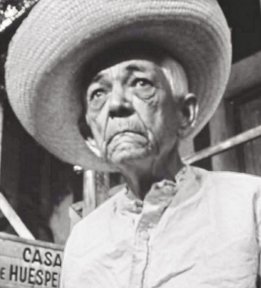
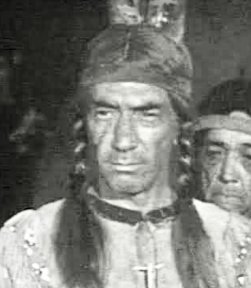
film posters or other better-know actors. I've included two phots and I
can't swear that they're actually of him.
The drabble for today, ‘Part of the Scenery,”
was inspired by the career of Ray Beltram and hundreds of people like
him who helped make cinema magic. Crowd scenes need a crowd, a bustling
city needs to bustle, and a native village has to have natives.
PART OF THE SCENERY Lex Barker said, “Ray, this is the third film we’ve made together and yet you hardly speak to me.”
“Sorry Mr. Barker, but we aren’t allowed to talk to the stars.”
“I didn’t know that, but you always seem so quiet on set.”
“Unless
I have some action choreographed, my job is to remain silently in place
so that I don’t mess up the sound track or detract from the primary
action in the scene.”
“Sounds boring.”
“Sometimes, I have a line.”
“You can talk to me whenever you want.”
“Thanks, but I’ve always considered myself the strong silent type.”
INHERITANCE
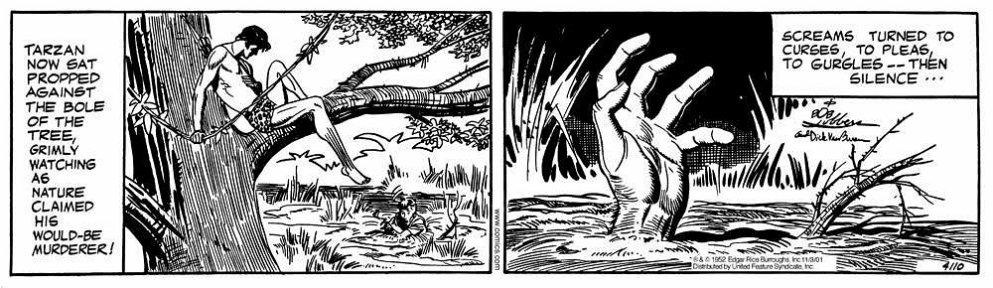
October 18,: On this day, the Bob Lubbers illustrated and Dick Van Buren scripted Tarzan daily newspaper story arc, Tarzan and the Inheritance, concluded. I’m fortunate to have two days of original artwork from this story arc. Read the entire 52 installment story at http://www/erbzine.com/mag53/5316.html
The story starts with a plane wreck in Africa and a greedy potential
heir in the UK, who can’t inherit until he proves that his uncle, Tom
Casey, is dead, not just missing. Jim Casey, the heir, goes to Africa
and convinces Tarzan to take him into gorilla country, where the plane
had crashed. There they find the uncle living happily with a native
tribe. Jim convinces his uncle that the two of them should capture
gorillas and sell them. It’s Jim’s second plot against his uncle. He’d
sabotaged the airplane and now he planned to have his uncle killed by
gorillas. His plan fails and Jim dies in quicksand.
The drabble for today, “Inheritance,” was inspired by the story arc.
INHERITANCE Tarzan said, “Sorry for your loss.
Your nephew was hurrying to kill me and not watching where he was
going. He stepped in quicksand.”
Tom
Casey nodded. “He’d have never come to any good. He couldn’t wait for
my money. He tried to kill me twice. He shot innocent gorillas. The
good book says that he who brings ruin on his family will inherit the
wind.”
“It does. It also says that the meek will inherit the earth.”
Tarzan, my nephew wasn’t meek, he was an arrogant jerk, but it sure looks like he inherited a mouthful of dirt today.
LA NEEDS HELP
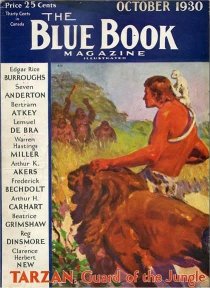
October 19: On this day in 1930, the serialization of “Tarzan, Guard of the Jungle” began in Blue Book Magazine. Laurence Herndon
drew Tarzan cover art for six of the seven installments. The story was
retitled and published in novel form as “Tarzan the Invincible.”
The drabble for today is “La Needs Help,” and it was the blurb for the Ballantine publication of novel, written in all probability by the publisher, Ian Ballantine.
LA NEEDS HELP
La
was in trouble. The high priestess of the Flaming God in the ancient
city of Opar forgotten outpost of Atlantis had been betrayed by her
people and locked in the eon-haunted dungeons until Tarzan came to
rescue her. La still loved Tarzan but Tarzan had brought her to his
people, and then left her. Now, together with a strange woman, she lay
bound in the tent of an Arab slave-trader, dreading her certain fate.
Meanwhile, Tarzan was beset by a strange band of men who’d invaded his
land led by a madman bent on evil subversion!
I TOLD THE WITCH DOCTOR
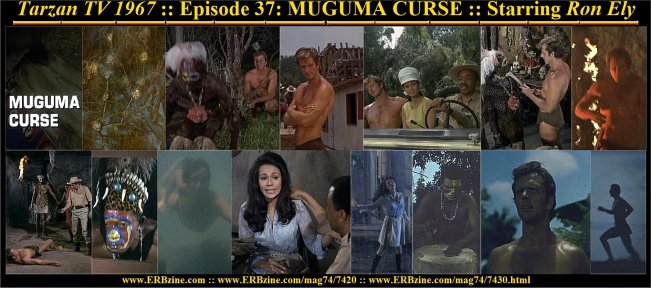
October 20: On this day in 1967, episode number six of the second season of the Ron Ely Tarzan series, Muguma Curse, was broadcast. The guest stars were Simon Oakland (KOLCHAK: THE NIGHT STALKER) and Barbara Luna
(STAR TREK, MISSION: IMPOSSIBLE, THE SIX MILLION DOLLAR MAN, FIVE WEEKS
IN A BALLOON, BUCK ROGERS). The story line on this one was pretty
convoluted, but it’s worth it. Sadly, it includes a lot of stock
footage. The fire dancer, played by Isaac Fields is worth the price of
admission alone. A local white woman becomes the subject of an
spiritual attack by the local witch doctor after a sacred tree is
chopped down. Tarzan must find out who really destroyed the tree and
try to help his friend fight of the effects of the bad voodoo.
The drabble for today, “I Told The Witch Doctor,” was inspired by the episode and a song recorded by David Seville and his friends. Absolutely deathless lyrics.
I TOLD THE WITCH DOCTOR
Frankie, played by Barbara Luna asked, “Tarzan, am I safe?
“There are many things in the jungle that can kill you The witch doctor knows of these things. You should talk to him.”
“Witch doctors? Am I supposed to take advice from a witch doctor? I thought all witch doctors were evil.”
“Witch
doctors who work with my enemies are evil. Our witch doctors are
wonderful men. It’s really a simple distinction. If anyone asked, my
friend the witch doctor, he told me what to say.”
October 21: On this day 52 years ago in 1973, the Russ Manning illustrated and scripted Tarzan Sunday newspaper story arc, Tarzan’s Pal-ul-Don Adventure, concluded. You can read the entire 57episode story arc beginning at: https://www.erbzine.com/mag21/2127.html
It has been reprinted in ERBdom, the comics review and in Tarzan: The
Complete Russ Manning Newspaper Strips Volume 3 (1971-1974).
The drabble for today, “Good For the Goose,
was inspired by a lot of things, including one attorney general, he who
shall not be named. Sadly, newspapers, magazines, and electronic
communication sources find themselves in a quandary. If you censor what
people write, you’re violating their right to free speech, but if you
don’t censor it, you’re a risk of being sued for allowing them to
exercise that right. Kinda tough spot to be in. Just saying.
GOOD FOR THE GOOSE
Upon
Tarzan’s return from Pal-ul-don to the civilized world, the first
person he encountered was Major Bouncingbutt who was in a complete
uproar. “What’s wrong,” asked Tarzan.
“The
radio stations and the newspapers are all making comments supporting
letting women and natives vote. That must stop instantly.”
“Major, that’s called free speech. Everyone is allowed to say and write what they want as long as it isn’t libel or slander.”
“Nonsense,
speech that I agree with should be free. Speech I don’t agree with
should be outlawed and the speaker, writer, and the newspapers and
radio stations sued into oblivion.
SCARCITY MEANS VALUE
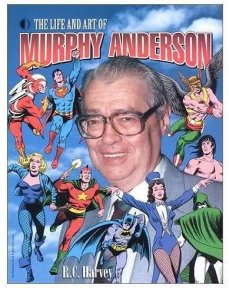
October 22: On this day in 2015, comic book artist Murphy Anderson Jr.
died in New Jersey. Anderson was an American comics artist, known as
one of the premier inkers of his era, who worked for companies such as
DC Comics for over fifty years, starting in the Golden Age of Comic
Books in the 1940s. He worked on such characters as Hawkman, Batgirl,
Zatanna, the Spectre, and Superman, as well as on the Buck Rogers daily
syndicated newspaper comic strip. During his time at DC, he also worked
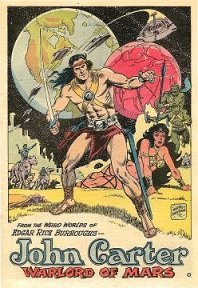
on “Beyond the Farthest Star, John Carter om Weird Worlds #1-3, and Korak, Son of Tarzan #52-56. He worked on back up stories, including John Carter in Tarzan Comics.
Anderson
received an Inkpot Award in 1984 and was inducted into the Jack Kirby
Hall of Fame in 1998, the Will Eisner Hall of Fame in 1999, and the
Inkwell Awards Joe Sinnott Hall of Fame in 2013.
The fictional drabble for today, “Scarcity Means Value,”
was inspired by the career of Murphey J. Anderson. He illustrated
covers and interiors for several of my favorite comic book characters,
Hawkman, the Atom, and Adam Strange come immediately to mind. He may
have been the first artist that I learned how to identify his art.
SCARCITY MEANS VALUE
“Mr. Anderson,” said the interviewer. “Your original art is selling for hundreds of dollars. I hope you have a lot of it.”
“DC
just threw all the art in a storage room. I asked about it and they
told me to come and get what ever I wanted. I could have taken
anything, but I only took my own work.”
“And where’s it now?”
Anderson
laughed, “Sold some, gave some away, lost some. If I still had a lot it
wouldn’t be worth any money, would it? I believe the most valuable
collectibles are the things that you don’t have.”
COMMERCIALIZED
October 23: On this day in 1976, episode seven, Tarzan and the Strange Visitors, the animated Tarzan, Lord of the Jungle TV series, was broadcast. This series was outstanding and Robert Ridgely did a great job voicing Tarzan. Danton Burroughs did the Tarzan yell for the series.
A
lady anthropologist studying apes witnesses a group mysteriously
disappear. Tarzan and his monkey friend Nkima spot a strange light in
the sky and go to investigate.
Tarzan
rescues the anthropologist from a truck about to fall off a cliff. They
run into an invisible force field, and the anthropologist is captured
as Tarzan fights off robotic panthers. Tarzan is eventually captured
and brought aboard a massive alien spacecraft. He discovers the ship is
a traveling zoo/laboratory filled with caged animals and captured
jungle specimens destined to be exhibited on the aliens' home planet.
An
empathetic female alien (named Lira) disagrees with the crew's cruel
methods. She assists Tarzan, who refuses to leave without his human and
animal friends, leading him to fight his way back into the lab to free
them.
The drabble for today is, ‘Commercialized Captivity,”
inspired by the episode and by Tarzan’s protection of the jungle
creatures. The views and opinions expressed in this drabble are those
of the episode and do not necessarily reflect the views or positions of
or the author, the editor, or Major League Baseball.
COMMERCIALIZED
Tarzan
learned anthropologist Jill Bennington, had been taken aboard an alien
spacecraft. He was captured while trying to save her.
The captive Tarzan demanded to know what the aliens wanted.
“Our
mission is to explore strange new worlds, to seek new life and new
civilizations, to boldly capture them for our zoos. We take native
flora and fauna in order to recreate each animal’s natural habitat.”
“A zoo is just a prison.”
“That’s harsh. We stave off planetwide extinctions.”
“We have zoos on this planet, and the only creature on Earth whose natural habitat is a zoo, is the zookeeper.”
SURROUNDED
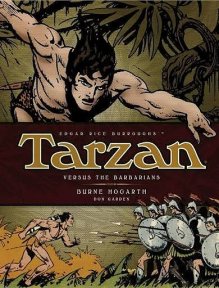
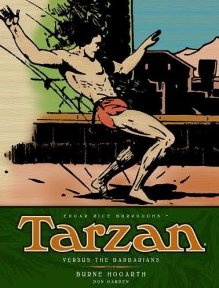
October 24: On this day in 1943, the Burne Hogarth illustrated and Don Garden scripted Sunday Tarzan story, Tarzan and the Barbarians, concluded. This tale is a classic of the genre. It was Don Garden’s
last page. Garden has written the script since September 1943, meaning
that he wrote about 525 Sunday pages over ten years and a month.
The
story isn’t available electronically as far as I can tell, but it is
available for purchase in the same titled book as part of The Complete
Burne Hogarth Sundays and Dailies Library Series by Titan Books for
$40.00.
In the story, Tarzan has to fight several groups of Barbarians, including Arabs, Vikings and Amazons.
The drabble for today, “Surrounded,” was inspired by the story arc. It is a blatant theft from a joke I learned childhood.
SURROUNDED
Jane said, “Tarzan, the village is surrounded and the Arab barbarians are preparing to attack.’
“No worries. I’ll call a herd of elephants to trample them.”
“That should be great, but what if the Viking barbarians are also preparing to attack?”
“I’ll simply call another herd of elephants. Elephants don’t like Vikings. Tantor hates those pointy hats.”
“The
Amazons are around here somewhere. Those women are tougher than the
Vikings. What will you do if the barbarian Amazons attack?”
“Another elephant herd.”
“Tarzan, where are you getting all these elephant herds?”
“The same place that you’re getting all these barbarians.”
LIVE TO FIGHT ANOTHER DAY
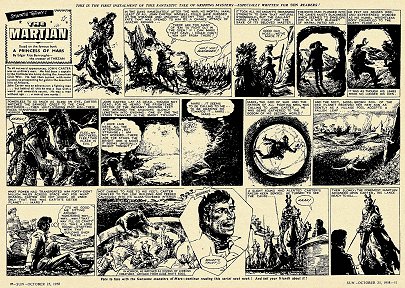
October 25: On this day in 1958, a John Carter Comic strip, The Martian, illustrated by Robert Forest,
began in the British newspaper, Sun Weekly. The adaption was written by
D. R. Morton and it ran for thirty-nine weeks. It should not be
confused with the 1941-1943 American Sunday comic strip written and
illustrated by John Coleman Buroughs. Enjoy these Martian strips in
ERBzine at https://www.erbzine.com/mag13/1388.html
Not
much is known about Robert Forrest's life. His contributions to British
comics remained under the radar for many years, despite their skillful
execution. Forrest was born in 1907 and spent many years working for
Inland Revenue, the government department responsible for the direct
tax collection. He was well in his forties when he switched to
illustration, hired by Amalgamated Press editor Ted Holmes to draw 'Kit
Carson' on the front page of “The Comet” in 1951. He also illustrated
‘The Three Musketeers,” He had never worked as a professional artist
before, but was quickly noted for his natural, action-packed style.
The drabble for today is, “Live to Fight Another Day”, and it was written by D. R. Morton for “The Martian.”
LIVE TO FIGHT ANOTHER DAY
With
disciplined efficiency, the ships of Helium sped through the smoke
streaked sky and cut through the very center of the conflict. Many of
the Zoodangan ships were blown to pieces in the sky, others became
helpless, drifting wrecks. Boarding parties of armed men were lowered
down to these. But resistance was costly and in vain – many a brave
warrior fell in the last few minutes of that terrible battle, until a
high ranking Zodangan officer reversed his sword and called out to John
Carter, “We are beaten. We can gain nothing but death by continuing
this bloodshed. We surrender!”
PAY THE PRICE
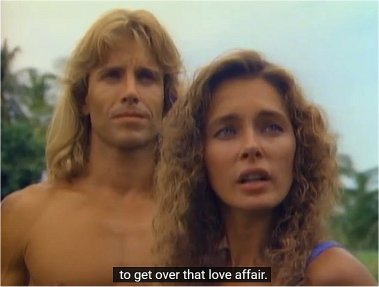
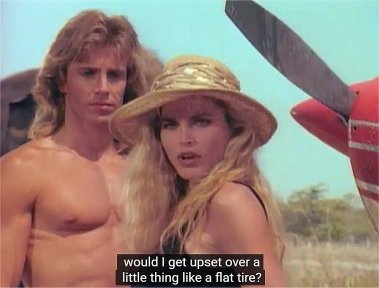
October 26: On this day in 1992, episode number three, season two, Tarzan and the Forbidden Jewels, Wolf Larson TV series,
aired. IMDB gives the year as 1997, but that’s nonsense. Different
websites assign different episode numbers to several of the episodes,
some using the date of release, some using the order of production, and
some apparently only using a sense of humor and a wild-ass guess.
In
the episode, A greedy visitor, Karl Hauser, arrives in the jungle
claiming to be working for the American Zoo Society, but actually
seeking a legendary lost temple containing valuable jewels,
strong-arming Tarzan while Tarzan and Jane grow suspicious of his true
motives. The temple turns out to be a cave, and the jewels are only one
piece of jewelry, but the curse is real. Hey, if there wasn’t any
danger in stealing ancient jewelry, anyone could do it.
The main cast, as always, was Wolf Larson, Lydie Denier, and Shean Roberge. Guest stars were James Healey and Errol Slue. More about the Wolf Larson TV Series at https://www.erbzine.com/mag74/7453.html
The drabble for today is, “Pay the Price,” inspired by the story and by the way life works.
PAY THE PRICE
Tarzan said, “Karl, you represent the American Zoo Society. You’ve been here for weeks and haven’t captured a single animal.”
The animals that I want live near the remains of an abandoned temple in the desert. You could guide me.”
They
found a beautiful necklace in a cave hanging in a decayed altar. Tarzan
said, “It’s a trap. Don’t touch it. It can’t be this easy.”
Karl grabbed the jewelry. “Mine, all mine.”
The roof collapsed, killing him.
Tarzan said to himself. “He was a rat and rats die in traps because they don’t understand that the cheese isn’t free.
IN YOUR OWN SKIN
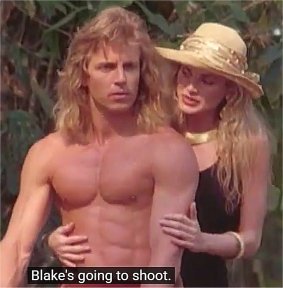
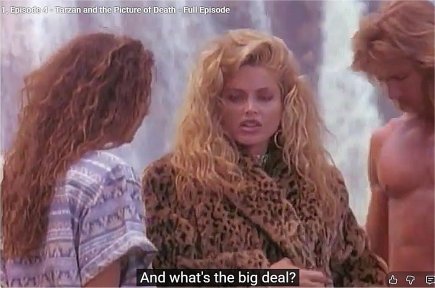
October 27: On this day in 1991, the third episode of season one of the Wolf Larson / Lydie Denier Tarzan television show, “Tarzan and the Picture of Death.”
While confusion reigns about the broadcast dates for seasons two and
three, sources are generally in agreement for the season one episodes.
Some sources list this episode as #4, but I disagree. ERBzine
identifies this episode is number three. Again, confusion because the
episodes weren’t always released in the order of filming.
In
this episode, A spoiled, high-profile fashion model named Kendra Dixon
(played by Claire Cellucci) and her pushy photographer Blake Evans
(played by Richard Eden)
arrive at Tarzan's and Jane's camp in the jungle to shoot a commercial
fashion layout. Kendra and her crew immediately offend Tarzan and Jane
by wearing and posing in animal fur fashions, which Tarzan recognizes
as coming from killed endangered leopards. Despite having an official
permit, they clash over the ethics of exploiting wildlife for
commercial publicity.
Jungle
Danger: Showing fake helplessness and disregard for the wilderness,
Kendra and her cameraman venture deeper into the dangerous jungle.
Their reckless behavior quickly puts them in mortal peril, leaving
Tarzan to track them down and rescue them before the jungle claims
them. More about the Wolf Larson TV Series at https://www.erbzine.com/mag74/7453.html
The 100-word fictional drabble for today, “In Your Own Skin,” was inspired by the story.
IN YOUR OWN SKIN
Tarzan said, “You and your crew are wearing clothing made from leopard skins. That’s not acceptable.”
“It is acceptable,” said Kendra. “We have permits from the government.”
“Not from the leopards.”
“This coat is amazing.”
Jane
said, “Fur looks best when worn by its original owner. For you, it’s a
fashion choice, for the leopards, it’s life or death. Cruelty is one
fashion statement I can do without.”
“People have always worn leather, belts, shoes, hats, and coats.”
“You
say leather, because calling it animal skin makes you ashamed. Are you
hiding the truth from yourself or from everyone else?”
JUNGLE RULES
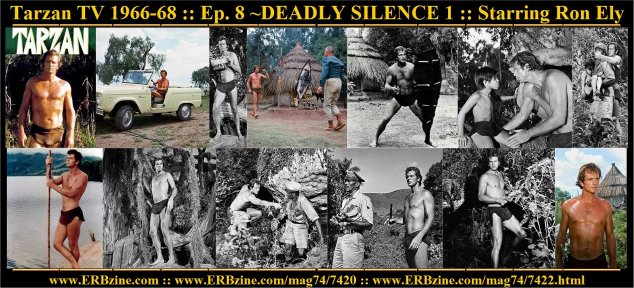
October 28: On this day in 1966, episode eight, season one, “The Deadly Silence Part One,” of the Ron Ely Tarzan TV series, was broadcast. The episode featured Nichelle Nichols and Jock Mahoney. More about the Ron Ely TV series in ERBzine https://www.erbzine.com/mag0/0014.html The drabble for today, “Jungle Rules,”
was inspired by the story. Trying to rule the jungle reminds me of
flying an aircraft. You have to be perfect. The skies only has to win
once.
JUNGLE RULES The Colonel, played by Jock Mahoney smiled. “I want to rule the jungle, just as you have.” Tarzan replied, “You’re mistaken. The jungle is ruled by no one.” The Colonel laughed, “Things change, Tarzan. Things change.” Nichelle Nichols asked Tarzan, “Tarzan, can you stop the Colonel?” “I don’t know,” responded Tarzan. “The colonel is extremely powerful.” “That makes me frightened.” “The
jungle can defend itself. It never gives up. Never surrenders. It only
has to win once, whereas a would-be ruler like the Colonel has to win
every time. The jungle wins, you die. You win, it’s just another day.”
FOOD FIGHT
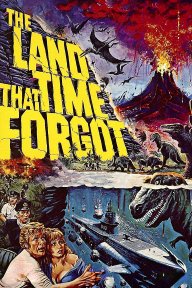
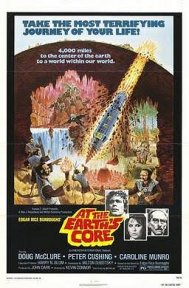
October 29: On this day in 2016, actor Godfrey James, who appeared in the Amicus films, “The Land That Time Forgot” and “At the Earth’s Core,”
died for at least the second time in East Sussex, England. He played
Borg in The Land That Time Forgot and died when the submarine exploded.
He played Ghak in At the Earth’s Core,” and was a survivor of the
uprising against the Mahars. Ghak was a large man and extremely brave.
He was assigned as one of Dian’s protectors.
Godfrey
has 162 film and television appearances listed at IMBD, including
Highlander, The Legend of King Arthur, The Return of the Saint,
Raffles, The Avengers and Space: 1999
The drabble for today, “Food Fight,” was inspired by Godfrey James’ character Ghak, in “At the Earth’s Core.”
FOOD FIGHT Abner Perry said, “David, the natives
know nothing of organized warfare. We’re completely at the mercy of the
mind-controlling human-eating Mahars.”
David
Innes shook his head. “Those monsters are smart, but smart doesn’t win
battles. Here’s my plan. We’re going to charge in mass and simply
overwhelm them. That control everyone’s minds.”
“Who is brave enough to lead the charge? You?”
“Ghak’s the biggest, the strongest. He’s something of a berserker.”
The Ghak led human army charged and slaughtered their Mahar overlords.”
Abner smiled. “That went surprisingly well.”
“The beasts hungered, but they weren’t ready for a Big Ghak Attack.”
SMALL THINGS CAN BITE
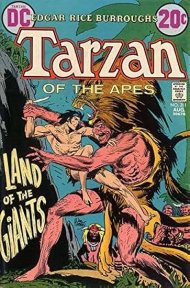
October 30: On this day fifty years ago, the 8th episode of the first season, “Tarzan and the Land of Giants,” of the animated Tarzan, Lord of the Jungle TV series
was broadcast. It was a rainy morning in New Orleans that morning. We
stayed in and watched Saturday morning cartoons before meeting John
Guidry in the French Quarter for lunch.
A complete list of the episodes is available at:
October
30, 2026 and fifty years ago on this day fifty years ago, the 8th
episode of the first season, “Tarzan and the Land of Giants,” of the
animated Tarzan, Lord of the Jungle TV series was broadcast. It was a
rainy morning in New Orleans that morning. We stayed in and watched
Saturday morning cartoons before meeting John Guidry in the French
Quarter for lunch.
The episodes are for sale on Amazon, but I didn’t buy them, it just seemed wrong somehow.
The illustrations accompanying this post aren’t from the episode.
While
searching for water during a severe drought, Tarzan discovers and is
held hostage by a hidden tribe of giants who live high up in the trees.
Tarzan stumbles upon a giant young man named Yuri who is being
threatened by soldiers. Yuri explains that his father, Muro, has been
imprisoned and is scheduled for execution by the ruthless King
Odysseus, who rules the valley with an iron fist. In addition to King
Odysseus's human tyranny, the local giants live in deep terror of Buto,
a creature they worship and fear as a god, which is actually a massive
white rhinoceros. To complicate matters further, a destructive and
dangerous storm is rapidly moving in toward the giants' village of
Zoram.
The drabble for today, “Small Things Can Bite,” was inspired by the episode and J. R. R. Tolkien.
SMALL THINGS CAN BITE
Tarzan
interceded between the giant man, Yuri, and several huge soldiers who
were threatening him. Yuri said, “You’re small, but the soldiers ran
away when you challenged them.”
“Big doesn’t always mean brave and small doesn’t always mean weak. Even a lion will run from an angry wasp.”
“The king plans to let the rhinoceros god, Buto, kill my father in the arena. You’re far too small to help me.”
“Yuri, I
am not too small. Even a gnat or gadfly can topple a throne. It is the
small everyday deeds of ordinary folk that keep the darkness at bay.
ENEMY OF THE PEOPLE
October 31: On this day in 1943, the Burne Hogarth scripted and illustrated Sunday comic story arc, “Tarzan Against Kandullah and the Nazis,”
began. During the second World War, comic strips, films, and radio
shows all featured storylines that supported the war effort. In 1944,
another Hogarth strip would be titled, “Tarzan Against the Nazis.” I
guess that Kandullah didn’t make the second cut.
This story was reproduced in Bill Blakbeard’s “TARZAN IN COLOR #13” and “Tarzan versus The Nazis” (Complete Burne Hogarth Comic Strip Library volume 3)
Hundreds of the HOGARTH Tarzan Sunday strips are feature in ERBzine at https://www.erbzine.com/hogarth/
Tarzan
traveled back to the lands of the Boers, who were old allies of his.
Defeated or retreating Nazi soldiers have infiltrated the region,
trying to secure a desolate hidden enclave to build a "Fourth Reich"
and strike back at democracy. The Nazi forces with the help of the
native, Kandullah, scheme to turn local groups against one another,
stirring up the natives to attack the white Boer settlers. Stepping
into the conflict, Tarzan used knowledge of the African wilderness,
tracking, and physical prowess to disrupt the Nazi plots, unite the
local factions, and foil the attempt to establish a new fascist base.
The drabble for today, “Enemy of my Enemy,
was inspired by the story arc and history, which tells us that Nazi
activity in South Africa during WWII focused on domestic fascist
organizations, espionage networks, and radio communication links
supporting the Axis powers.
ENEMY OF THE PEOPLE
The
Boer leader complained, “Tarzan, the war has come to South Africa in a
strange way. We aren’t fighting the Nazis directly, we’re just fighting
with each other.”
Tarzan
replied, “It’s an old tactic, one I learned as a child. It was better
for me to convince two enemies to fight each other than for me to fight
either one myself. I call it, “Let’s you and him fight.”
“What do we do.”
“Reunite, stick together.”
“Will evil leaders always use this strategy of divide and conquer?”
“Probably. If the people are fighting with each other, they’re fighting with him.”