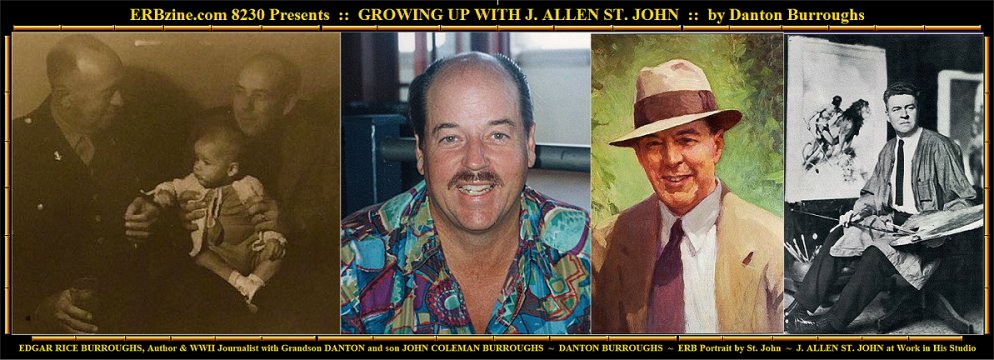
I, Danton Burroughs, was only five years old
when my Grandfather, Edgar Rice Burroughs, passed away in 1950, so my memories of him are from the
perspective of a child. And growing up with the art to St. John hanging
on the walls of our home and at the corporation that Ed created was not
something that I paid much attention to. One has to realize that when
someone grows up with the familiar, they don't understand the
importance that someone else might place upon it -- such as the fans of
my grandfather's stories and St. John's illustrations for them -- until
they are older and can listen or read what the fans have to say about
them.
Also my father, John
Coleman Burroughs, was an artist who illustrated some his father's
books, so it wasn't unusual to me to have an artist around. It was just
something he did -- although as someone who can't draw I was certainly
amazed by his abilities.
It was Dad who first
raised my consciousness about just how special J. Allen St. John was.
He would often call to my attention, as I grew older, this or that St.
John painting and why he thought it special. One such painting that
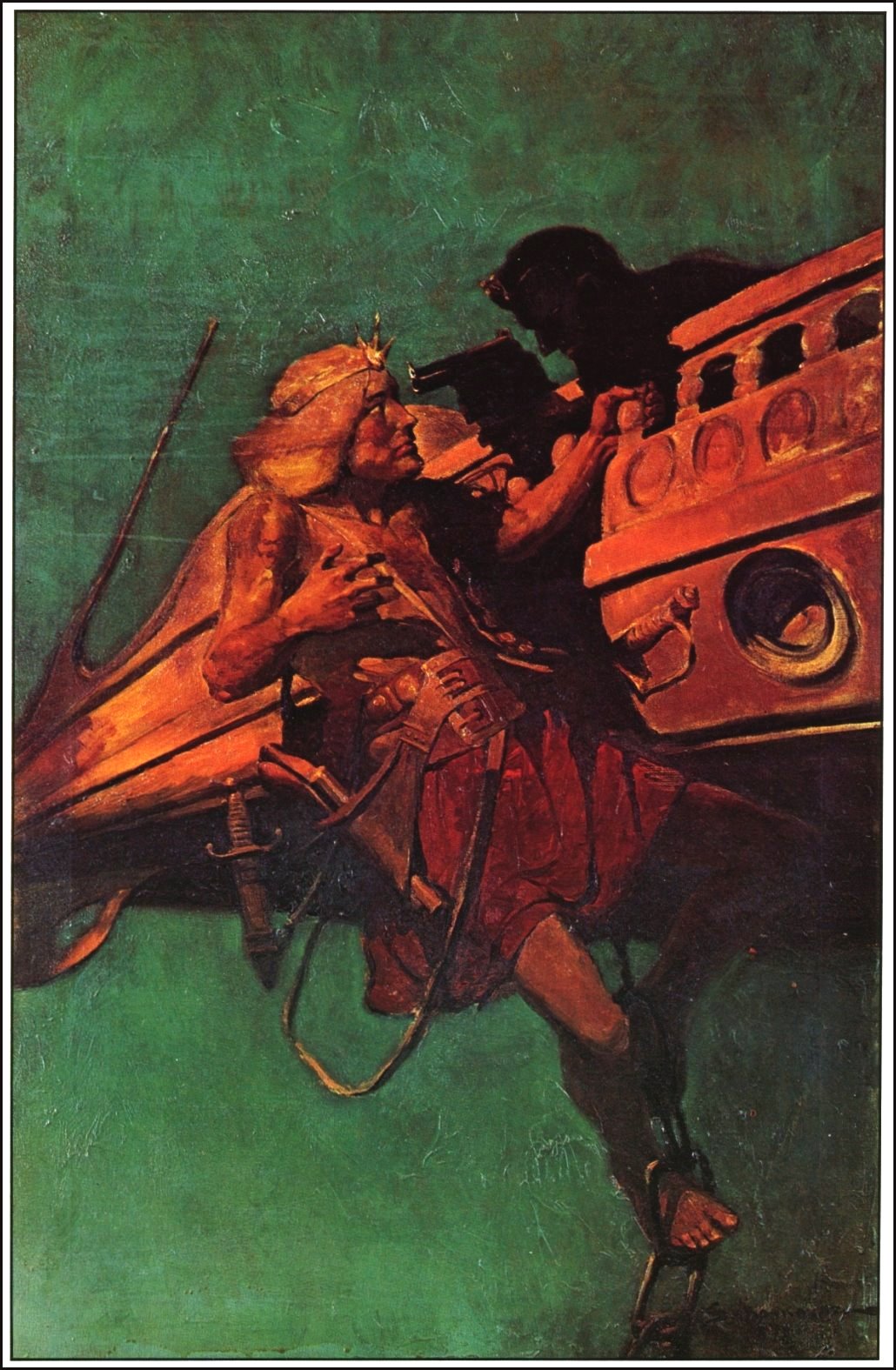
especially intrigued him was St. John's illustration facing page 56 of
the 1920 McClurg edition of Thuvia, Maid of Mars.
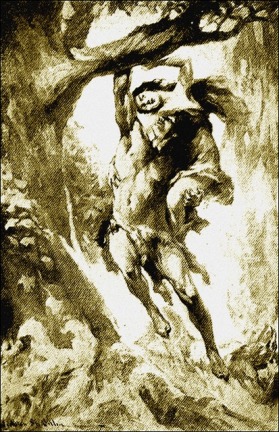
"With a savage cry of triumph, Thar Ban disappeared down the black
canyon of the Avenue of Quays." Dad so admired this illustration that
he was inspired to copy it for himself -- so he could have an original
of it hanging on his own wall!
By the time I actually
went to work for the family corporation, I was developing quite an
affection for St. John's art. It would have been impossible not to,
since I was surrounded by it daily. And, during forays into our files
to assist some of the various researchers who were writing about my
grandfather, I began to gain an interest in the letters between St.
John and Ed. It was wonderful to read just how enthusiastic Ed was
about St. John's illustrations and how much St. John enjoyed doing them
yet also to realize that my grandfather wasn't always so complimentary.
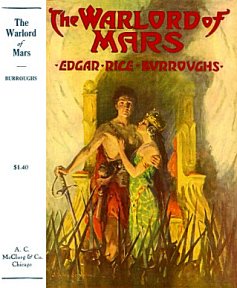
Ed disliked the face that St. John painted on John Carter for the dust jacket of The Warlord of Mars,
stating that he would like it to be repainted because he felt it too
effeminate! But his disagreements with what St. John did were few and
far between.
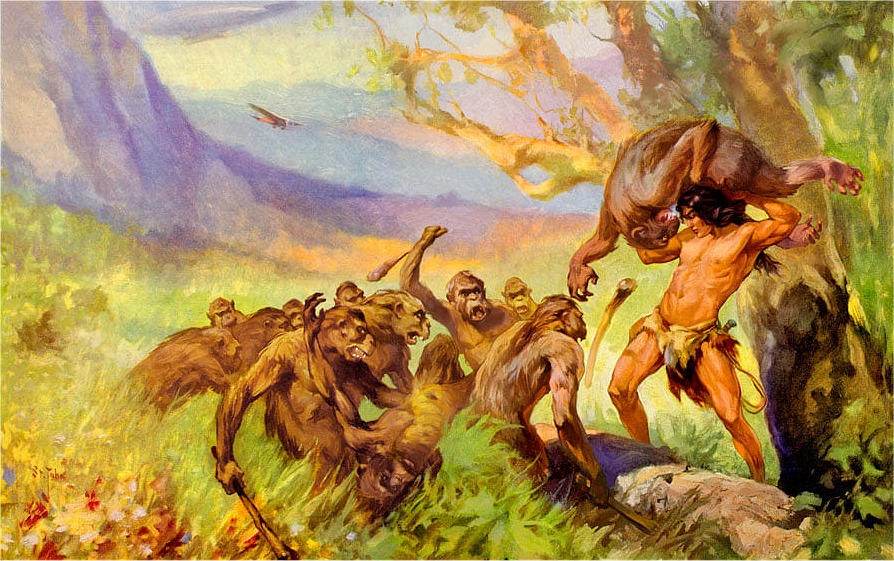
"I have intended writing
you after each new Tarzan book appeared, to tell you how much I liked
your work. I understand that it is quite the thing for authors to rear
up on their hind legs and tear their hair when they see how the
illustrations have mutilated their ideas and characters, but not being
a really literary person I am denied the emotions of the elect.
"I think you visualized
the characters and scenes precisely as I did. If I could do the sort of
work you do I would not change a line in any of the drawings. I think
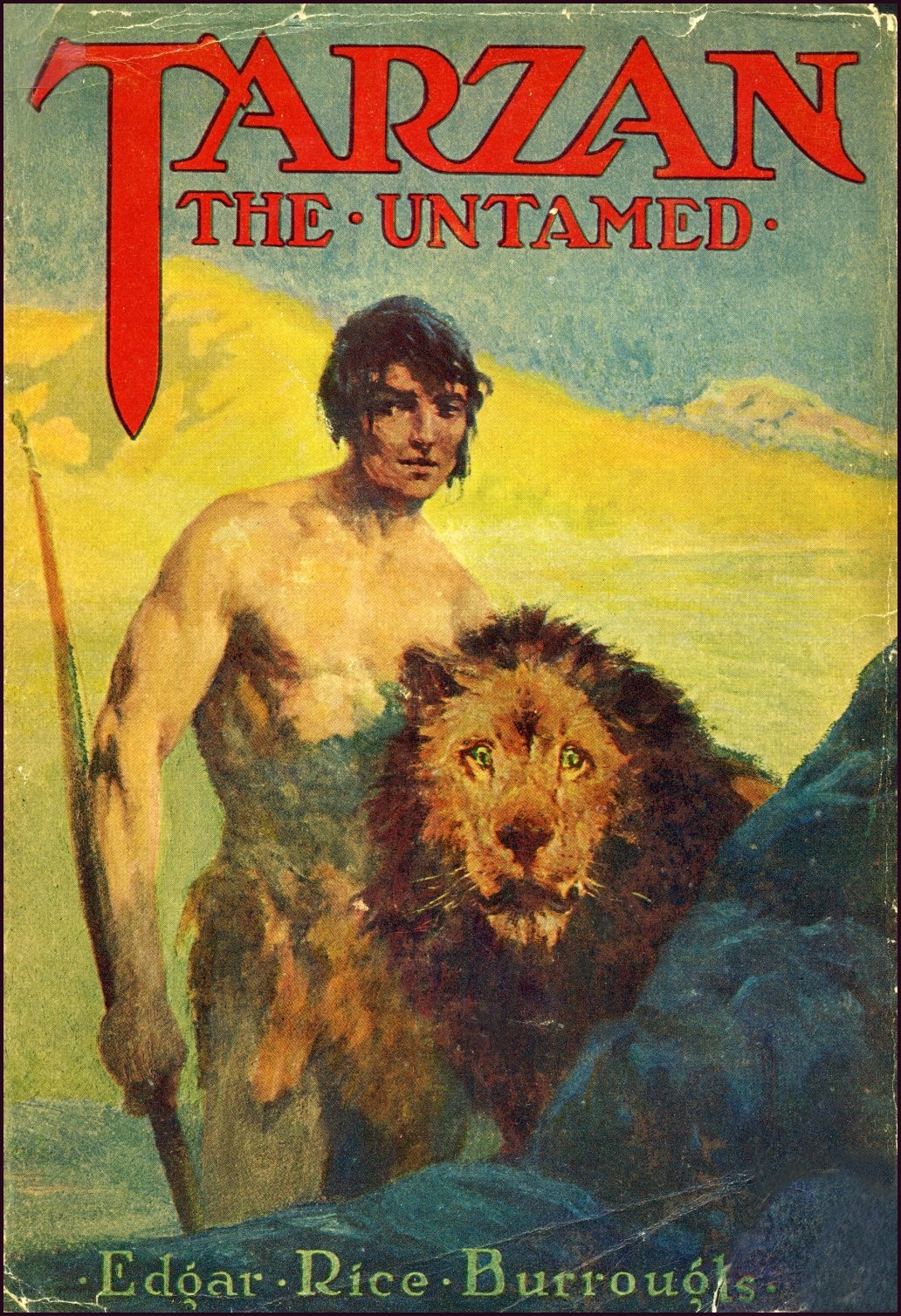
your work for Tarzan the Untamed
is the finest I have ever seen in any book. Each character reflects the
thought and interest and labor that were expended upon it, and so I
wish not only to congratulate you but to thank you for helping to make
a book which would sell on the strength of the illustrations alone,
regardless of the text."
EDGAR RICE BURROUGHS
May 18, 1920 letter from ERB to St. John
Disappointingly, after Ed
decided to leave A. C. McClurg and Company, who had published his
novels for fifteen years, and join with Metropolitan Books, his
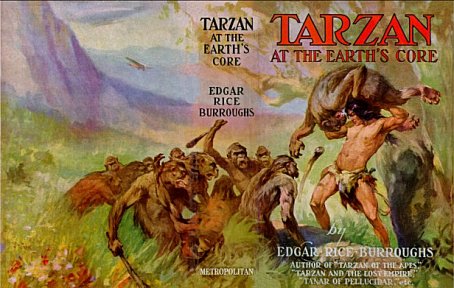
partnership with St. John was on the wane. St. John illustrated only
one of his books published by Metropolitan, Tarzan at the Earth's Core.
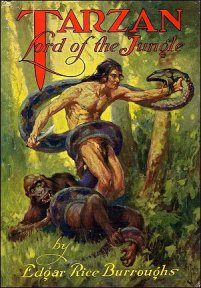
"The criticism that I have to offer is one that you
would have noted were you as familiar with the books as we are, that is
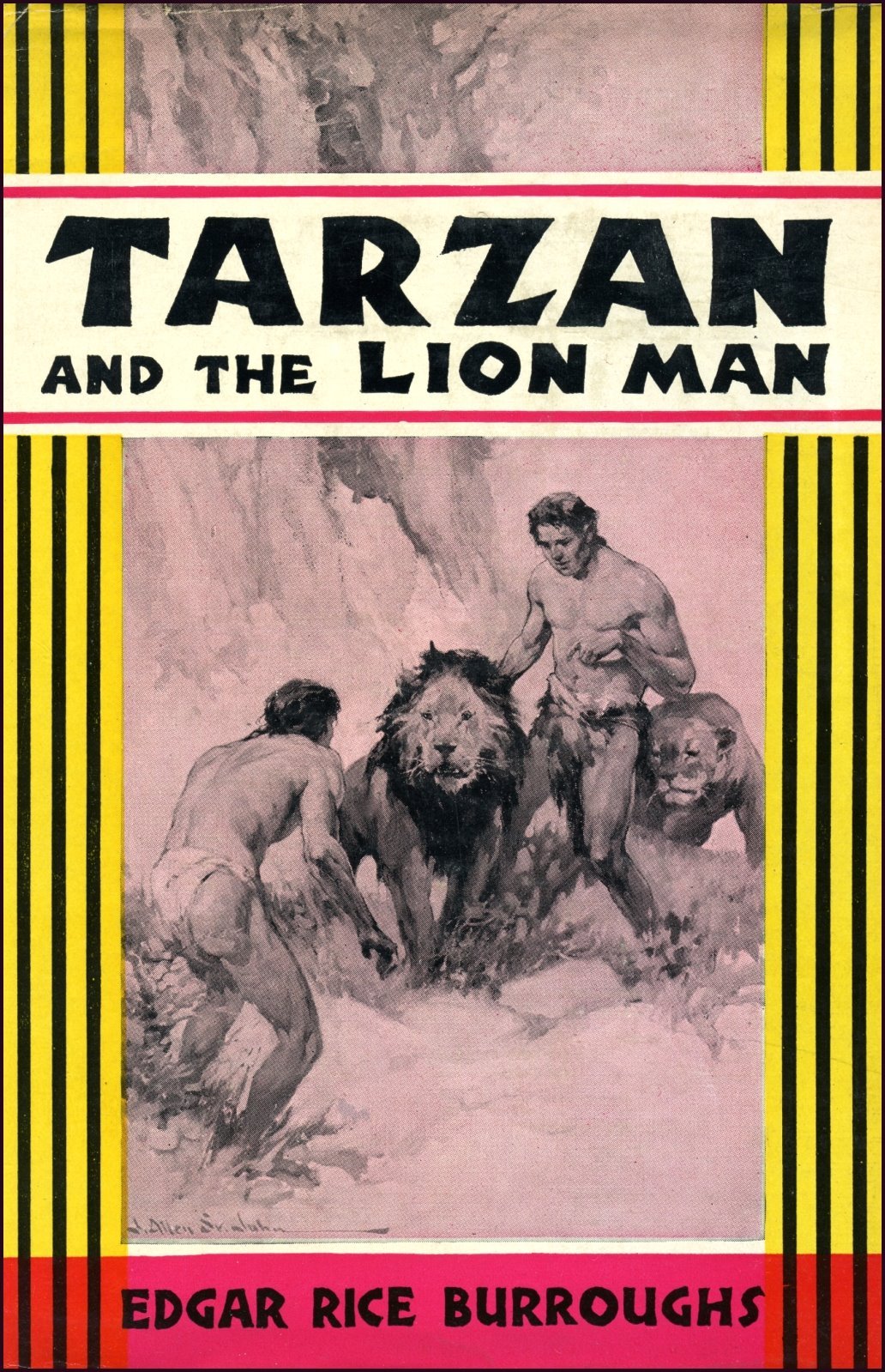
the similarity in appearance of this jacket and that of Tarzan, Lord of the Jungle,
a similarity which could have been obviated by changing the style and
color of the lettering." It should be noted that Metropolitan Books
asked Ed to forego his usual approval of art before publication because
of time constraints, stating that "unfortunately J. Allen St. John has
proved slow in getting out his work on the frontispiece and the jacket
for Tarzan at the Earth's Core."
One of the truly interesting things I discovered while going through some of our files was the sample for the John Carter of Mars
Sunday page that St. John drew for Randolph Hearst's King Features
syndicate. Unfortunately, this, the only known copy of the work, was
lost sometime during the production of the Edgar Rice Burroughs Library of Illustration
published by Russ Cochran. There is some indication that St. John had
trouble getting the original returned. It is conceivable that the
original could still be in Hearst's or King Features' possession.
However, there is enough
material in our correspondence files that one can get an idea of what
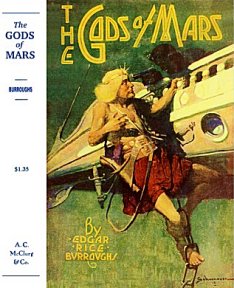
it may have been like. King Features sent St. John a portion of The Gods of Mars
and requested that St. John design a Sunday page around this excerpt,
using "word balloons" and coloring the original so they could get an
idea of what it would look like in color. When St. John sent Ed a
negative of his sample art, Ed's son Hulbert, had some positive prints
made and Ed made the following suggestion to St. John: "If King
Features decide to use this strip, I am going to suggest that they run
the descriptive matter below the pictures as is done with the Tarzan
strips, as I like the better than the balloons. I know that you agree
with me in this."