
Official Edgar Rice Burroughs Tribute and Weekly Webzine Site
Since 1996 ~ Over 15,000 Webpages in Archive
www.erbzine.com/swag/books2.html
ERB SWAG BAG
THE BOOK SHOP ~ Rm 2
Back to the Main Showroom
|
Nigel Cox |
  |
|
 . . 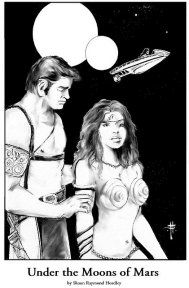 
"Film Tarzans Through the Years" ~ "Under the Moons of Mars" ~ Tarzan Portfolio (7 Prints) To view all 11 prints and full ordering information go to Shaun's ERBzine Webpage at ERBzine 0842: www.erbzine.com/mag8/0842.html |
|
A limited run of 100 copies published by Frank Puncer 
CONTENTS
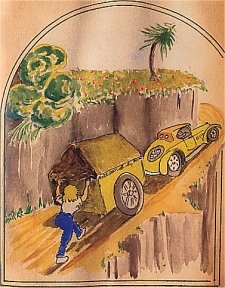
available from the publisher, Frank Puncer. $13.00 in person and $15.00 via first class mail - (cheques payable to Frank Puncer) Because of the very limited print run he will trade/sell one copy only to any one individual. The price reflects his exact costs. CONTACT
|

 |

Covering the Worlds of Edgar Rice Burroughs by Jeff Long and Chris Wright Covering the Writer Jeff Long and artist Chris Wright probe the fantastic worlds of the man who created John Carter of Mars and Tarzan of the Apes — from the perspective of that ancient tabloid newspaper, The Barsoomian Blade. With a dash of The Onion, and in the tradition of Tarzan Alive by Philip Jose Farmer, "Covering the Worlds of Edgar Rice Burroughs" mixes analysis with a fair amount of absurdity. That kind of scholarship can only come from a life-long love of the works penned by the Master of Adventure. Long and Wright dive headfirst into a universe where princesses are incomparably beautiful, villains are unquestionably evil, and heroes are indisputably noble. The reporters and editors in that reality are ... well ... like reporters and editors everywhere — constantly chasing a roaring good story. And Burroughs provided dozens, in far-flung locales ranging from the Red Planet, to the jungles of Africa and the core of the Earth. Preview Price: US$15.00 |
|
ECOF 2011 Guest David Fury and his Artist's Press have announced a Special Sale for Burroughs Bibliophiles members only. 40% off on "Johnny Weissmuller: Twice the Hero" ($21), "Maureen O'Sullivan: No Average Jane" ($15), and a whopping 50% off the Special Edition of "Johnny Weissmuller Twice the Hero" ($30). David also has 4 soft-cover copies only of "Kings of the Jungle" at $25 each (2 large print, 2 reg print). Book rate is $4 for one book, $2 each additional book. Mail address is: PO Box 4766, Irvine CA 92616. More info at: www.ArtistsPress.com Email: tarzan1904@aim.com |
|
.
|
by David Fury 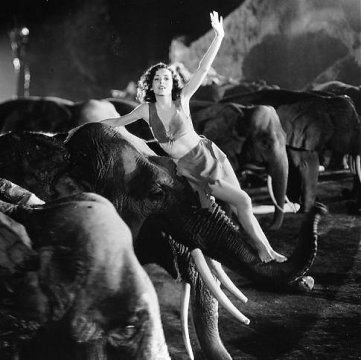 .
. David Fury |
|
 |
will not want to miss the latest edition of Farmerphile Of special interest to ERB fans are the articles: Essex House, Tarzan and Time's Last Gift by Bob Zeuschner and The Peerless Pastiche Farmer Does Doyle and Burroughs by Archimedes Q. Porter, Ph. D (aka Huck Huckenpohler) and I Still Live! 75th Ann. of Tarzan of the Apes Keynote Address by Philip Jose Farmer Complete ordering information for Farmerphile
may be found at:
|
|
Part 1 ~ Part 2 ~ Part 3 |
|
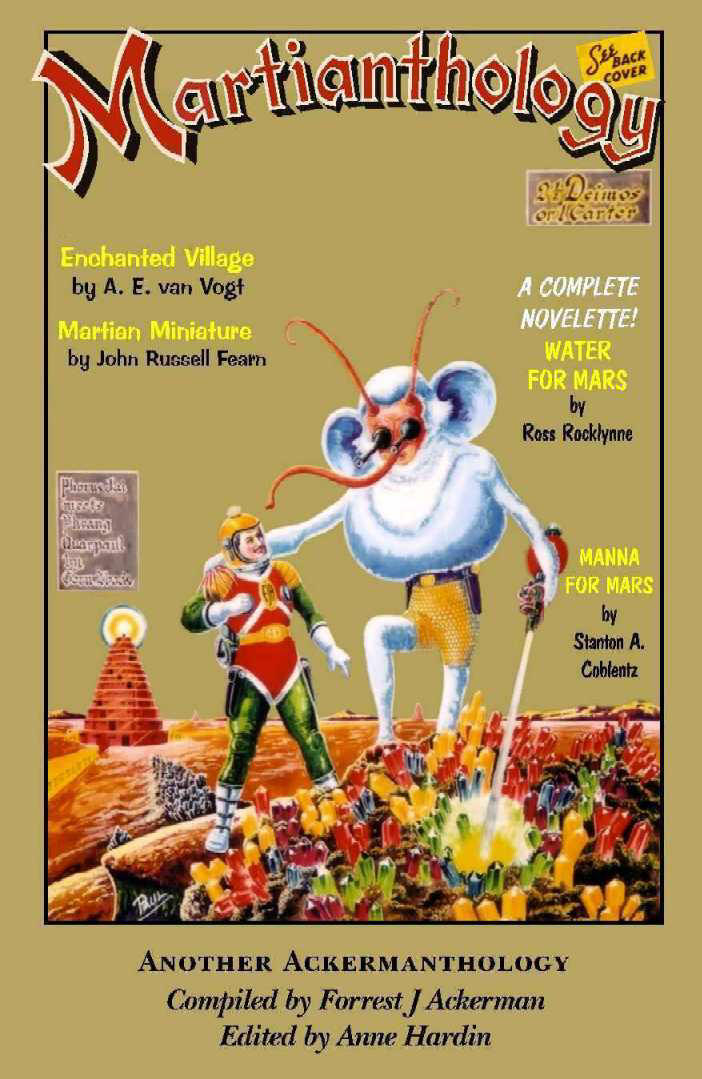
Martianthology |
|
|
THE DRAWINGS OF J. ALLEN ST. JOHN From Vanguard Productions!
|
|
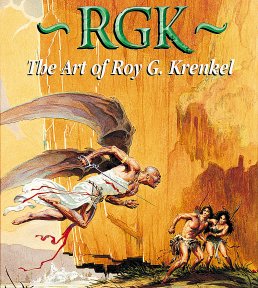
RGK: The Art of Roy G. Krenkel Commentary by Al Williamson Edited by J. David Spurlock & Barry Klugerman
|
|
|
will be limited to 550 individually numbered copies with quality hardcover binding and pictorial endpapers. Publication March 2005 £39.95 / US$69.95 ~ ISBN 0-9548277-2-4
|

www.denny-miller.com |
The New Autobiography by Denny Miller Now Available for $34.95 202 pages with over 100 pictures ISBN: 0-9753917-0-4 To Order:
|
 |
Gorton's Fisherman is offering a second Celebriduck Collectible http://www.gortons.com/promotions/celebriduck2/ |
 |
|
 |
 |
 |
 |
|
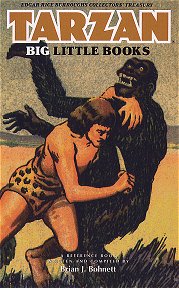
by Brian Bohnett CONTACT: Mad Kings Publishing 1909 Chestnut Street Holt, Michigan 48842 |
A Bio by Robert W. Fenton Foreword by G. T. McWhorter Reprint of The Big Swingers CONTACT: George T. McWhorter U. of Louisville Library, University of Louisville Louisville, KY 40292 |
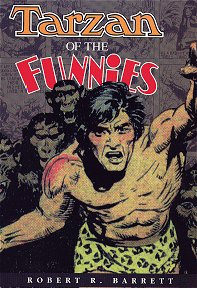
by Robert Barrett House of Greystoke CONTACT: George T. McWhorter U. of Louisville Library, University of Louisville Louisville, KY 40292 |
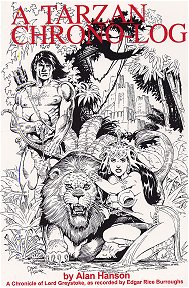
A Chronology -- Lord Greystoke by Alan Hanson Expanded and Updated Art by Dave Hoover WAZIRI PUBLICATIONS N. 12007 Atlantic Spokane, WA 99218 USA |
 ...... ......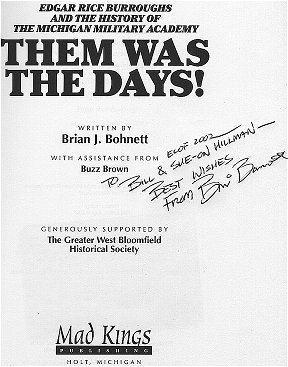
For Purchase Information Contact: MAD KINGS PUBLISHING 1909 Chestnut Street |

.NOTE: Tarzan
the Musical has ended its Broadway run ~ It is now opening worldwide.

Tarzan on Broadway Tarzan The Musical: Holland Tarzan the Musical: Hamburg Tarzan the Musical: Utah |

 |


The
Fantastic Worlds of Edgar Rice Burroughs
ERB
Companion Sites Created by Bill Hillman

tarzan.com |

tarzana.ca |

DantonBurroughs.com |

tarzan.org |

burroughsbibliophiles.com |

johncolemanburroughs.com |

tarzan.com/tarzine |
JohnCarterOf Mars.ca |

edgarriceburroughs |

Weekly Webzine |

Weekly Webzine |

pellucidar.org |





BILL
HILLMAN
Visit
our thousands of other sites at:
BILL
AND SUE-ON HILLMAN ECLECTIC STUDIO
ERB
Text, ERB Images and Tarzan® are ©Edgar Rice Burroughs, Inc.-
All Rights Reserved.
All
Original Work ©1996-2011/2019 by Bill Hillman and/or Contributing
Authors/Owners
No
part of this web site may be reproduced without permission from the respective
owners.






 Maureen
O’Sullivan: No Average Jane (Artist’s Press 2006, 450 pages, 100+ photos,
$40)
Maureen
O’Sullivan: No Average Jane (Artist’s Press 2006, 450 pages, 100+ photos,
$40)
 “Farmer
goes one step further than mere literary fun. He takes engaging advantage
of the reader’s inherent susceptibility to myth.”—Publisher's Weekly. “Tarzan
is seen as a 20th-century heroic figure having much in common with the
mythical demigods of an earlier day, and this book will not fail to please
and enthrall his many followers.”—Library Journal.
“Farmer
goes one step further than mere literary fun. He takes engaging advantage
of the reader’s inherent susceptibility to myth.”—Publisher's Weekly. “Tarzan
is seen as a 20th-century heroic figure having much in common with the
mythical demigods of an earlier day, and this book will not fail to please
and enthrall his many followers.”—Library Journal.
 $4.95 from

 Price:
34.95 (DX $49.95)
Price:
34.95 (DX $49.95)
 Pearls
from Peoria assembles over sixty previously uncollected pieces of fiction,
faction, poetry and autobiography that demonstrate the extraordinary range
and vitality of Philip Jose Farmer’s imagination.
Pearls
from Peoria assembles over sixty previously uncollected pieces of fiction,
faction, poetry and autobiography that demonstrate the extraordinary range
and vitality of Philip Jose Farmer’s imagination.
 A
"must" for collectors and booksellers, the new EDGAR RICE BURROUGHS
- Bibliography of Grosset and Dunlap editions 1918-1941 is the
first fully-documented bibliography of the G&D reprints that flooded
a thirsty market in the years between world wars.
A
"must" for collectors and booksellers, the new EDGAR RICE BURROUGHS
- Bibliography of Grosset and Dunlap editions 1918-1941 is the
first fully-documented bibliography of the G&D reprints that flooded
a thirsty market in the years between world wars.
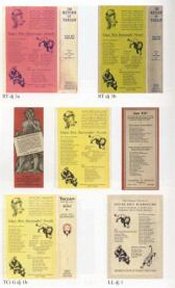 There's
never been a Burroughs book devoted exclusively to the G&D's, but they
sold more books than any of ERB's other publishers, including himself.
To the millions of us who have read and loved those uniform-sized editions
with the incredible illustrations and dust jackets this is a chance to
re-visit those books. For the collector it's a chance to put their books
in proper publishing sequence for the first time. For the bookseller it's
a chance to identify your Burroughs reprints and provide a reference source.
Years in the making, this book is available here for the first time. Limited
to 350 copies, 250 currently available for sale.
There's
never been a Burroughs book devoted exclusively to the G&D's, but they
sold more books than any of ERB's other publishers, including himself.
To the millions of us who have read and loved those uniform-sized editions
with the incredible illustrations and dust jackets this is a chance to
re-visit those books. For the collector it's a chance to put their books
in proper publishing sequence for the first time. For the bookseller it's
a chance to identify your Burroughs reprints and provide a reference source.
Years in the making, this book is available here for the first time. Limited
to 350 copies, 250 currently available for sale.