First and Only Weekly Webzine Devoted to the Life and Works of Edgar Rice Burroughs Since 1996 ~ Over 15,000 Webpages and Webzines in Archive |
|
First and Only Weekly Webzine Devoted to the Life and Works of Edgar Rice Burroughs Since 1996 ~ Over 15,000 Webpages and Webzines in Archive |

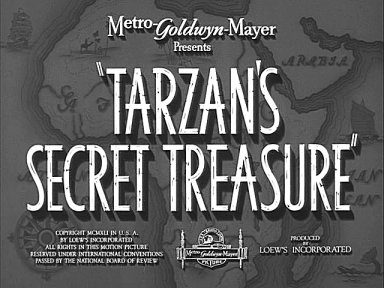
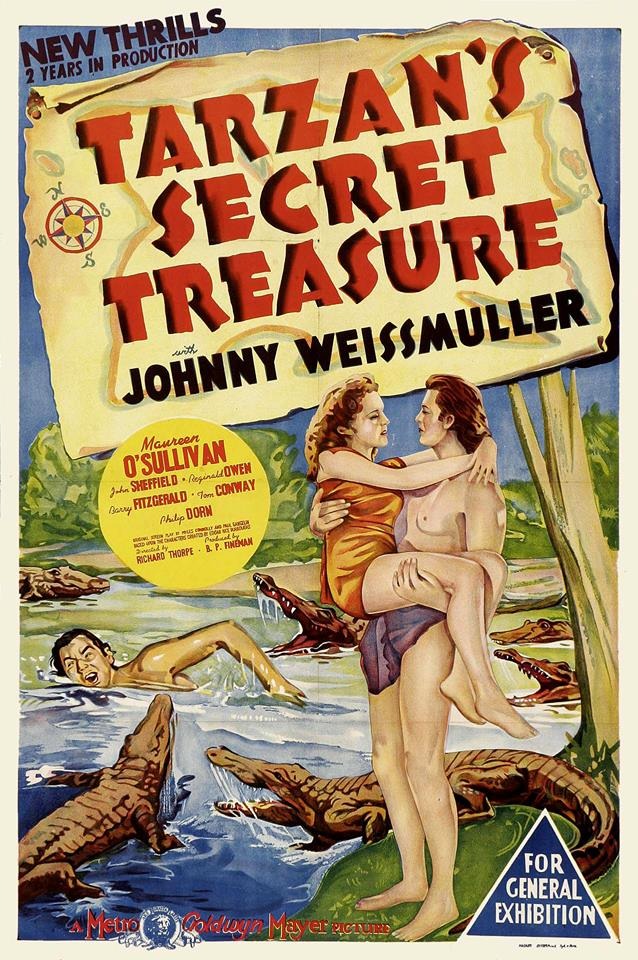
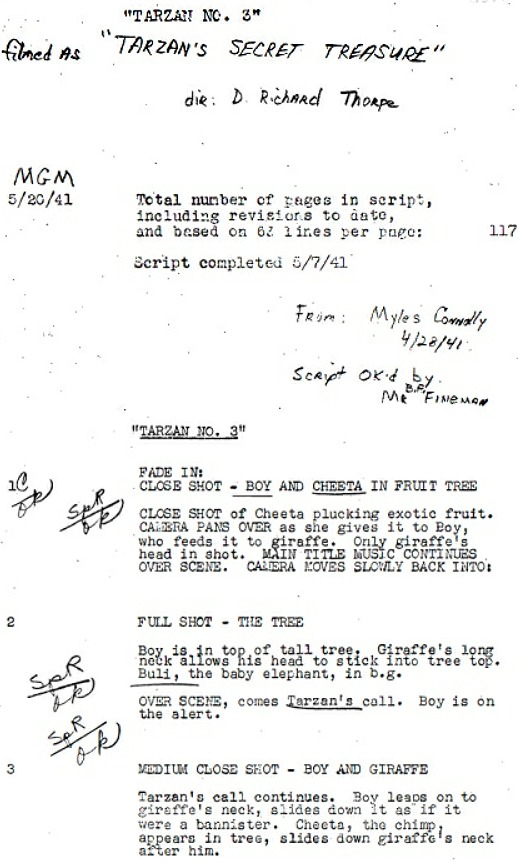
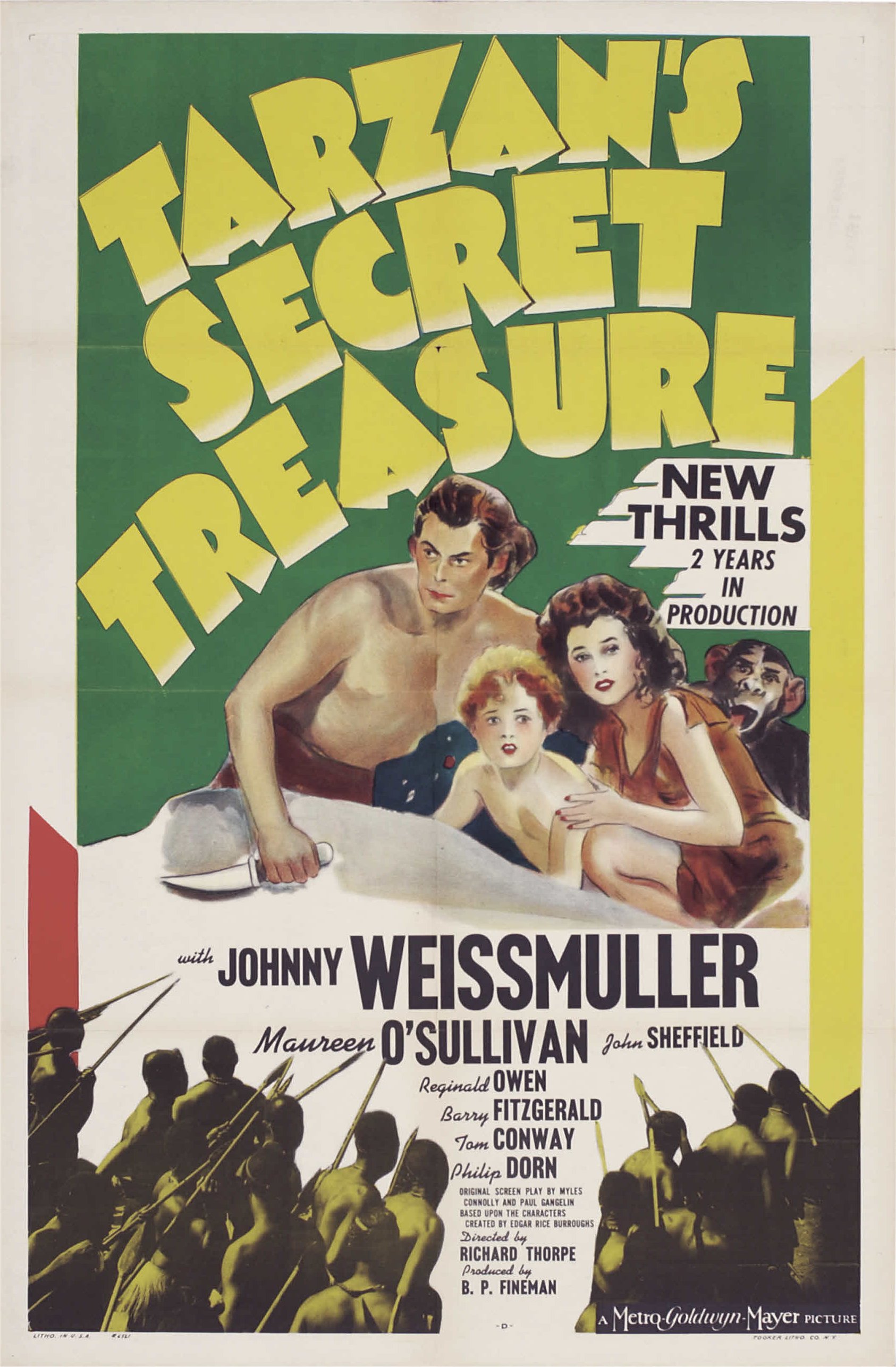
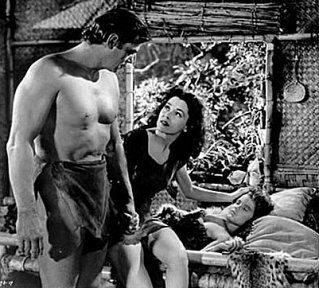
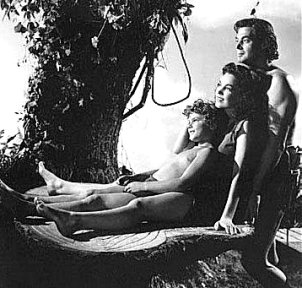
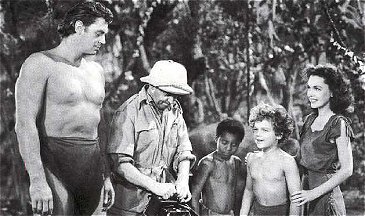
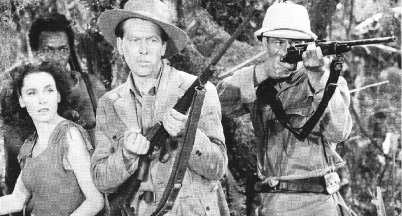
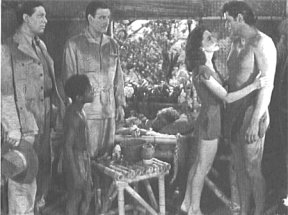
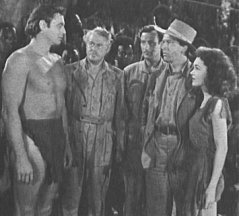
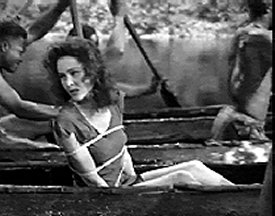
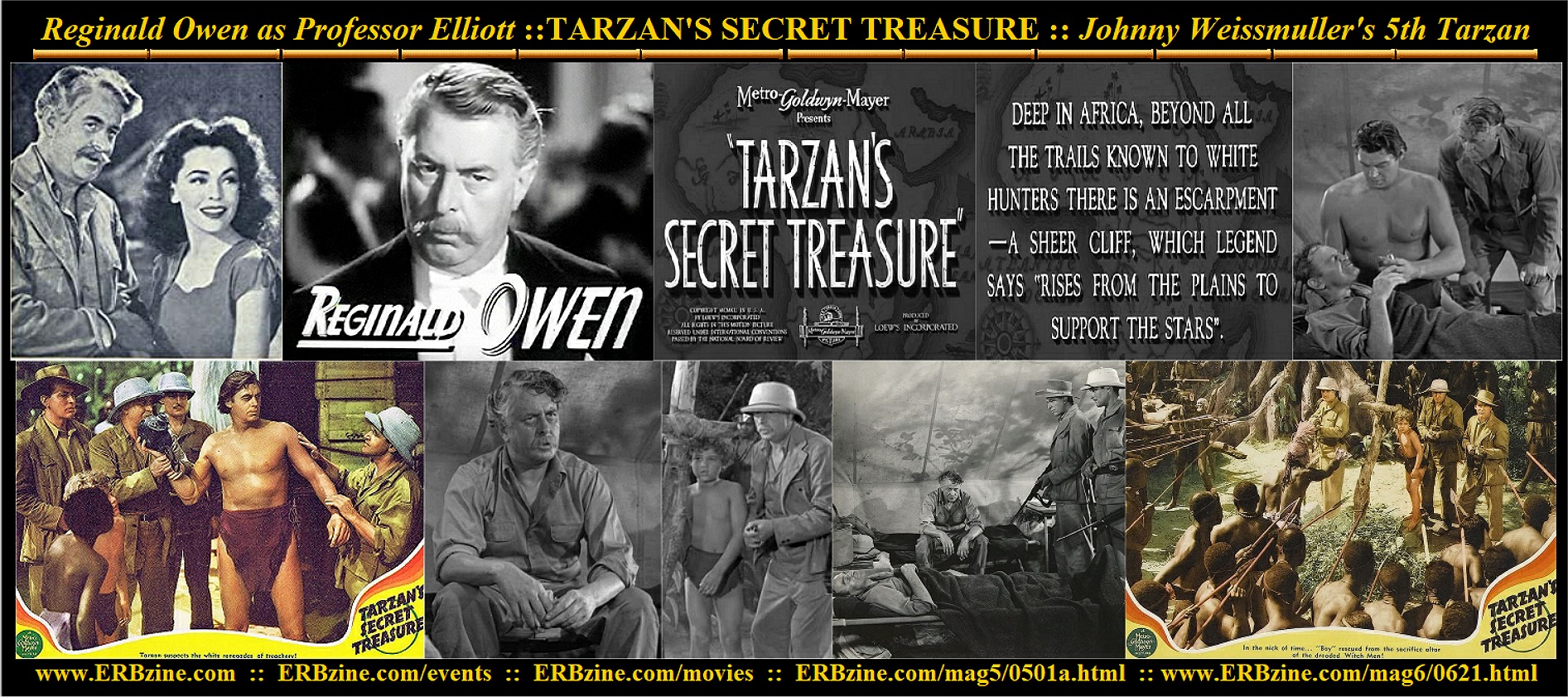
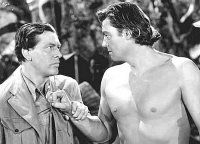
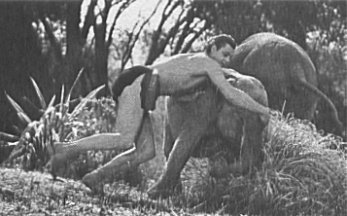
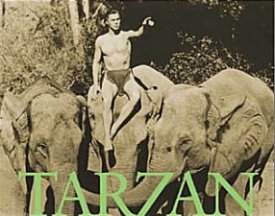
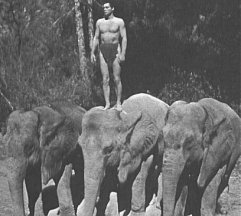
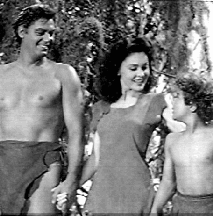
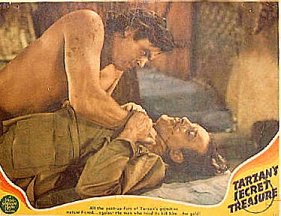
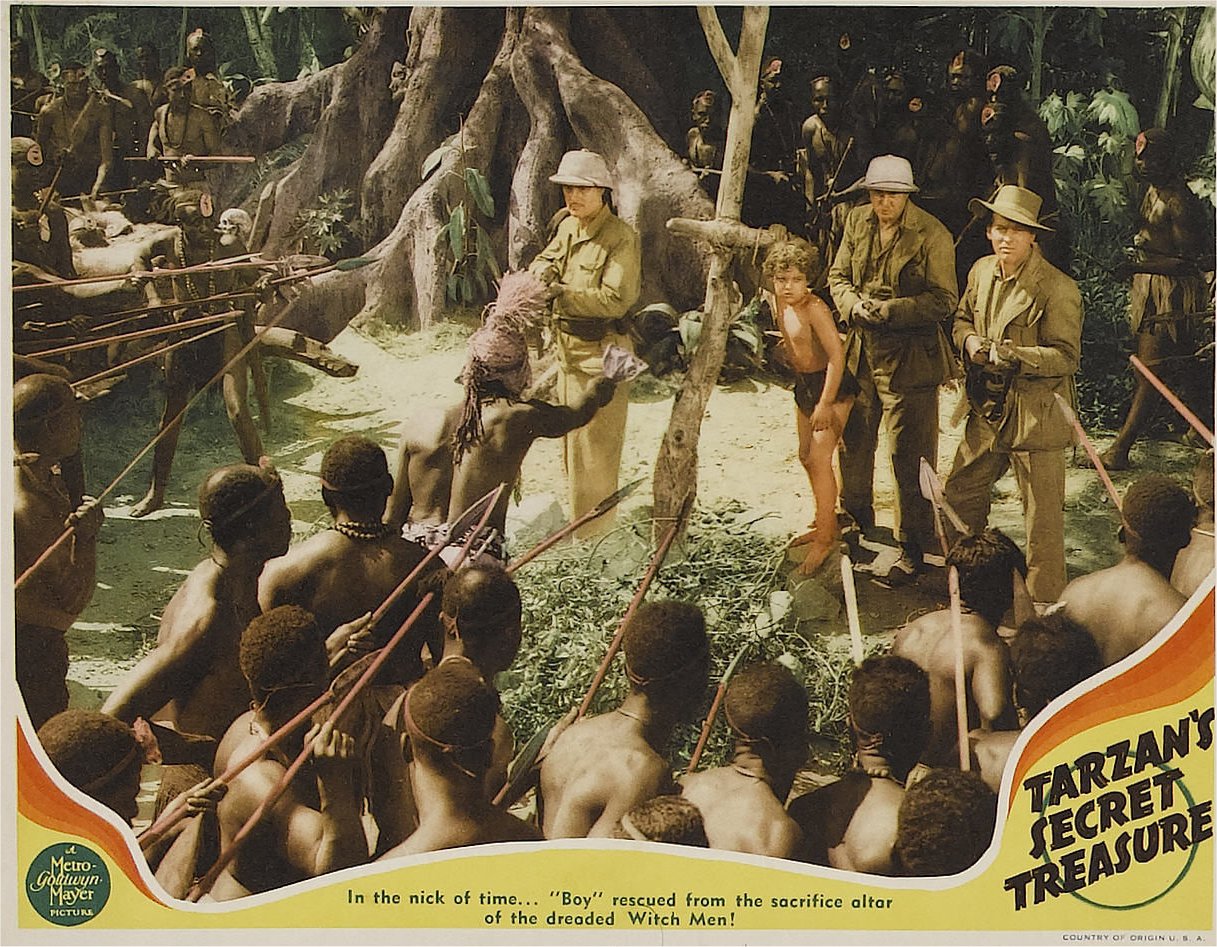
Tarzan's adopted son, Boy (Johnny Sheffield), finds gold while swimming in a river and when Jane (Maureen O'Sullivan) tells him of all the things this could buy him in civilization, he goes off exploring the world. He is captured by the Ubardis after rescuing a child belonging to their tribe. The natives are about to sacrifice Boy to ward off a plague, when he is rescued by a scientific safari led by Professor Elliot (Reginald Owen) and Tarzan (Johnny Weissmuller). Greedy safari members, Medford (Tom Conway) and Vandemeer (Philip Dorn) learn from Boy that there is gold on Tarzan's escarpment. They allow the good Professor Elliot to die from fever and then kidnap Jane and Boy to force them to lead them to the gold. On their way to the "mountain of gold" they are captured by the Joconis who torture the porters to death and take the whites along the river to their village. Tarzan who has been aided by the safari's good cameraman, O'Doul (Barry Fitzgerald), follows then down the river and enlists the aid of elephants and cooperative crododiles in capsizing the native canoes. Jane and Boy are rescued, Medford and Vandermeer are killed, and O'Doul is rewarded with a melon-full of gold nuggets.
| Director: Richard Thorpe
Producer: B.P. Fineman Writers: Edgar Rice Burroughs (characters) ~ Myles Connolly & Paul Gangelin (screenplay) CAST
Original Music by David Snell
|
Special Effects by Warren Newcombe
Black and White (Sepiatone - blue tone) ~ 81m ~ 8 reels ~ 35mm negative and print ~ Spherical ~ Aspect Ratio 1.37 : 1 Film Editing by Gene Ruggiero Art Direction by Cedric Gibbons ~ Howard Campbell (associate art director) Set Decoration by Edwin B. Willis Production Management: Art Smith Assistant Director: Gilbert Kurland Joseph M. Newman: second unit director Recording Director: Douglas Shearer Photographic Effects by Lloyd Knechtel Florida Director of Photography: Lloyd Knechtel Florida Camera Operator: Al Lane Production Companies: Loew's Inc. ~ Metro-Goldwyn-Mayer (MGM) Distributors: Loew's Inc. ~ Metro-Goldwyn-Mayer (MGM) Production Dates: 10 July 1941 - 16 August 1941; additional scenes September 1941 and 22 September 1941 - 8 October 1941 Release Dates: USA December 1, 1941 ~ New York City December 24, 1941 ~ Canada (Toronto) June 30, 1942 Copyright Holder Loew's, Inc.; 12 November 1941; LP10872 |
|
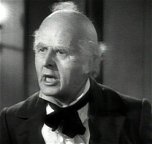 Reginald
Owen: Born August 5, 1887 at Wheathampstead, Hertfordshire, England
and died of a heart attack on November 5, 1972 in Boise, Idaho. He was
probably Hollywood's busiest character actor - making more than 80 films.
He was educated in England at Sir Herbert Tree's Academy of Dramatic Arts.
Owen excelled and made his professional debut also in England at the age
of 18. He came to New York in the early 1920s and started working on Broadway
by 1924. He left New York in 1928 and moved to Hollywood, hoping to make
it in films. In 1929, he landed his first role in The Letter. In 1932 he
played Dr. Watson in Sherlock Holmes.
Reginald
Owen: Born August 5, 1887 at Wheathampstead, Hertfordshire, England
and died of a heart attack on November 5, 1972 in Boise, Idaho. He was
probably Hollywood's busiest character actor - making more than 80 films.
He was educated in England at Sir Herbert Tree's Academy of Dramatic Arts.
Owen excelled and made his professional debut also in England at the age
of 18. He came to New York in the early 1920s and started working on Broadway
by 1924. He left New York in 1928 and moved to Hollywood, hoping to make
it in films. In 1929, he landed his first role in The Letter. In 1932 he
played Dr. Watson in Sherlock Holmes.
Although, he didn't get many leading roles, he did get to work with some of Hollywood's most beautiful leading ladies like, Jean Harlow, Joan Crawford, Jeanette MacDonald (Owen's personal favorite), Barbara Stanwyck and Elizabeth Taylor. Owen continued to work into his 70s and 80s making family classics.
Parial Filmography: Robbers' Roost (1932) ~ Sherlock Holmes (1932) ~ Study in Scarlet (1933) ~ Of Human Bondage (1934) ~ Anna Karenina (1935) ~ Call of the Wild (1935) ~ Great Ziegfeld (1936) ~ Rose-Marie (1936) ~ A Tale of Two Cities (1935) ~ A Christmas Carol (1938) ~ Charley's Aunt (1941) ~ A Yank in the RAF (1941) ~ Mrs. Miniver (1942) ~.Woman of the Year (1942) ~ Random Harvest (1942) ~ White Cargo (1942) ~ Madame Curie (1943) ~ National Velvet (1944) ~ Canterville Ghost (1944) ~ Kitty (1945) ~ Imperfect Lady (1947) ~ Three Musketeers (1948) ~ Kim (1950) ~ Tammy and the Doctor (1963) .... Jason Tripp ~ Five Weeks in a Balloon (1962) ~ Mary Poppins (1969)~ Bedknobs and Broomsticks (1971)
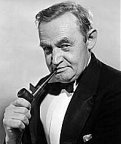 Barry
Fitzgerald: Born William Joseph Shields on March 10, 1888 in Dublin
Ireland and died of a heart attack on January 14, 1961 in Dublin, Ireland.
He was educated to enter the banking business but was bitten by the acting
bug in the 1920s and joined Dublin's world famous Abbey Players and went
on to star in the Abbey Theatre Production of Sean O'Casey's Juno
And The Paycock - a role that he re-created in his film debut for
director Alfred Hitchcock in 1930. Known for his connections to famous
Irish authors, Fitzgerald was brought by John Ford to Hollywood to reprise
in film a role he had played on stage in Ireland, The Plough and
the Stars (1936), written by Sean O'Casey, a onetime roommate.
Barry
Fitzgerald: Born William Joseph Shields on March 10, 1888 in Dublin
Ireland and died of a heart attack on January 14, 1961 in Dublin, Ireland.
He was educated to enter the banking business but was bitten by the acting
bug in the 1920s and joined Dublin's world famous Abbey Players and went
on to star in the Abbey Theatre Production of Sean O'Casey's Juno
And The Paycock - a role that he re-created in his film debut for
director Alfred Hitchcock in 1930. Known for his connections to famous
Irish authors, Fitzgerald was brought by John Ford to Hollywood to reprise
in film a role he had played on stage in Ireland, The Plough and
the Stars (1936), written by Sean O'Casey, a onetime roommate.
He took up residence in Hollywood and went on to give outstanding performances in major films He won the Academy Award For Best Supporting Actor in 1944 for his portrayal of gruff, aging Father Fitzgibbon in Going My Way. In an Academy first, he was also nominated for the Best Actor Award for the same role, the only actor to ever be so honored.
Filmography Highlights: Bringing Up Baby (1938)
~ Dawn Patrol (1938) ~ The Long Voyage Home (1940) ~ How Green Was My Valley
(1941) ~ None But The Lonely Heart (1944) ~ Going My Way (1944) ~ Duffy's
Tavern (1945) ~ And Then There Were None (1945) ~ Two Years Before The
Mast (1946) ~ The Quiet Man (1952).
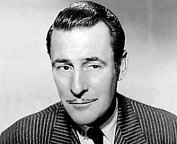 Tom
Conway: Born Thomas Charles Sanders on September 15, 1904 in St. Petersburg,
Russia and died of a liver ailment on April 22, 1967 in Culver City, Los
Angeles, California. Tom Conway and brother George Sanders were born to
a wealthy family in pre-Bolshevik Revolution Russia, He might have followed
his father's occuaption as a rope manufacturer and inherited several estates
but for the Revolution. Tom (age 13) and George (age 11), together with
their parents and sister Margaret (age 5) emigrated to England, leaving
most of their wealth in the hands of the Bolsheviks. The brothers attended
Dunhurst and Bedales, public schools, and eventually Brighton College.
After college, Tom went to Northern Rhodesia where he worked in gold, copper
and asbestos mines and even attempted ranching. Frustrated by his lack
of success he borrowed passage home. In England, Conway worked as an engineer
in a carburator company and later sold safety glass. He was discovered
by a representative from a little theatre group who persuaded him to join
them. Conway eventually worked for the Manchester Repertory Company and
toured with them in twenty-five or thirty plays. He also appeared in BBC
radio broadcasts. Brother George persuaded him to go to Hollywood. To prevent
confusion on the part of the public, they tossed a coin to see who would
have to change his name. Conway began work for MGM, eventually appearing
as a contract player in twelve films there, including a bit part in "Mrs.
Minniver".
Tom
Conway: Born Thomas Charles Sanders on September 15, 1904 in St. Petersburg,
Russia and died of a liver ailment on April 22, 1967 in Culver City, Los
Angeles, California. Tom Conway and brother George Sanders were born to
a wealthy family in pre-Bolshevik Revolution Russia, He might have followed
his father's occuaption as a rope manufacturer and inherited several estates
but for the Revolution. Tom (age 13) and George (age 11), together with
their parents and sister Margaret (age 5) emigrated to England, leaving
most of their wealth in the hands of the Bolsheviks. The brothers attended
Dunhurst and Bedales, public schools, and eventually Brighton College.
After college, Tom went to Northern Rhodesia where he worked in gold, copper
and asbestos mines and even attempted ranching. Frustrated by his lack
of success he borrowed passage home. In England, Conway worked as an engineer
in a carburator company and later sold safety glass. He was discovered
by a representative from a little theatre group who persuaded him to join
them. Conway eventually worked for the Manchester Repertory Company and
toured with them in twenty-five or thirty plays. He also appeared in BBC
radio broadcasts. Brother George persuaded him to go to Hollywood. To prevent
confusion on the part of the public, they tossed a coin to see who would
have to change his name. Conway began work for MGM, eventually appearing
as a contract player in twelve films there, including a bit part in "Mrs.
Minniver".
Brother George, tiring of RKO's Falcon series, offered Tom his first big break as his replacement in "The Falcon's Brother" (1942), he first of ten films he did in the series. He had a multitude of other roles (comedy, adventure, mysteries, horror, musicals, two Tarzan films, SF) but with the collapse of the studio system the calibre and number of film roles started to shrink in the '50s. He turned to television and had many guest roles in shows such as Detective Mark Saber, Rawhide, Adventures in Paradise, Perry Mason, Alfred Hitchcock Presents, the Betty Hutton Show, etc. Failing eyesight and prolonged bouts with alcohol took their toll on Tom Conway in his last years. His second wife, Queenie Leonard divorced him in 1963 and his brother broke off all contact with him over his drinking. In 1965 he was discovered living in a $2-a-day flophouse in a Venice. Conway stood tall, trim, and white haired to the end. His last years were marked with many hospital visits including an operation for caaracts. Former sister-in-law Zsa Zsa Gabor visited his hospital room one day and gave him $200. He died the next day. (Ref. IMDB)
Filmography Highlights: Lady Be Good (1941) ~ People vs. Dr. Kildare (1941) ~ Falcon's Brother (first of many in the series) (1942) ~ Mrs. Miniver (1942) ~ Rio Rita (1942) ~ Mr. and Mrs. North (1942) ~ The Challenge (Bulldog Drummond) (1948) ~ Tarzan and the She-Devil (1953)
Filmography Highlights in Hollywood: Enemy Agent (1940) ~ Ziegfeld Girl (1941) ~ Random Harvest (1942) ~ Calling Dr. Gillespie (1942) ~ Passage to Marseille (1944) ~ I've Always Loved You (1946) in which a future Jane, Vanessa Brown, appeared. ~ I Remember Mama (1948).~ Fighting Kentuckian (1949) ~ Sealed Cargo (1951)
|
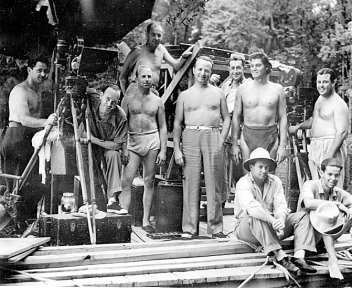
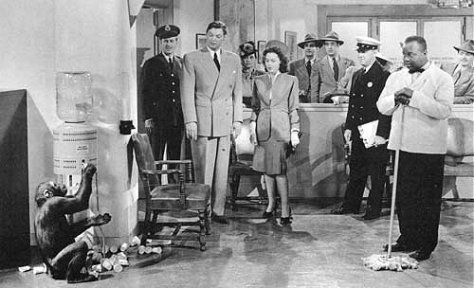
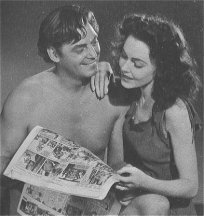
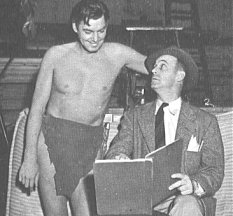
POSTER GALLERY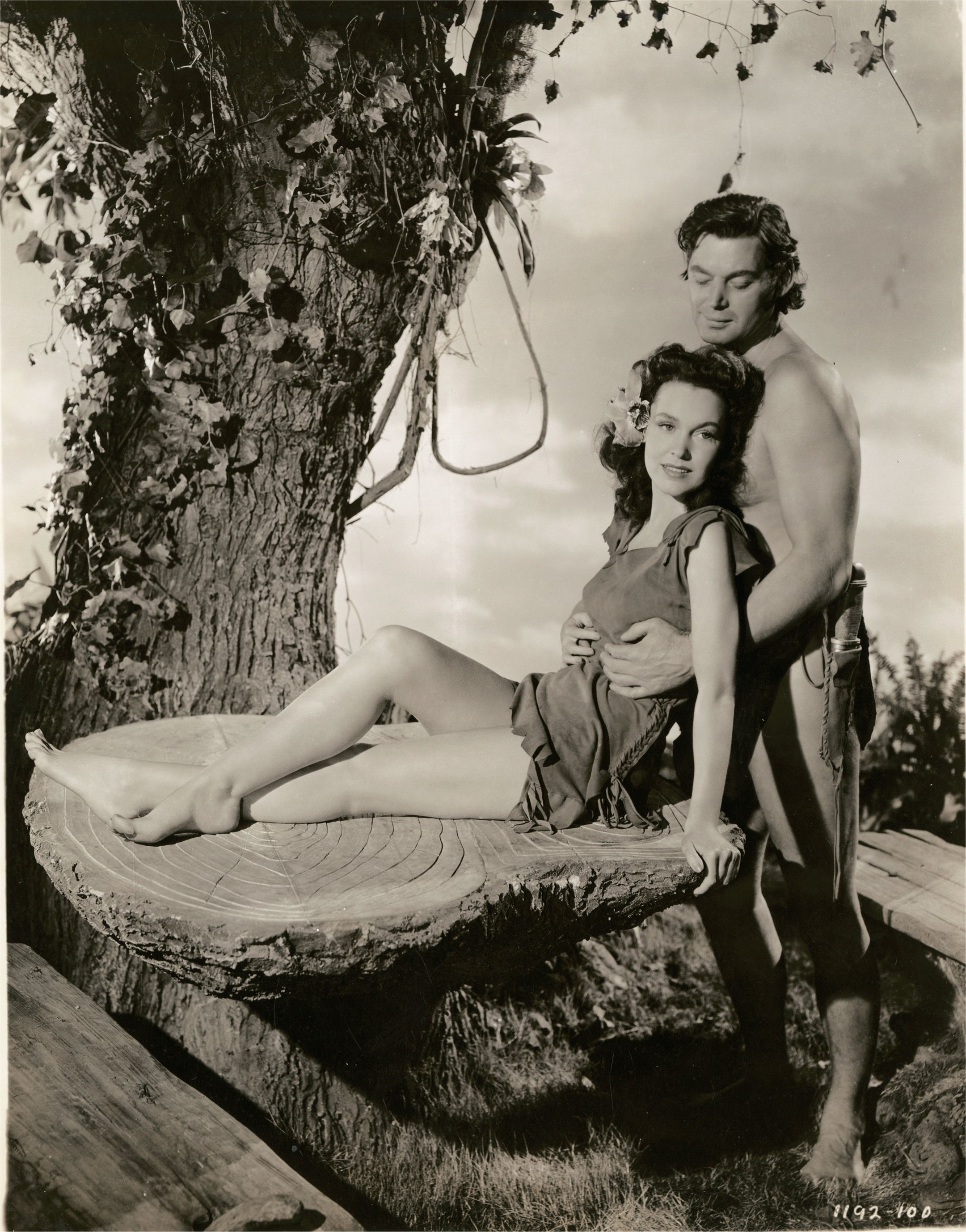
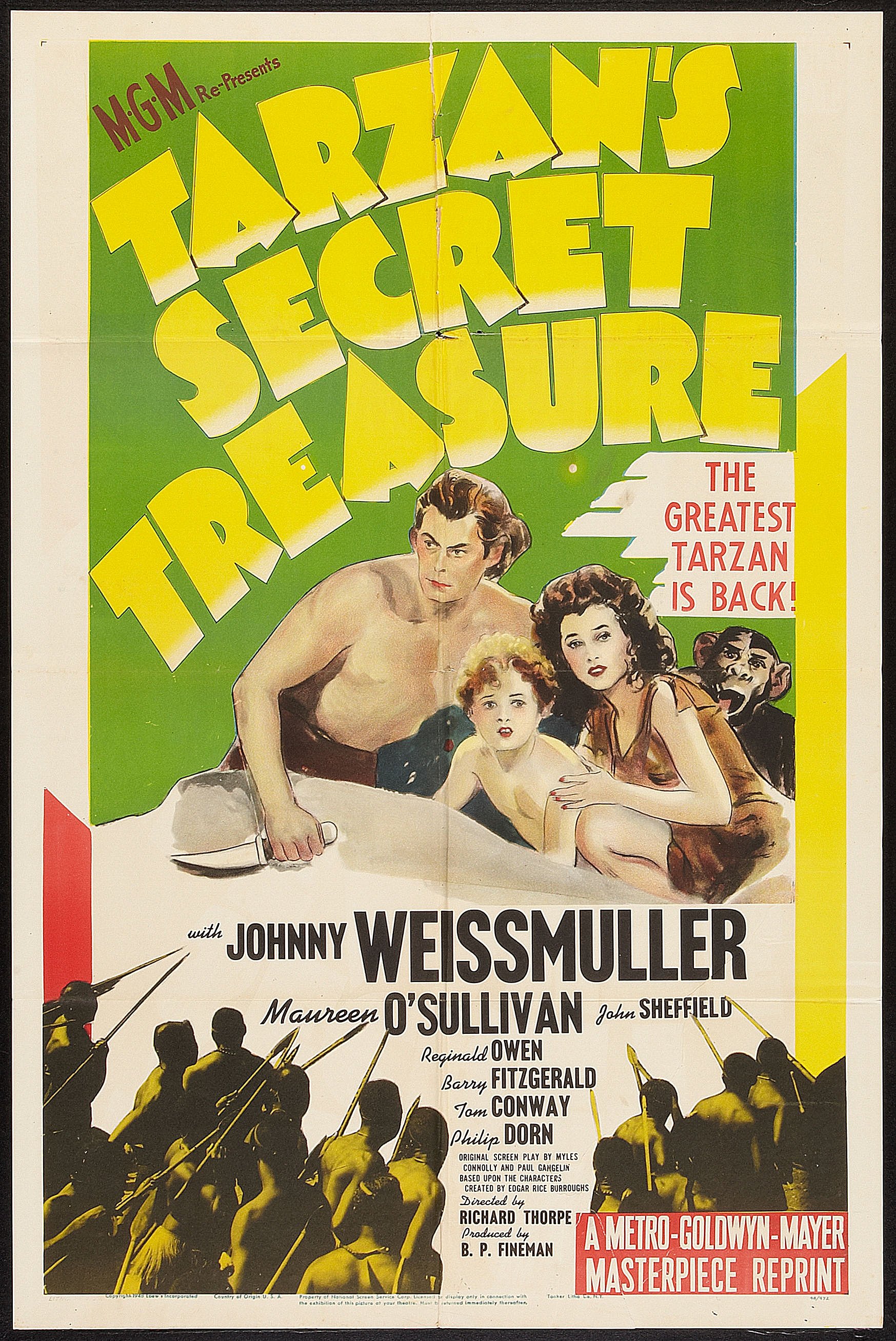
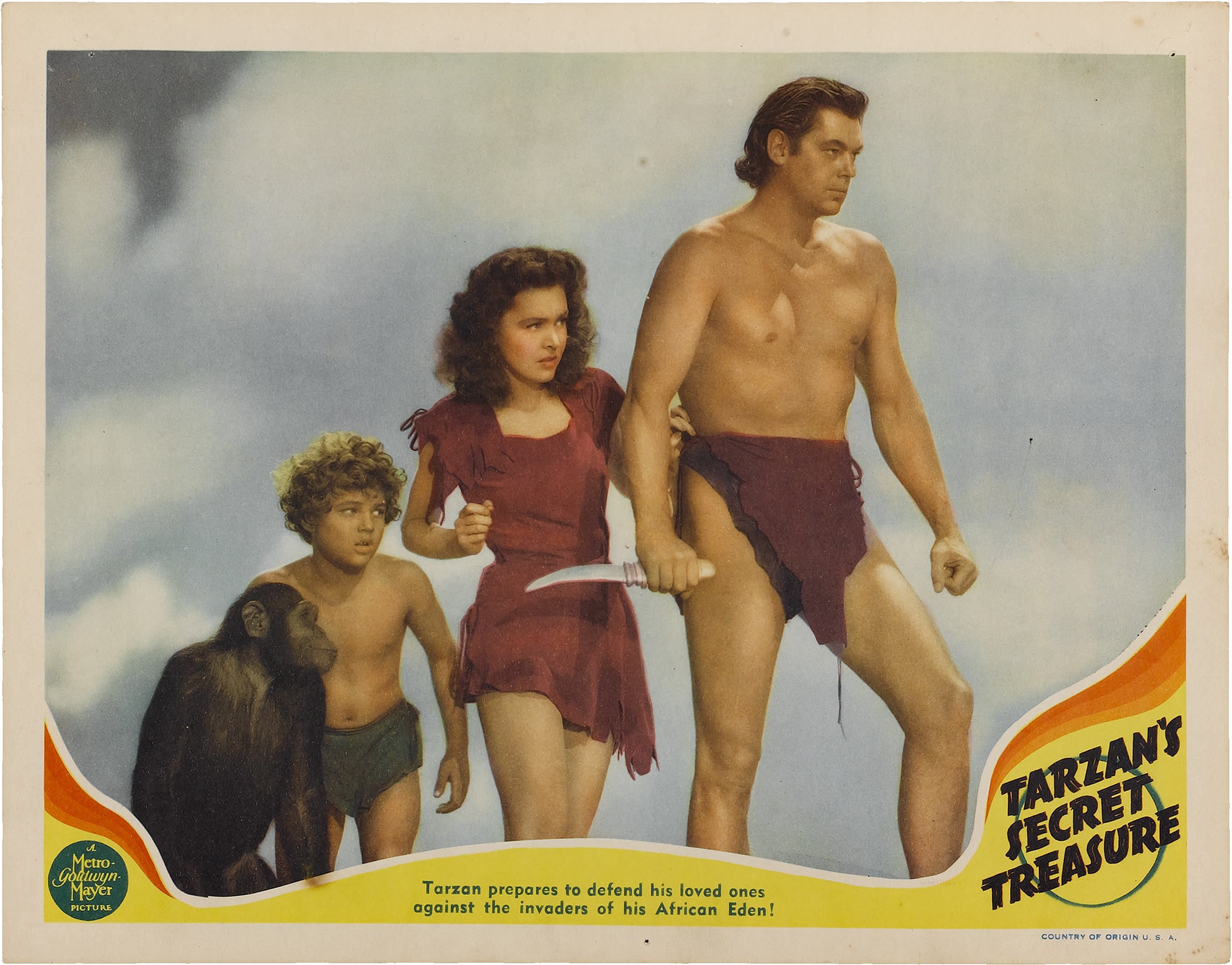
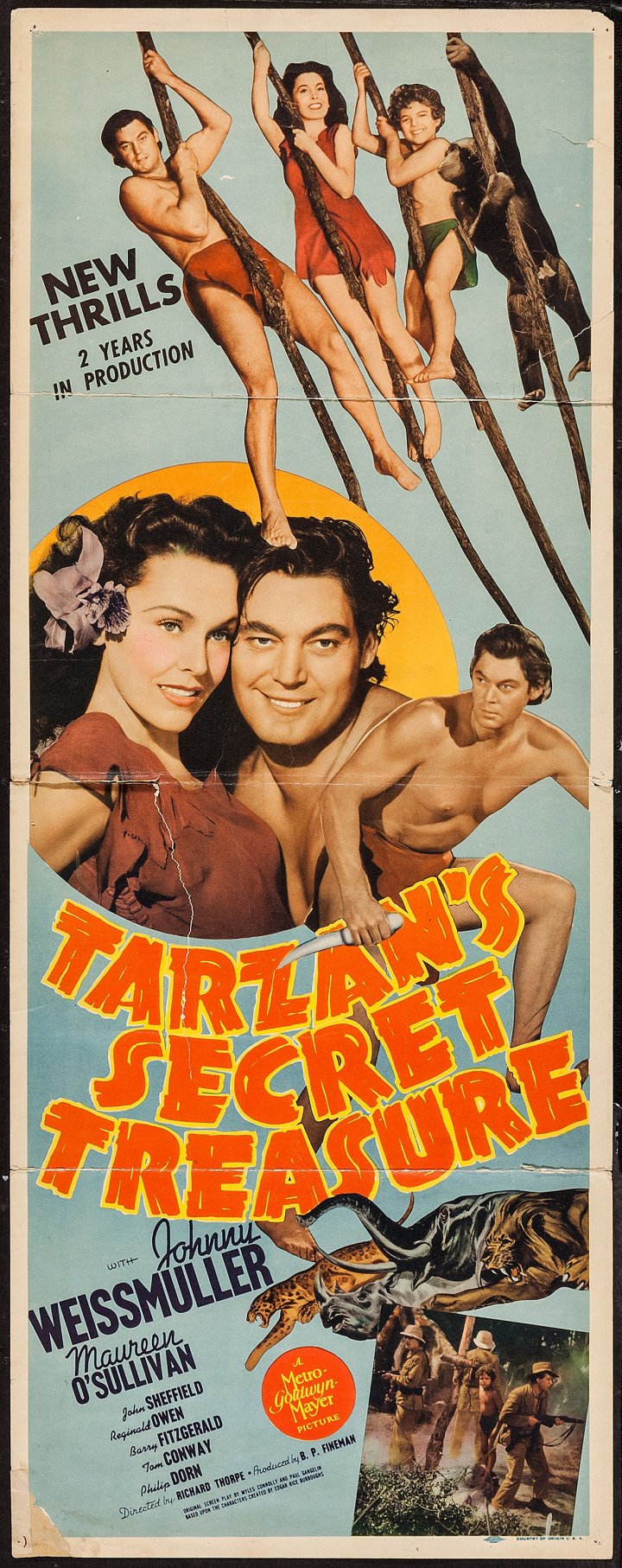


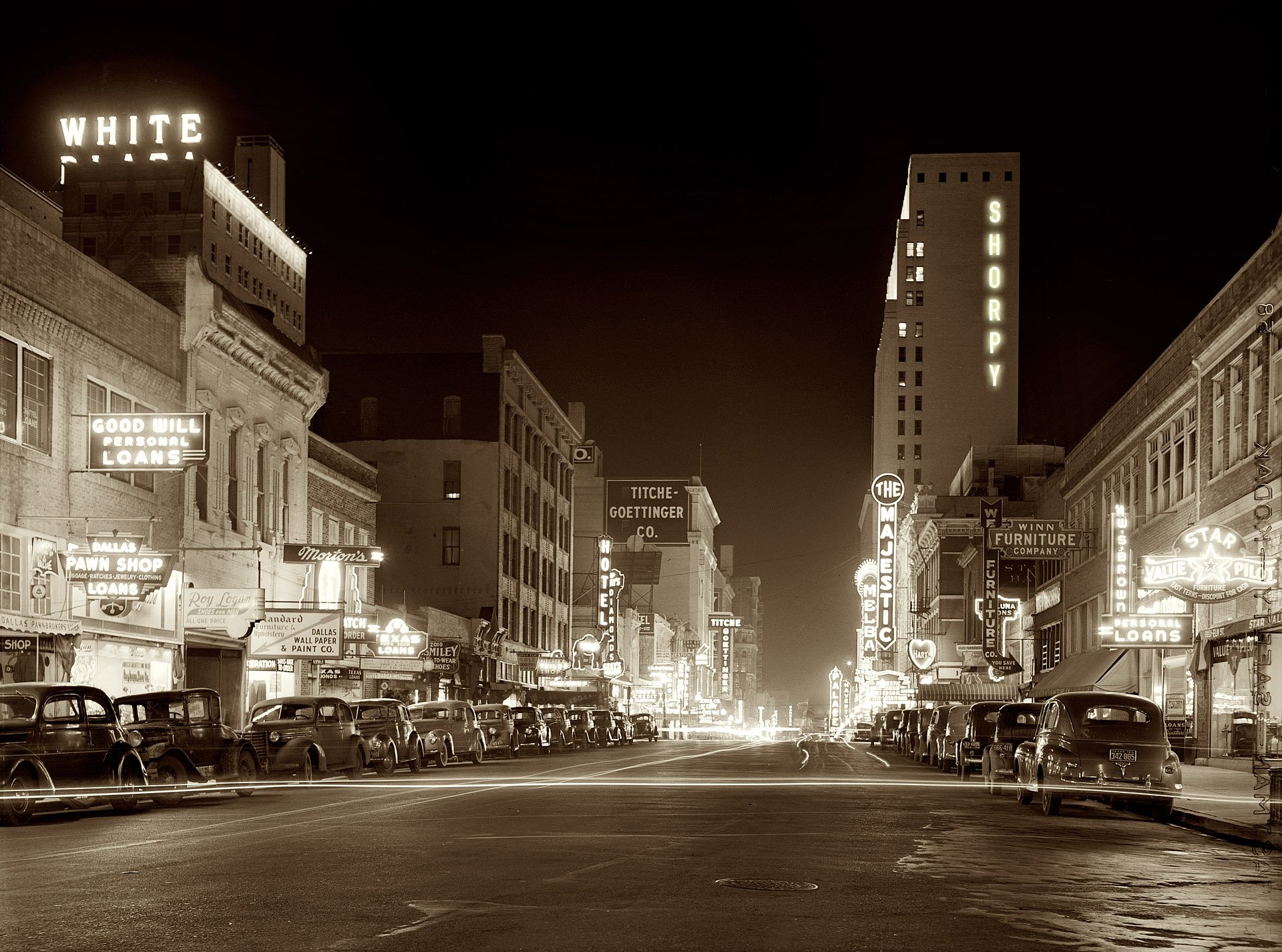
January 1942. Elm Street. Theater Row in Dallas
Tarzan's Secret Treasure is playing at the Majestic.
|
The Ape Man |
And His Mate |
Escapes |
Finds A Son! |
Secret Treasure |
New York Adventure |
| . |
Triumphs |
Desert Mystery |
and the Amazons |
Leopard Woman |
. |
ERBzine Silver Screen
Series: An Online Resource Guide to the Movies of Edgar Rice Burroughs
ERB and
the Silver Screen Volume I - The Silent Years by Jerry Schneider
Jerry Schneider's Movie Making
Locations
ERB On The Silver Screen
Florida
Film Legacy
Tarzan Movie Posters
http://www.mergetel.com/~geostan/treasure.html
http://www.mergetel.com/~geostan/films.html
RKO Films
My Mother's
Tarzan
Merlads:Johnny Sheffield
in Tarzan's Secret Treasure


Volume
0621

BILL
HILLMAN
Visit
our thousands of other sites at:
BILL
and SUE-ON HILLMAN ECLECTIC STUDIO
ERB
Text, ERB Images and Tarzan® are ©Edgar Rice Burroughs, Inc.-
All Rights Reserved.
All
Original Work ©1996-2006/2021/2026 by Bill Hillman and/or Contributing
Authors/Owners
No
part of this web site may be reproduced without permission from the respective
owners.