TARZAN THE UNTAMED
A Review Submitted by Doc
Hermes
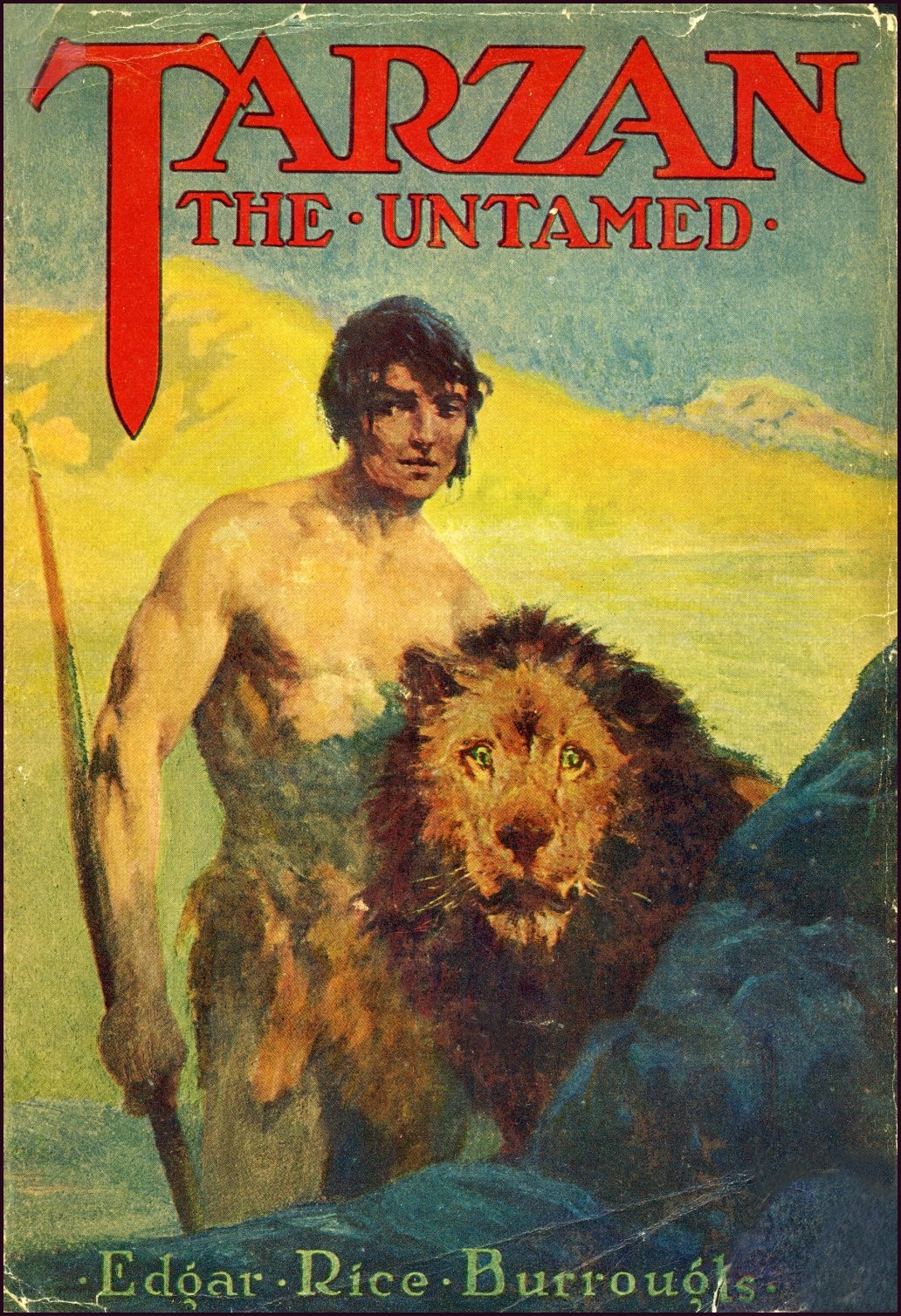
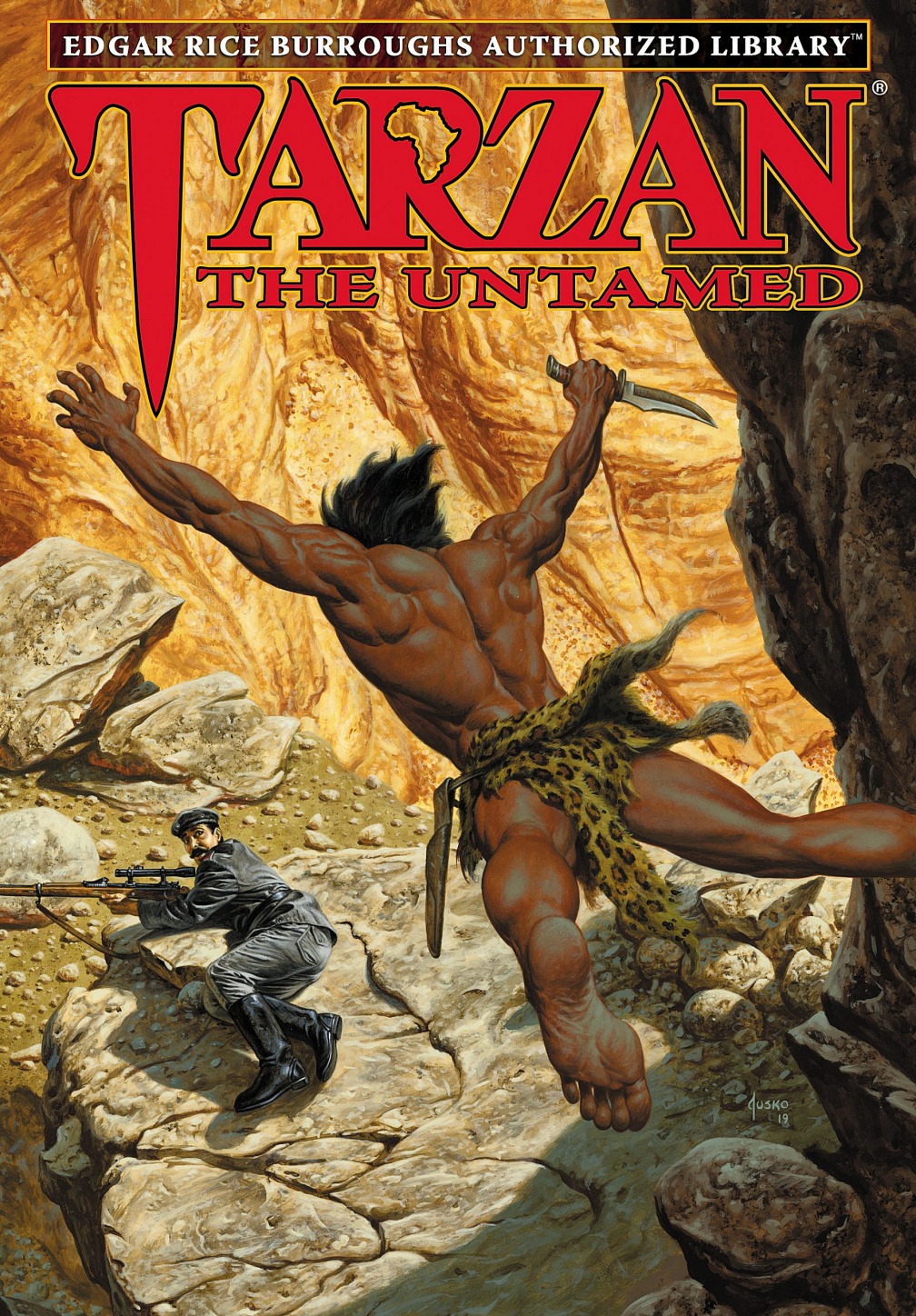
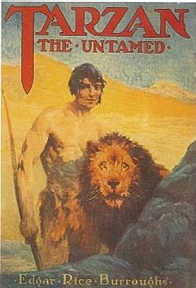
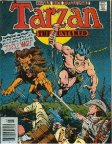
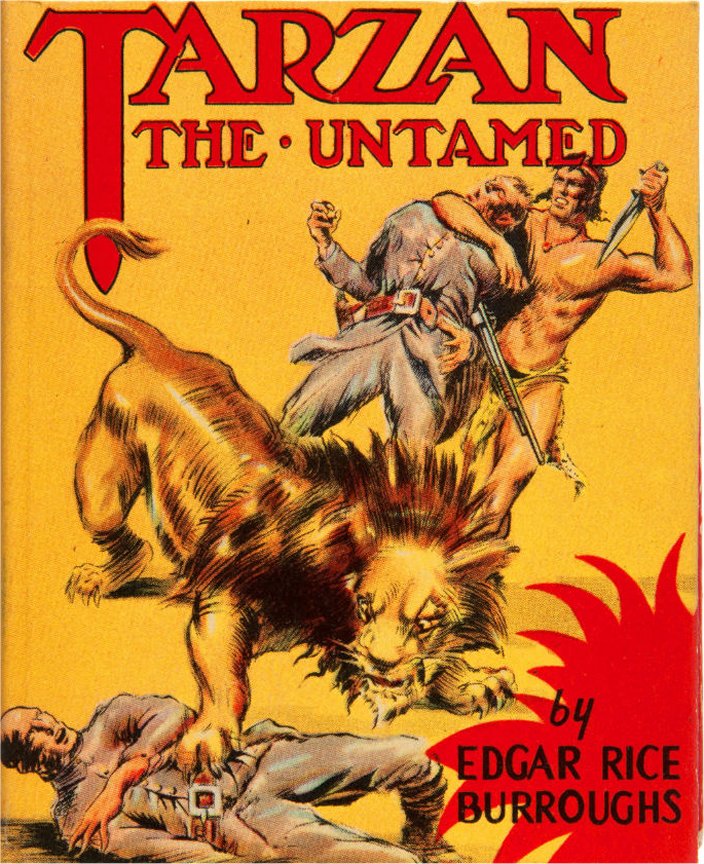
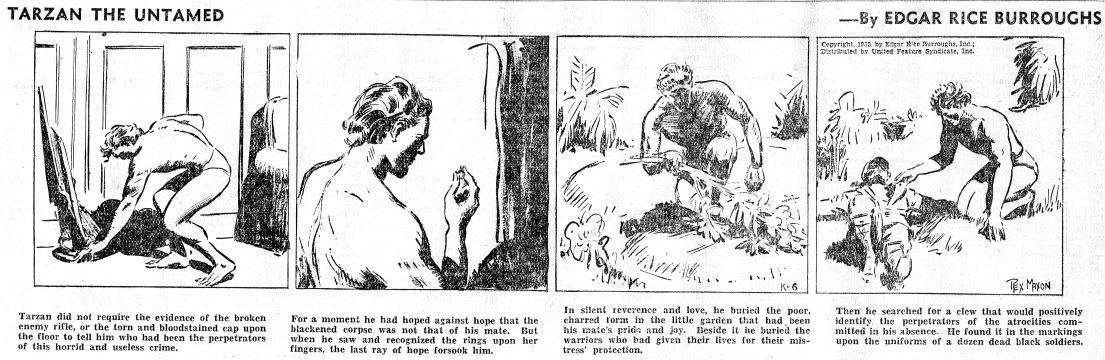
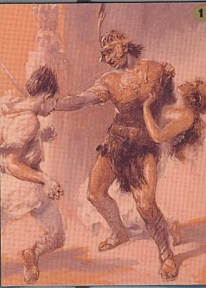
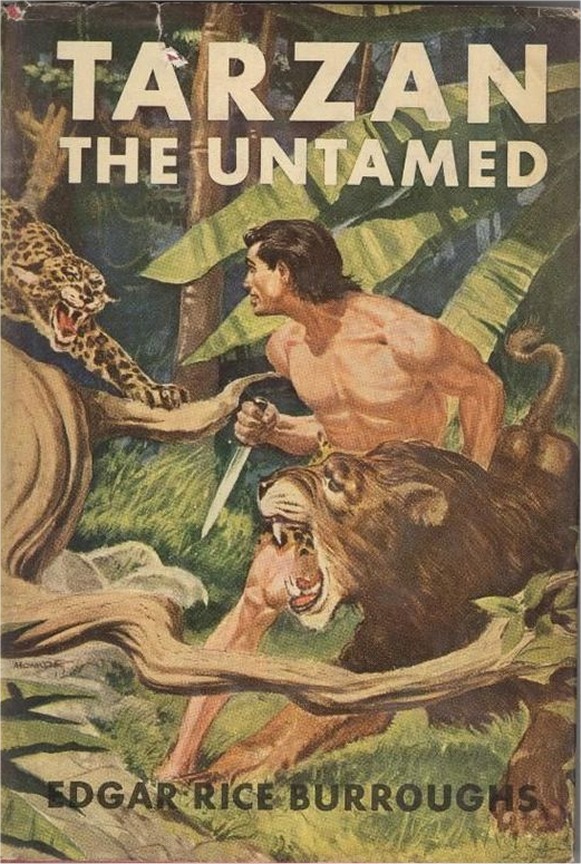
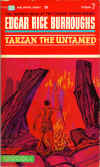
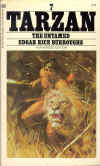
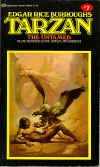
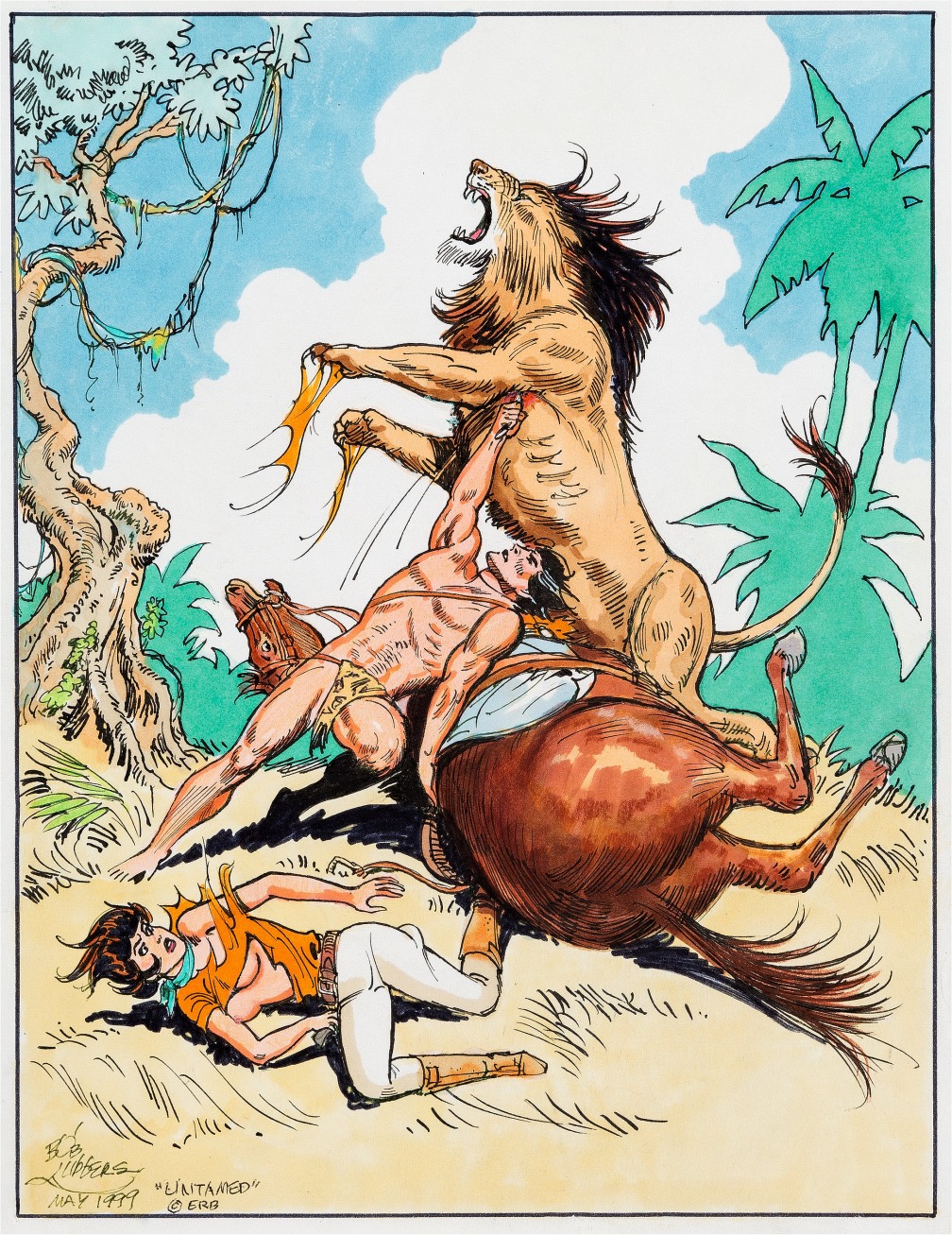
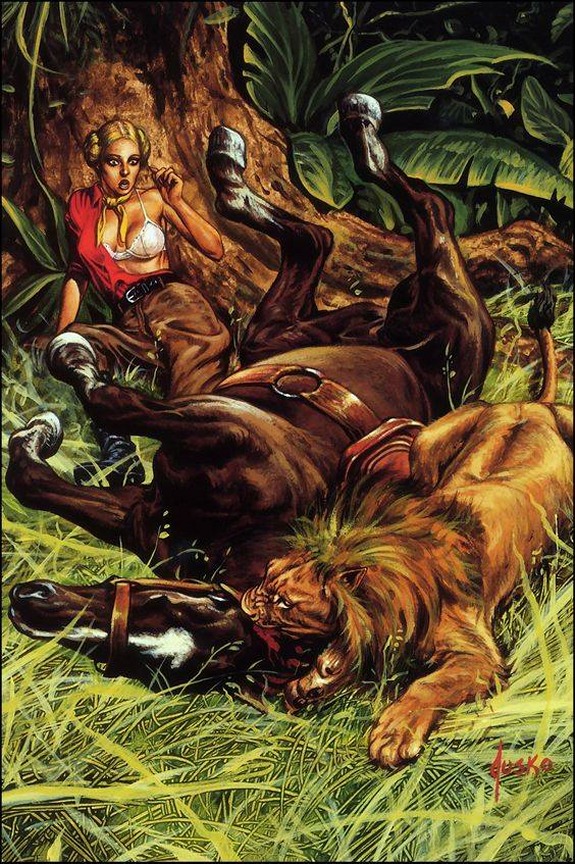
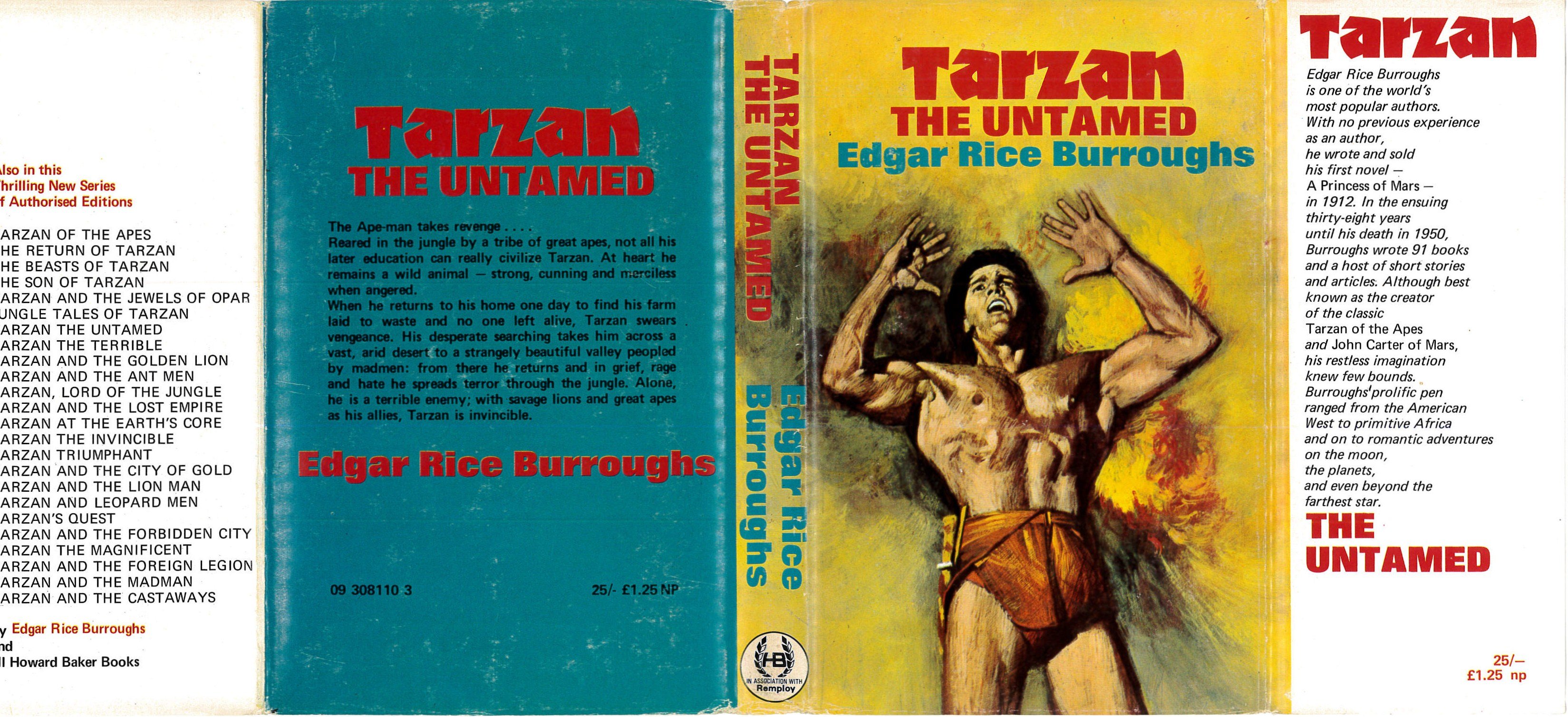
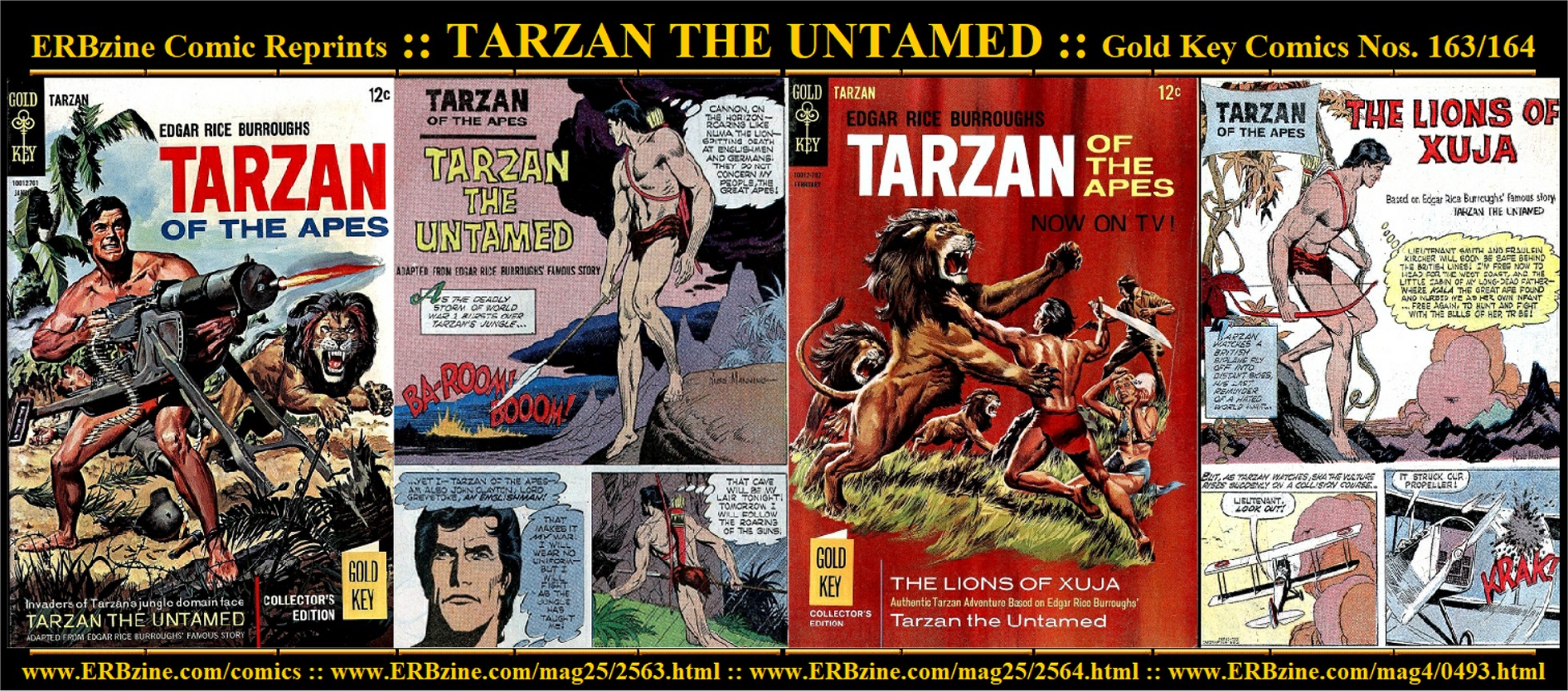
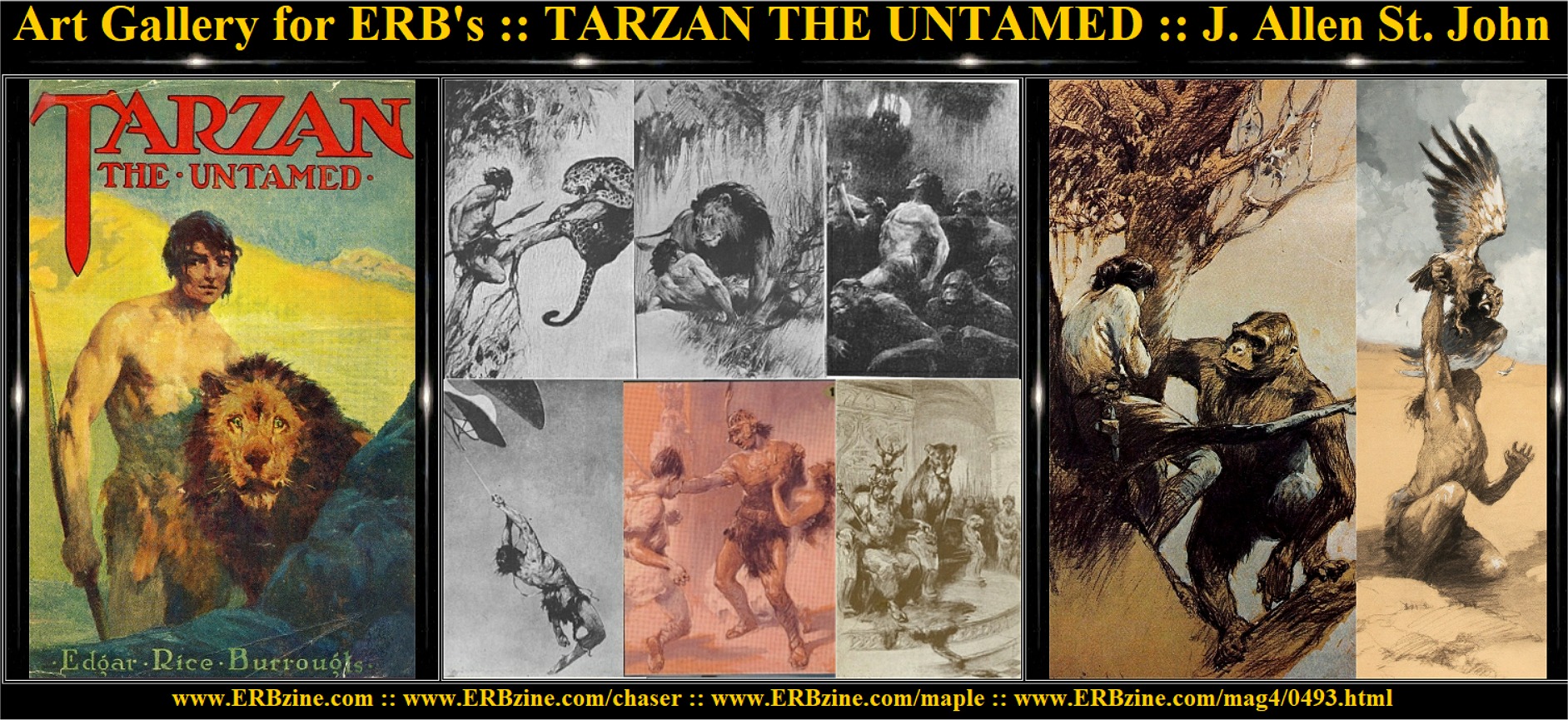
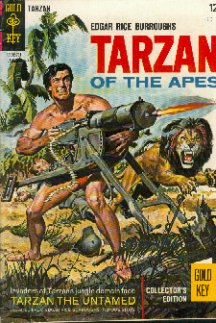
This comics cover captures the essence of
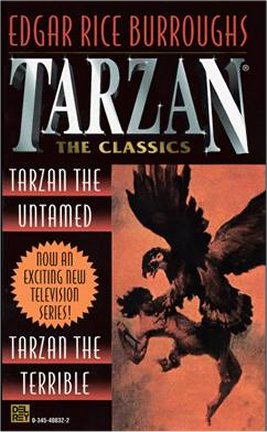
TARZAN THE UNTAMED
better than most of the book covers I found.
 This
is really two separate Tarzan novels. The first has some of Edgar Rice
Burroughs' most energetic and vivid writing, as Tarzan avenges the killing
of Jane and burning of his plantation by slaughtering Germans in all directions.
Continuing on from there, the second half (actually much longer than half)
is okay but not up to the level of the first, as the Apeman rescues a young
couple from a lost city of psychotics. I thought some of the impact of
the German-killing rampage was weakened by the way the book then shifts
direction and keeps going into more prosaic Tarzan themes for the bulk
of the book. By the time everything is wrapped up on page 254, there has
been so much hectic activity and drama that the massacre back at the Greystoke
estate seems almost forgotten in the past.
This
is really two separate Tarzan novels. The first has some of Edgar Rice
Burroughs' most energetic and vivid writing, as Tarzan avenges the killing
of Jane and burning of his plantation by slaughtering Germans in all directions.
Continuing on from there, the second half (actually much longer than half)
is okay but not up to the level of the first, as the Apeman rescues a young
couple from a lost city of psychotics. I thought some of the impact of
the German-killing rampage was weakened by the way the book then shifts
direction and keeps going into more prosaic Tarzan themes for the bulk
of the book. By the time everything is wrapped up on page 254, there has
been so much hectic activity and drama that the massacre back at the Greystoke
estate seems almost forgotten in the past.
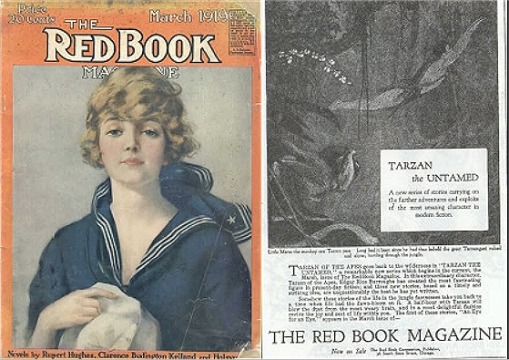
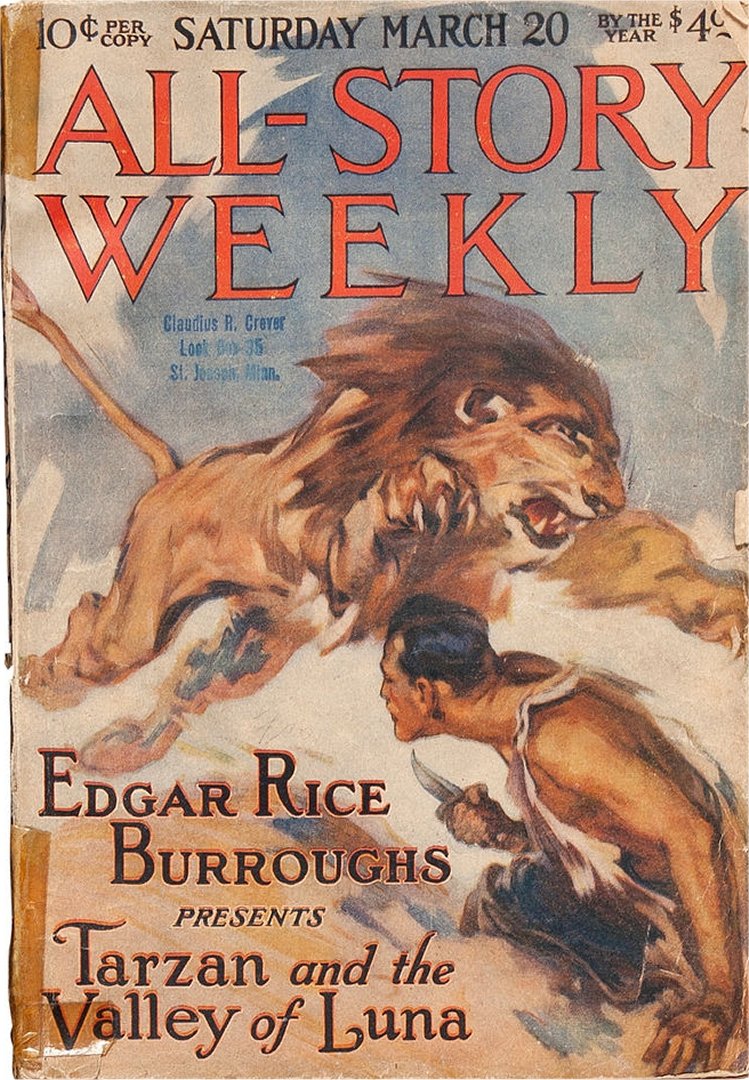
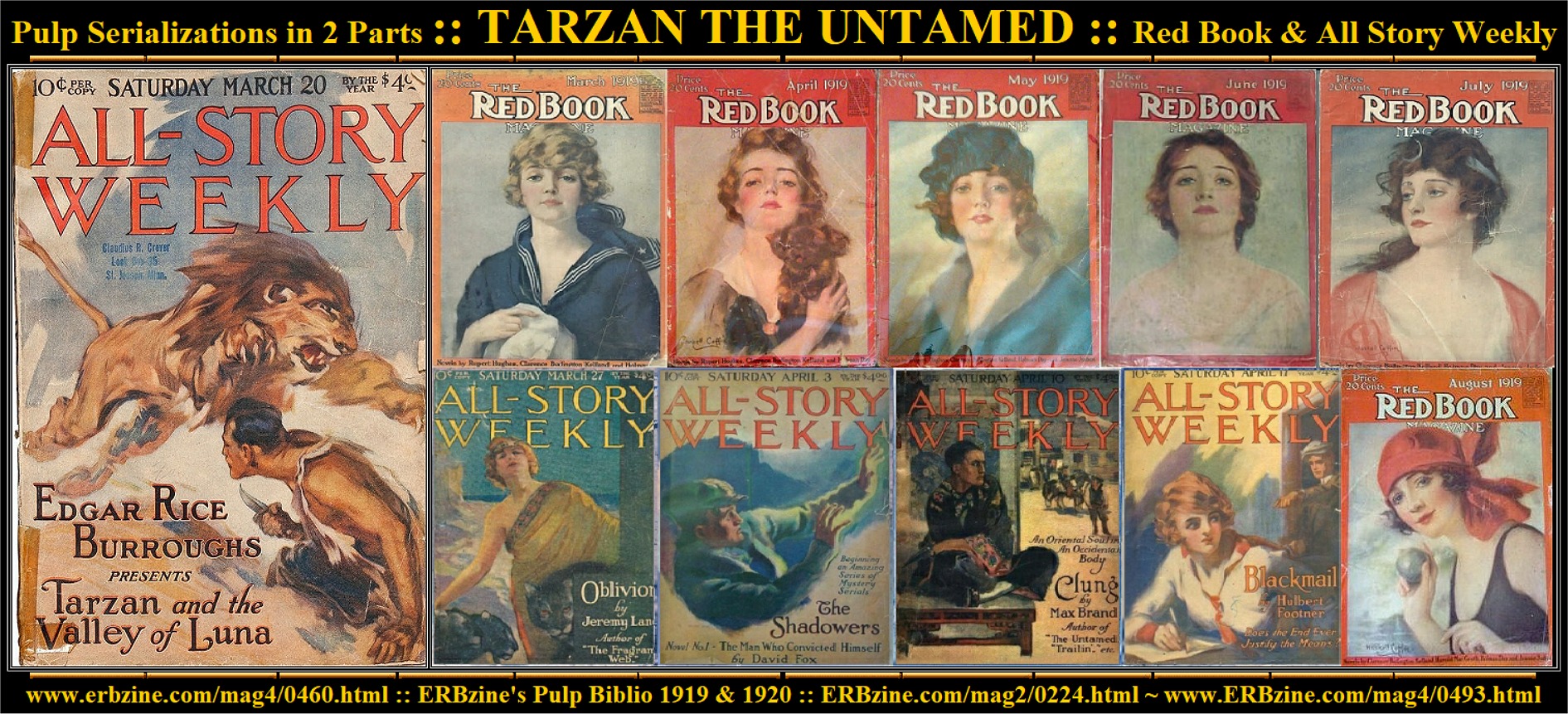
TARZAN THE UNTAMED was first
serialized in RED BOOK from March to August 1919, while "Tarzan and the
Valley of Luna" appeared in ALL-STORY WEEKLY in March and April 1920, thereafter
being combined into the seventh book of the Tarzan saga. It`s been documented
in a number of sources that Burroughs originally intended for Jane to be
actually and permanently bumped off in this tale, but he was persuaded
to spare her (her apparent death was a cruel hoax by the Germans) and learning
that she is still in fact alive leads Tarzan off in pursuit in the next
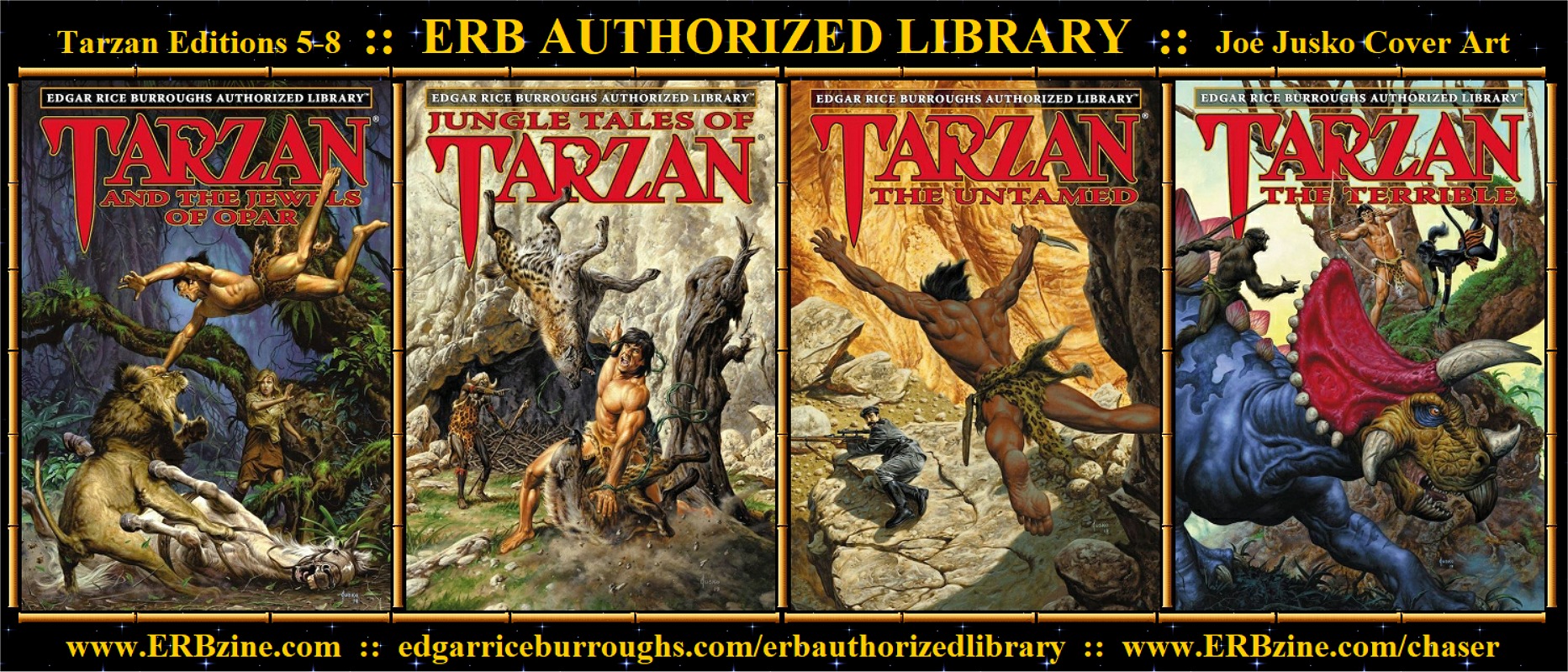
book, TARZAN THE TERRIBLE (one of the best in the series).
Most commentary on this book
has centered on the first part, where Tarzan finds his estate burned to
the ground, the Waziri slaughtered and a charred body he thinks is Jane`s;
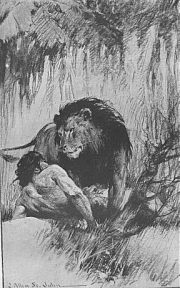
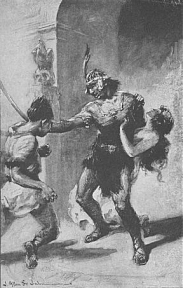
out for revenge, the Apeman uses a hungry lion to help kill dozens of German
soldiers, but he`s not above picking them off with a rifle from concealment.
Burroughs doesn`t detest just the German war machine or Army, though; he
grimly condemns the entire country and everyone in it ("It was Hate - and
it brought to him a measure of solace and comfort, for it was a sublime
hate that ennobled him as it has ennobled countless thousands since - hatred
for Germany and Germans... it included everything German, animate or inanimate.")
Throughout the story, Tarzan
finds himself reluctantly rescuing and assisting a beautiful young woman
he knows as Bertha Kircher. He thinks she`s a German spy and deserves to
be killed, but his innate chivalry keeps troubling him until he goes back
and gets her out of danger. As it turns out, she`s not what she seems and
his mixed feelings about her are vindicated. If Burroughs had been a bit
more enlightened, he might have shown Tarzan gradually warming up to Bertha
despite her Germanity (err, her Germanness?) and slowly concluding that
there could be good people in any culture. No such luck. Actually, Burroughs
always seemed to despise the human race in general, and a few sympathetic
American or English characters are all he could muster up. If it wasn`t
for his formula requiring a young couple falling in love in each book,
we wouldn`t have even that many likeable people in the series.
The second part usually gets
glossed over, as the Apeman tracks Bertha and a young English pilot (inevitably,
they will tumble for each other and become engaged before THE END) to an
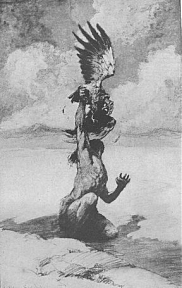
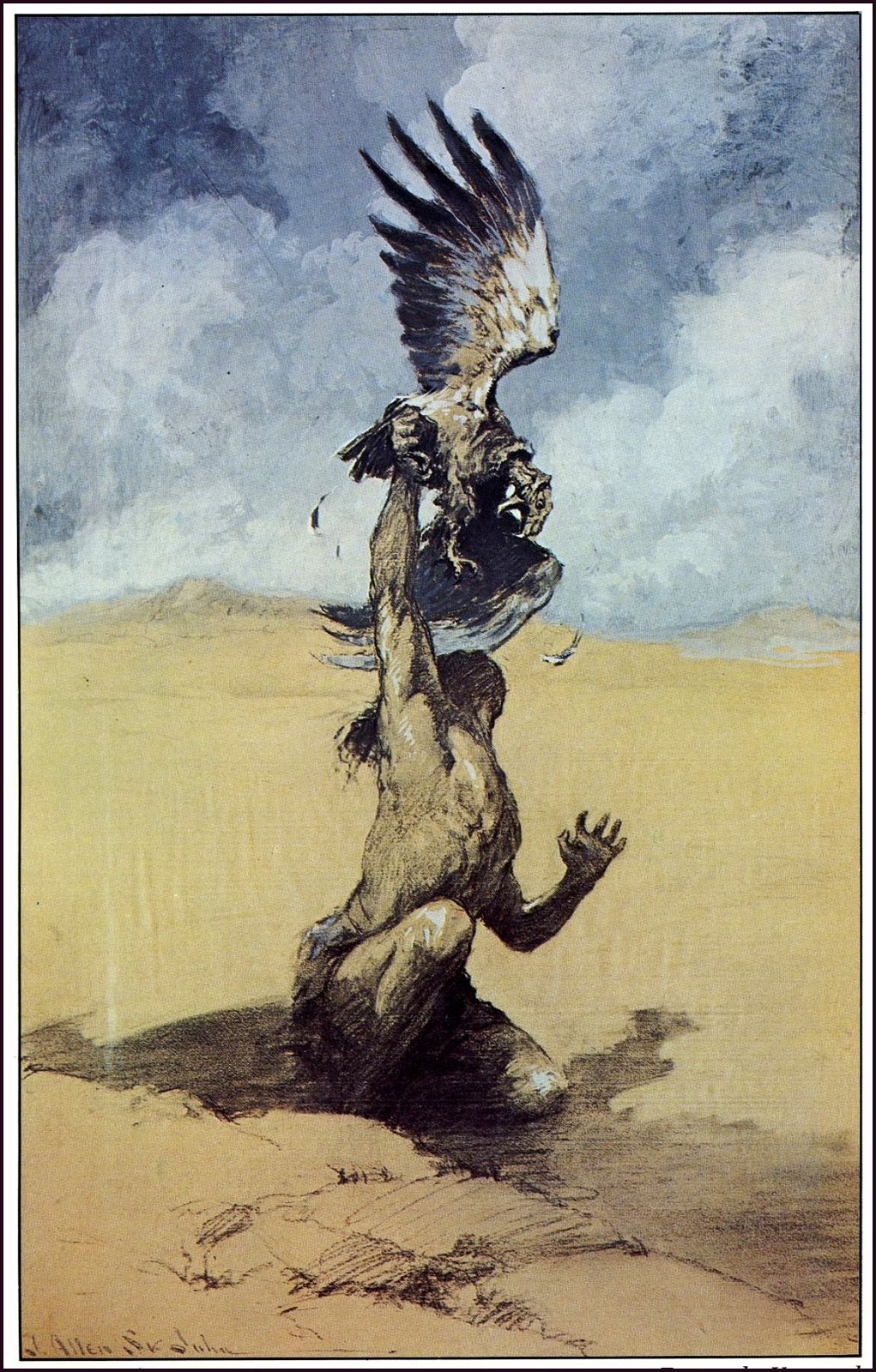
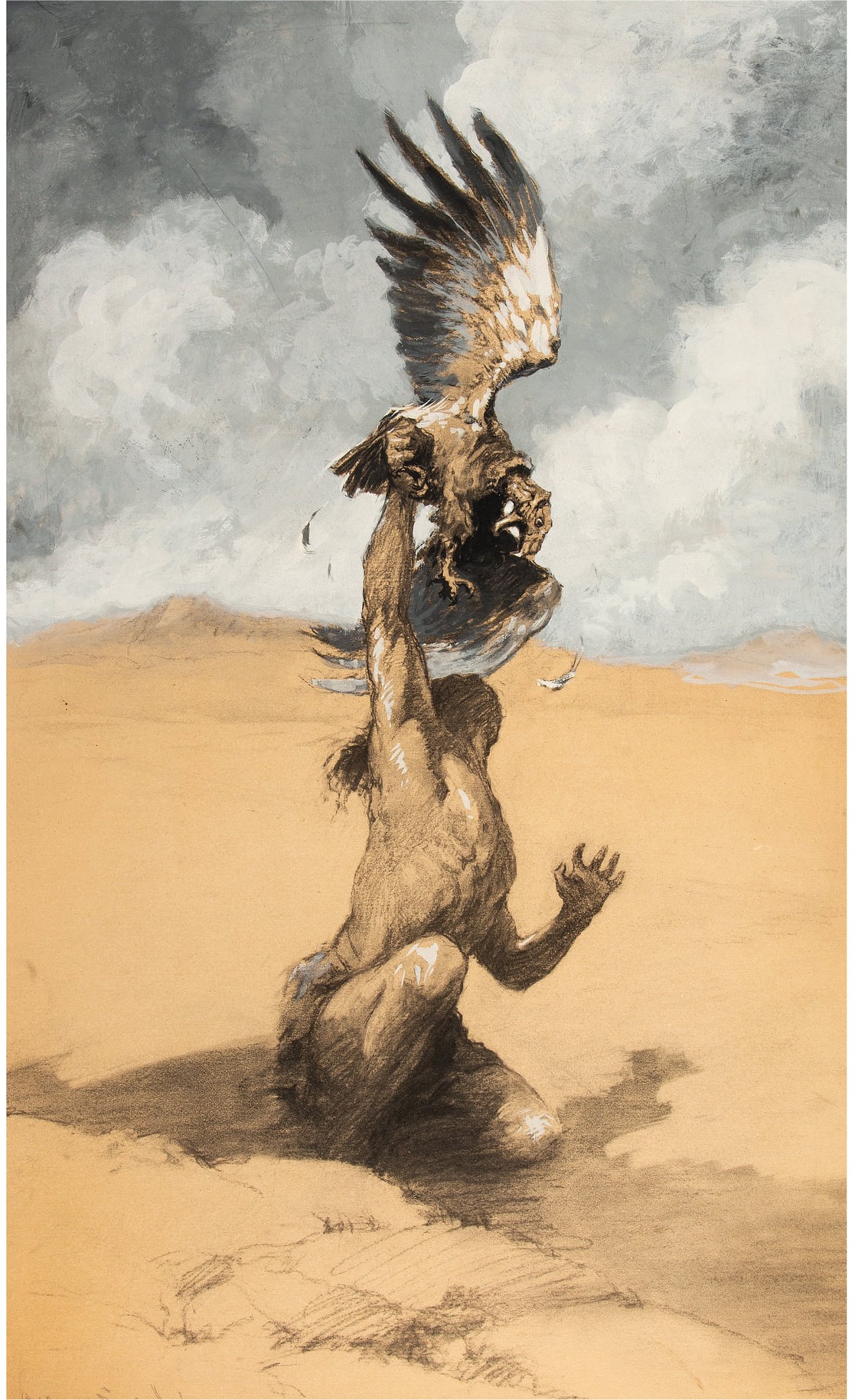
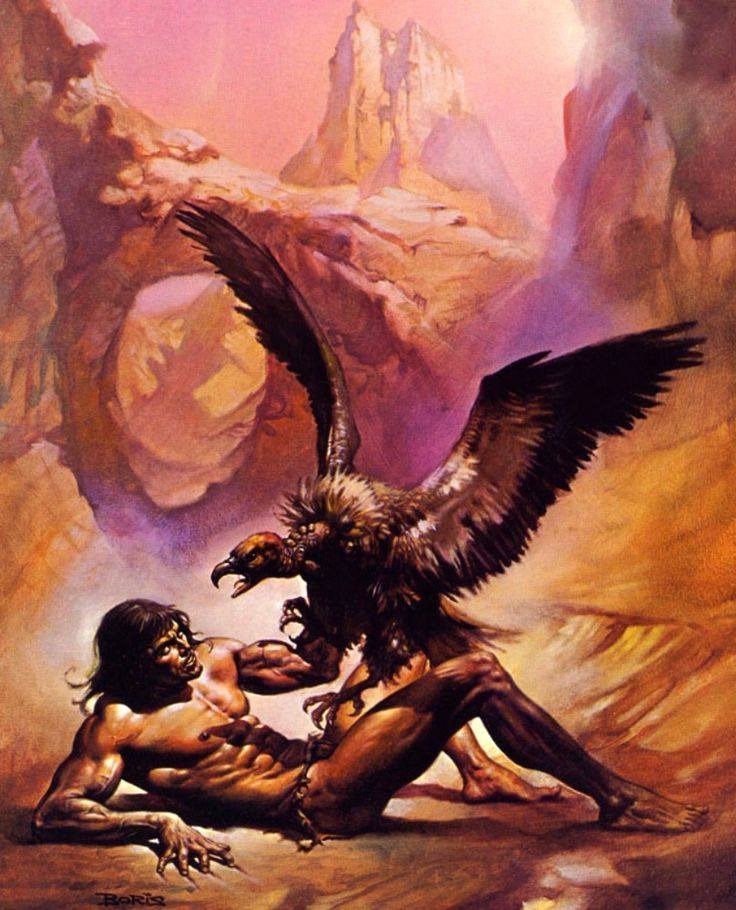
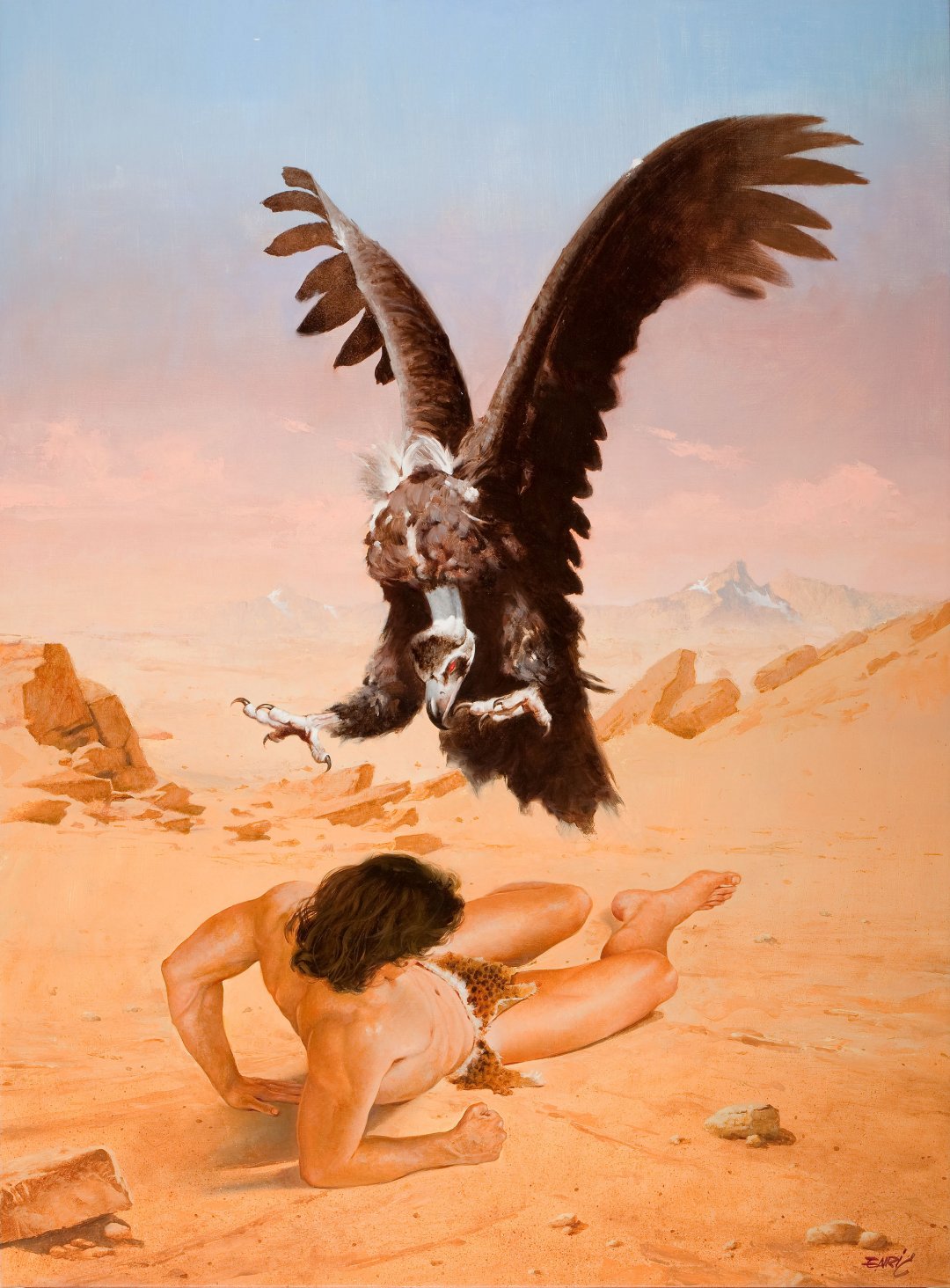
unknown civilization deep in the wilderness. There is a classic scene where
Tarzan, near death and lying weakly in the desert, has a vulture land on
him; he quickly bites the vile bird to death and eats it. That`s a tough
hero! Compared to Opar or the city of talking gorillas or the city of crusaders,
Xuja isn`t an impressive creation. Its origin is never revealed or even
hinted at, and the fact none of the protagonists get to learn the language
limits any discussion with the inhabitants, keeping them undeveloped. The
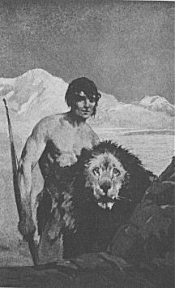
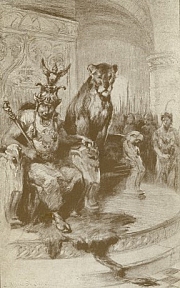
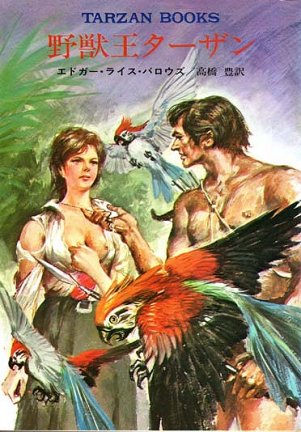
Xujans worship parrots and have domesticated lions, which they use as guard
dogs. Lions are also their diet, the only food they like. Colorfully enough.
the men and women of Xuja are literally a race of insane people. Their
erratic behavior and mood swings keep Tarzan and his companions on their
toes, and certainly make it easy to move the story along; the Xujans can
be placid or homicidal or amorous as the plotting requires.
There are so many doubtful
aspects of Xuja that you have to crank your suspension of disbelief up
as far it will go and even that may not work. They eat lion meat every
day, which means they have to maintain a huge number of herd animals to
feed the lions ("boar, deer and antelope") which also means they have to
cultivate vast areas (in this valley in the desert) to support those herds.
Is this practical? The Xujans don`t keep a minimum number of lions around
for dinner, either; the darn big cats are all over the place. Raising crops
to feed the herds to feed the lions to feed the Xujans... don`t count on
any free time if you live there.
The universal insanity of
the Xuja population is given away by the fact that they look like lunatics.
Burroughs has always mentioned that a well-shaped head (whatever he means
by that) reveals a person`s intelligence and moral character, and here
he reveals the opposite. ("They have all the earmarks [of madmen]. Whites
of the eyes showing all around the irises, hair growing stiffly erect from
the scalp and low down upon the forehead... even their mannerisms and their
carriage are those of maniacs.") I never realized so sharply how long ago
it was that Burroughs wrote. He mentions theories and fads that have been
discredited for so many decades that I have never heard of them, like this
idea that insanity shows in the way your eyes are proportioned. (I also
remember his unsettling proposal that, if you just execute the families
of criminals, crime would entirely disappear for good. Glad he never ran
for office.)
Burroughs still reminds
us that, no matter what you may see on the Discovery Channel or National
Geographic, lions, rhinos and elephants live in dense forests and make
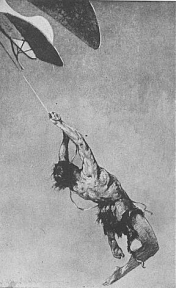
their ways along trails (fairly large ones, I would imagine). Also, a World
War I bi-plane, with a wooden propeller and flimsy canvas wings, is perfectly
capable of plowing through fifty grown men, cutting them to scattered streamers,
and then taking off again without any need for repairs. My car should be
so sturdy.
Tarzan himself is presented
here as the complicated union of opposites he is. This is where we see
most clearly how the Apeman is a unique creature, part of two worlds but
not completely belonging to either. Enraged by the massacre of his wife
and retainers, he vows to never again have anything to do with people after
he kills all the Germans he can find; but, almost immediately, the Apeman
starts offering his help to the English forces in the area and he adopts
the young man and woman who would die in the jungle without his help. Despite
his sermons about how civilization produces only evil, in fact it is that
side of his heritage that makes him heroic ("Tarzan`s conscience was troubling
him, which accounted for the fact he compared himself to a weak, old woman,
for the ape-man, reared in savagery and inured to hardships and cruelty,
disliked to admit any of the gentler traitws that in reality were his birthright.")
As much as he rants
about the evils of civilization, our hero soon is planning how to lead
a tribe of apes to build storehouses for putting food away for hard times.
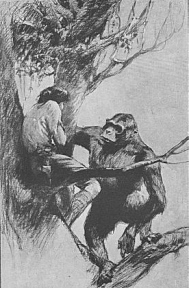
("He would try to teach them some of the better things that he had learned
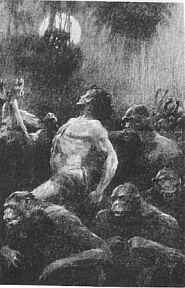
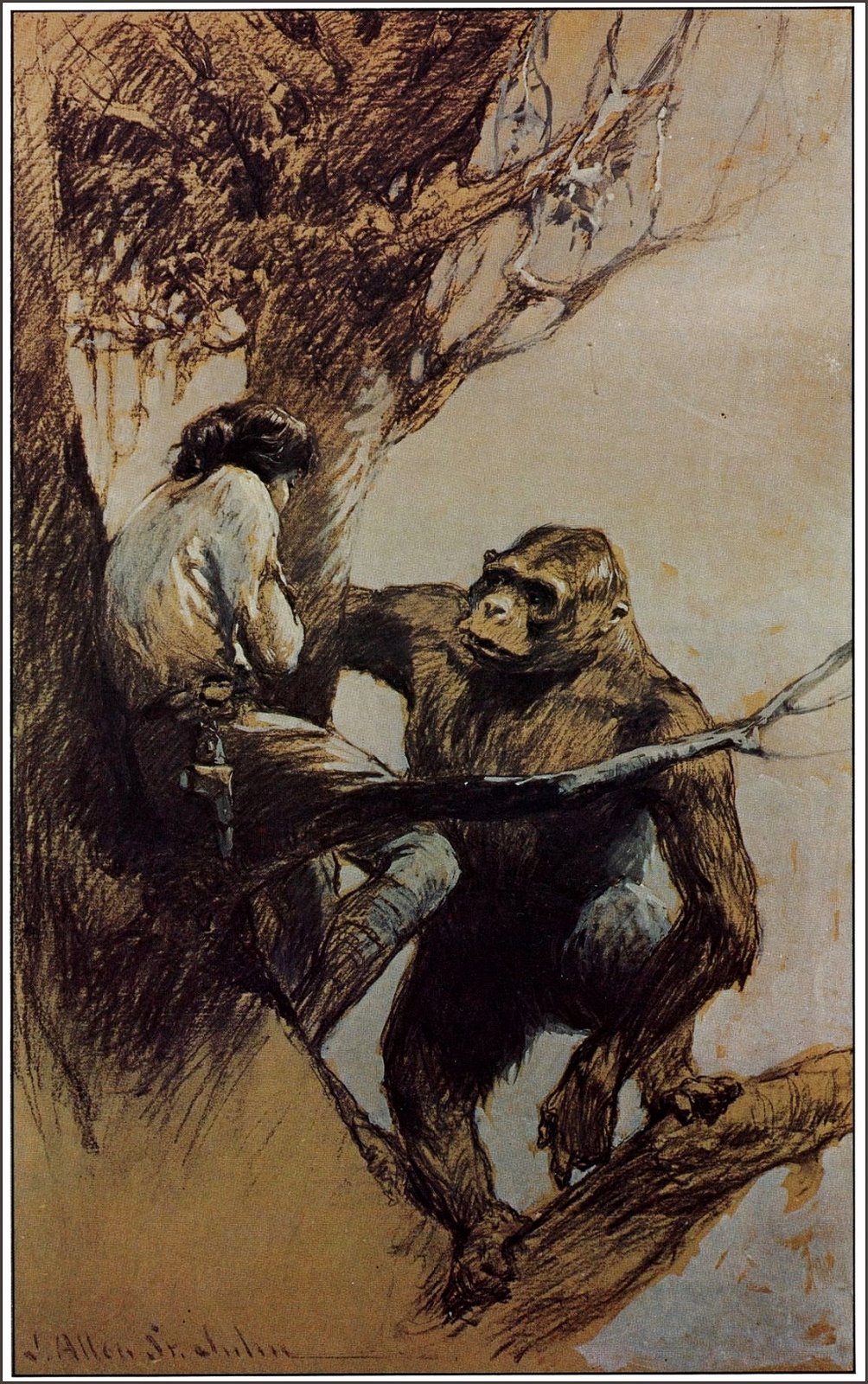
from man...") And although he intrudes on a Dum-Dum dance and tackles the
leader of a tribe of Mangani to be accepted as one of the boys, err apes,
he is not too proud to use "a jujutsu hold that Tarzan had learned among
civilized men" to get an advantage on the big guy. Although he claims to
have only grudgingly learned a little bit of civilized ways to please Jane,
you notice he speaks fluent German and has read classics in the original
Latin on his own. Our boy likes to think of himself as pure Tarmangani,
not a cursed human, but he doesn`t fool himself for long. Tarzan is complex,
conflicted, yin and yang in one person, more than a little mixed-up. It`s
what makes him such a fascinating creation.