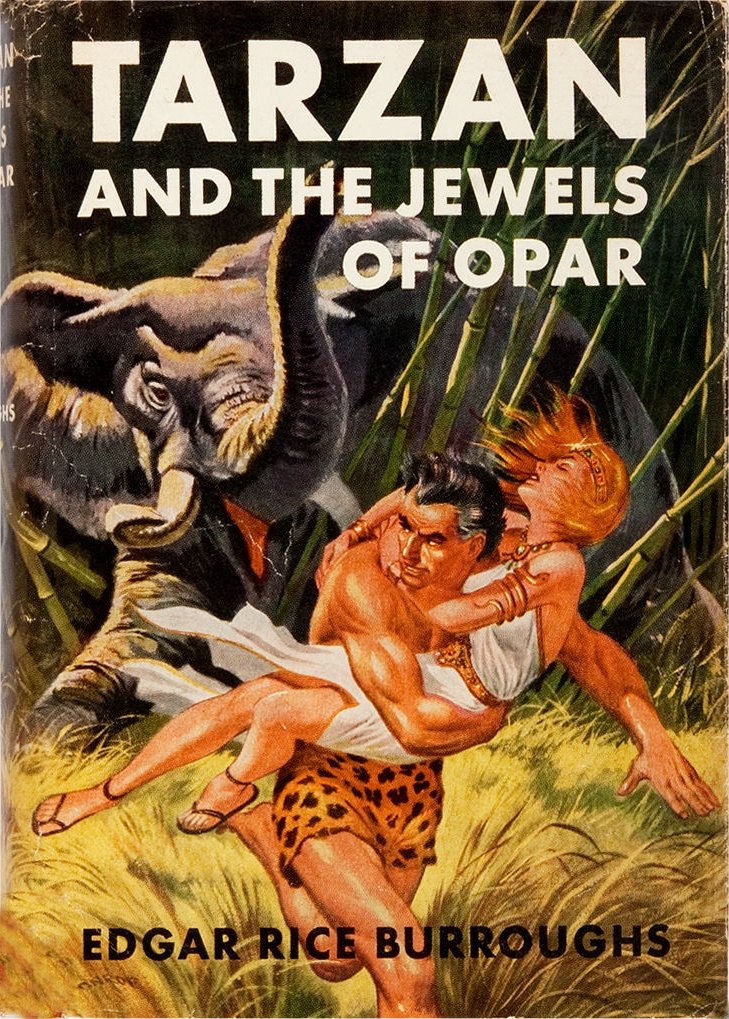
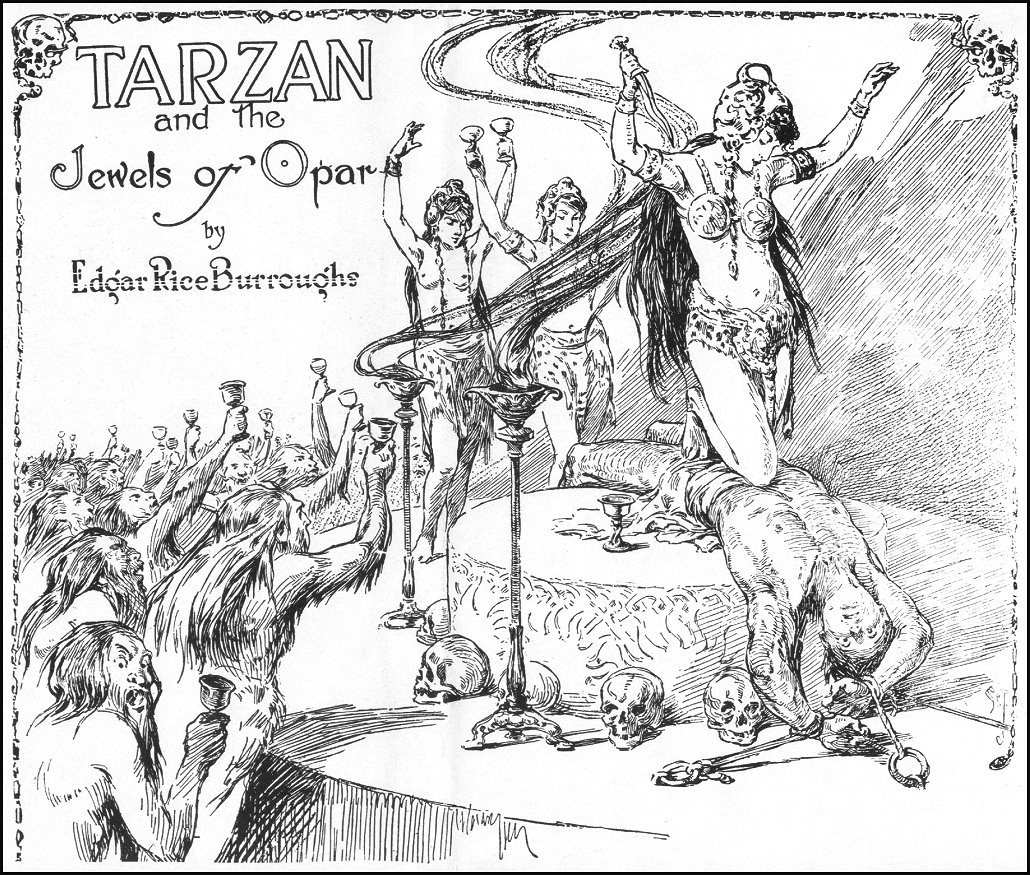
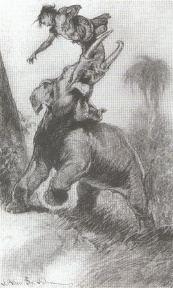
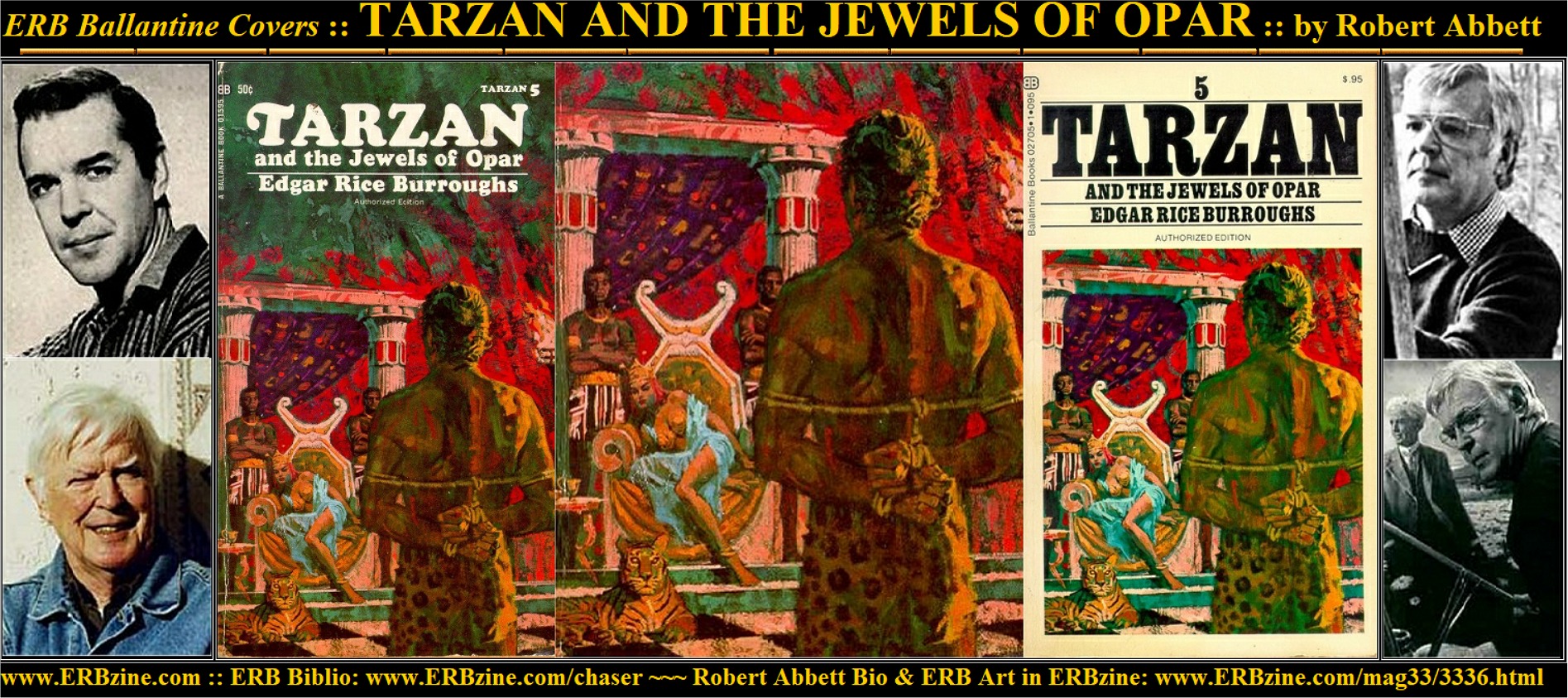
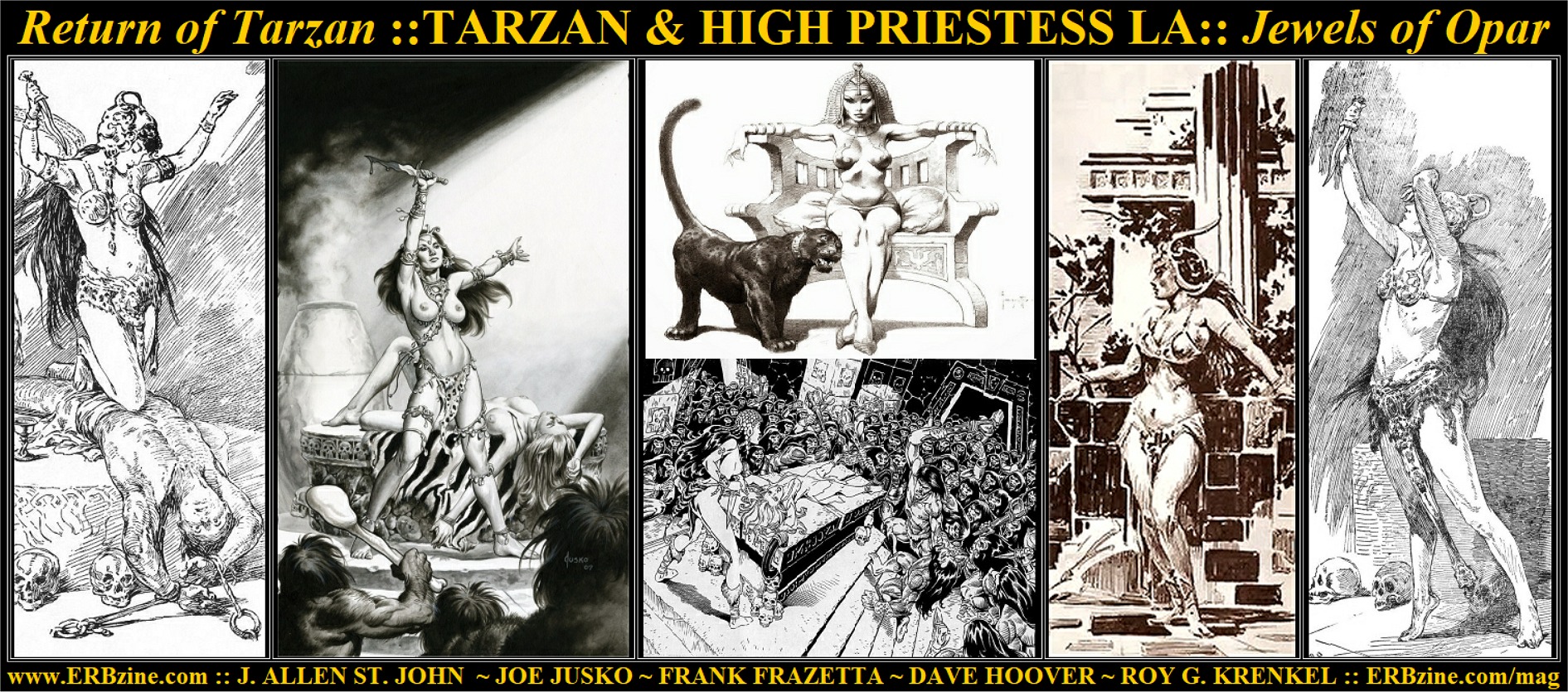
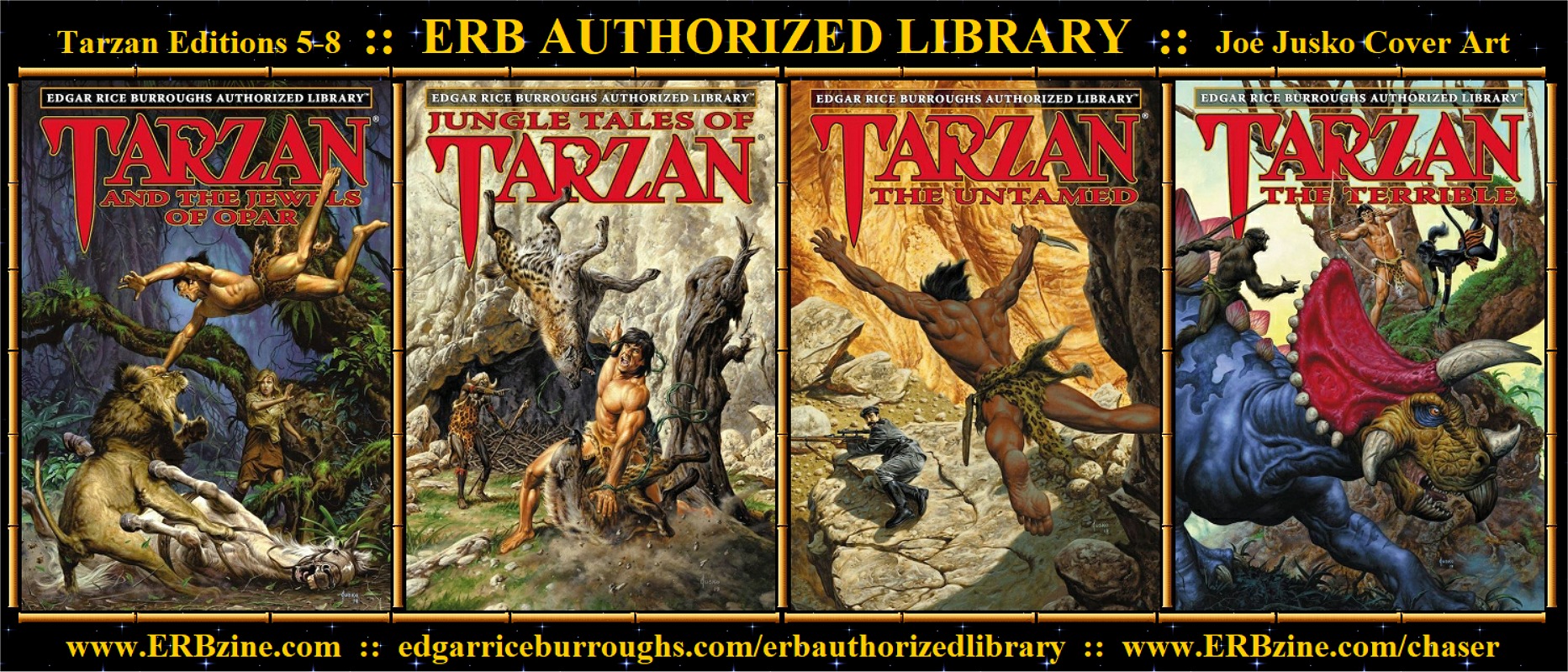
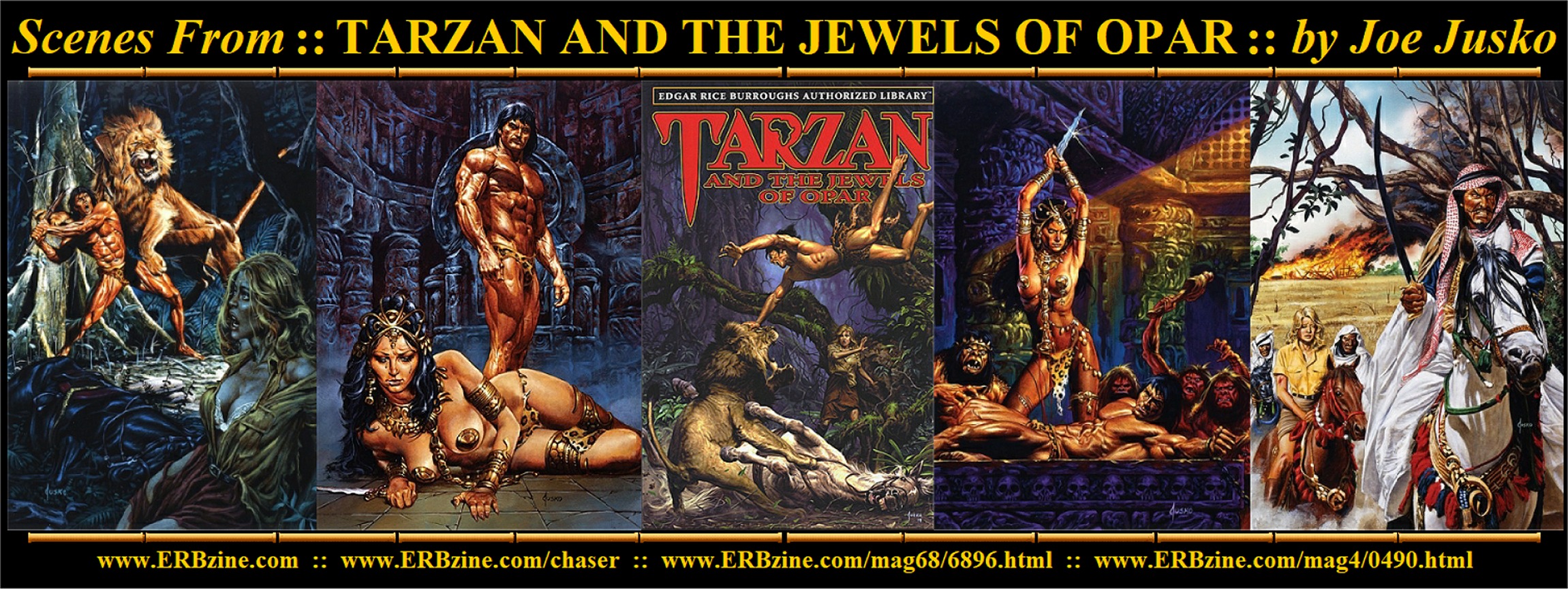
TARZAN AND THE JEWELS OF OPAR
Review contributed by
Doc
Hermes ERB Reviews
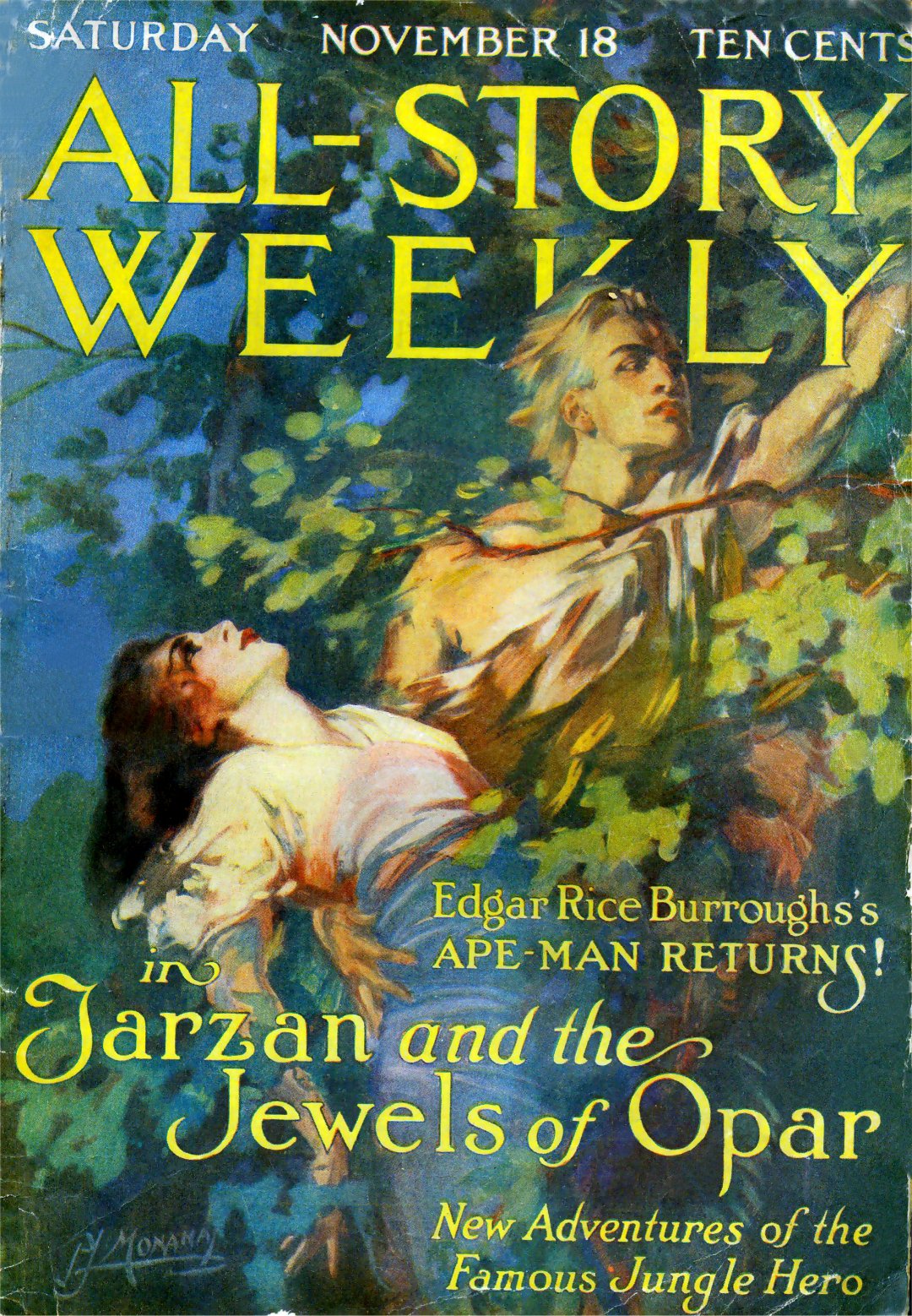
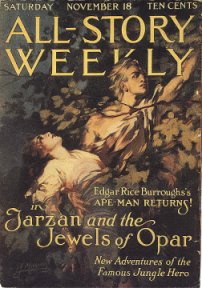
From the November and December 1916 issues of ALL-STORY
WEEKLY, this is more like it! I started these reviews with some of the
lesser known books in the series and, well, there`s a reason why those
later books are not as well known. They`re not very good, particularly
when compared with the earlier entries. JEWELS OF OPAR, on the other hand,
is a lot of fun to breeze through. It doesn`t have a linear plot as much
as a tangle of threads weaving in and out (Burroughs basically sets a dozen
characters loose in the jungle and has them bounce off each other for a
hundred and fifty pages), but the writing itself has much more energy and
enthusiasm than the latter half of the series showed. There is more description
and detail, and plenty of vivid incidents which may not be plausible but
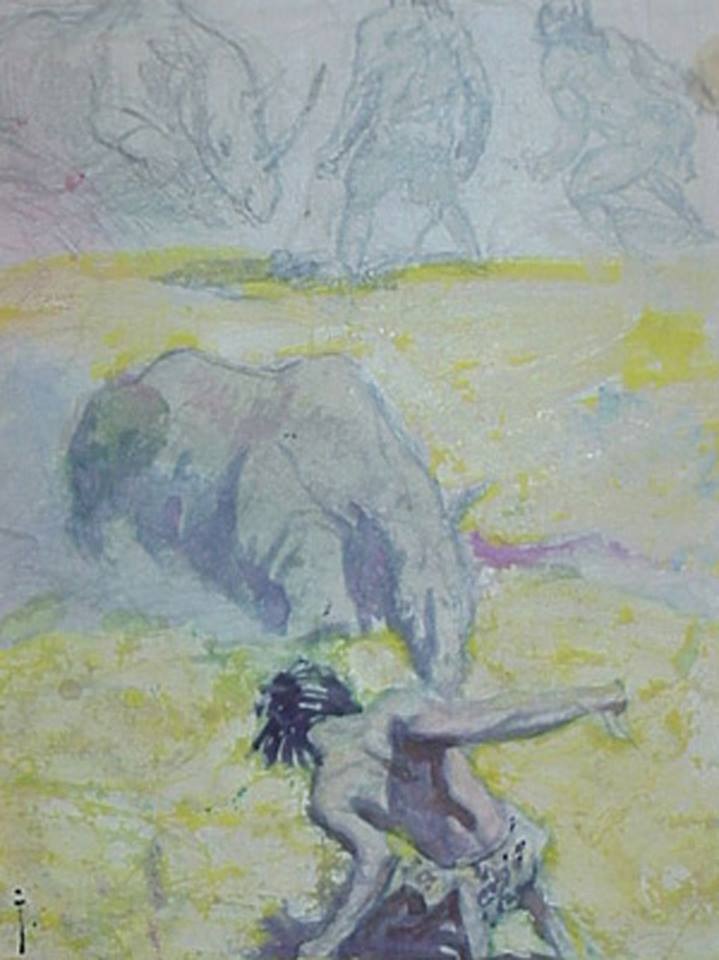
are still dramatic (a rhino in a trench fighting seven lions may be something
that wouldn`t happen in real life, but it`s a wild image.) And the final
paragraph is in effect a wonderful punchline that leaves the reader knowing
something which the puzzled characters will never learn.
For me at least, the most interesting aspect of Tarzan
is his duality. He`s unique in the world, the only one of his kind. He
can enjoy an art gallery in London with Jane, while not being really happy
in the constricting clothing and stuffy interiors. Yet back among the great
apes or his Waziri, he`s also somehow not fully at home either. Tarzan
is the classic misfit and outsider, living in two worlds but not wholly
of either. This is something that was lost after the tenth book or so,
where the Apeman apparently abandoned his family and went back to a simplistic
jungle life. In JEWELS OF OPAR, he comes back on horseback "from a tour
of inspection of his vast African estate" and then spends "the afternoon
in his study, reading and answering letters". Yet the very next night,
he`s droppng naked out of a tree onto a deer because he just HAS to kill
something himself and devour some blody flesh.
Tarzan is actually more savage than his tribe of Waziri,
since they will not eat some of the odd items he enjoys and they prefer
their meat cooked. The Apeman enjoys fresh meat, uncooked and unspoiled
(hey, Tarzan, how`s that trichinosis going lately?) While in later books,
our boy seems to live entirely on raw meat and river water, here Burroughs
is still taking time to mention that Tarzan eats a wide variety of prey,
including "beetles, rodents and caterpillars". Once or twice, there
is mention of fruit, which may not be as macho as raw flesh but which is
useful to prevent scurvy.
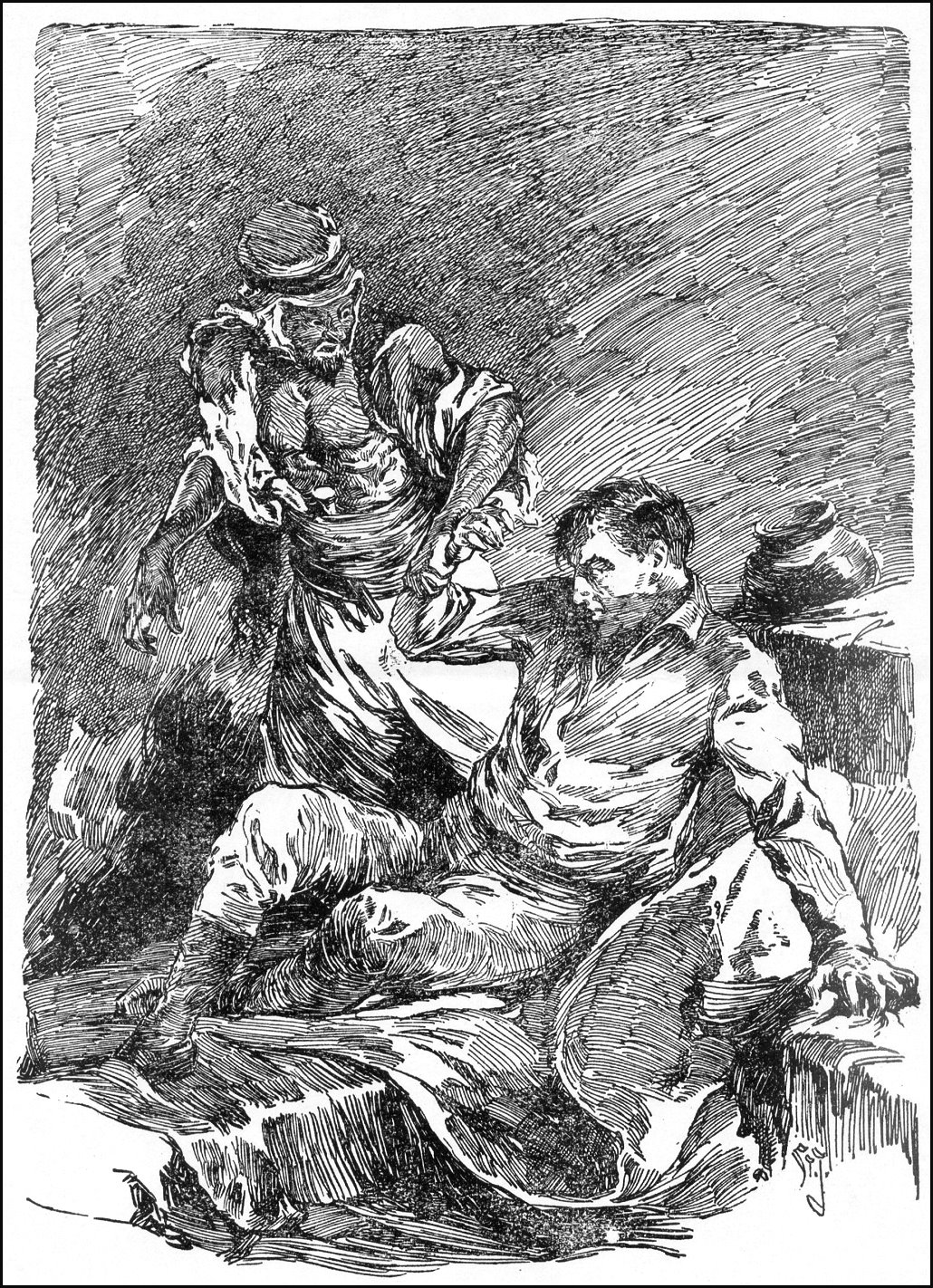
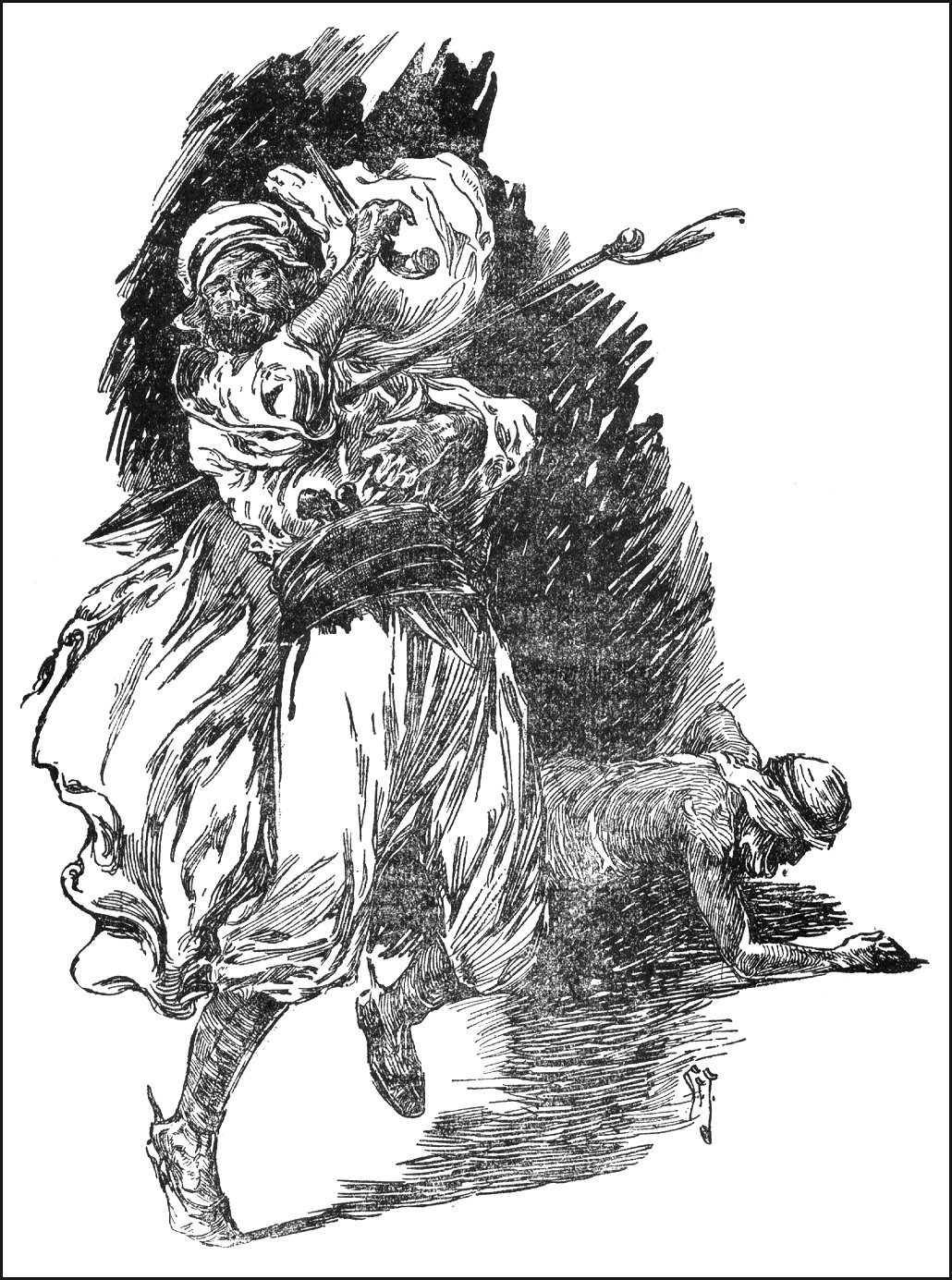
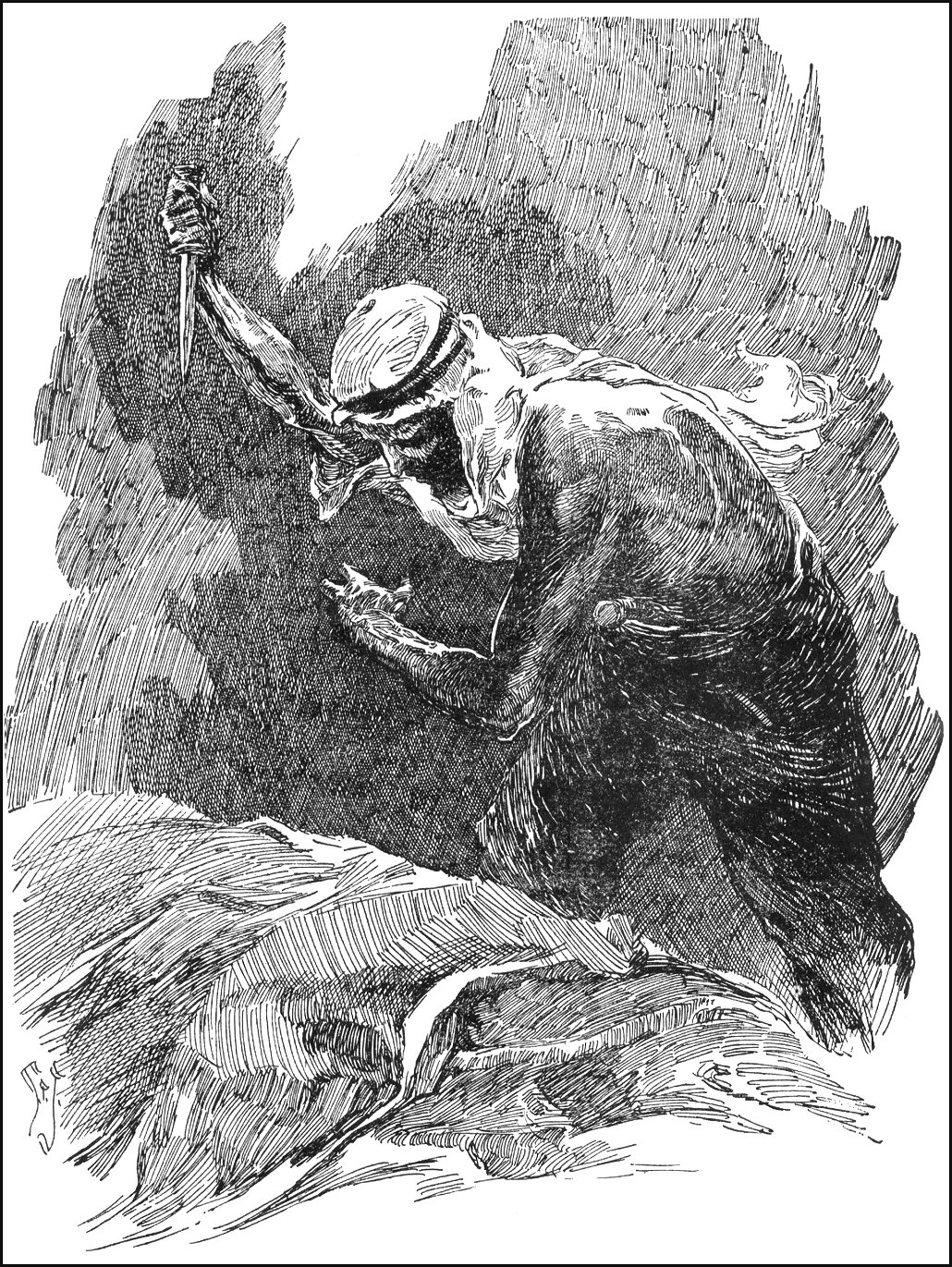
The tangled events in the story spring from the misdeeds
of a renegade Belgian officer, Albert Werper, and his uneasy alliance with
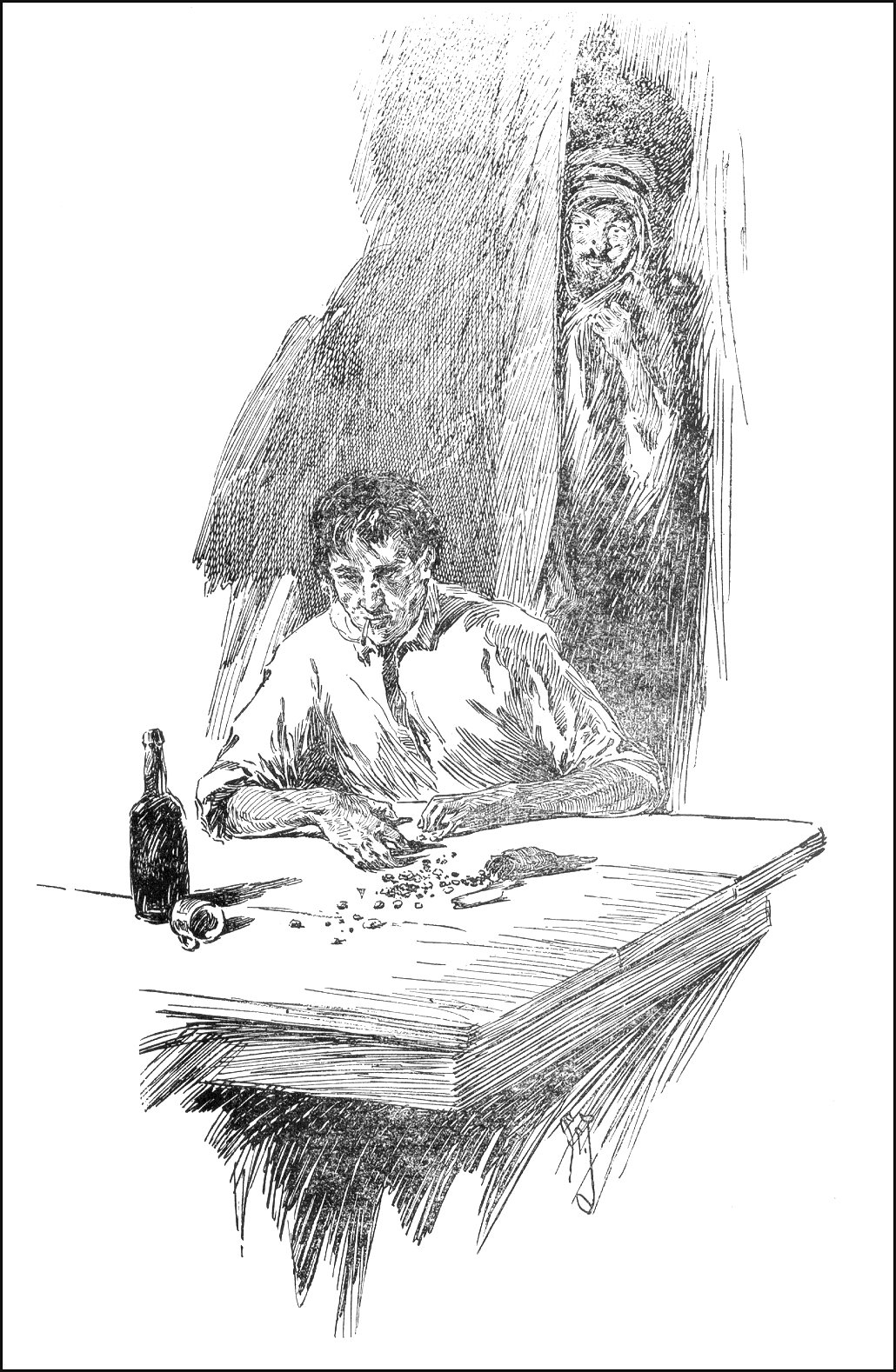
a vicious Arab cut-throat named Achmet Zek. Werper is weak and greedy,
more an opportunist than the outright predator Zek is. Tarzan has returned
to steal a hundred ingots of gold from the hidden treasure vaults of Opar
(hey, the Oparians don`t even know about the gold and wouldn`t have any
use for it if they did, so Tarzan feels it might as well be put to good
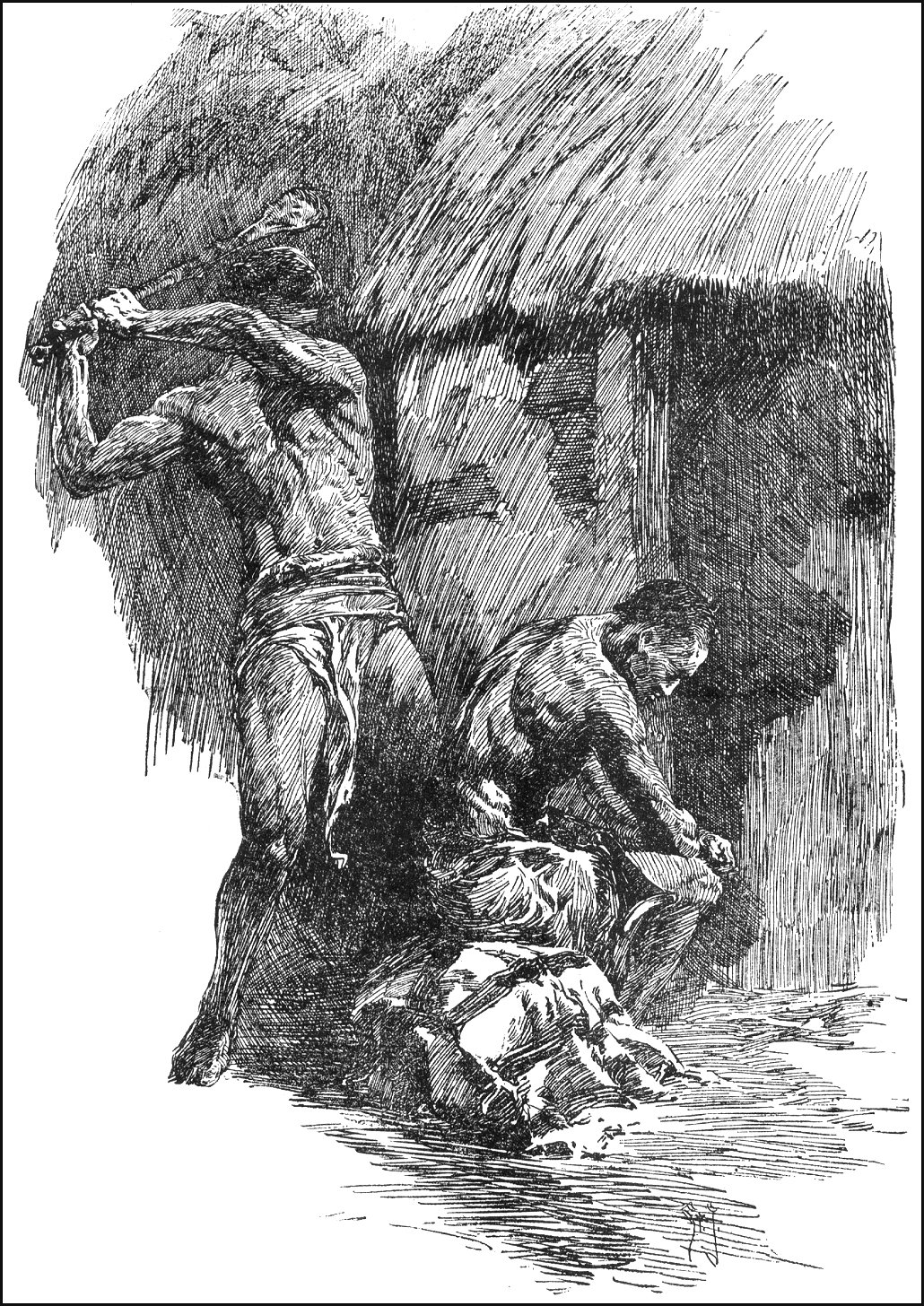
use on his plantation, right?). Werper ends up with a pouch of incredibly
valuable gems (thus, the book`s title). Tarzan gets away with the sacred
sacrificial knife of the Flaming God and so has a steaming La chasing him
with fifty of her brutish followers. Meanwhile, Jane has been abducted
by the Arabs, who think they can get a good price for her in a harem somewhere,
and a giant Waziri warrior named Mugambi* is tracking that party with determination
to rescue Jane and avenge his slain tribesmen. So there are a lot of people
chasing each other back and forth through Afriica, and a lot of agita.
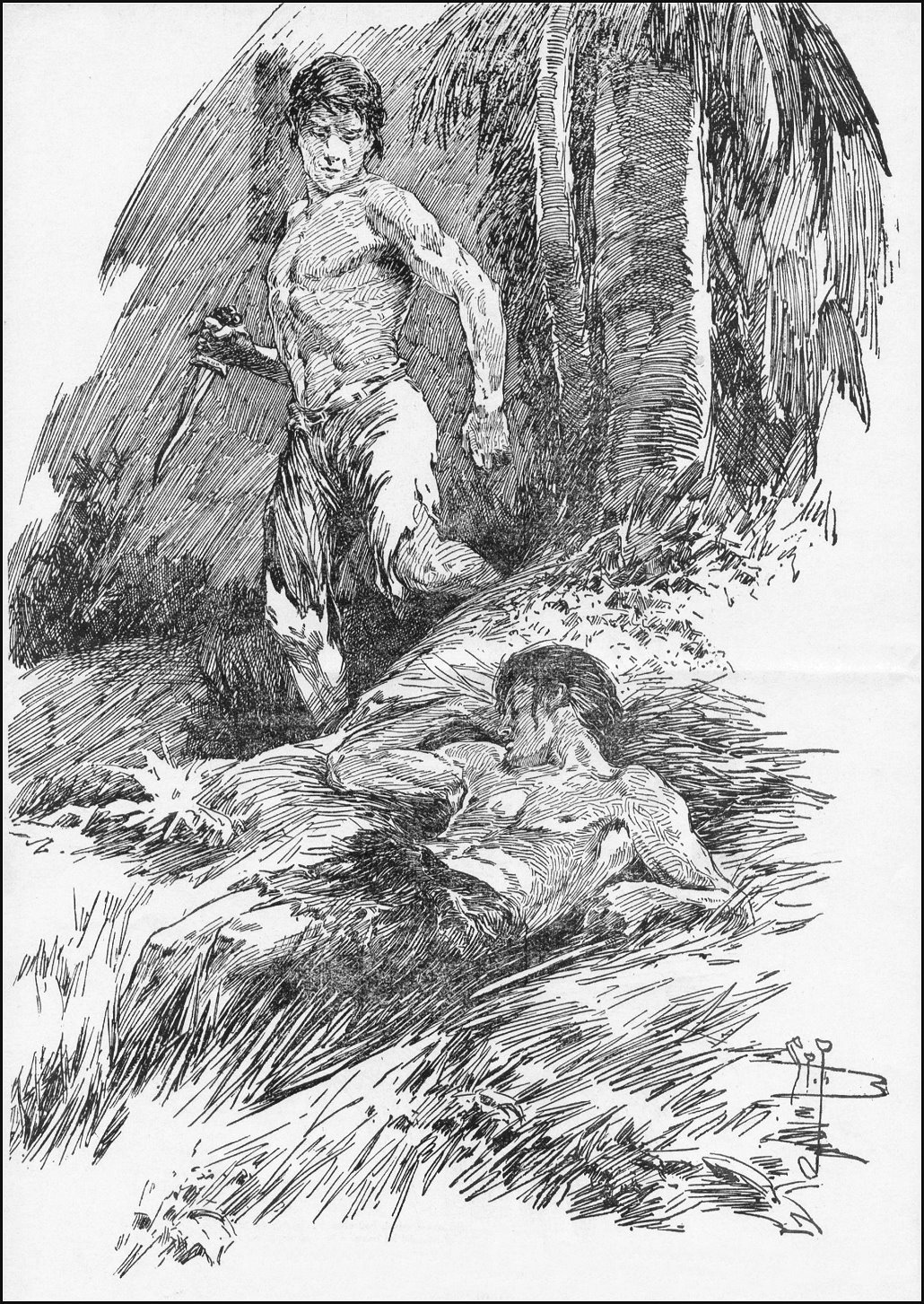
To complicate things just a bit more, Tarzan has been
conked on the head by falling rubble and suffered one of his occasional
amnesiac episodes, where he has forgotten all about everything that happened
since his puberty. More than a few commentaries have wondered if, deep
down, the Apeman doesn`t welcome these memory losses and perhaps subconsciously
cause them. It`s a great way to forget all his responsibilities and
problems, just being a hairless ape running through the jungle for a while.
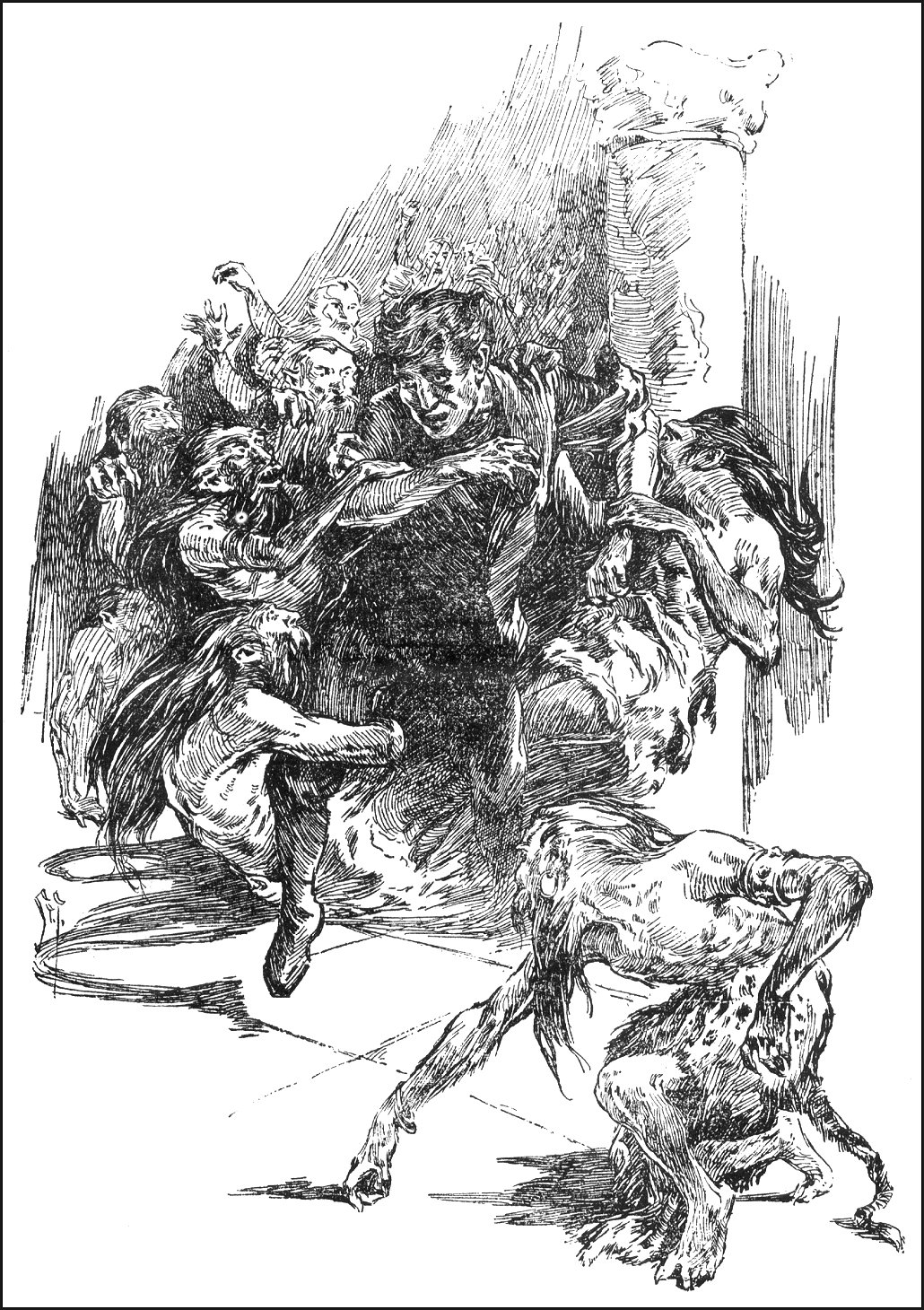
Opar itself is one of the great lost civilizations in
pulp fiction. Crumbling and nearly ruined, the last surviving outpost of
one of Atlantis` colonies, Opar has a population of males who sound a lot
like stereotyped Neanderthals. Short, stocky, with long powerful arms and
bent legs, the Oparians also have interbred with the apes. In fact, they
speak Mangani and have some of the apes living with them. (I`d love to
see National Geographic do a special on these guys.) Yet, somehow through
some real stretching of credulity, the females are still gorgeous beauties
"descended from a single priestess of the royal house of Atlantis who had
been in Opar at the time of the great catastrophe. Such was La."
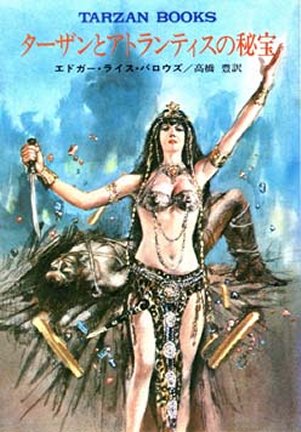
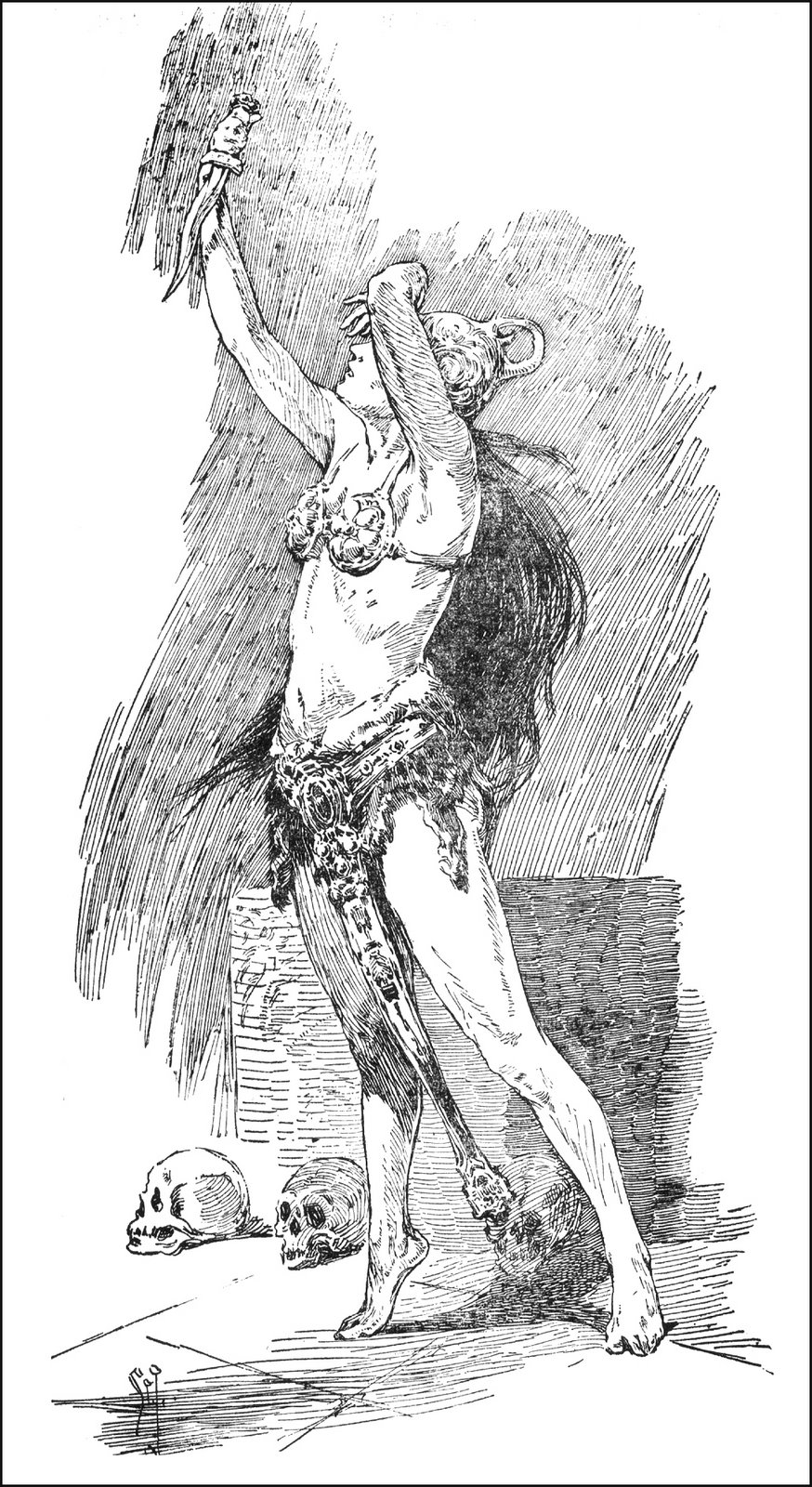
You have to like La, she`s got such a hopeless life. Incredibly
beautiful but condemned to eventually have to choose a mate from the Opar
galoots, she has spent her life sacrificing people in cold blood on the
altars of the Flaming God. As soon as she sees Tarzan, she`s smitten with
lust and becomes a "pulsing, throbbing volcano of desire" (Yowza!). But
of course, Tarzan isn`t interested in her in the least and she decides
to torture him to death. I think we`ve all had relationships like that.
By the way, doesn`t it seem odd that Tarzan doesn`t respond
at all to La? Here`s this completely luscious woman rubbing her body all
over him for hours, kissing him all over, fervently pleading with him to
love her, they`re both essentially naked.. and yet the Apeman just smiles
and goes to sleep. What the heck? At this point, Tarzan is going through
one of his amnesiac periods where he has absolutely no memory of Jane and
yet he doesn`t react to La a bit. Maybe Burroughs was just trying to tease
the readers without having the editor reach that old blue pencil...
Much of what seemed tired and unexciting in the later
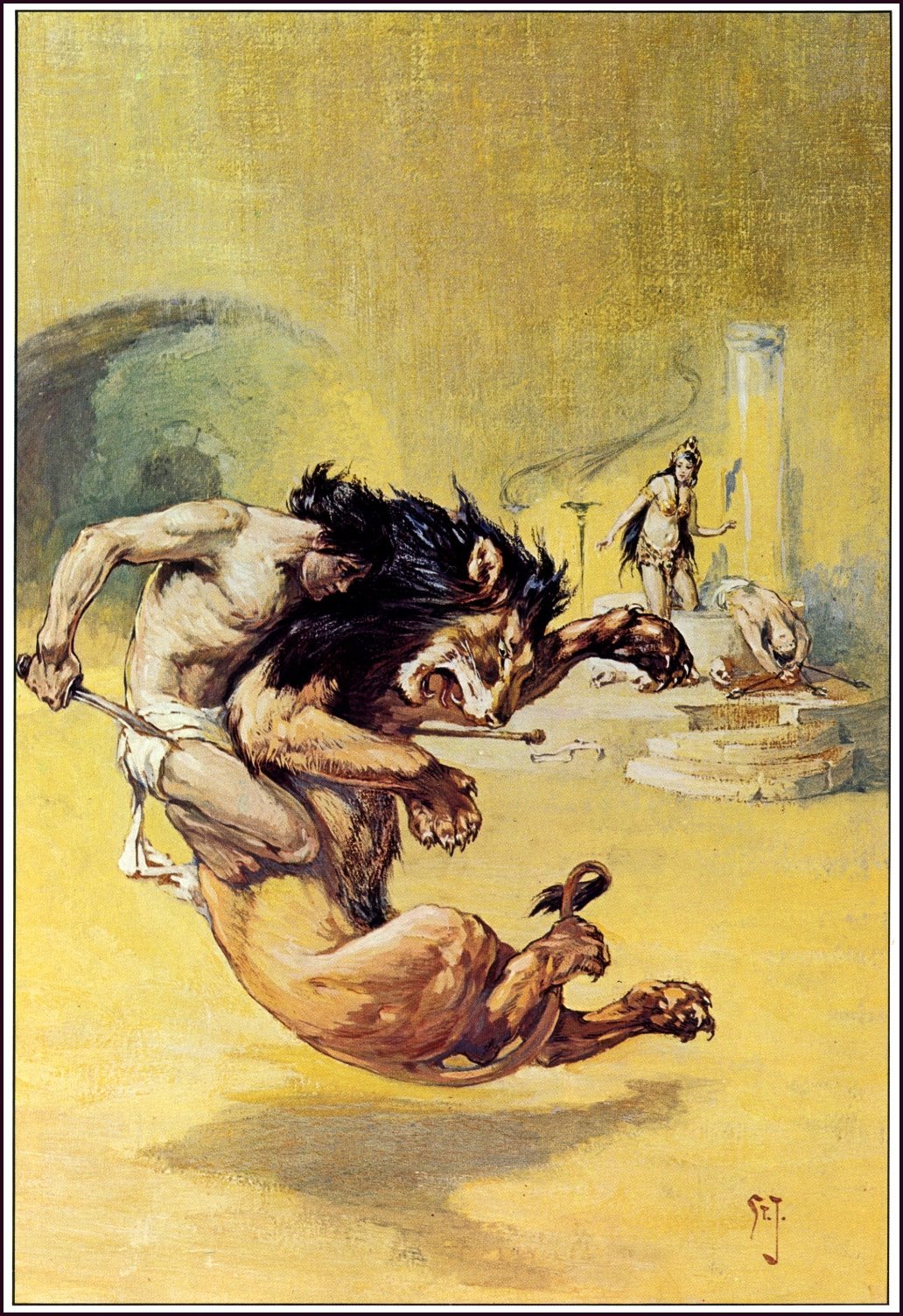
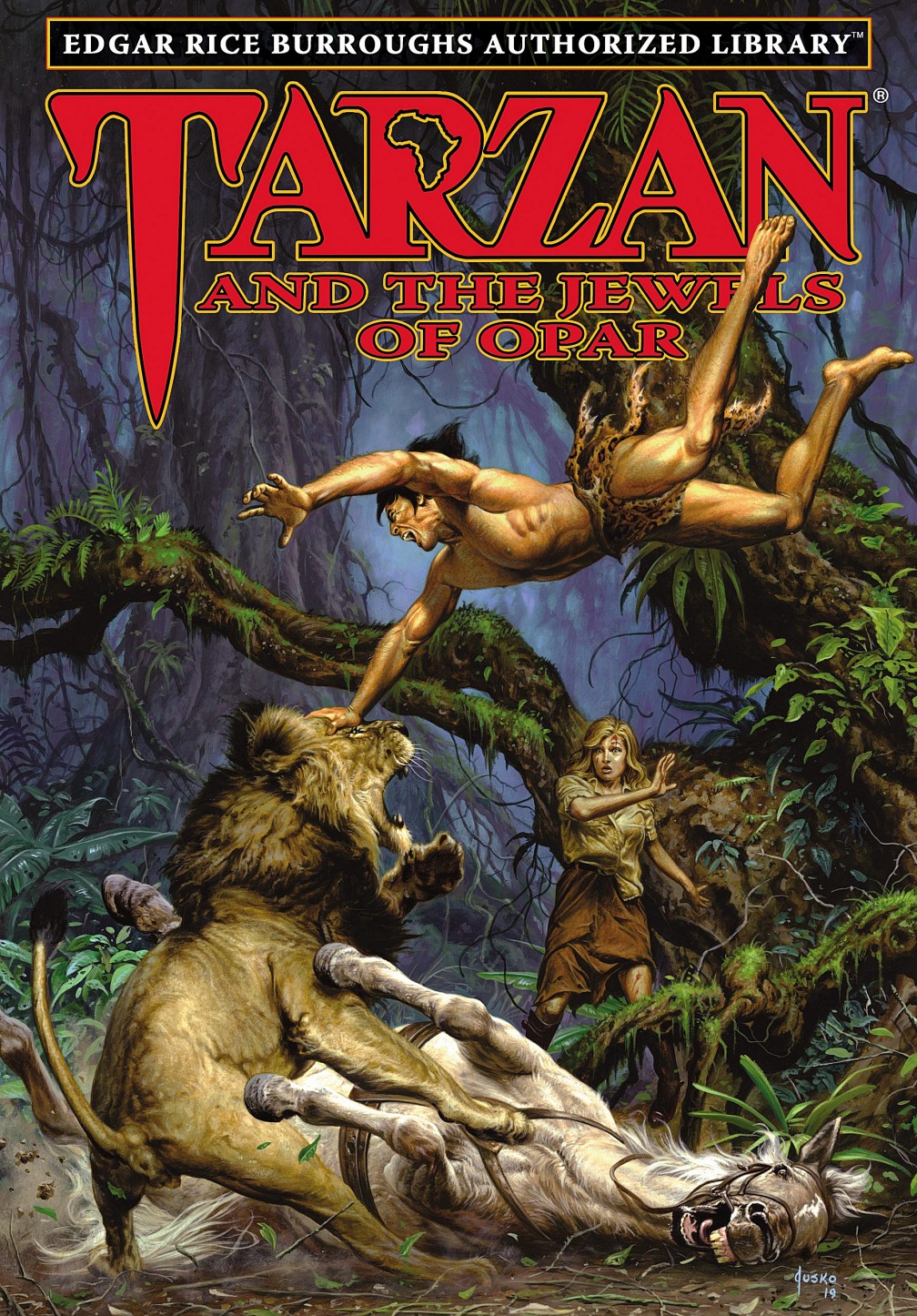
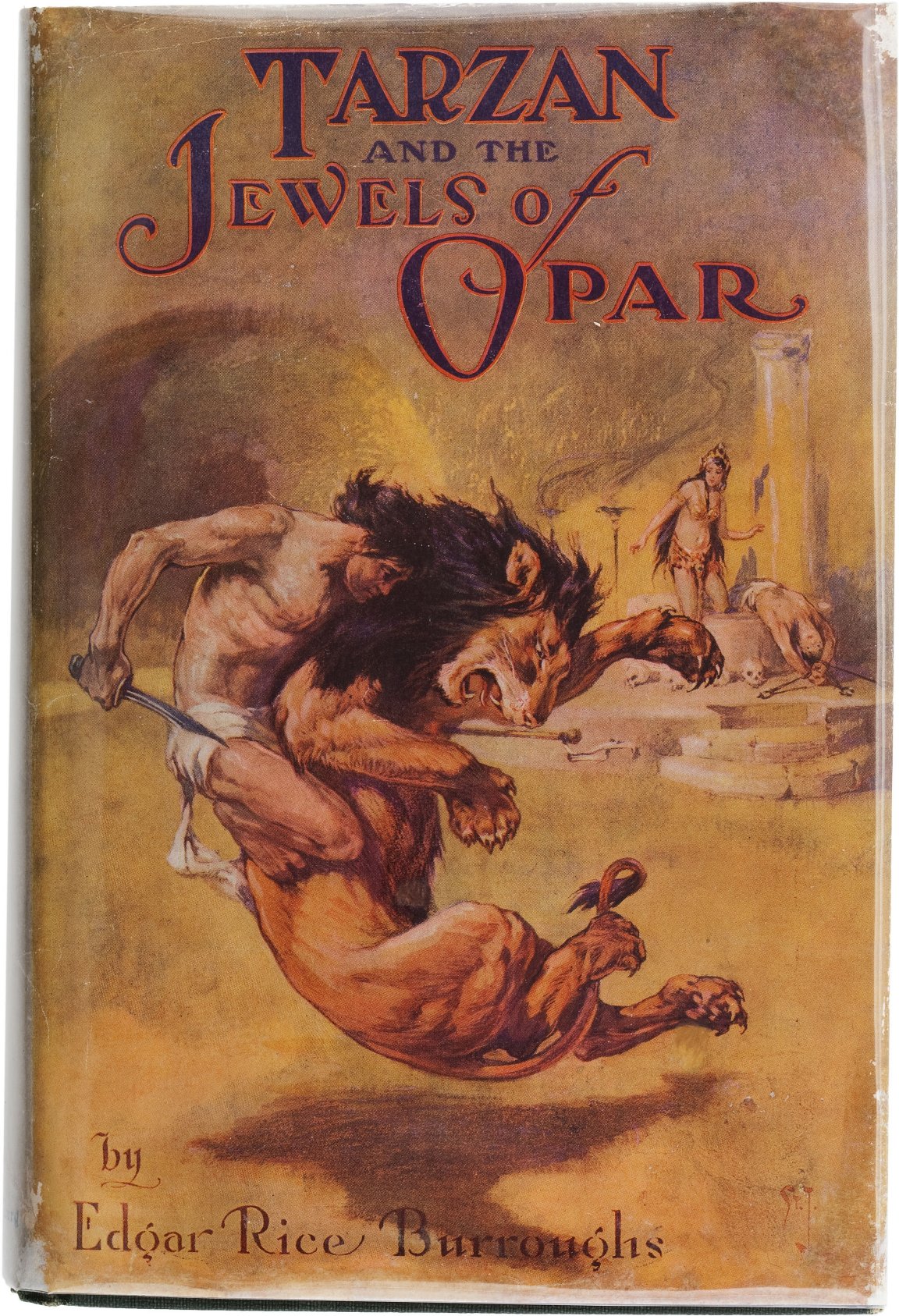
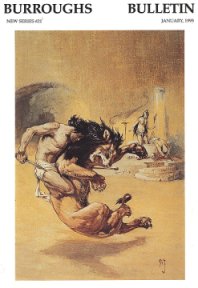
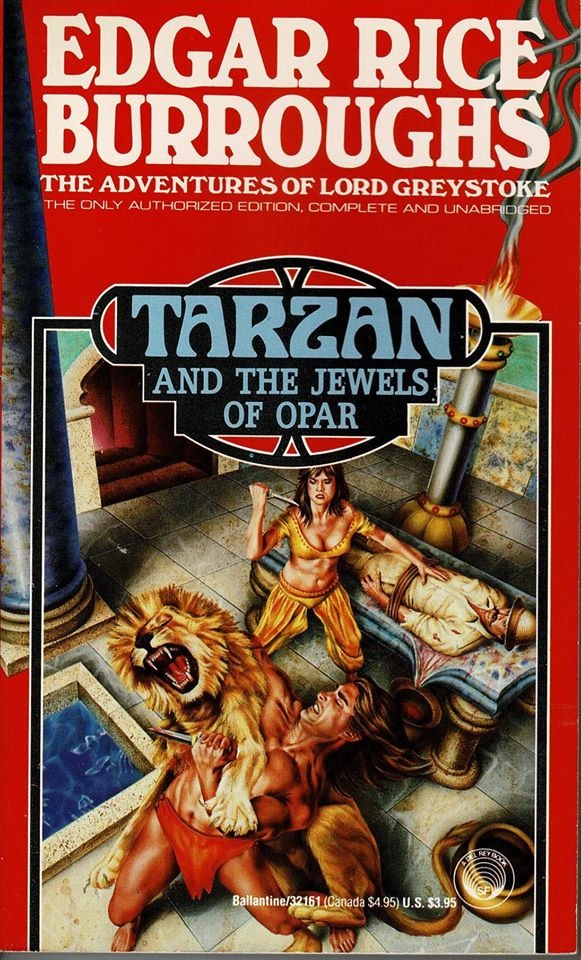
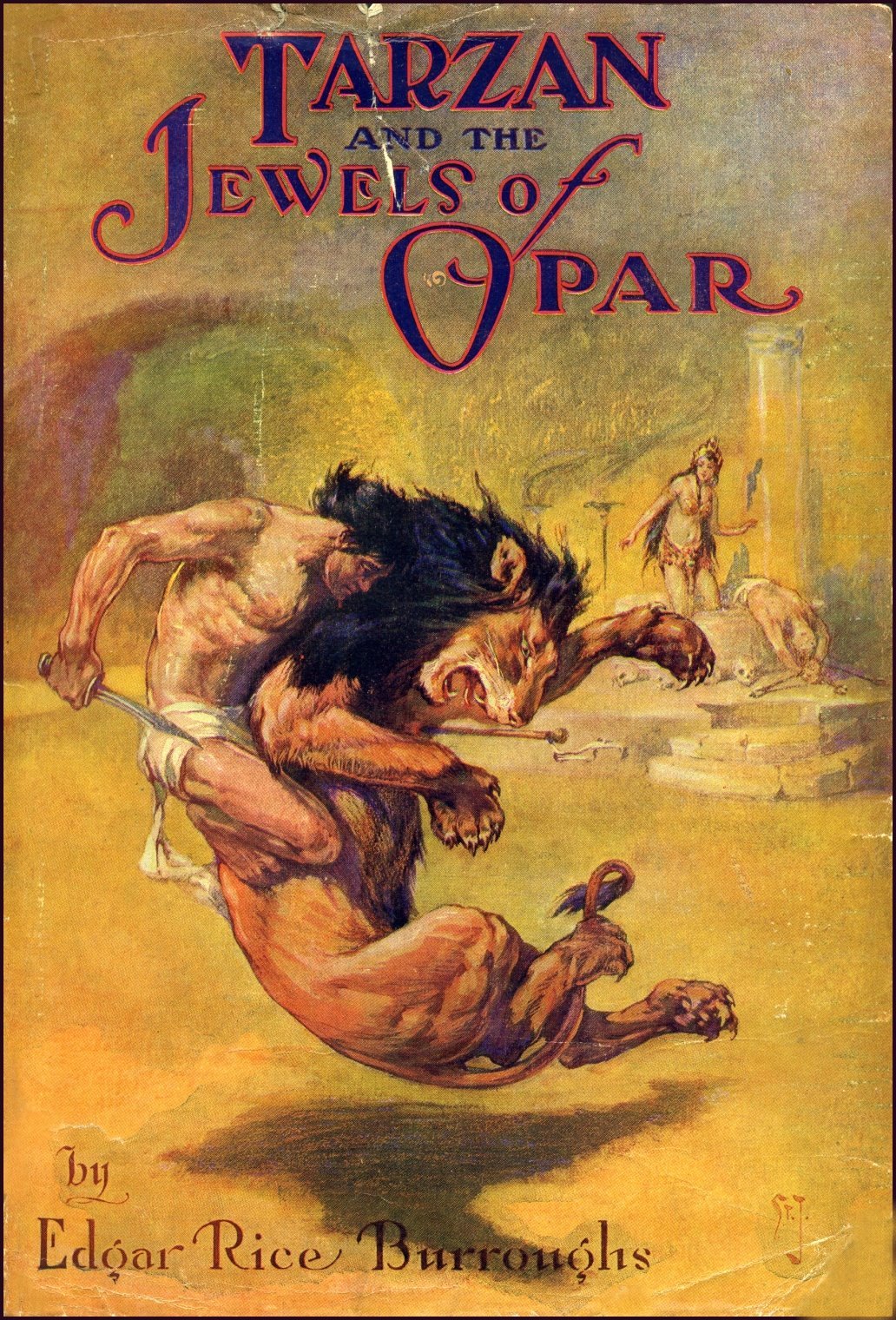
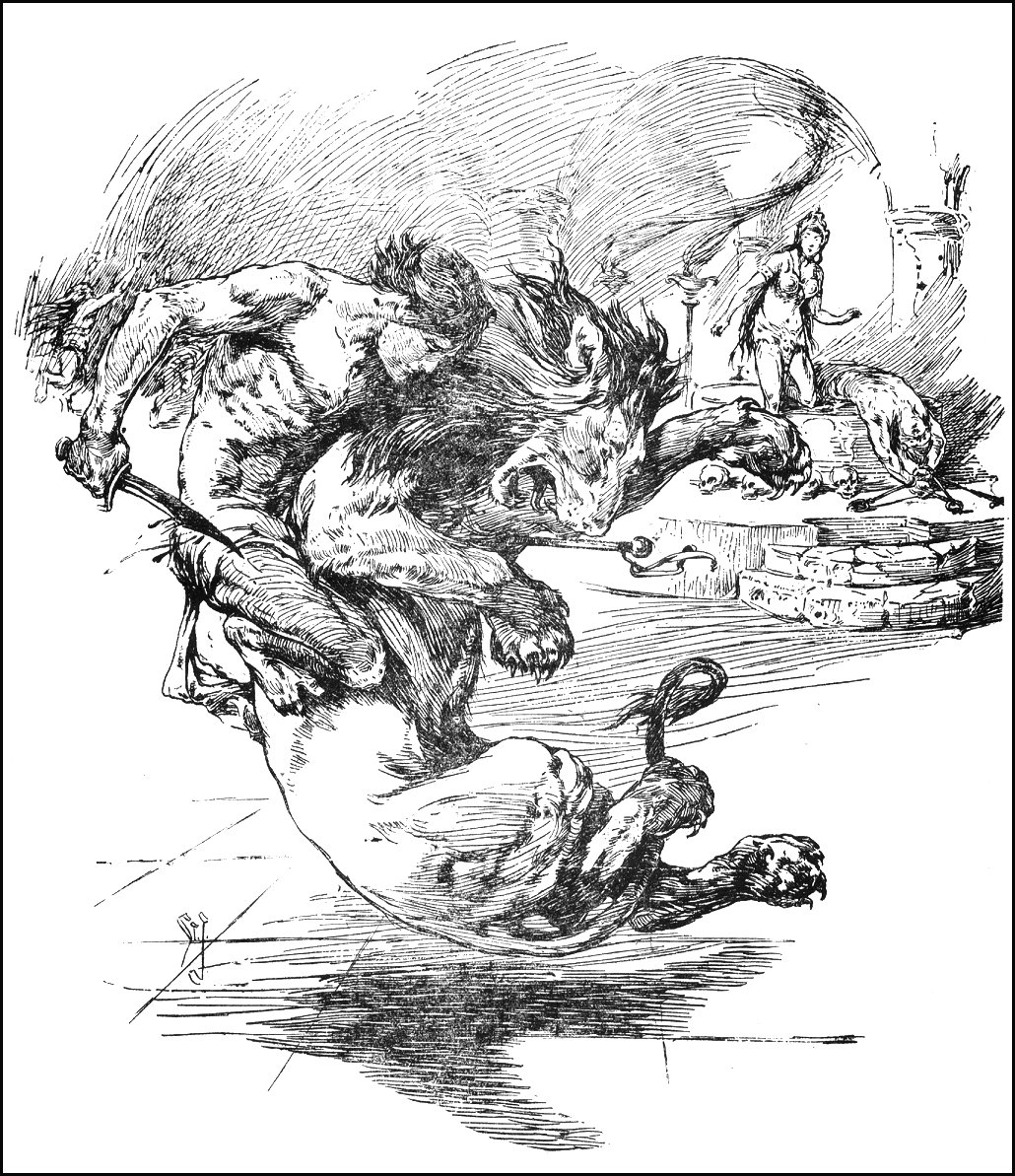
books is here presented with real conviction. When Tarzan leaps on a lion
to kill it with only a knife, it seems as extremely dangerous as it should
be presented. The Apeman takes bruising punishment as the furious cat rolls
about and it`s not the ho-hum routine stunt it seems to be later on. ("To
have loosened for an instant his grip there, would have been to bring him
within reach of those tearing talons or rending fangs, and have ended forever
the grim career of this junglebred English lord.")
Although Burroughs himself quickly tired of Jane
Clayton (even intending to kill her off in TARZAN THE UNTAMED), she brings
a focus and center to the Apeman`s life that he badly needs. Without her,
he slips back into being a one-dimensional character not much more complicated
than his usual film persona. And frankly, Jane is very likeable, a down
to earth lady who can take care of herself even when dealing with Arab
slavers or hungry lions. Her presence is sorely missed after the halfway
point of the series.
*Mugambi is another character who deserved to be used
much more in the books. He first saved Tarzan`s life in THE BEASTS OF TARZAN,
became initiated into the Waziri tribe, and seems to accompany the Apeman
and Jane as a bodyguard and companion. "Now Mugambi had been in London
with his master. He was not the unsophisticated savage that his apparel
proclaimed him. He had mingled with the cosmopolitan hordes of the greatest
city in the world; he had visited museums and inspected shop windows; and,
besides, he was a shrewd and intelligent man." I would have liked to see
Burroughs do a story where Tarzan gets in trouble in London and Mugambi
has to go bail him out.