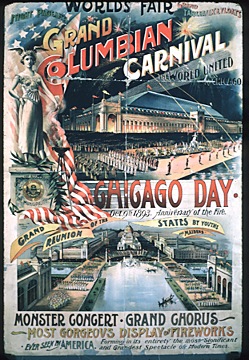
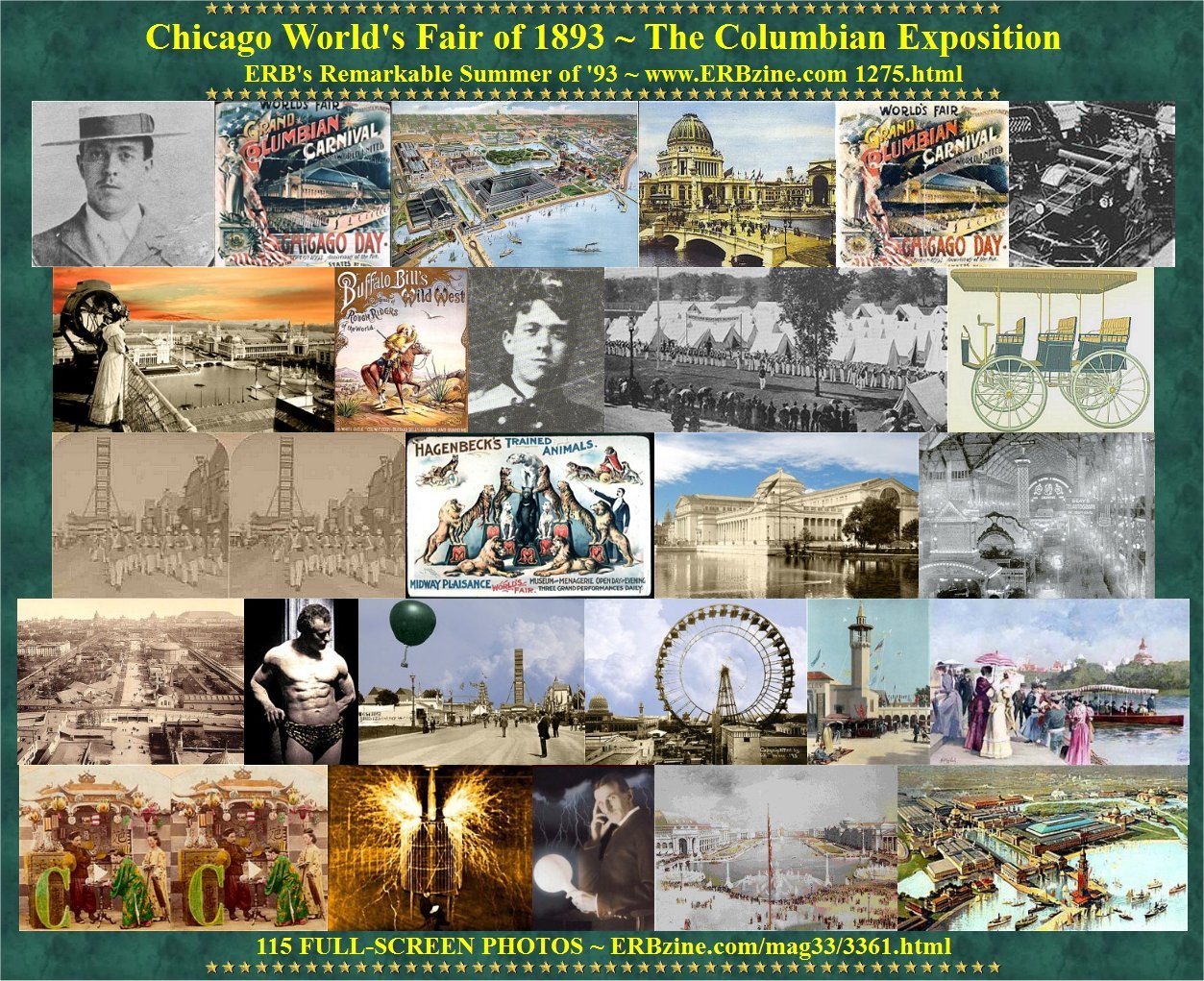
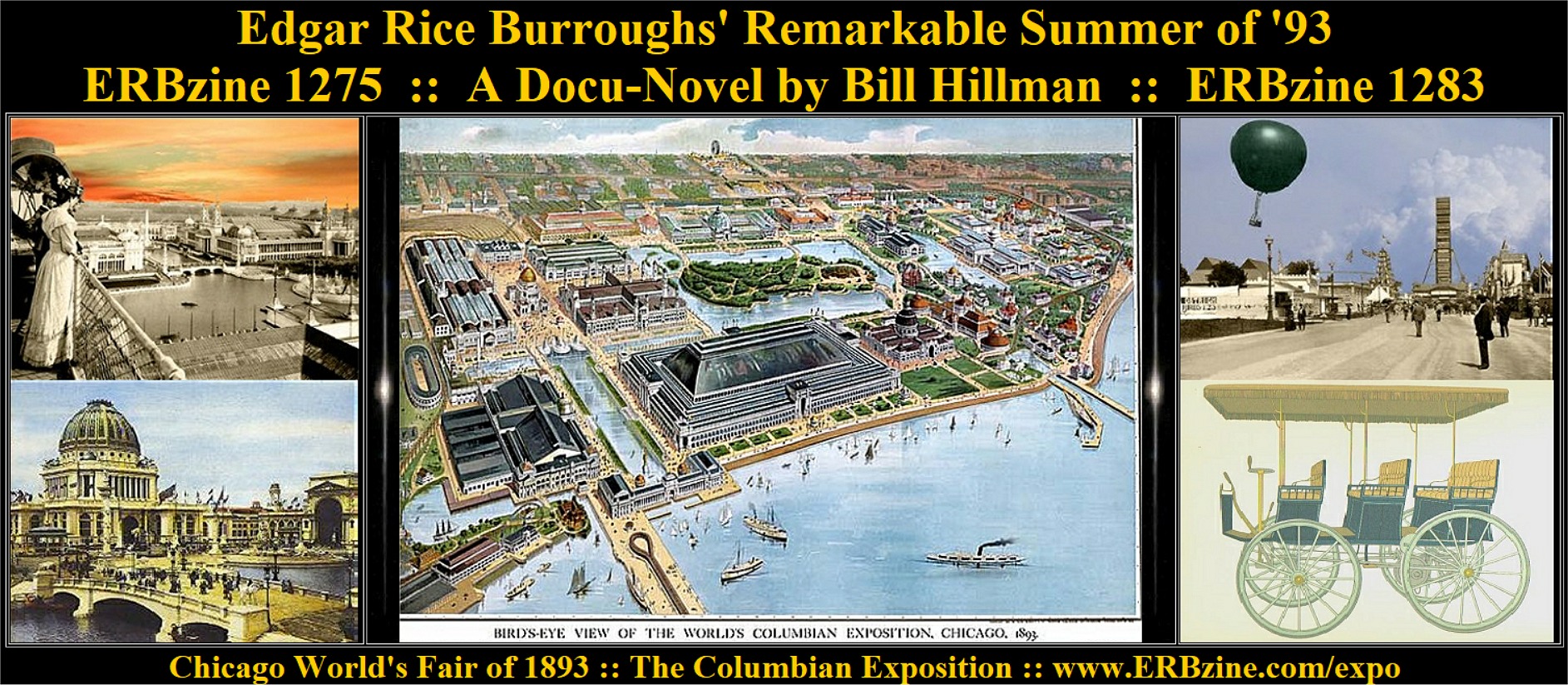
The Chicago Columbian Exposition
of 1893
From May 1 to October 31, 1893, Chicago and its glorious
Columbian Exposition played host to over 27 million visitors -- nearly
one quarter of the country's population at the time. This event was the
last and the greatest of the nineteenth century's World's Fairs -- and
a landmark event in American history and culture.
The Fair was immensely popular and was touted as being
the greatest cultural and entertainment event in the history of the world
-- an amazing achievement for a city that had so recently emerged phoenix-like
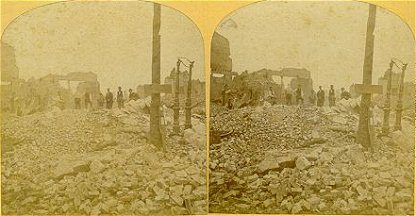
out of the ashes of the disastrous Chicago Fire of 1871.
Many Travellers arrived by "Exposition Flyers" -- Pullman
coaches travelling at the amazing speed of 80 m.p.h. It was before
the Age of the Automobile, before the invention of the airplane, before
the World Wars, and before so many of the inventions and conveniences that
we now take for granted in the 21st Century. The world, led by a young,
emerging and boisterous America, had just entered the Age of Electricity
and the promises of things to come were as exciting as in any time in the
history of Mankind.
The World's Columbian Exposition was a tremendously popular
and influential social and cultural event. Reflecting on the progress of
America in the 400 years since Columbus, it presented the country as a
cultural, commercial, and technological leader. The 1890s was a time when
Americans were undergoing the sometimes painful shift from an agricultural
to an industrial society.
Unlike the state of depression outside the Fair's gates
and in so many of the world's cities, the well-managed and seemingly uncorrupt
Fair had unbelievably clean streets, well-behaved crowds, the most
advanced sanitary and transportation systems, and most of all, it was beautiful
-- so unlike the grey and dusty cities many of the visitors had come from.
In many respects, the Fair in fact was a utopia.
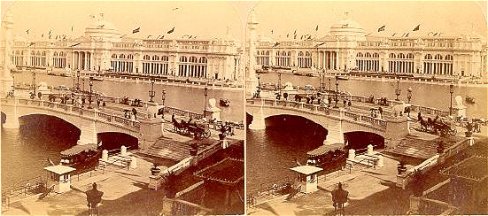
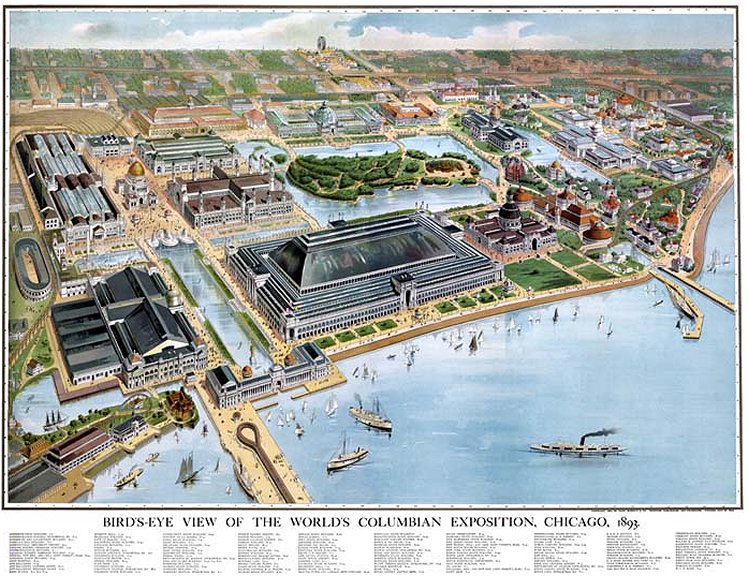
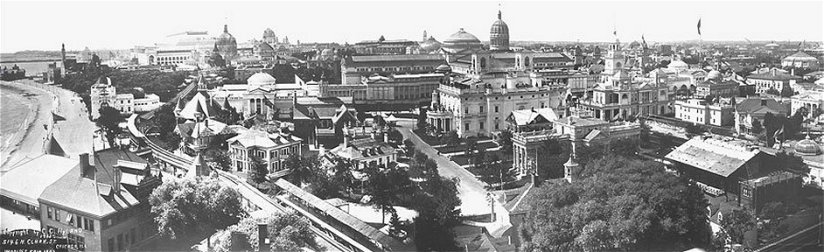
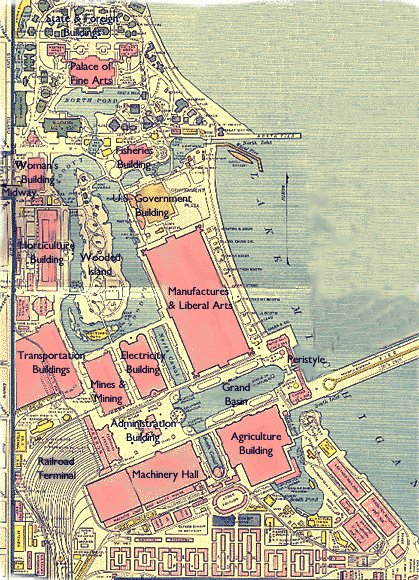
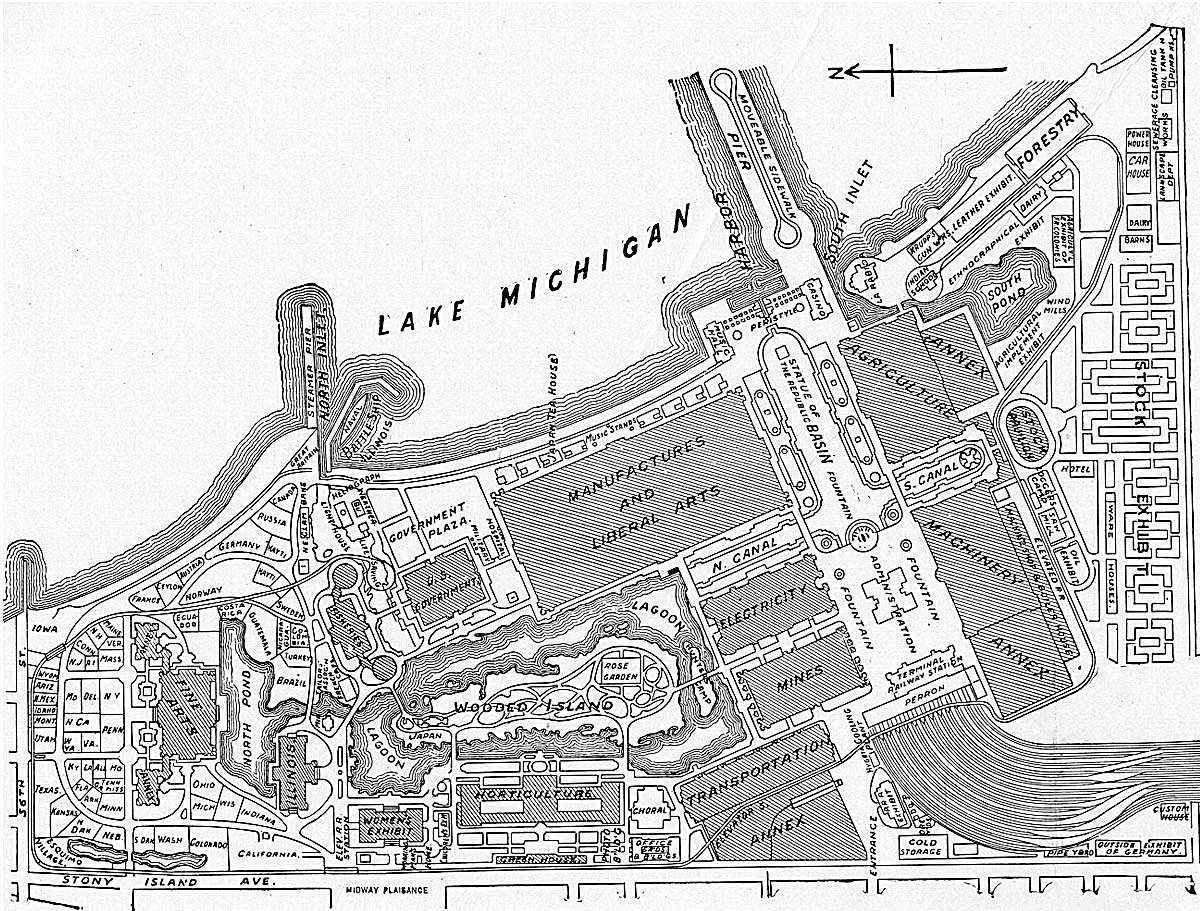
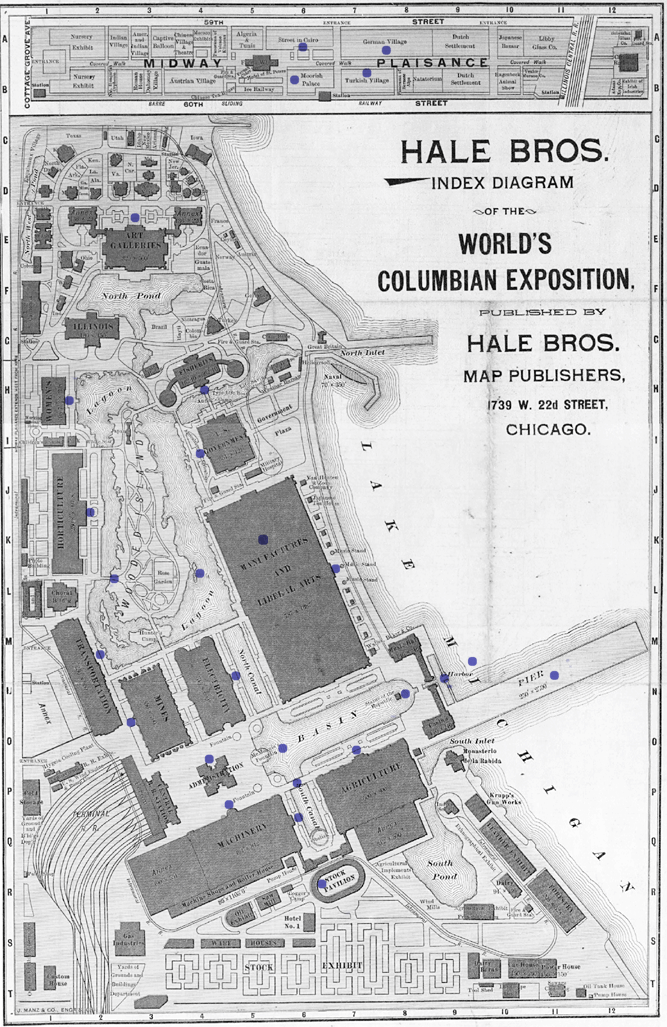
Utilizing the natural landscape of Jackson Park, the designers
created a system of lagoons and waterways fed by Lake Michigan. These bodies
of water served as decorative reflecting pools, waterways for transportation,
and provided a place of respite necessary for weary summer visitors --
the shady Wooded Island.
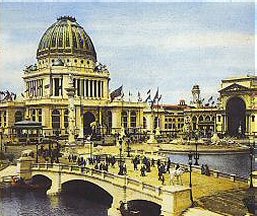
The 14 main buildings surrounding the waterways were in
the Beaux-Arts style, with its emphasis on logic, harmony, and uniformity.
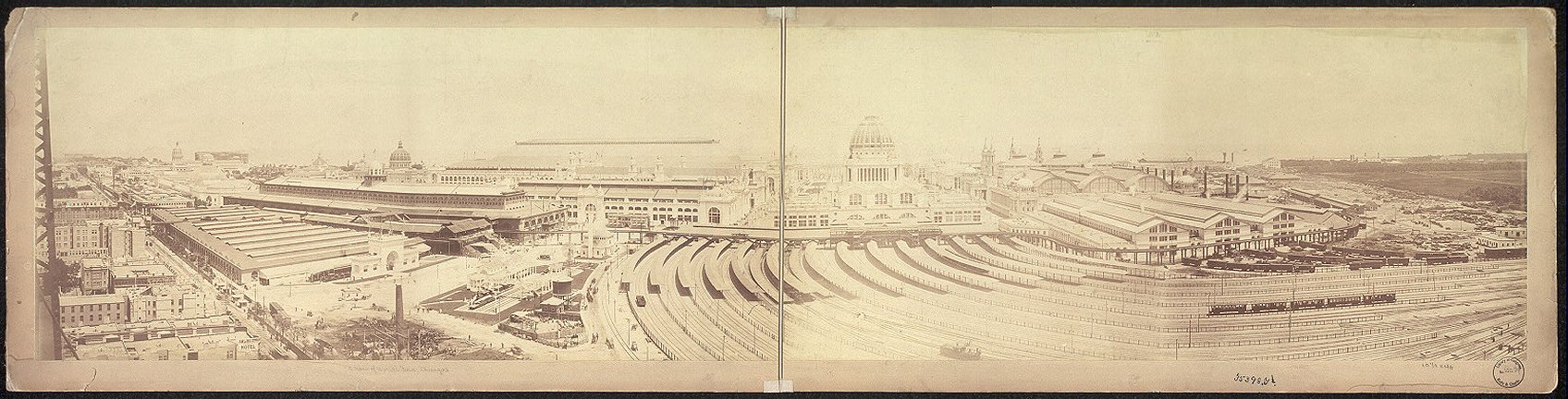
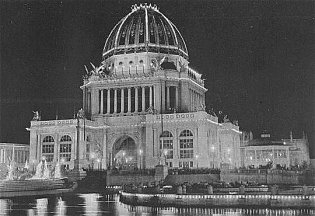
The Court of Honor buildings-- surrounding the Grand Basin with its massive
gilded statue of the Republic -- were covered with "staff," or stucco,
giving the main buildings a magnificent whiteness and dazzling visitors
who arrived at the rail terminal just outside the Fair's gates.
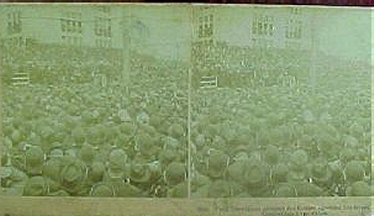 On opening day 100,000 people crowded the Court of Honor
to watch President Cleveland touch a golden lever, electrically sending
into motion the dynamo engines that powered the Fair. After three years
of preparation and at a cost of $28 million, the Fair was finally underway.
Visitors over the six months of the Fair's operation were excited, entertained,
and overwhelmed. The event was calculated to be awe-inspiring, and in the
eyes of most people it achieved its goal.
On opening day 100,000 people crowded the Court of Honor
to watch President Cleveland touch a golden lever, electrically sending
into motion the dynamo engines that powered the Fair. After three years
of preparation and at a cost of $28 million, the Fair was finally underway.
Visitors over the six months of the Fair's operation were excited, entertained,
and overwhelmed. The event was calculated to be awe-inspiring, and in the
eyes of most people it achieved its goal.
Visitors were greeted with 633 total acres of Fairgrounds,
65,000 exhibits, and restaurant seating for 7,000. They were amazed by
the clean and safe elevated railway and the electric launches plying the
canals and lagoons. Guests, on the way to the entertainment and the spectacle
of the Midway felt quite safe with the hundreds of Columbian Guards and
plainclothes detectives on the grounds. Hundreds of concessionaires, selling
everything from souvenir paperweights to popcorn and the newly invented
carbonated soda, hamburgers, juicy fruit gum, Cracker Jack and picture
postcards, crowded the walkways.
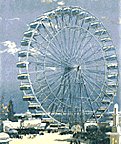
The world's first Midway featured an endless array of
exotic exhibits and rides -- rides such as the hot air balloon and the
first ever giant Ferris Wheel that moved over 1,000 riders at a time with
speeds of 50 m.p.h. Dignitaries, artists, writers, thinkers, inventors,
adventurers and showmen from all over the world gathered here for inspiration
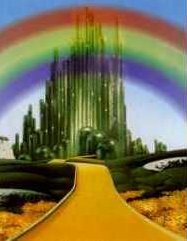
and entertainment. John Philip Sousa wrote an Exhibition march, the magnificent
buildings inspired L. Frank
Baum to create his Emerald City, Scott Joplin developed Ragtime while
playing on the grounds, Dvorak composed the New World Symphony, the
Pledge of Allegiance and Columbus Day were introduced,
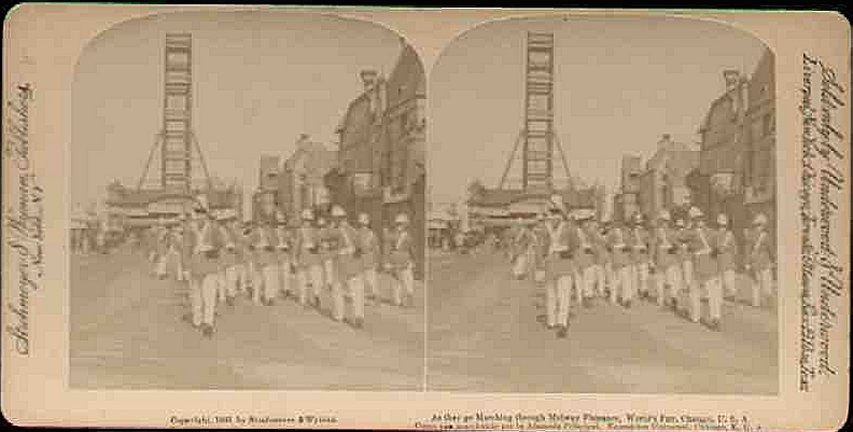
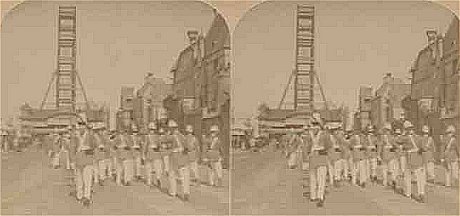
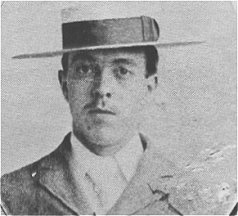
It was this fantastic world in which young Ed Burroughs
and his fellow cadets from Orchard Lake spent most of the month of June,
1893. Not only did they spend their free time exploring the delights and
mysteries of this exotic environment, they also enjoyed parading around
the grounds in their military uniforms, basking in the adulation of curious
thousands of fairgoers. At the end of their stay as cadets they attended
the Michigan Military Academy graduation, held on the grounds, with their
former idolized commandant and one of the most popular writers of adventure
stories of the day, Captain Charles King, in attendance.
 Ed soon returned for the remainder of the summer to assist
his father's company -- the American Battery Company -- in showcasing their
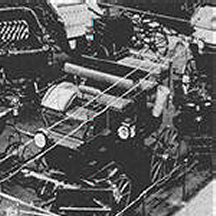
products in a display in the futuristic Electricity Building. The most
exciting part of his duties involved the driving of what many say was the
first electric horseless carriage in Chicago. The sight of this strange
vehicle caused near pandemonium wherever it appeared on the grounds.
Ed soon returned for the remainder of the summer to assist
his father's company -- the American Battery Company -- in showcasing their
products in a display in the futuristic Electricity Building. The most
exciting part of his duties involved the driving of what many say was the
first electric horseless carriage in Chicago. The sight of this strange
vehicle caused near pandemonium wherever it appeared on the grounds.
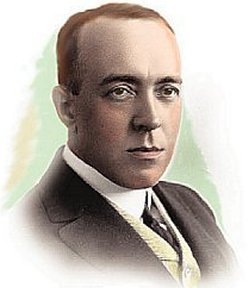
 The influence of this amazing summer of '93 upon the imagination
of the young, impressionable Edgar Rice Burroughs was undoubtedly profound.
Almost all of the wondrous adventures and the fantastic worlds that he
would eventually transcribe to paper 20 years later can be linked to events
that he experienced at the Chicago Columbian Exposition.
The influence of this amazing summer of '93 upon the imagination
of the young, impressionable Edgar Rice Burroughs was undoubtedly profound.
Almost all of the wondrous adventures and the fantastic worlds that he
would eventually transcribe to paper 20 years later can be linked to events
that he experienced at the Chicago Columbian Exposition.
In an ongoing series of "What if...?" or "You are there
. . ." first person journal accounts we will draw upon extensive Columbian
Expo research, combined with what is known of ERB's real life activities
during that summer, and with what the future held for him over the next
incredible 60 years of his life.