Official Edgar Rice Burroughs Tribute and Weekly Webzine Site
Since 1996 ~ Over 15,000 Web Pages in Archive
Volume 8304
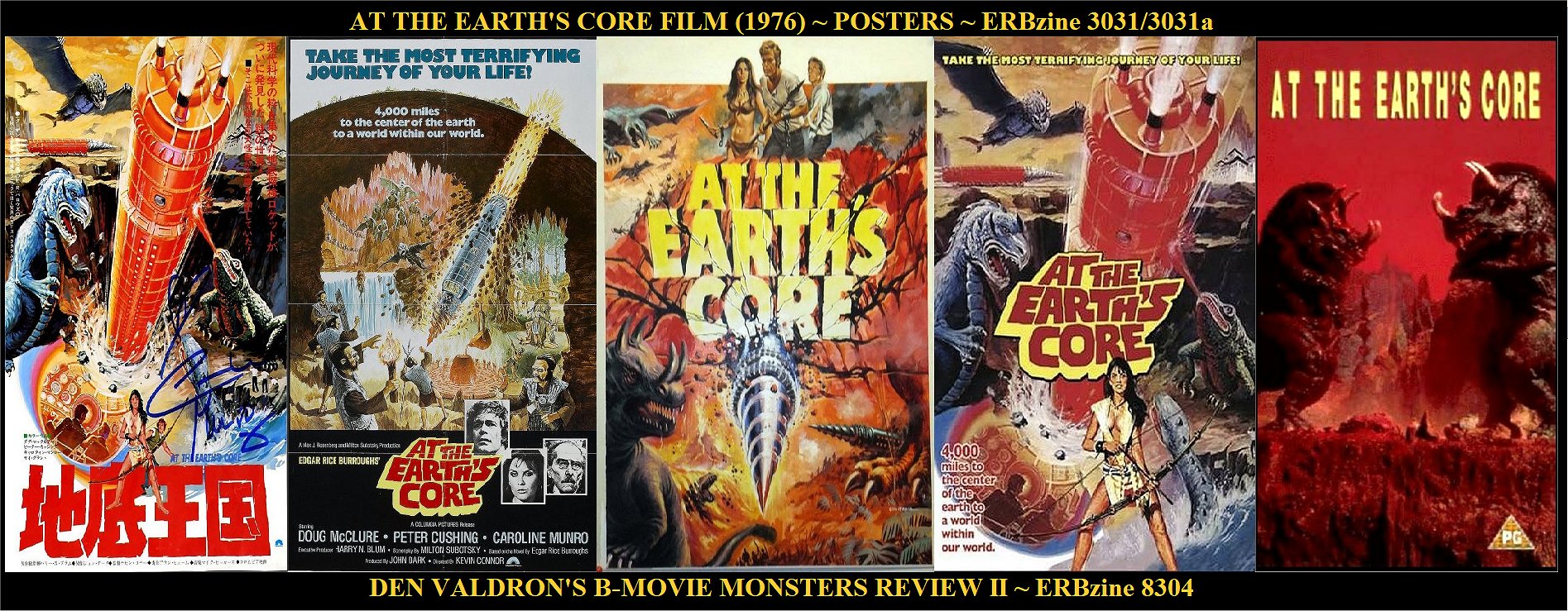
At the Earth’s Core, was the follow up to the
Land that Time Forgot. I’m not sure why.
Rationally, the follow up should have been The
People that Time Forgot, and Out of Time’s Abyss, three novellas comprising
Edgar Rice Burroughs Caspak Trilogy about a weird sub-antarctic Island of
prehistoric life.
I mean, it just makes sense, the first novella,
and the first movie begins and ends with the hero trapped on the Island,
throwing a message in a bottle into the sea begging for rescue. That’s a
cliffhanger, it’s begging for a sequel.
But no, instead, Amicus decided to go to a
second Burroughs series, the Pellucidar novels, about a subterranean world of
prehistoric life at the Center of the Earth. Basically, it’s Jules Verne, but
with more monsters and romance.
Go figure.
Apart from the prehistoric monsters, there’s no
connection between these two Amicus movies. It doesn’t make a lot of sense. But
prehistoric monsters are the point, I guess.
The Land that Time Forgot was chock full of
Monsters. That was the whole point. The underlying premise, evolution made
manifest, was ludicrous. The story, it if can be called that, was a wild series
of left turns, a succession of events rather than a story, which pretty much
describes the novella.
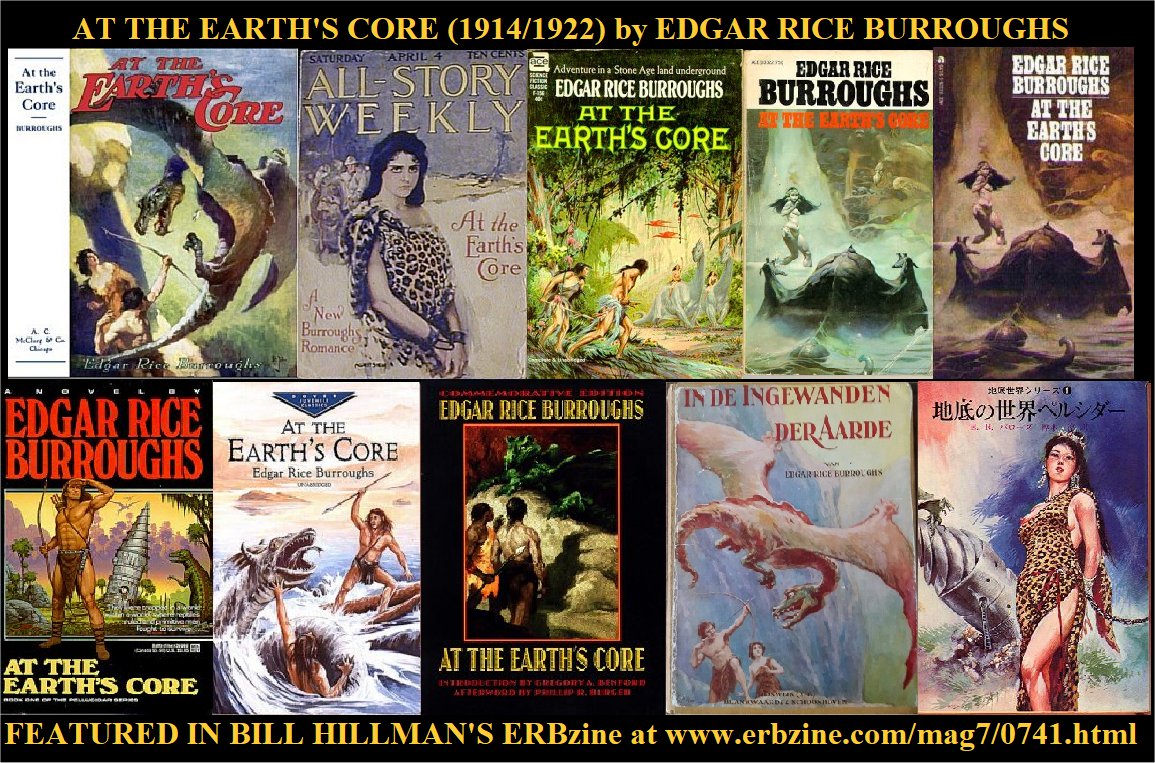
At The Earth’s Core is a more coherent work,
ridiculous in its own way, but coherent. A hero, David Innes, played by Doug
McClure once again, and his mentor, Professor Abner Perry, played by Peter
Cushing, use a tunnelling machine to accidentally go to the centre of the
Earth, where they discover a lost world of prehistoric monsters and primitive
humans. Newly born into this underground world, they’re helpless at first. They start out fleeing monsters, then they get
enslaved, then they make friends with other slaves, discover that the whole
place is ruled by evil monster pterodactyls called Mahars who use powers of
compulsion to literally feed on their slaves, they escape, realize the Mahars
are sitting on a volcano, plot rebellion, fight a few monsters, overthrow the
Mahars and everyone lives happily ever after.
Some have criticized that plotline - the
outsider who upsets the established order and overturns the apple cart as
regressive and colonial, justified only by deliberately making the Mahars as
evil as possible.
I don’t know about that. Switch out
Billionaires for Mahars and you could have a modern day story. The Epstein
revelations have shown us how enthusiastic our ruling class is for young human
flesh. Between the Mahars and guys like Altman, Bezos and Thiel there’s not
much difference, except that at least the Mahars are quiet about it. The human
predator/parasite class refuses to shut the hell up, their toxic narcissism on
full display.
But enough of politics, setting aside the
ridiculousness of a world at the centre of the earth and a plot relying on
telepathic Pterodactyls, there’s a real story going on in both the novel and
the movie.
Compared to The Land that Time Forgot, Amicus’
At the Earth’s Core manages to be entertaining in a completely different, but
equally clumsy and ham handed way - there actually is a story here, a plot,
some actual ideas at work, a through line of relationships and romance that
evolves. It’s less a pinball machine this time and more an actual narrative.
It’s actually a compelling pulp, B-movie narrative, with a story that functions
from start to finish, has a meaningful resolution, has characters that evolve
and relationships that develop, and checks all the boxes of good story telling.
In that sense it works.
And if the Land that Time Forgot used up all
the really good dinosaurs, At The Earth’s Core had an answer: They just made themselves up new ones, or at
least freely adapted whatever leftover prehistoric monsters they could find
into something new and bizarre.
For me, that’s actually kind of fun, seeing
these bizarre creatures that aren’t quite like anything you’ve seen before. They
straddle the line between compelling prehistoric and joyfully bizarre.
I freely admit, At the Earth’s Core is not a
great movie. Setting aside the ludicrousness of the premise, the script is
underwritten - Apparently, Peter Cushing was frustrated by how sparse and
responded by ad libbing a lot, and sometimes you can clearly tell. Mostly the
acting is pretty tosh, Doug McClure is beefy but bland, with just enough of a
belly roll that he’d never pass muster in an action movie today. Caroline Munro
doesn’t bring much to the part, but then again isn’t given much to work with.
Everyone is locked into B-movie mode.
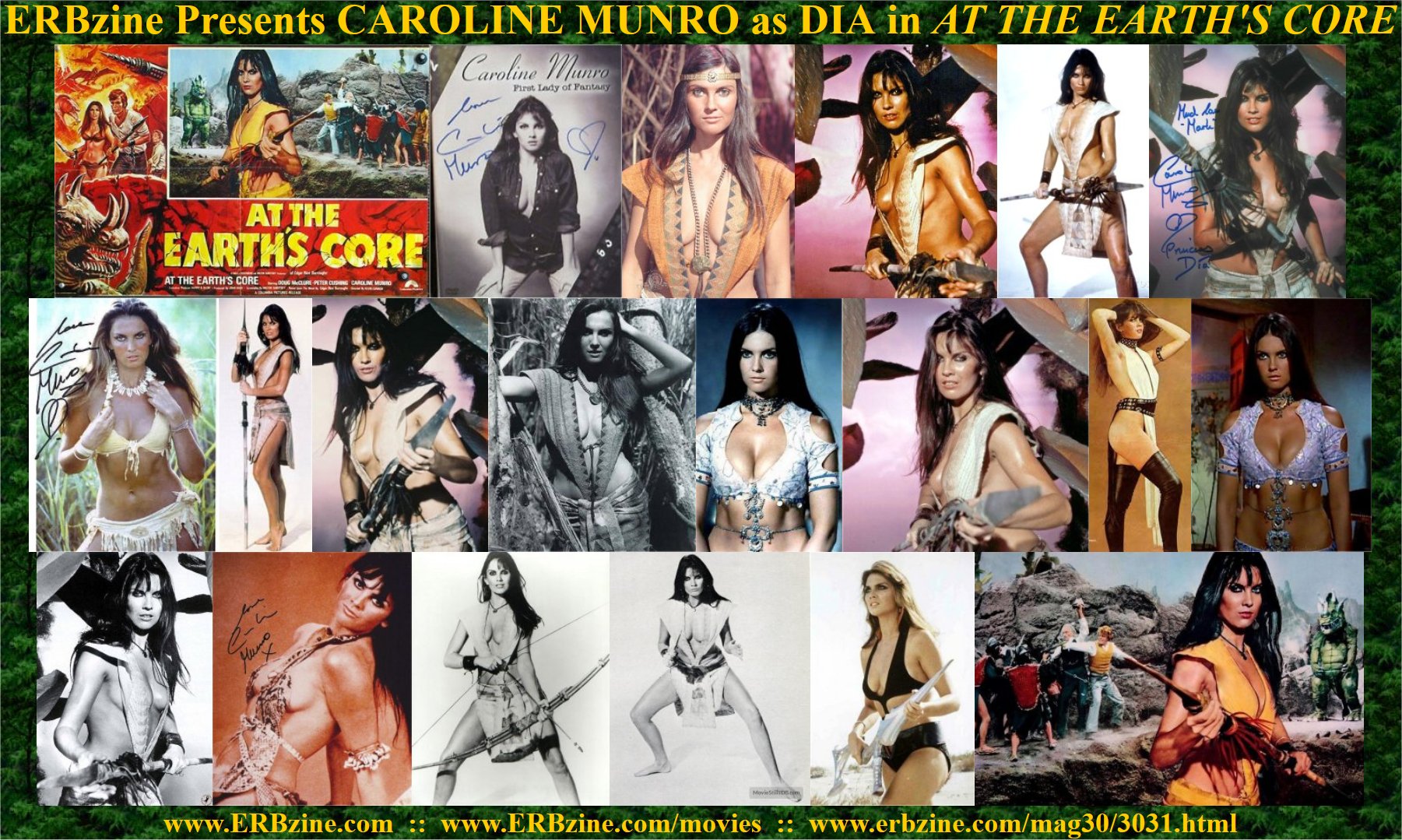
Okay, maybe I’m unfair to Munro. In her first
appearances onscreen, she’s a genuinely charming presence. But after a while
the script doesn’t give her much to do but stand there and scream on cue.
Her best moments though come at the end. In the
film, it’s established that women are basically property - a guy likes a girl,
he beats up and runs off the competition, and she’s his. Innes fights and wins
her, and she’s okay with that. But at the end, when it’s time to leave, she
says ‘no.’ She’s staying here in her world, breaking David’s heart a little,
but asserting her autonomy and indicating cave man society is a little more
complicated than let on. She’s making a choice.
Of course, realistically, if she had gone up to
the surface, she’d have been dead of a common cold or some other commonplace
bacteria in a week. Pellucidareans would have no immunity to anything on the
surface.
This is actually a nice touch particular to the
movie. In the novel, David thinks he’s taking Dian with him, only to discover
when he reaches the surface, that she was kidnapped and switched out for a
trussed up Mahar under a blanket without him noticing. I’m just going to leave
that there for the implications to sink in.
This isn’t the same Peter Cushing that
dominated screens as a muscular Doctor Who, a commanding Baron Frankenstein or
a two fisted Doctor Van Helsing in the 1950s and 60s by the way. Cushing’s wife
Helen had fallen ill and passed away in 1971, and Cushing had aged ten years
literally overnight, becoming a visibly frail old man. Still, he’s game, and
his character here so resembles his version Doctor Who in look and temperament
that some people, including Mark Gatiss creator of Sherlock and a Doctor Who
writer himself, consider this to be effectively Amicus’ third Doctor Who film.
The direction is uneven. There are genuinely
tense and effective scenes, as when McClure’s character crawls among sleeping
Mahars. But there’s also a lot of ‘just get the shot in the can’ sort of
directing. Given the money probably not surprising. This is a British movie
shot in sound studios, often with a fraction of American budgets.
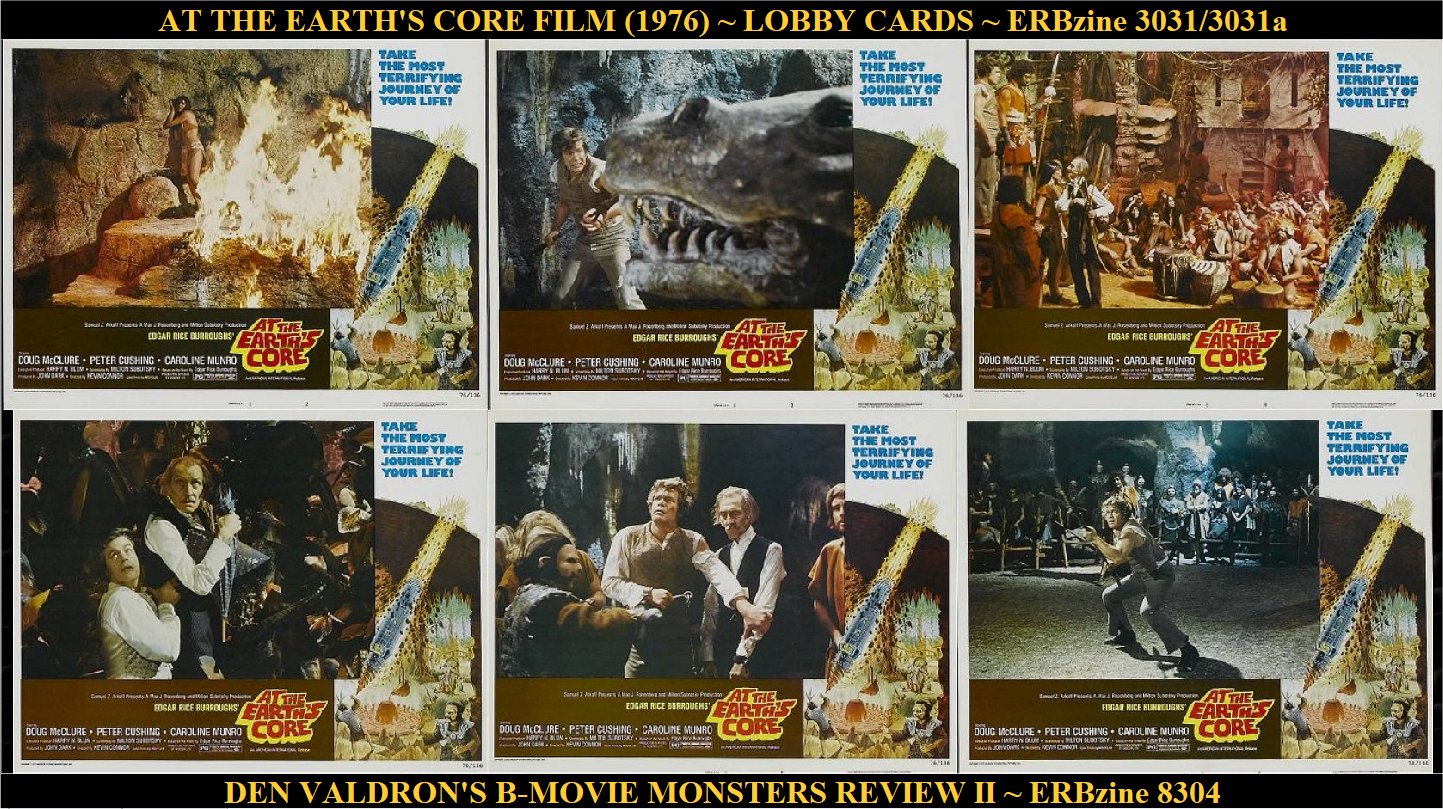
Often the film struggles with its monsters -
both the Mahars and the Saurus are very immobile costumes, you can’t do much
with them, so to give them drama and tension, there’s a lot of close ups and
cuts to the point that it gets tiresome, it’s like parts of the film were
edited by a meth-addicted hyperactive child. Even with the rapid sequence of
quick cuts around monsters, struggling to avoid the fact that the costumes
can’t do anything, its still bad so the light is turned down, everything is
shadows, and pyrotechnic fire effects get thrown in, as increasingly desperate
attempts to distract.
And there’s other issues than just the costumes
being unwieldy. For instance, the
telepathic, mind controlling Mahars. How do you portray telepathy in a movie?
Mostly the Mahars just stand there looking scary, holding their wings out like
reptilian Dracula-parrots, while their eyes flash, a musical chord strikes, and
there are all these quick cuts The Mahars can’t talk, they’re not supposed to
do anything. So it’s tricky.
Also, they’re up on rocks ten or fifteen feet
up, so the stuntmen have to be careful - they probably couldn’t see out of
those costumes, it’s hard to move, you’re in a precarious location and you
could get killed easily if you slip and fall a dozen feet. So the Mahars
generally, are pretty immobile, and once again, you have to get all
psychedelic, shooting with quick cuts, jarring music and flashing lights. It is
what it is, and I suppose they get away with it.
On the other hand, there’s a lot to like. The
monsters are often cheesy fun. The Bos battle, when two porcine behemoths have
their sumo match works great in a professional wrestling spectacle kind of
way. That’s a Bos battle by the way, not
Boss. In the promotional material, they’re called ‘Bos’ - it’s a great fight!
As with the previous Triceratops vs Ceratosaur fight, it’s just there. Nothing
to do with the plot, but great for a sense that this is a world where stuff
just happens, and the protagonists and humans are just a part of it passing
through.
And I really have to call out the production
design. Pellucidar is genuinely exotic. There’s no greenery anywhere. This is a
world without chlorophyll. Instead, we get this jungle landscape of alien
plants in muted reds and browns, trees and shrubs and giant toadstools in
profusion. And when it’s not alien vegetation, there’s chasms, cliffs and
ledges, a playground of rock. It’s all sound stages and if you look, you can
see the edges of sets. But it’s easy on the eyes, exotic and vivid. Even
clearly a sound stage, with rear projection and compositing tricks, there’s
something pleasingly alien to the landscapes of the Earth’s core. High marks.
Along the way, I’ve ended up watching a few
other ‘Journey to the Center of the Earth’ movies, and visually, this is the
best of the bunch. Usually its just rocks and beaches and debris and now and
then someone throws up a forest of giant mushrooms or a lost city.
As to entertainment value, The Land that Time
Forgot and At The Earth’s Core represent the high points. No doubt about
that. But this runs a very close second,
and it manages to be its own movie succeeding and failing in very different
ways than it’s predecessor, while still feeling familiar.
After that, though the rest of the trilogy, it
kind of falls apart. I can’t say that
any of these movies are actually good. I think they go over better now than
when they were made. These were all films from the late 70s - this was the era
of Star Wars, but also Jaws, the Deer Hunter, Urban Cowboy. It literally is
mind-breaking to think that the Amicus monster movies were coming out in the
same era that both straight and adventure cinema was literally re-writing the
rules in terms of acting, storytelling, production design and cinematography.
These movies were literally anachronisms in
their own time. They were throwbacks to the late 50s and early 60s. They
belonged in the glory days of Harryhausen and the Showa Godzilla franchise. I
can’t imagine how they were even made. Part of that seems to have been the
sensibilities of Amicus partner Milton Subotsky, whose sensibilities can best
be described as archaic.
Oddly, I think these movies work better today,
now that we’re literally a half century removed. When we watch them, we know
that they’re old and clunky. We accept that.
We’re not watching them in the way we did when
they came out, when they were alongside Star Wars or The Howling or American Werewolf,
or the Deer Hunter or Saturday Night Live - when they were comparing to their
contemporaries.
Instead we’re watching them in the context of
the Godzilla and Gamera movies, Jason and Sinbad, and of the early dinosaur
potboilers. We place them automatically into the age of cheese, where we’re
willing to forgive obvious zippers on the monsters, the quick cuts, the bad
acting and awkward dialogue, and just appreciate the manic verve that these
movies have.

| INTRODUCTION |
LAND THAT TIME FORGOT |
AT THE EARTH'S CORE |
PEOPLE THAT TIME FORGOT |
| ALL ERB NOVELS |
LAND THAT TIME FORGOT |
AT THE EARTH'S CORE |
PEOPLE THAT TIME FORGOT |

BILL HILLMAN
Visit our thousands of other sites at:
BILL and SUE-ON HILLMAN ECLECTIC STUDIO
ERB Text, ERB Images and Tarzan® John Carter® Priness of Mars® are
©Edgar Rice Burroughs, Inc.- All Rights Reserved.
All Original Work ©1996-2026 by Bill Hillman and/or Contributing Authors/Owners
No part of this web site may be reproduced without permission from the respective owners