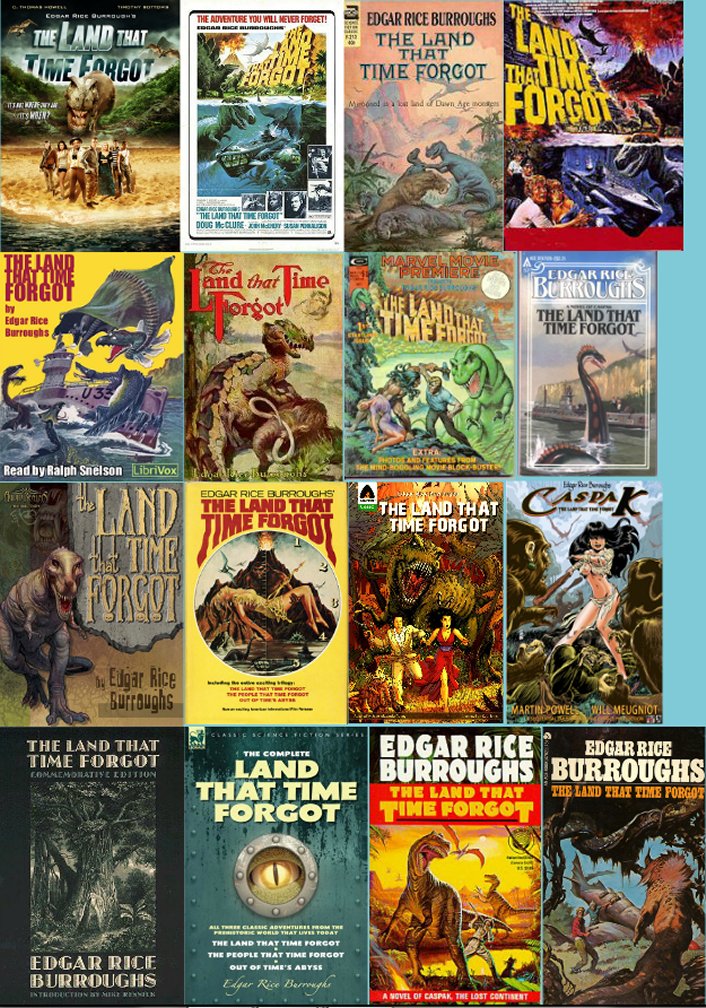
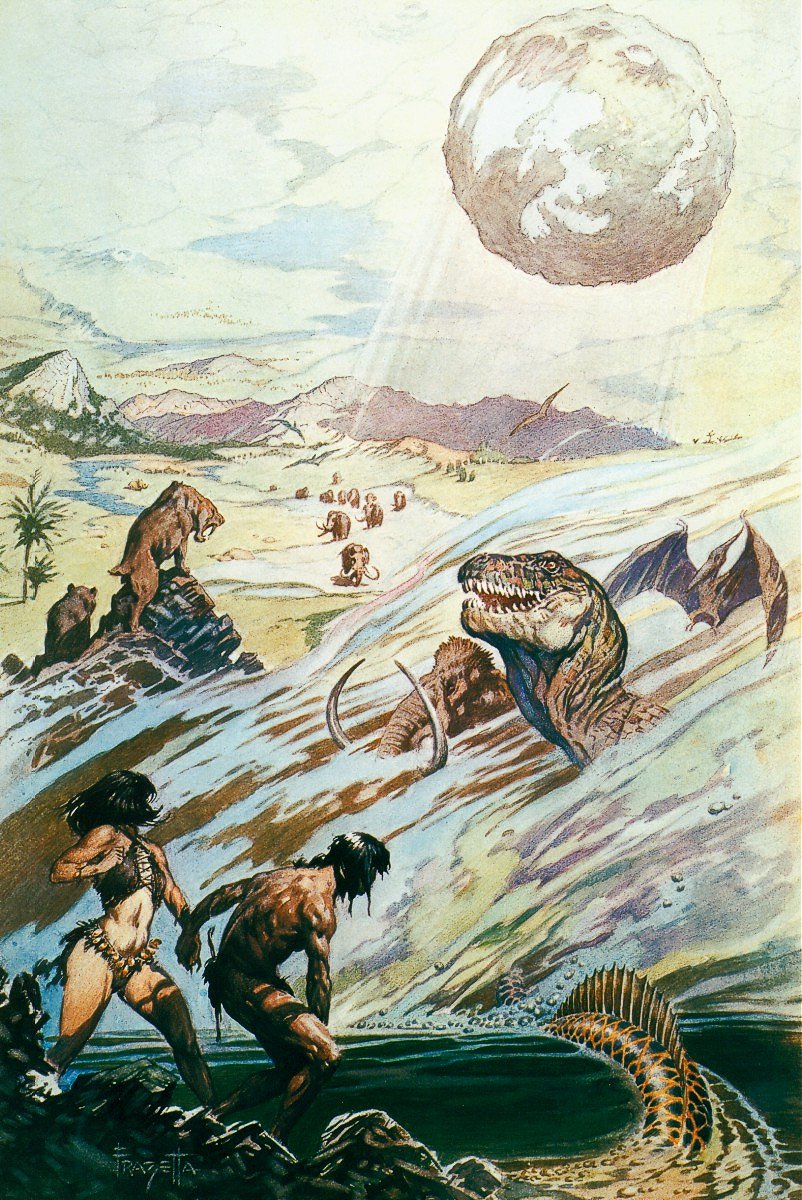
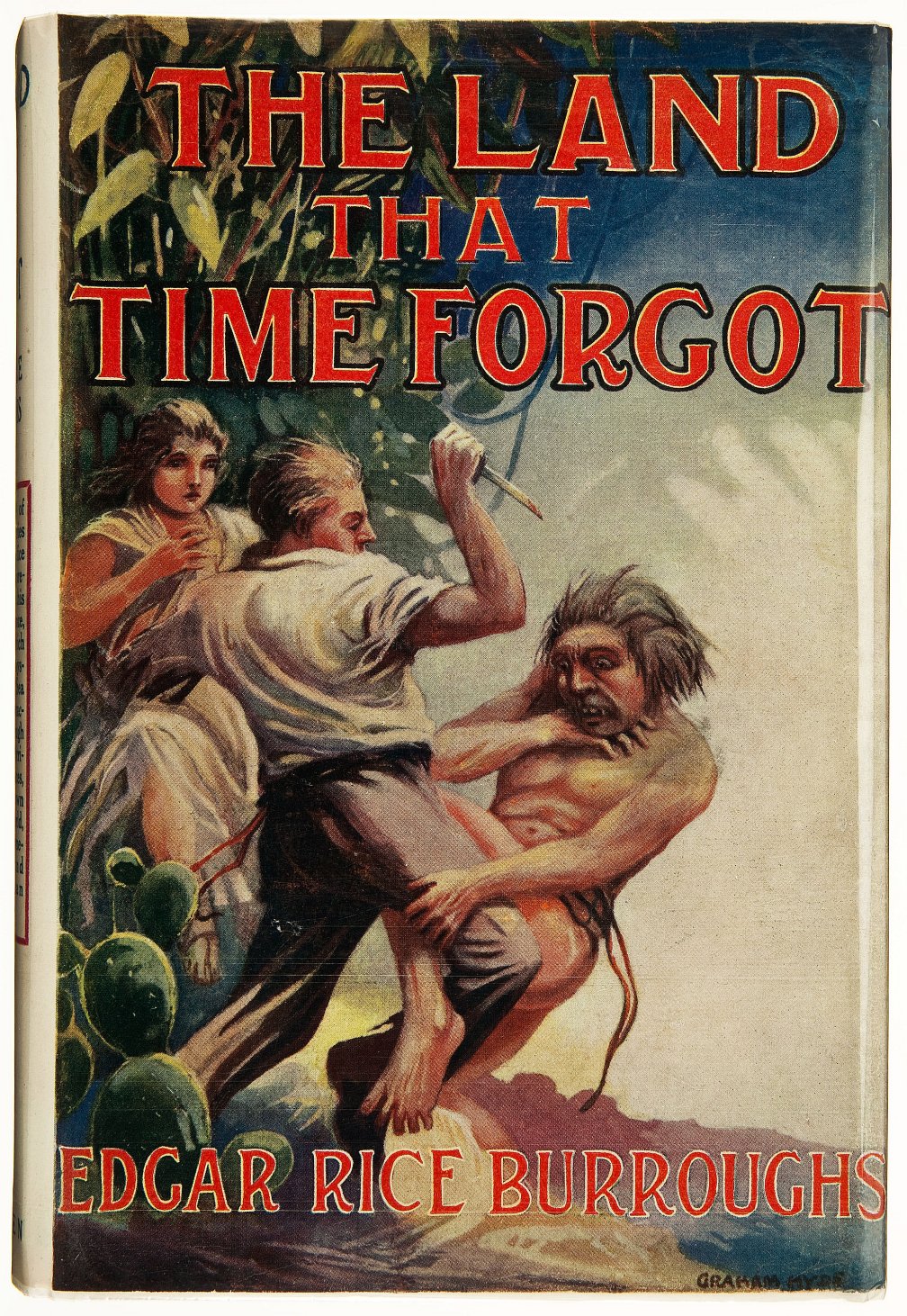
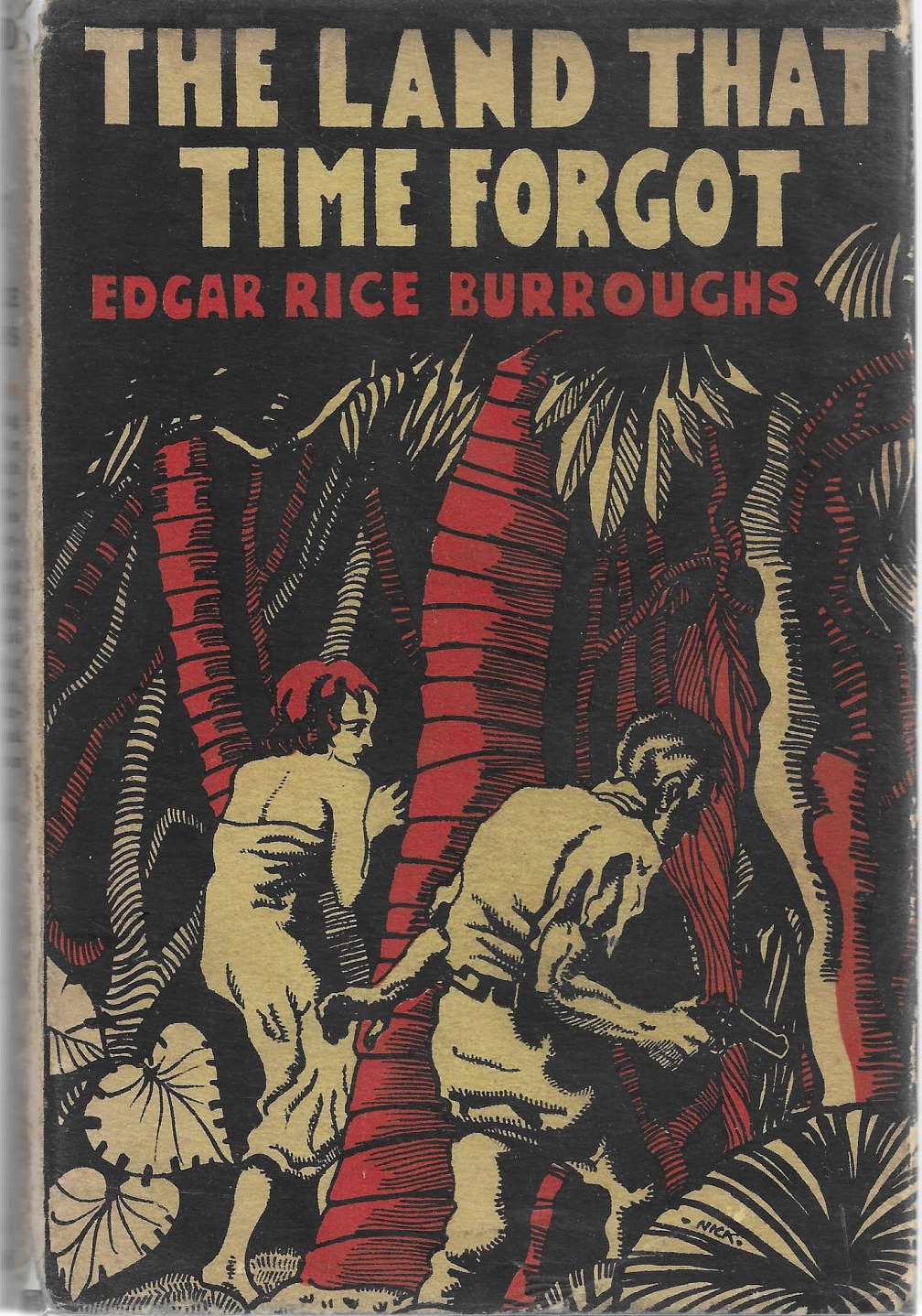
|
Caspak Series
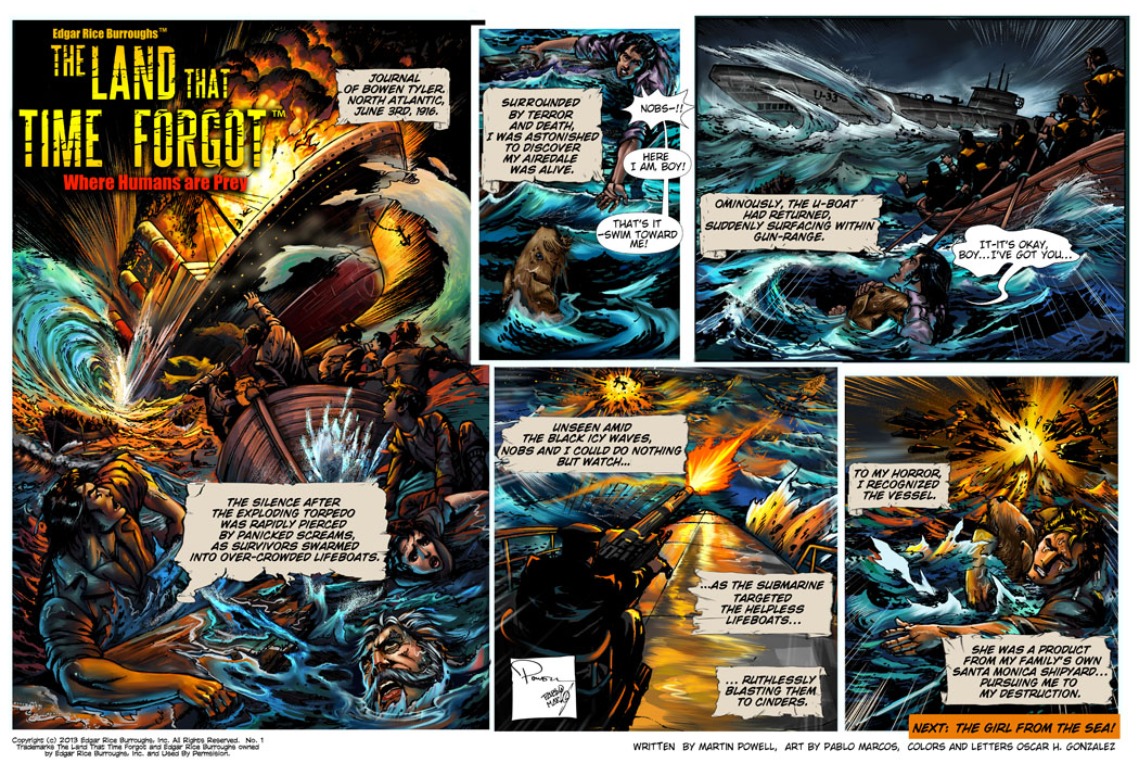
Bowen Tyler's fabulous adventure began with a
terror-haunted
trip as a captive in an enemy submarine-only to end on the rocky shores
of a monster-ridden lost world where time had stopped. Thus begins one
of the most thrilling sciencefiction series that the creator of Barsoom
and Tarzan ever conceived-the epic of the lost continent of Caprona and
of the American who first set foot there.
A manuscript is recovered from a thermos off
the coast
of Greenland purporting to be the journal of Bowen J. Tyler, an
American
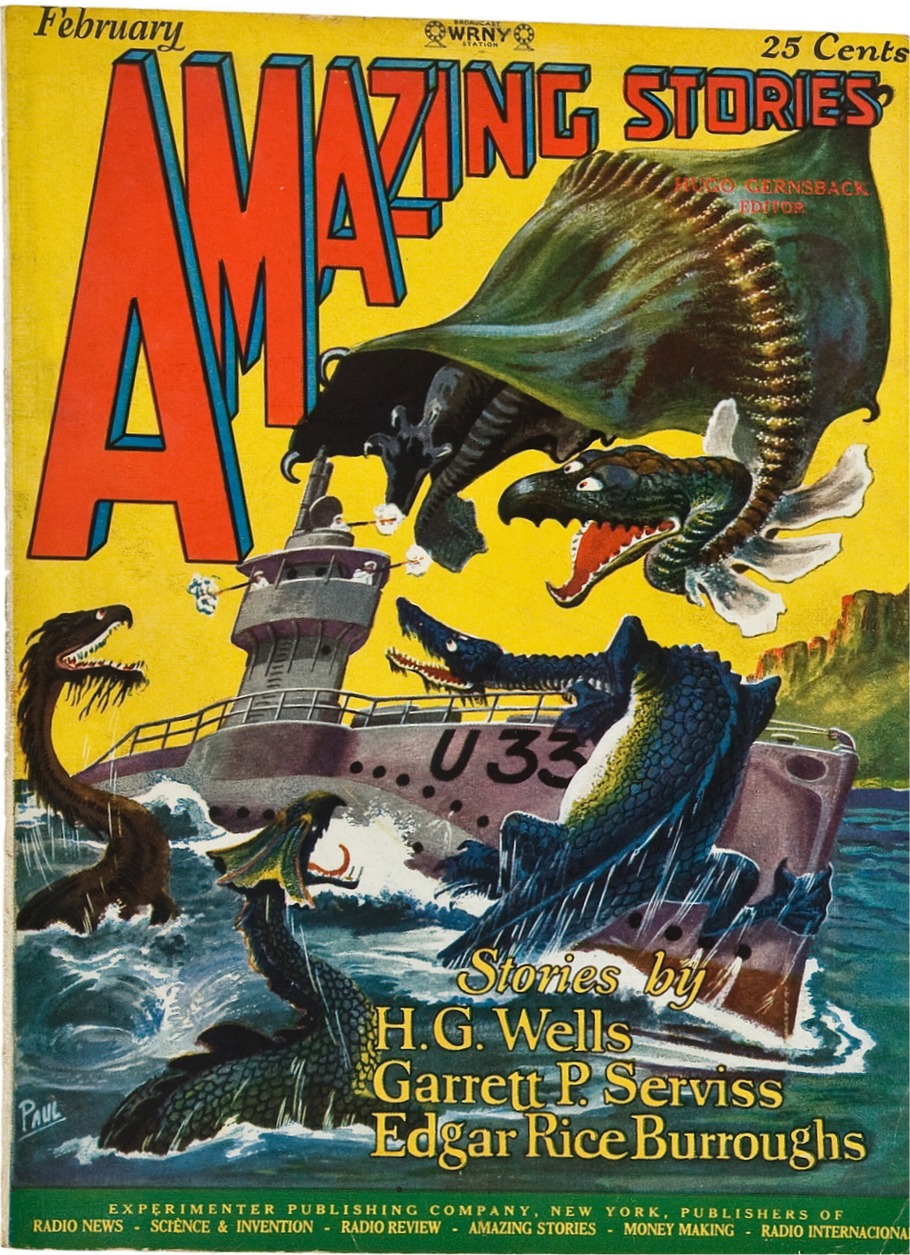
passenger on a ship sunk in the English Channel by the U-33, a German
U-boat,
in World War I 1916. He is rescued by a British tugboat with a female
survivor,
Lys La Rue. The tug is also sunk, but its crew manages to capture the
German
submarine after it surfaces. Unfortunately, the remaining British craft
continue to regard the sub as an enemy, and they are unable to bring it
to port. Sabotage to the navigation equipment sends the U-33 astray
into
the South Atlantic. The imprisoned German crew retakes the sub and
begins
a raiding cruise, only to be overcome again by the British. A saboteur
continues to guide the sub off course, and by the time he is
discovered,
the U-boat is in Antarctic waters. The U-33 is low on fuel, with its
provisions
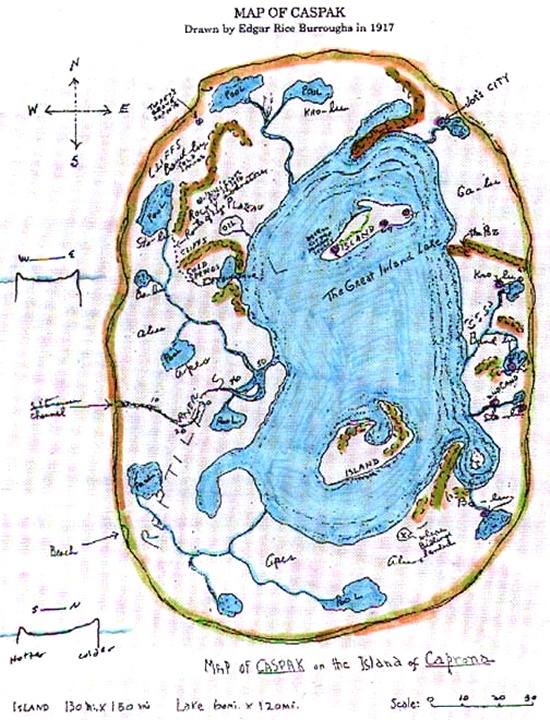
poisoned by the saboteur Bensen. A large island ringed by cliffs is
discovered
and identified as Caprona. A freshwater current guides the U-boat to a
stream issuing from a subterranean passage, which they enter with the
hope
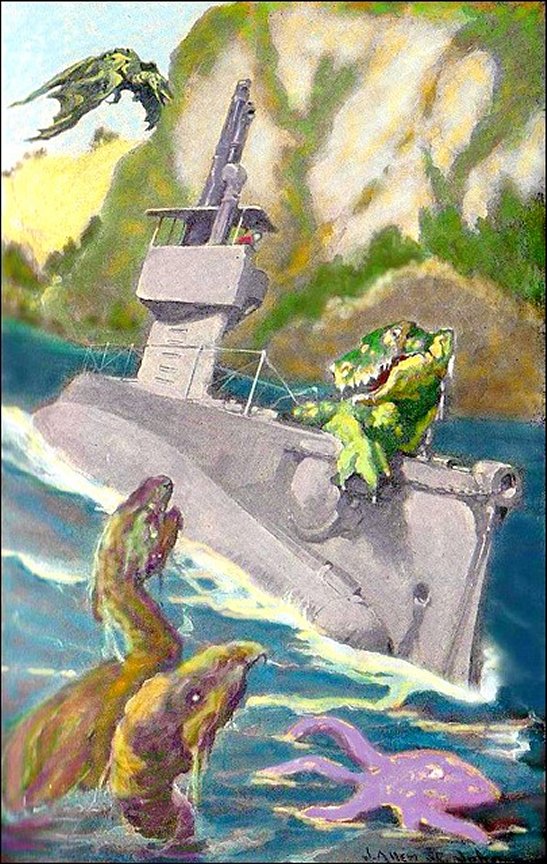
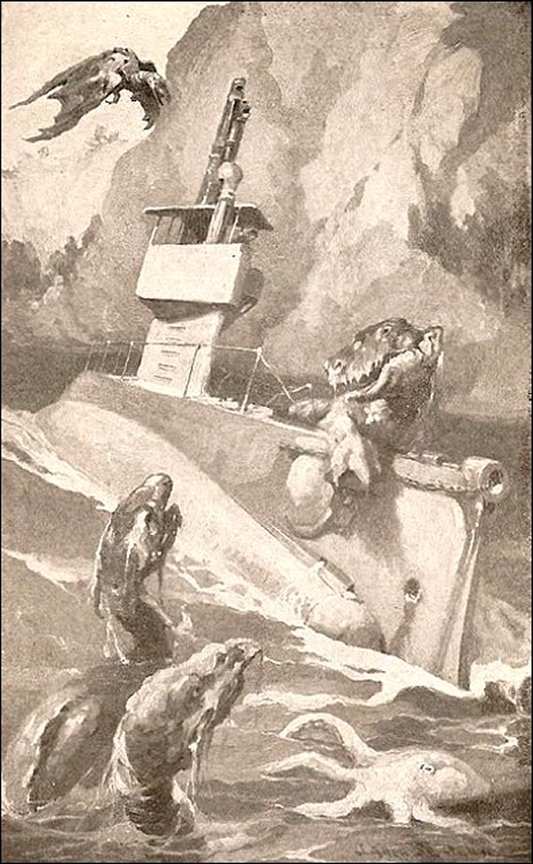
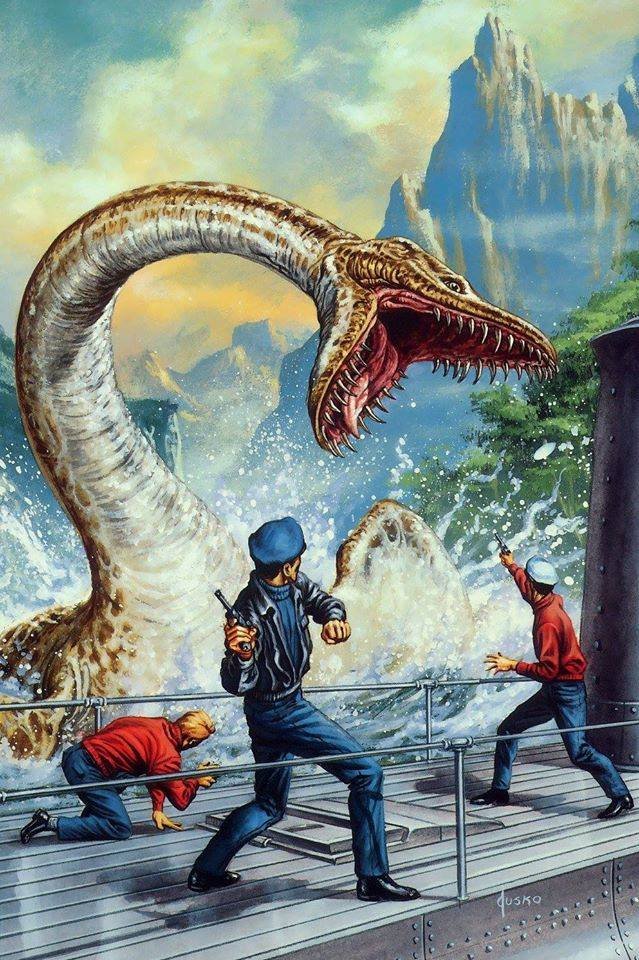
of replenishing the water supply. The U-boat surfaces into a tropical
river
teeming with primitive creatures extinct elsewhere. Attacked, it
submerges
again and travels upstream in search of a safe harbor. It enters a
thermal
inland sea, essentially a huge crater lake, whose heat sustains
Caprona’s
tropical climate. As the sub travels north along the island’s waterways
the climate moderates and wildlife undergoes an apparent evolutionary
progression.
On the shore of the lake the crew builds a palisaded base, dubbed Fort
Dinosaur for the area’s prehistoric reptiles and fauna. The British and
Germans agree to work together under Tyler, with Bradley, the mate from
the tug, as second in command and Von Schoenvorts, the original sub
commander,
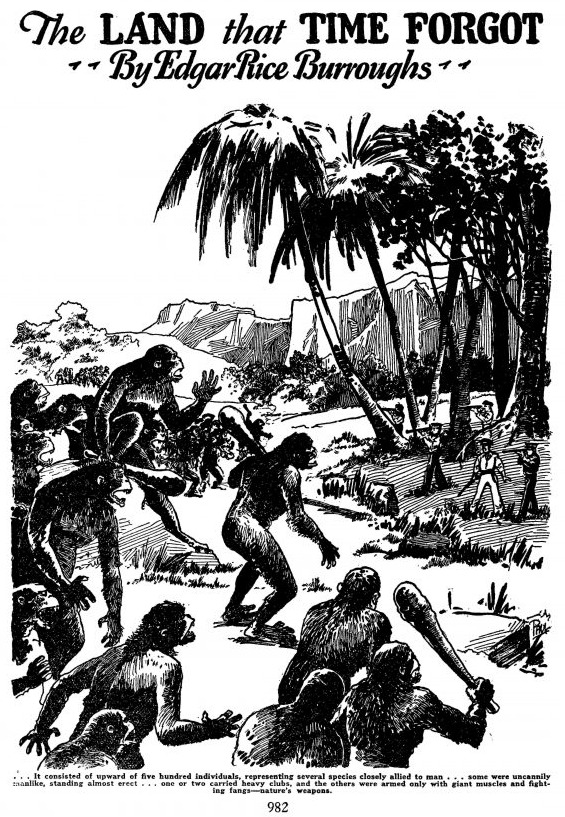
in control of the Germans. The castaways are attacked by horde of
primative
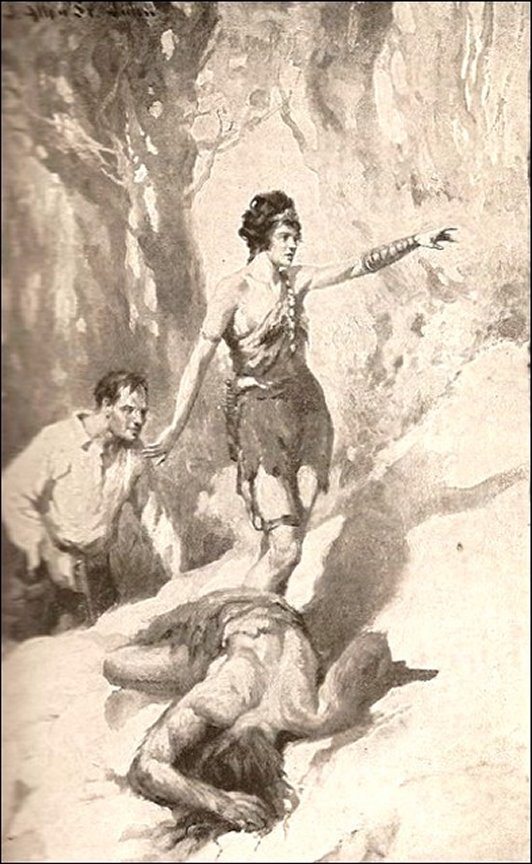
beast men and take prisoner Ahm, a Neanderthal. They learn that the
native
name for the island is Caspak. Oil is discovered, which they hope to
refine
into fuel for the U-33. As they set up operations, Bradley undertakes
various
explorations. During his absence Lys disappears and the Germans mutiny
again, absconding with the submarine.
Tyler leaves the other survivors to find and
ultimately
rescue his British love interest. Reunited and stranded in a LAND THAT
TIME FORGOT…
|
|
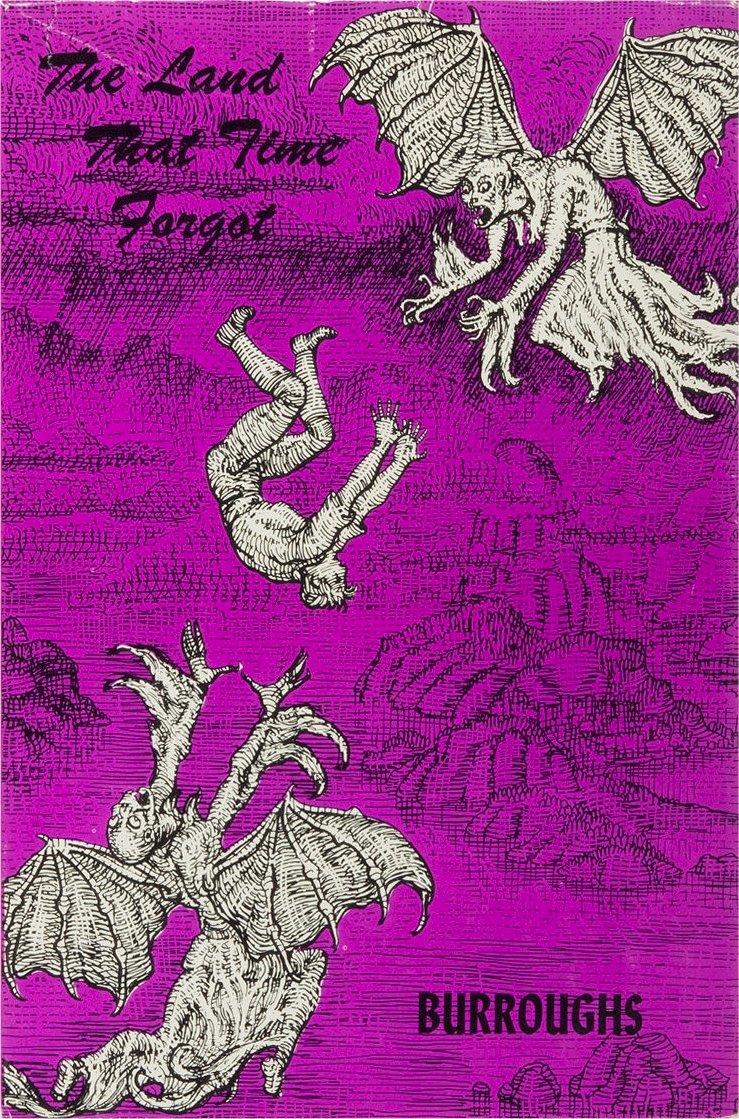
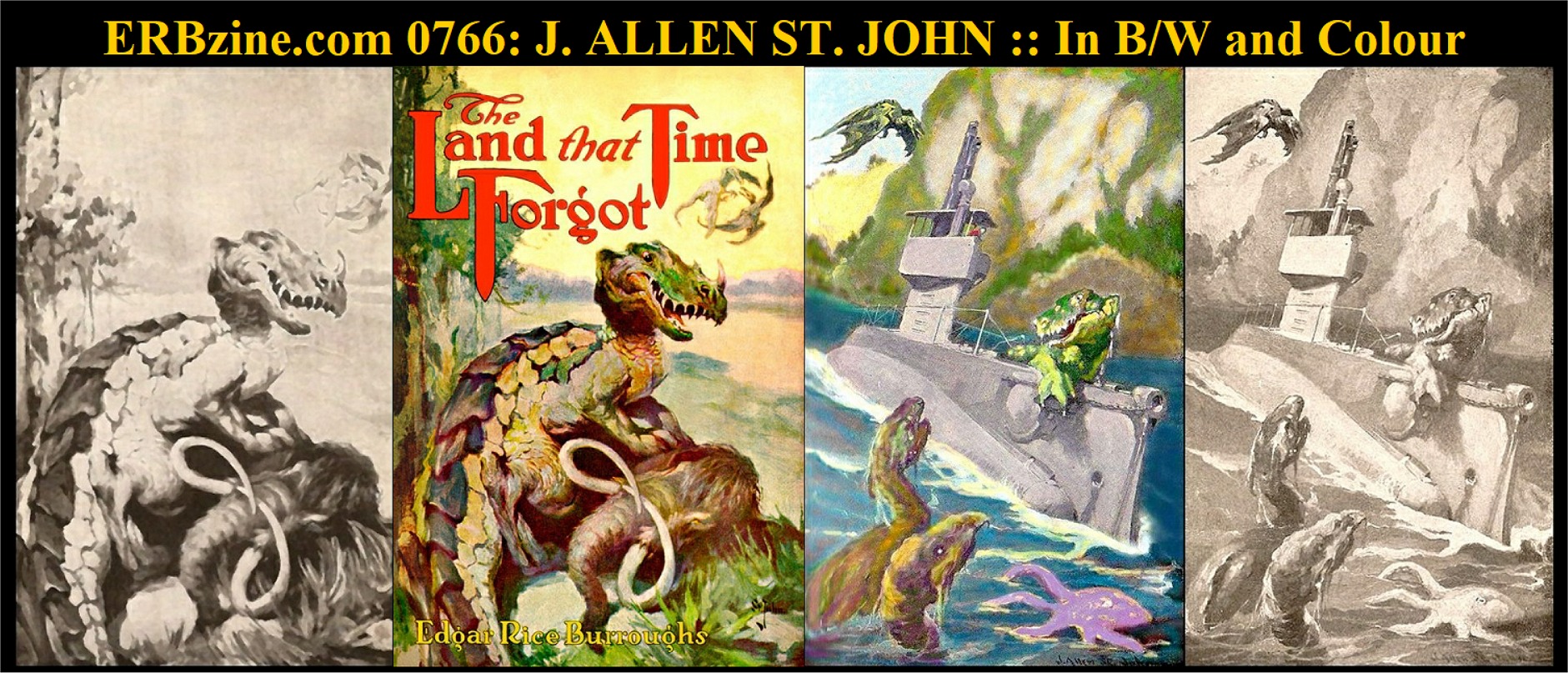
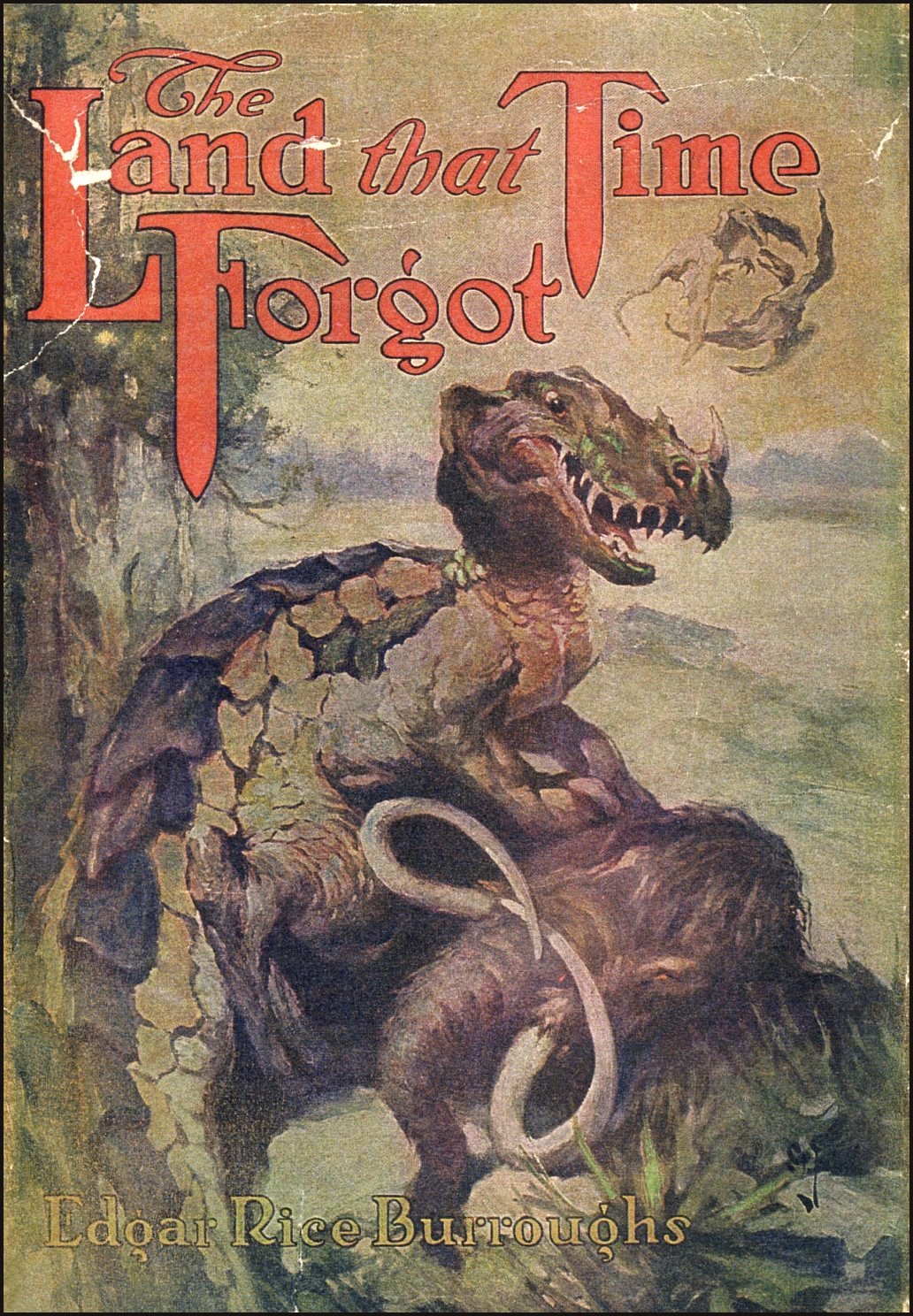
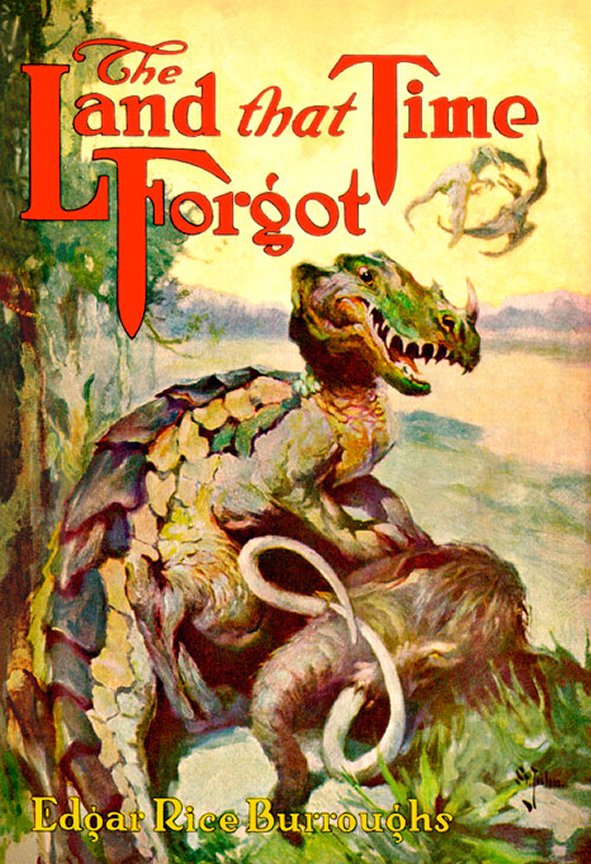
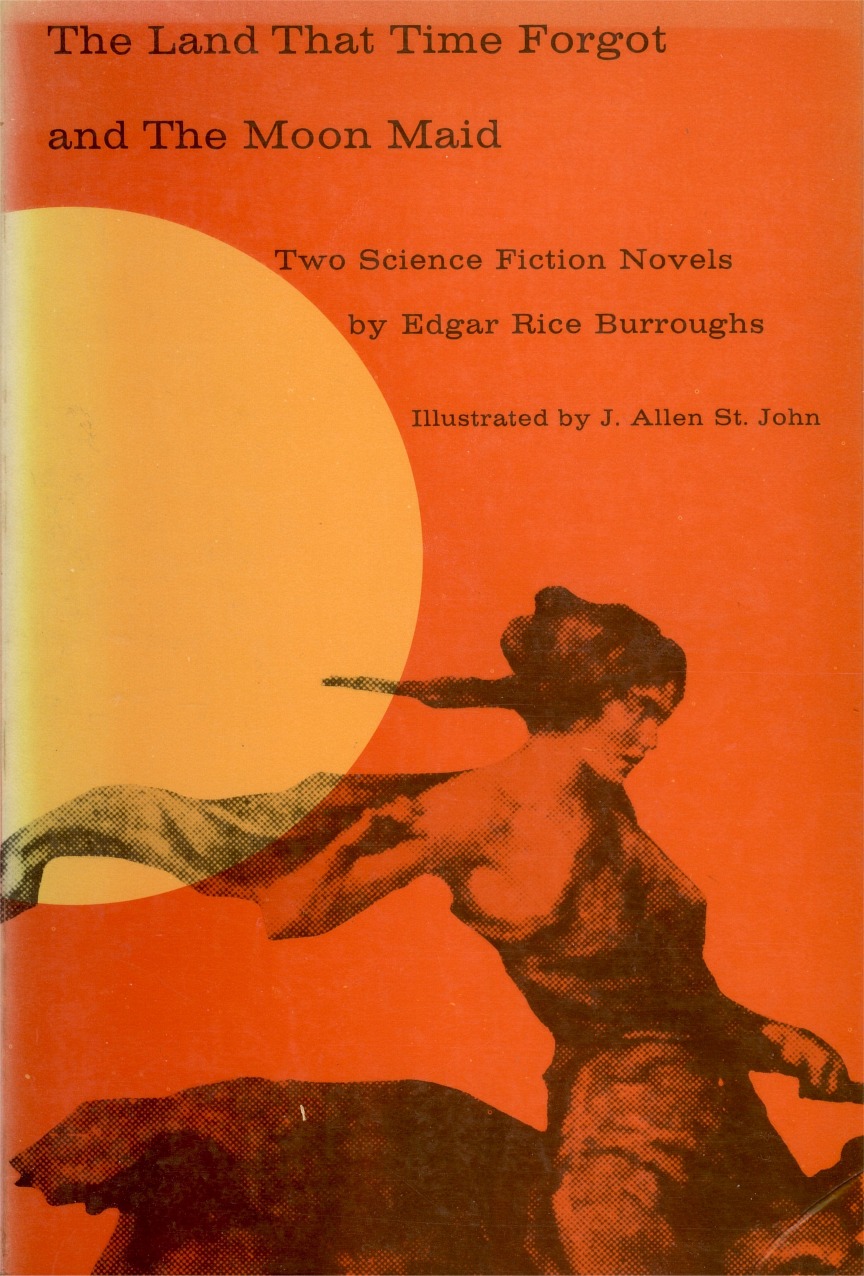
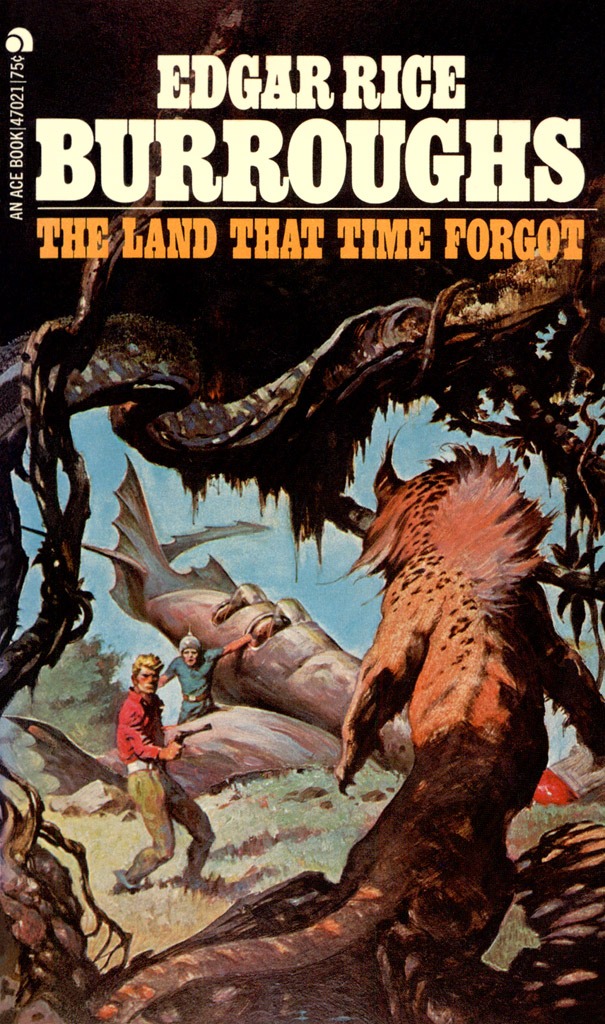
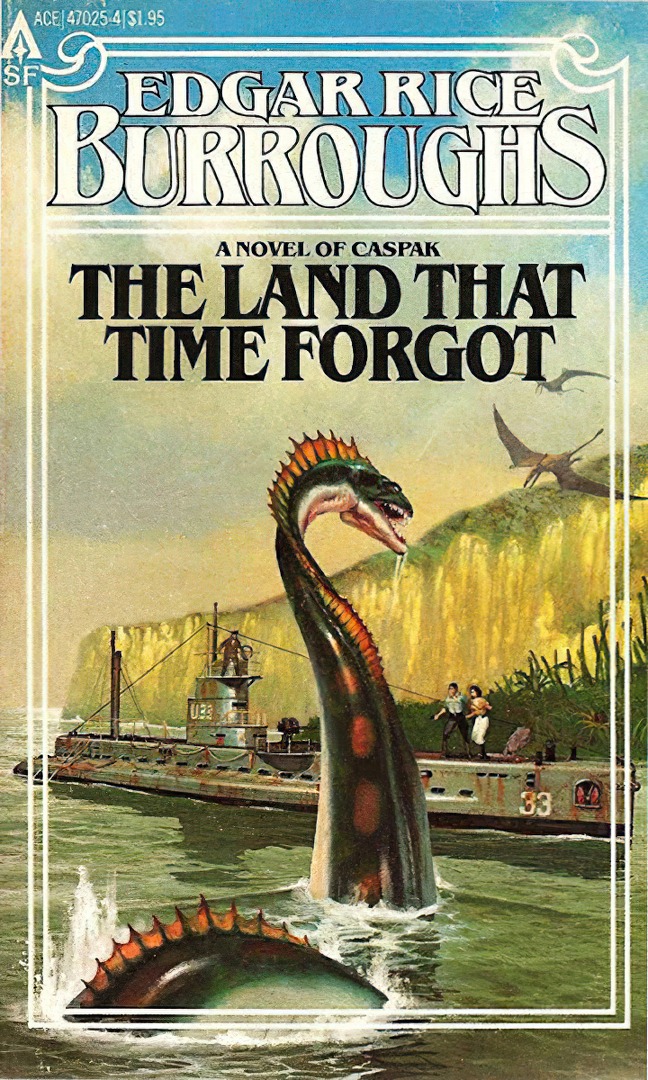
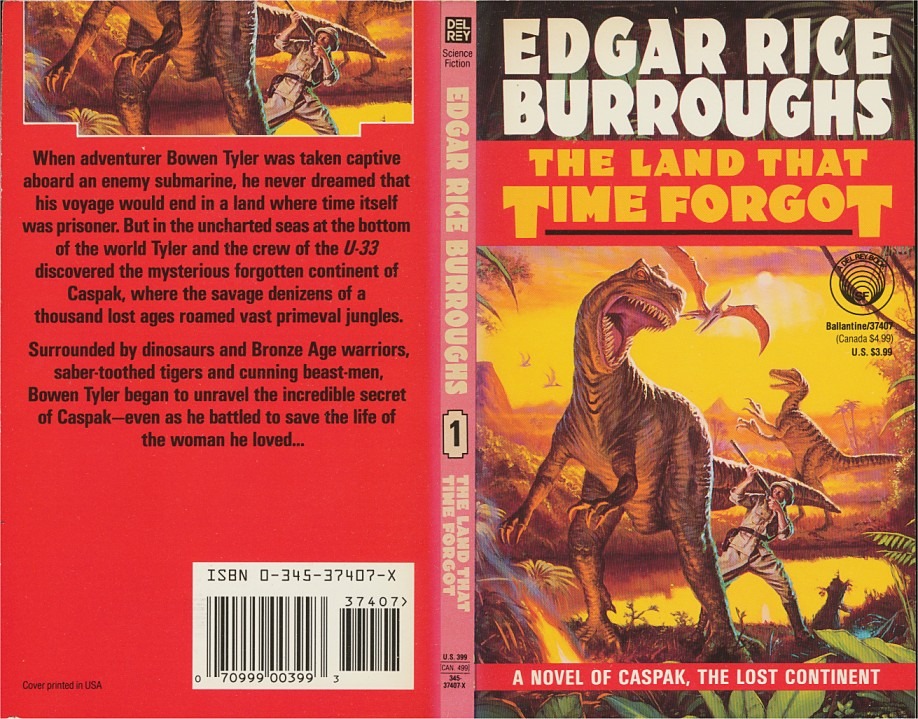
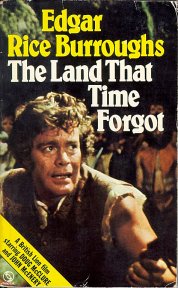
The Land That Time Forgot
The Land That Time Forgot: Bowen Tyler's
fabulous
adventure began with a terror-haunted trip as a captive in an enemy
submarine-only
to end on the rocky shores of a monster-ridden lost world where Time
had
stopped.
"...I have experienced a cosmic cycle, with
all its changes
and evolution’s for that which I have seen with my own eyes in this
brief
interval of time-things that no other mortal eye had seen before,
glimpses
of a world past, a world dead, a world so long dead that even in the
lowest
Cambrian stratum no trace of it remains. Fused with the melting inner
crust,
it has passed forever beyond the ken of man other than in that lost
pocket
of the Earth whither fate has borne me and where my doom is sealed."
Thus begins one of the most thrilling
science-fiction
series that the creator of Barsoom and Tarzan ever conceived-the epic
of
the lost continent of Caprona and of the American who first set foot
there.
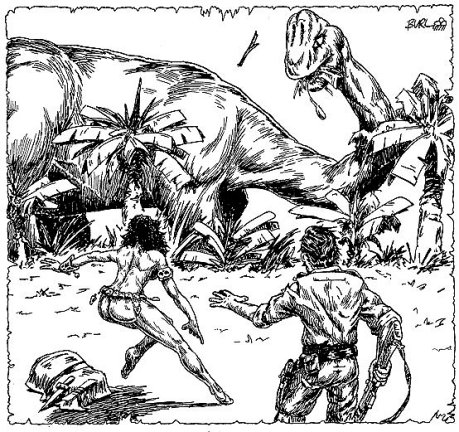
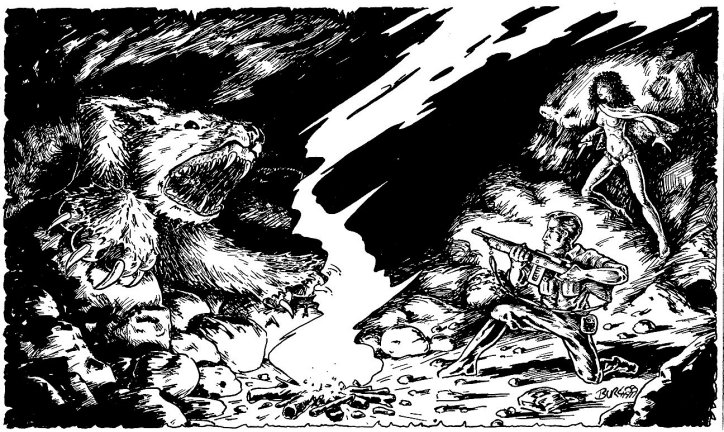
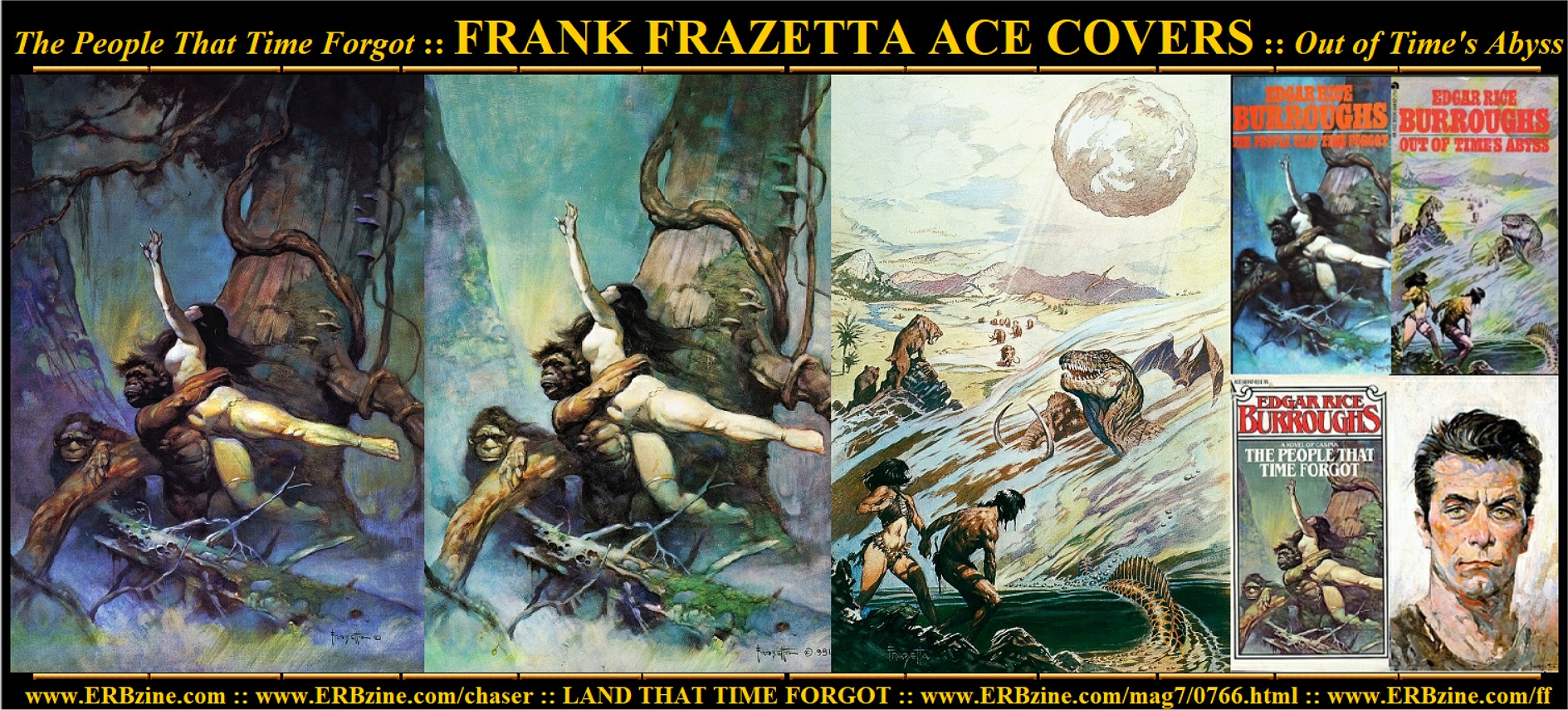
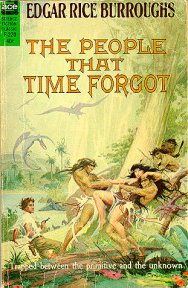
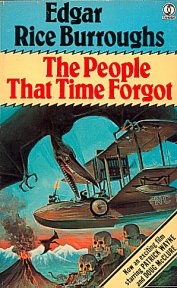
The People That
Time Forgot: When
Tom Billings set out to rescue Bowen Tyler from the lost continent of
Caprona,
he equipped himself with all the weaponry the modern world afforded,
and
a light hydroplane would allow him to scale the perilous wall
surrounded
the island: Modern Technology and American courage in a battle to the
death
against dinosaurs, cave-tigers and savage submen - in Caspak, the land
of THE PEOPLE THAT TIME FORGOT. I'll never forget my first impressions
of Caspak as I circled in, high over the surrounding cliffs. From the
plane
I looked down through a mist upon the blurred landscape beneath me...
I could see the surface of the water literally
black with
creatures of some sort... the general impression was of a vast army of
amphibious monsters. The land was almost equally alive with crawling,
leaping,
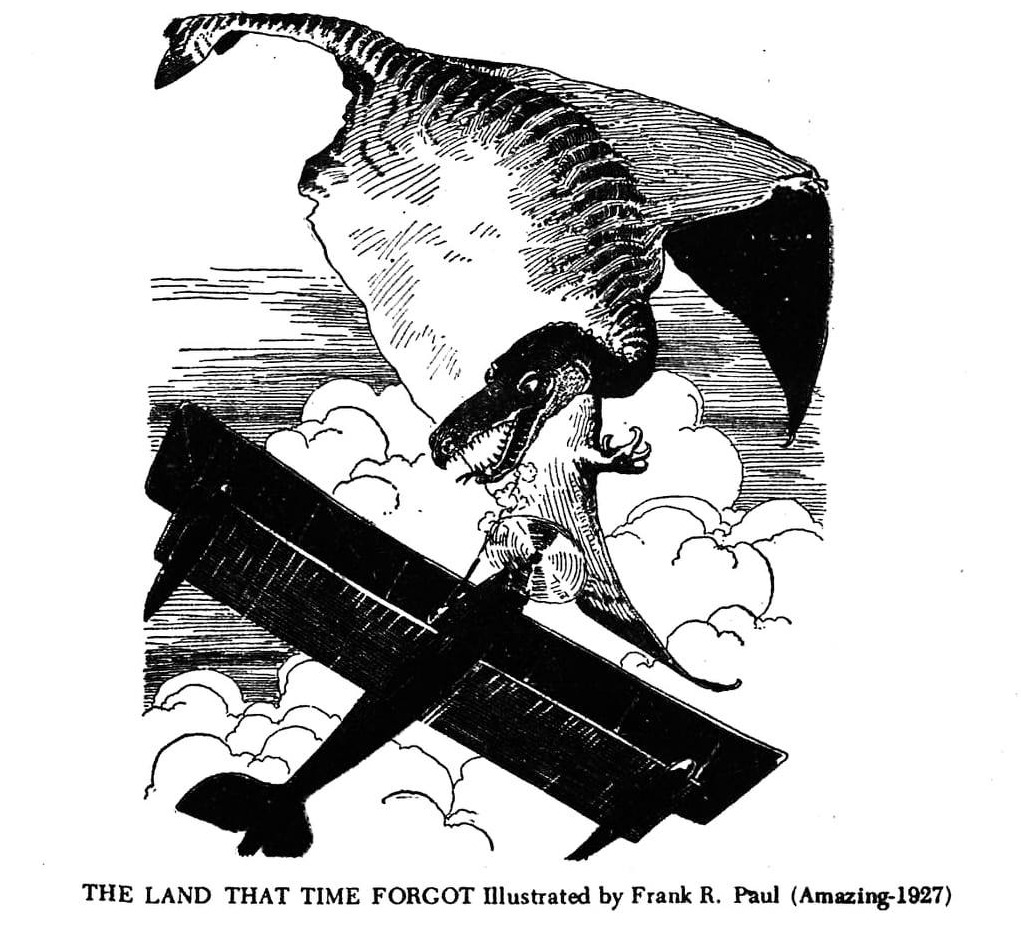
running, flying things. It was one of the latter which nearly did it
for
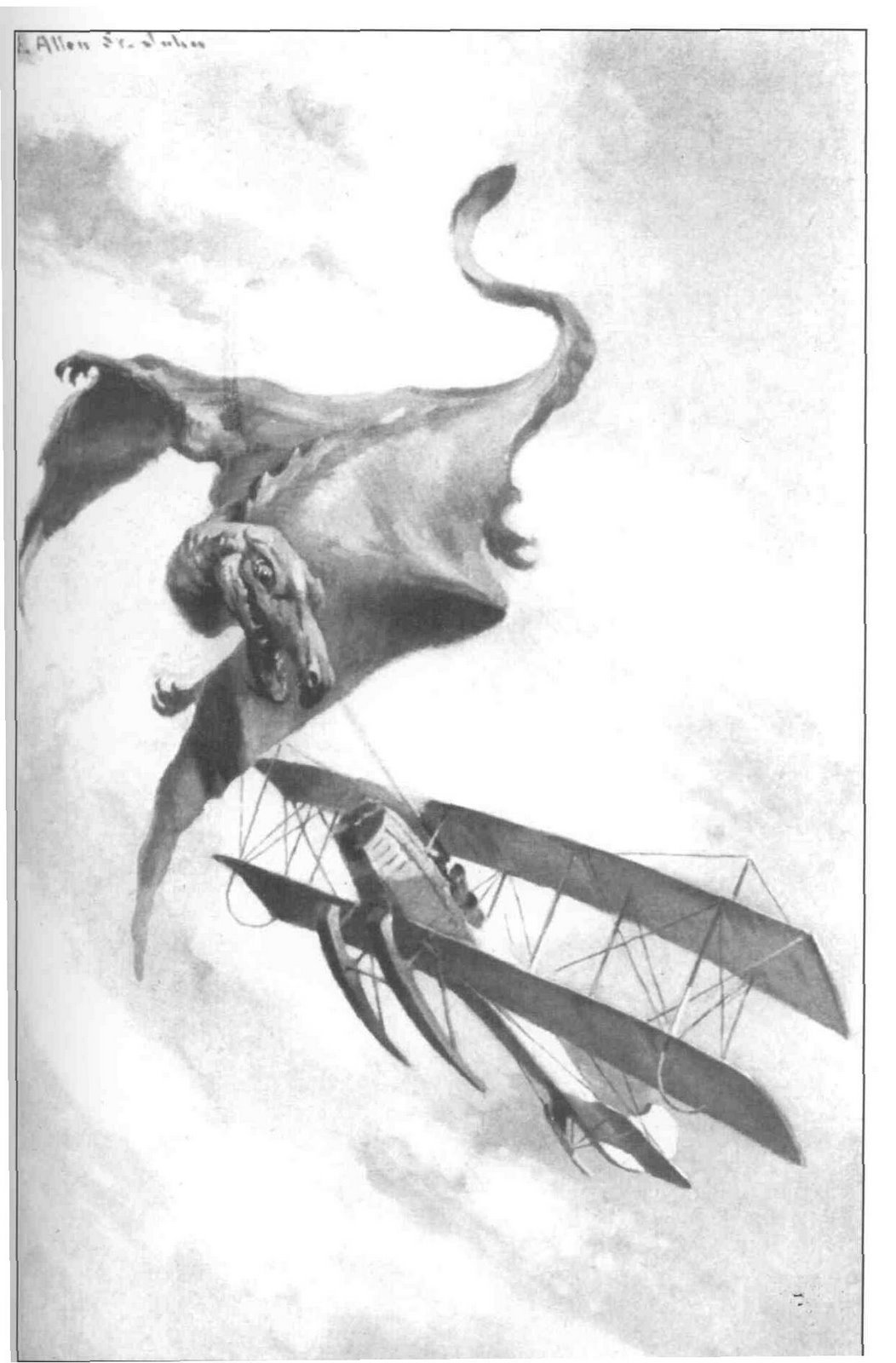
me.... The first intimation I had of it was the sudden blotting out of
the sunlight from above, and as I glanced quickly up, I saw a most
terrific
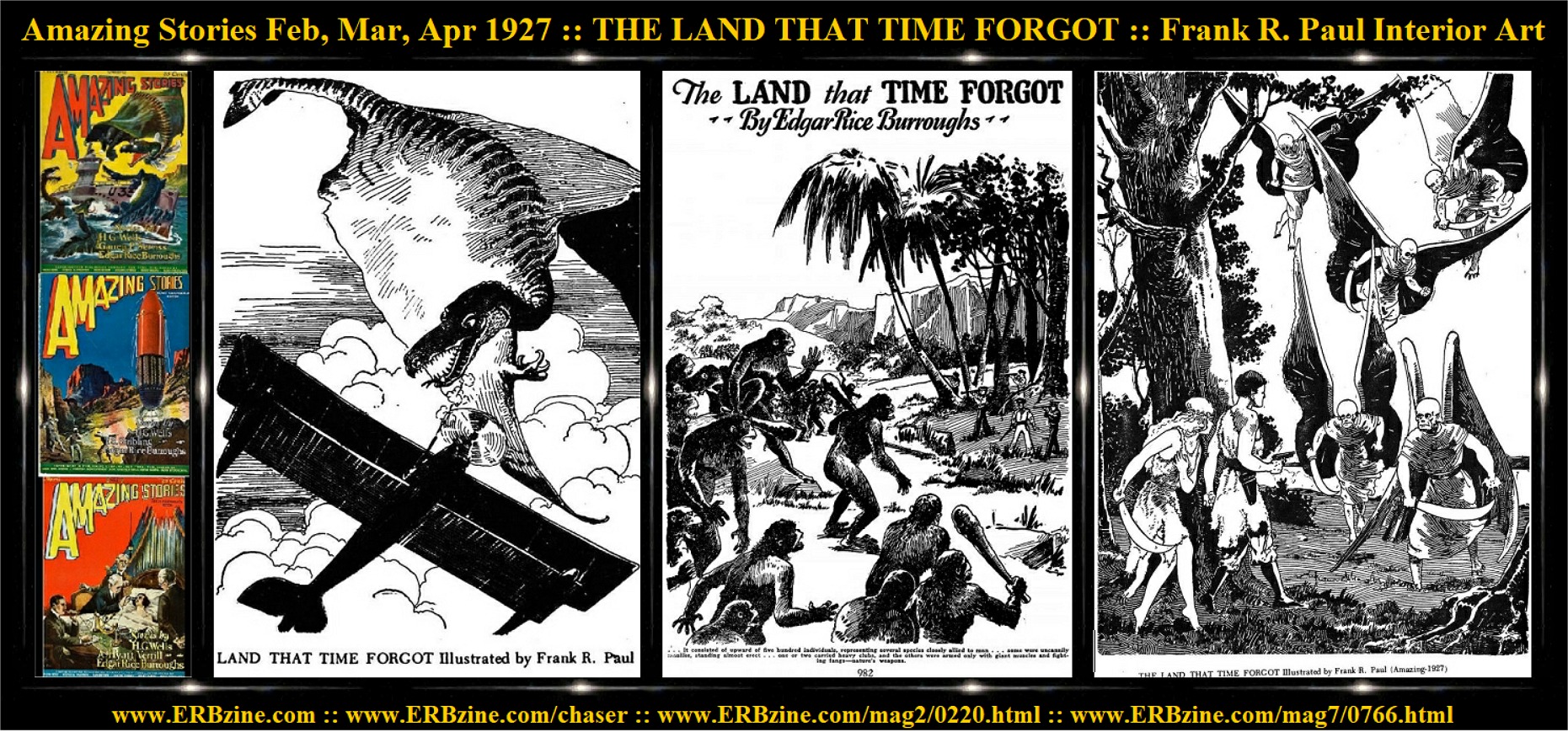
creature swooping down upon me. It must have been fully eighty feet
long...
with an equal spread of wings... It was coming straight down toward the
muzzle of the machine-gun and I let it have it right in the breast; but
still it came for me.....
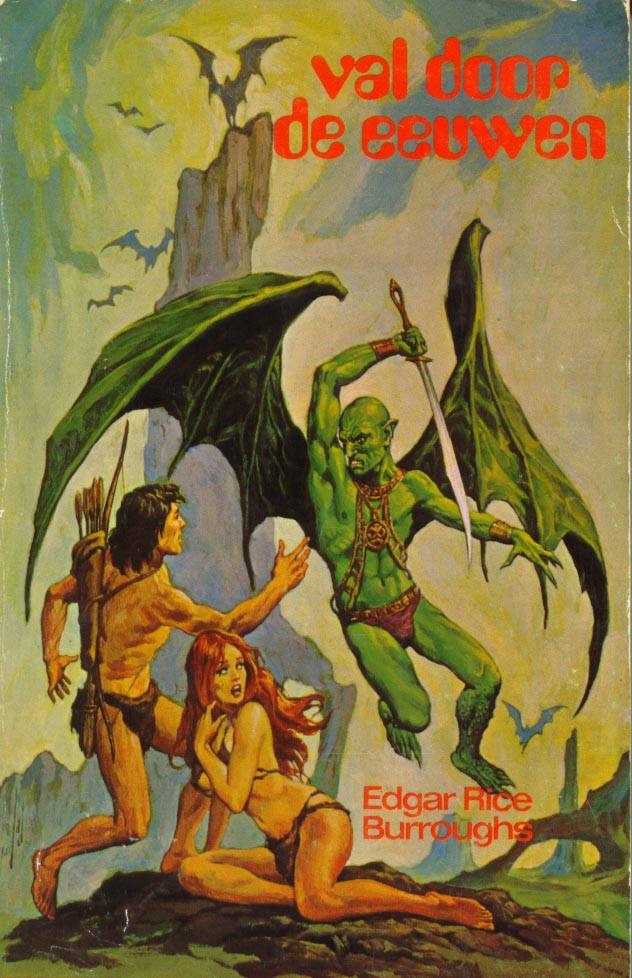
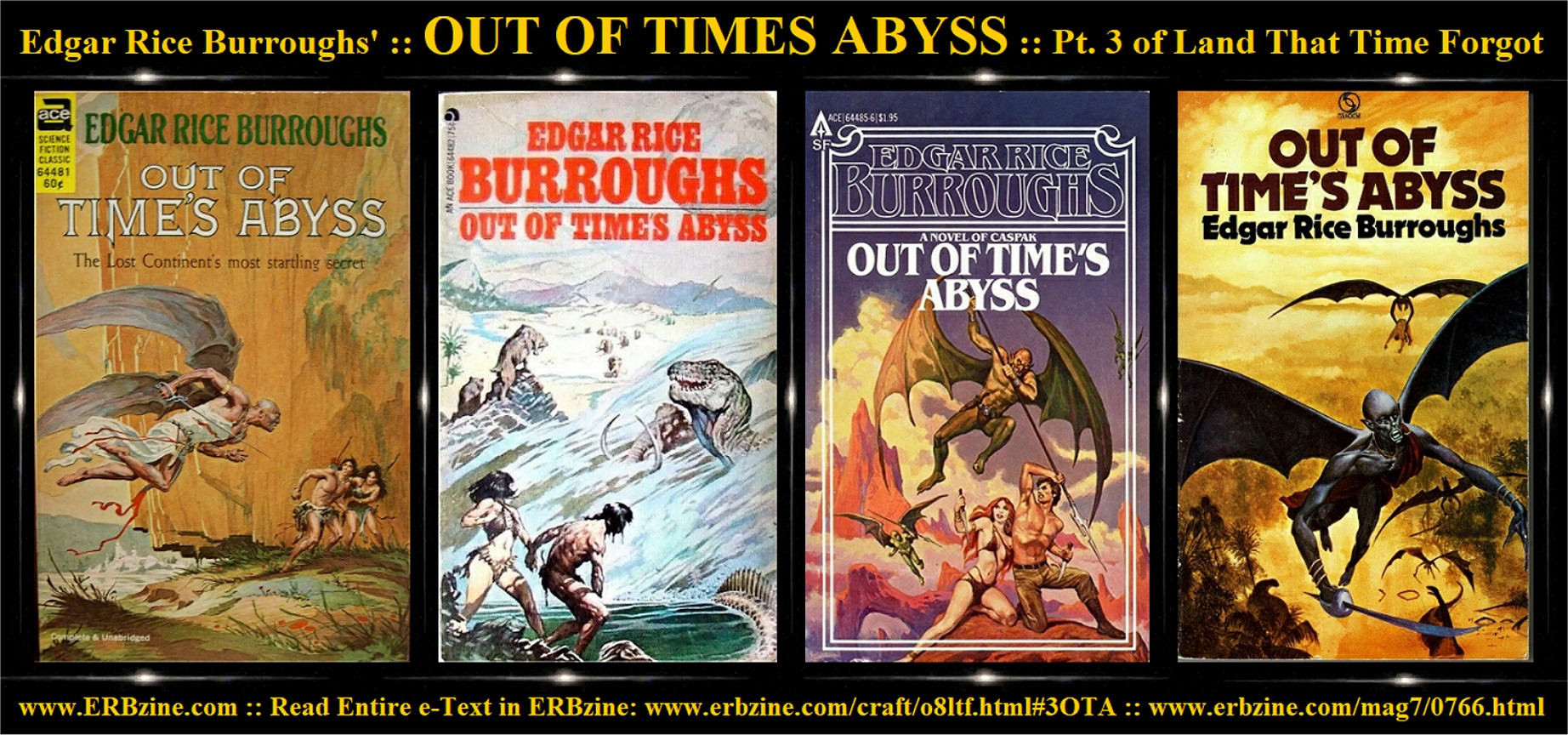
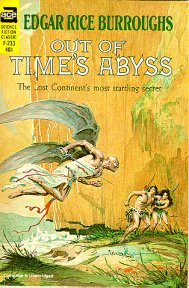
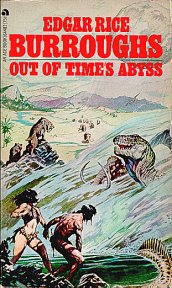
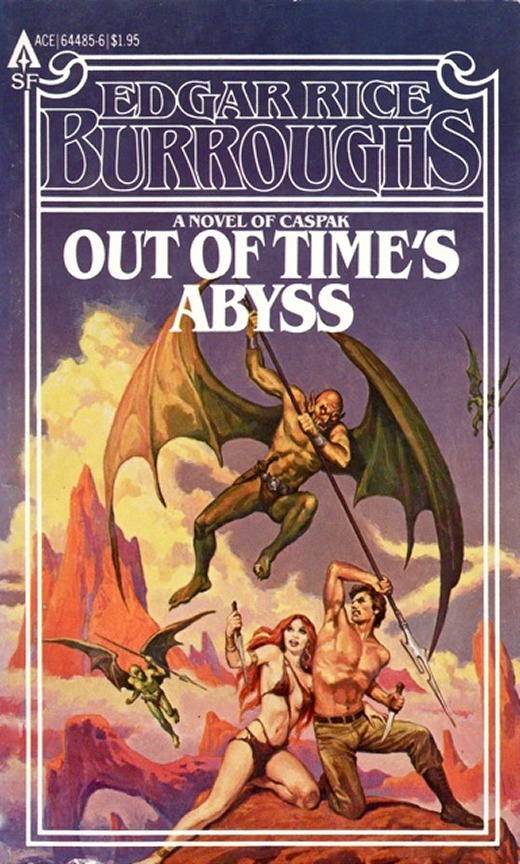
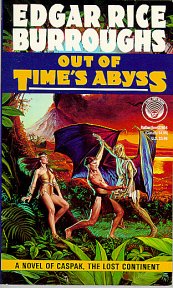
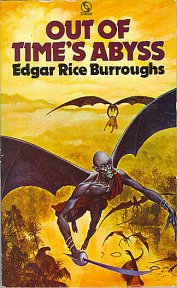
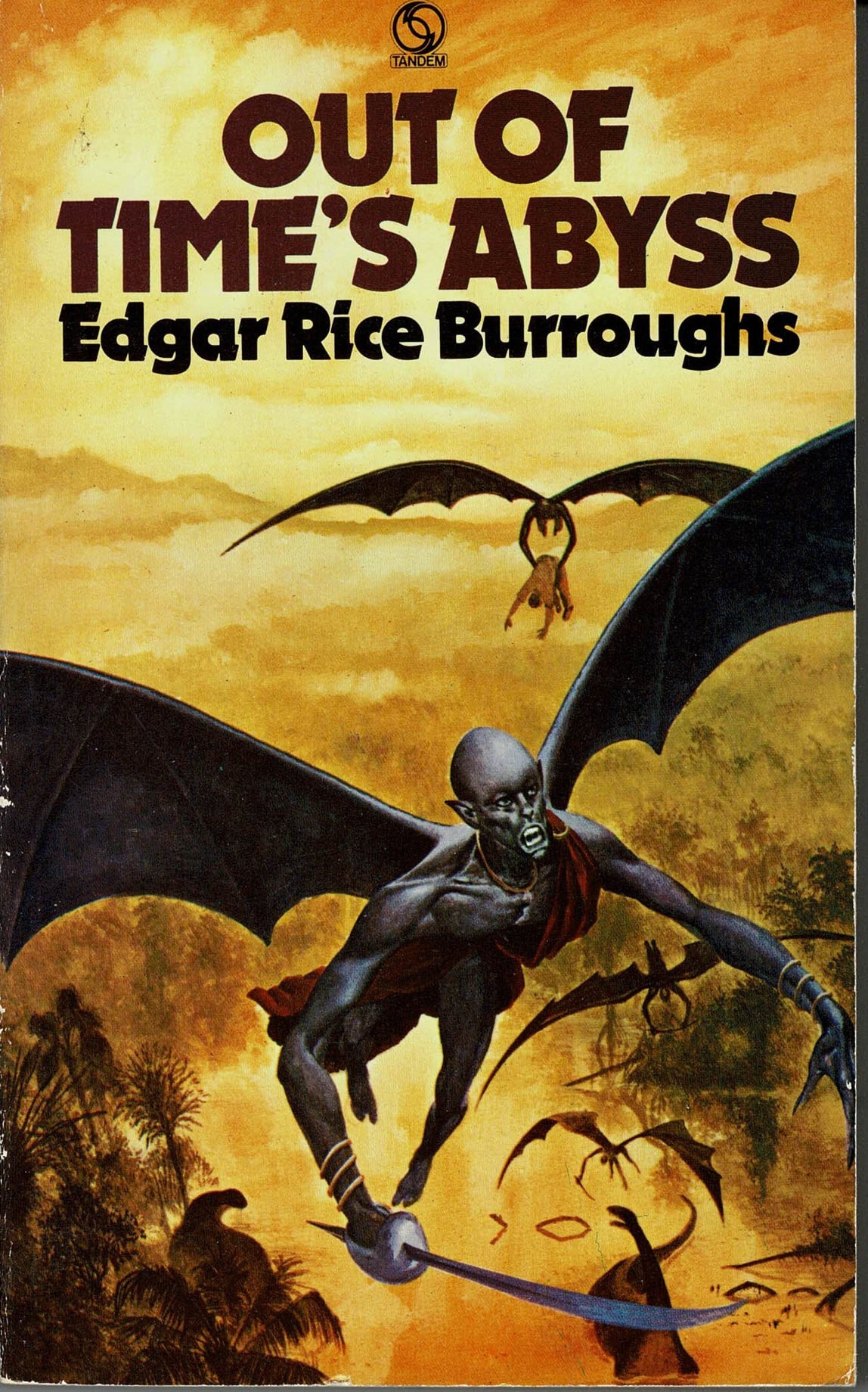
Out of Time's
Abyss: This is the
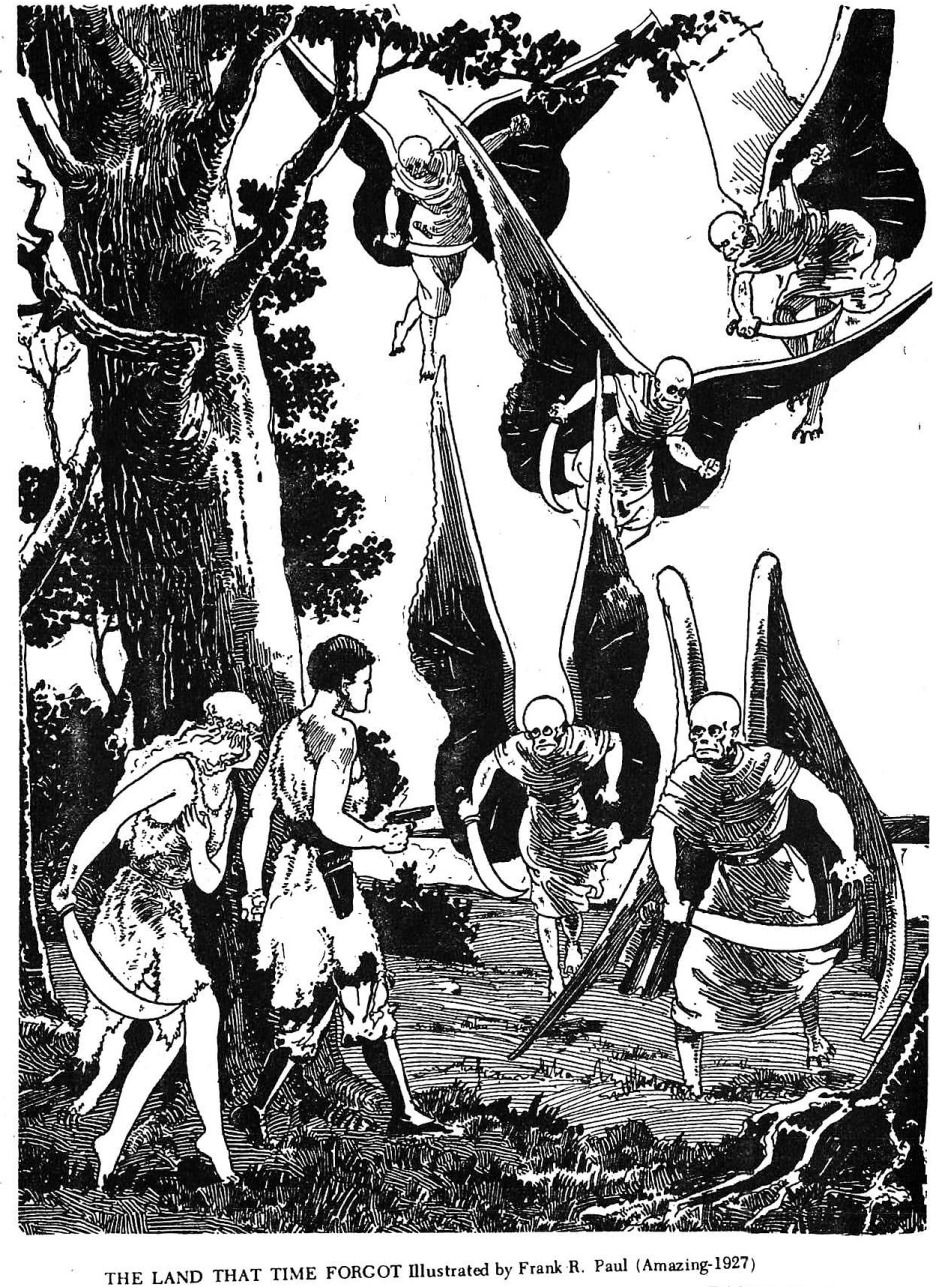
tale of how the leader of the group, Bradley, was carried off by the
flying
men of Caprona, and deposited into the clutches of the diabolical
Wieroos
who used the skulls of their victims to pave the streets of their city.
Young traveler and adventurer Bowen Tyler has
been marooned
with his wife on Caspak, a mysterious and uncharted land far in the
southern
seas. Here Time's laws have been reversed, and the denizens of a
thousand
lost ages struggle for supremacy. Amidst these terrors, Bowen Tyler
seeks
to find and rescue his lovely wife.
By an uncanny stroke of luck, Tyler has
contacted the
outside world. To his aid came Tom Billings in a powerful seaplane,
flying
over the unscalable cliffs that wall Caspak from the world. But the
tropic
jungles of this weird valley are alive with a thousand dangers, and
Billings,
too, has become lost, leaving his associates, Bradley and the others,
behind
at the hastily-constructed "Fort Out of Time’s Abyss Dinosaur" to await
his return with Bowen Tyler.
|











 .
.