.
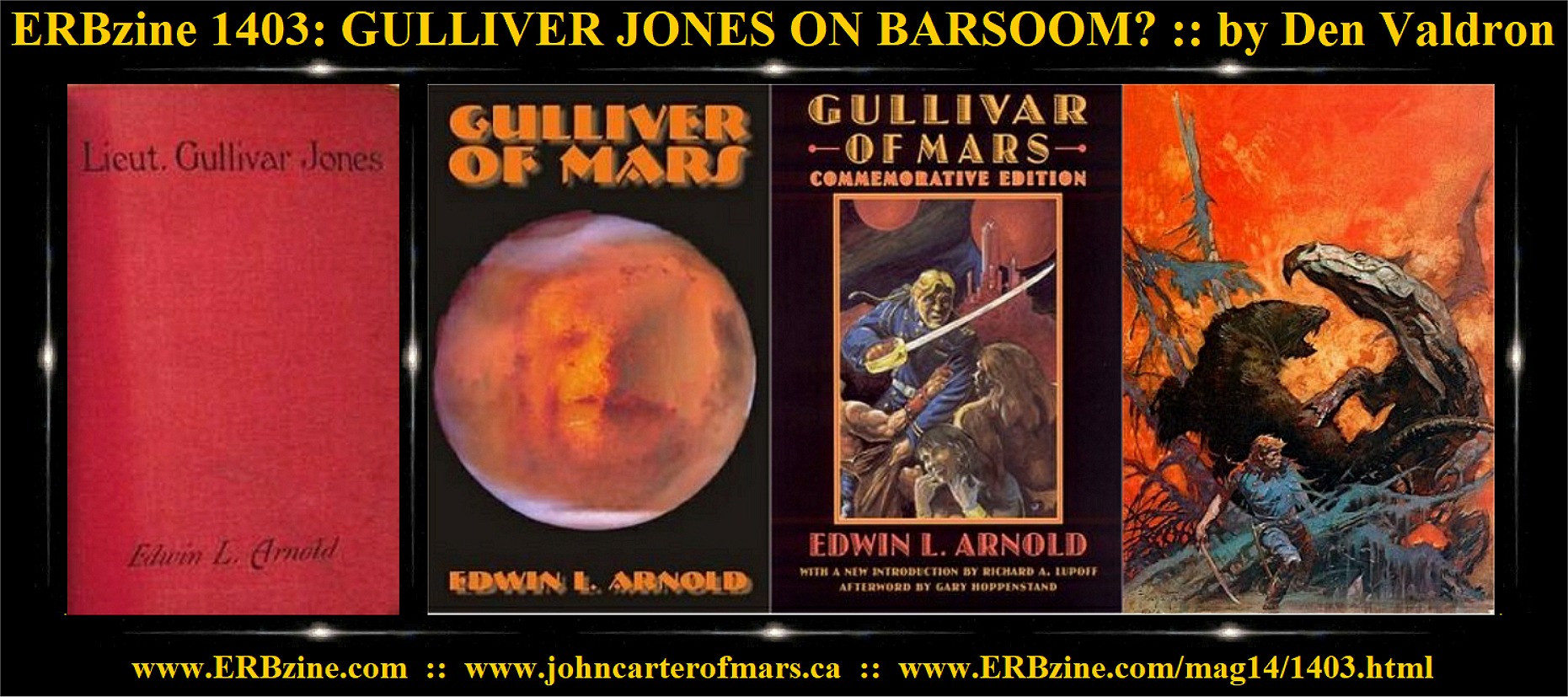
Gulliver Jones on Barsoom? . . . Sure, why not?
After all, Arnold’s
Gulliver Jones and his trip to Mars is often touted as being the source
of John Carter’s Barsoom.

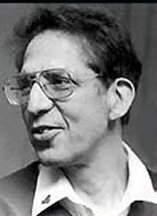
The theory was propounded originally, I believe, by Richard
Lupoff, who turned in a fairly polished essay on the subject.
I’m sure you can find it somewhere, and I certainly recommend its reading.
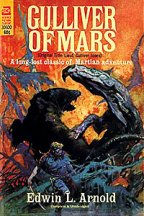
For those purists, I also recommend Edwin Arnold’s novel, which can also
be found on the net.
For my own part, I remain unconvinced.
Burroughs' sourcing and inspirations are far too transparently the works
of Percival Lowell
and other scientists of the age. It was the astronomers who
built up the vision of Mars as a formerly green and lush world now deep
in decay, its continents weathered flat, its seabeds drying, its life ancient
and clinging precariously to oasis, canals and ocean bottoms.
It was Percival Lowell who gave John Carter his amazing jumping ability,
and who gave Burroughs his fifteen foot giants, intelligent but inhuman,
and a decaying society fighting for its survival.
 It’s
true enough that Arnold’s romance featured a dying decadent society, an
alien princess, a river of death, and barbarian invaders. But then
again, rivers which are receptacles for the spirits dead appear on Earth
in the Nile and the Ganges. Every adventurer seeks a princess
and contends with Barbarians. So, the case for Arnold, I find
doubtful.
It’s
true enough that Arnold’s romance featured a dying decadent society, an
alien princess, a river of death, and barbarian invaders. But then
again, rivers which are receptacles for the spirits dead appear on Earth
in the Nile and the Ganges. Every adventurer seeks a princess
and contends with Barbarians. So, the case for Arnold, I find
doubtful.
But what the hell. Even the allegation, whatever
its merits, has given Gulliver Jones a lease on life he would never have
had, except as a quasi-part of Burroughs Martian canon. It’s
lead to fan debates, new publications of his novel, and even a distinctly
Burroughsian Marvel comic series.
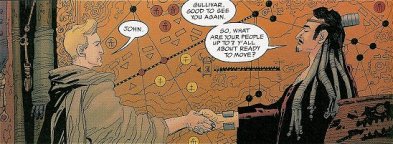
Most tellingly, in ‘The League of Extraordinary Gentlemen’,
no less than the great Alan Moore, sees fit to join these remarkable visitors
to Mars, having them link their forces in an assault against alien invaders.
 Well, if Alan Moore says Gulliver Jones is on Barsoom with John Carter,
then its good enough for me. That’s all but next to Edgar himself
rising from his sleep to wink at us.
Well, if Alan Moore says Gulliver Jones is on Barsoom with John Carter,
then its good enough for me. That’s all but next to Edgar himself
rising from his sleep to wink at us.
But if we play this game, if we, as an intellectual conceit,
accept Gulliver Jones as a quasi-member of Burroughs Martian canon, then
shouldn’t he be on Barsoom proper with John Carter, Ulysses Paxton, Tan
Hadron, Ras Thavas and the rest?
(I note that there is a ‘Wold
Newton’ essay out there arguing that Ulysses Paxton is actually Gulliver
Jones, or something, but frankly, that’s a bit too far fetched for me).
But if Jones is on Barsoom, then the question arises,
where the hell is he?
At first, it seems that there is very little resemblance
between Gully’s Mars and Carter’s Mars. Carter’s Mars is a
dry and forlorn desert world. Gully, on the other hand, enters
a world with a sea, and with rivers and forests. Gully’s
river of death leads north, Carter’s leads south. Carter’s world
has all sorts of fierce many legged critters, Gully’s creatures seem less
extraordinary.
On the surface, it seems that Arnold hasn’t read his Lowell,
and Burroughs harsh desert Barsoom is a very different place than the gentler
more idyllic land Gully is familar with.
But that just means we have to be creative.
And attentive. All too often, creativity is a tender young
thing of flexible morals, and detail is the man with the cash.
One gets the best out of the other. So let’s take a close look
at Gully’s world....
 Gulliver Jones comes to the northern hemisphere of Mars.
All right, that’s hardly controversial. But on the other hand, we
don’t appreciate just how far into the northern hemisphere it actually
is. The glaciers of the north pole are only a few lacksadaiscal
days journey away from Seth, the last city of the Hither people.
Gulliver Jones comes to the northern hemisphere of Mars.
All right, that’s hardly controversial. But on the other hand, we
don’t appreciate just how far into the northern hemisphere it actually
is. The glaciers of the north pole are only a few lacksadaiscal
days journey away from Seth, the last city of the Hither people.
Consider: Gulliver winds up on Mars, near
the city of Seth, where he meets and falls in love with the Princess Heru.
Seth appears to be on the shore of an opal sea, but it also borders a river
or two. The river is obviously draining into the sea.
The area is described as rich temperate forest land.
Once Heru is kidnapped by the Thither people who have
sailed across the sea. Gulliver sets out to rescue her.
He gets knocked out and knocked into the water for his troubles, landing
on some floating booty and drifting on the current, which appears to take
him northwards. Eventually, he makes his way to shore, finds
a friendly village and procures a boat. His attempts at sailing,
however, lands him in the river of death, which leads him to the glaciers.
As nearly as I can tell, this takes all of three days at most.
Now, it seems obvious that from the direction of the sea
current, that the sea is flowing north, and that the river of death flowing
northward, is actually draining from the sea itself.
Saltwater tends to be less prone to freezing than fresh water.
So its likely that the ‘river’ that abuts the glaciers is heavily salted,
literally, it comes with freeze protection. And in fact, its
likely that the salt water river may be the source of the erosion of the
glacier that Gully finds.
However, by odd circumstance, it appears that the glacier
has melted a bit, or gone through periods of melting and freezing, which
occasionally leaves the frozen dead exposed. There’s a very odd climate
phenomena here that will demand attention.
Gully spends a night among the dead, finds a friendly
scavenger, and gets the hell out of there. He wanders along
until he encounters a friendly woodsman and spends the night with him.
Thereafter, he walks for, at most, a few more days until he comes to the
land of the Thither people. On land, he goes on foot, which means
he can hardly be traveling too fast. He is not mounted.
In other words, in something less than a week, perhaps
as little as four or five days, Gully has traveled all the way up from
Seth, the Hither city, to the Polar Glacier, and then back down south to
the Thither lands, where he learns that Heru is only two days ahead of
him.
Now let’s think about this. Gully is not traveling
fast. For several of his days, he is on foot, even when traveling
by boat, he isn’t under sale, but simply paddling occasionally with the
current.. He dawdles in the company of various people, he gets lost
a couple of times, taking the wrong path more than once. He
takes the long way round.
In short, he can’t possibly have traveled any great distance.
Nor, for that matter, can Heru have traveled all that far, although the
matter is more complex. While we might think that a relatively
straight line by boat should be much faster, she’s only two days ahead
of Gulliver. This suggests that her travel time by boat might
be as little as two or three days.
Well, let’s speculate that its not a terribly big sea
if it can be crossed in two or three days. An ocean is right
out of the question. The likelihood is that it is likely a
relatively small body of water.
And in fact, it might be even smaller than Heru’s two
or three day crossing suggests. There’s nothing to indicate
that the Thither people are particularly good sailors, or that the winds
and currents favour them. There’s nothing to indicate that they pursued
a direct route home, without stops. Indeed, the situation seems
quite the opposite. A woman that Gulliver meets on an island has
news of the Thither fleet and its northern progress. So clearly,
its not taking the direct route, and its making a few stops along the way
if its progress has become common gossip. It’s quite possible
that their route was only marginally less circuitous and slow than Gulliver’s
own. Which suggests a quite small sea after all.
There are a few other clues. Gulliver
at one point makes reference to the short Martian night. Well, we
know that Martian days are as long as Earth days, a half hour longer, even.
So to call the Martian night short is suggestive. Living
up in the northern latitudes, I can testify that in the summer, due to
the angle of the Earth’s axis, days get very long and nights become very
short, only a few hours. Again, another suggestion that Gulliver
is located at extremely northern latitudes.
Gulliver observes fur bearing creatures, including an
elklike animal, and two ratlike monstrosities the size of elephants.
Now, there’s little enough to make of this under normal circumstances.
But on Barsoom, the only fur bearers inhabit the region of the poles.
And of course, the ‘opal’ or whitish sea, suggests ice
and frost, again, implying that this area is near the poles.
All of this goes towards putting Gulliver in extreme northern
reaches of the planet, whatever planet he is on. All
of this seems to add up to a case of the ‘sea’ and the Hither and Thither
people both being far in the northern hemisphere, just a short distance
from the glaciers of the north pole.
Assuming that Gully is travelling sixty miles a day (given
that he’s mostly drifting with the current, or slogging along on foot that’s
an incredible rate of speed) he seems to make the edges of the polar cap
in about four days. Which puts it at roughly 240 miles away, call
it 300 at most. This is hardly a fast distance.
Now, let’s stop for a moment, having exhausted this line
of inquiry, and turn to the people Gully encounters.
They are not Burroughs Red Martians, that’s for sure.
For one thing, these people are white, this is referred to a number of
times. They have startling purple eyes, some of them.
Their hair is of varying colours, brown is mentioned twice, and I think
that there are blonds in there as well. And, they have unusual
mental powers, one person teaches Gulliver the language through telepathy,
another is able to use his mental abilities to shield himself from lances.
They are an indolent and dying race, given to apathy, lazy and nonviolent,
driven to their last refuges by barbarians. Seth is the
last, or one of the last Hither cities. Across the sea, we
see a vanished Hither city, and learn that the Hither folk once ruled far
and wide.
Well, that’s pretty simple then... They’re
Orovars. Burroughs Orovars are a white race, with fair hair
and features, now extinct on much of Barsoom, but still remaining in a
few decadent enclaves. Most strikingly, the mental powers of
some the Orovars that we see in Burroughs are the most developed on all
of Barsoom.
And the Thither people? They’re quite interesting.
The Thithers are red men, like Burroughs own red men. Both
John Carter and Gulliver Jones live in a Mars where the red race has supplanted
the white.
But these are not typical red men, not John Carter’s red
men. Rather, Gulliver Jones makes constant reference to them
being hairy shaggy brutes. On Barsoom, only one race was known
for its body and facial hair, and that was the yellow Okar people.
This red race seems like a mixture of the red martians
of John Carter, and the hairy okar types. Interestingly, the
Okar’s survived inside the north pole on Barsoom, so we might expect that
possibly red men of the northern latitudes in certain areas might share
a disproportionate mix of Okarian blood.
Interestingly, there is one passage where Gulliver Jones
describes one of his red men as yellow or yellowish. This is
normally read as perhaps a showing of superstitious fear, but it may also
be a reference to actual skin tones, in which case, we have another hint
as to a mixture of Red and Yellow men.
Once again, of course, the Thither’s ethnic make up suggests
that we are in the extreme north of Barsoom.
The species that Gulliver notes, on the surface, seem
to have no resemblance to plants or animals that John Carter encounters.
On the other hand, Gulliver seems more of a botanist than a naturalist.
Several times he gives detailed descriptions of alien plants of various
types but his descriptions of animals tend to be cursory at best, he never
goes into detail, merely preferring to call this an elk, that a deer, this
an ape and so forth. In only one case, describing a battle
between two elephant sized ratlike creatures, does he give us any description.
And its not much more than what I’ve just said.
So what is going on with Gulliver. Is he actually
finding mundane animals among these plants? Or is he actually shortchanging
his descriptions, describing the local animals in terms of creatures they
most resemble on Earth, and only with the elephant/rats being put to trouble?
Perhaps the Elk that tows him to shore actually has eight
legs. Gulliver doesn’t say it does, but then, he doesn’t say
it doesn’t. So perhaps this ‘Elk’ is actually a semi-aquatic
variety of Thoat. And perhaps the black apes that he mentions are
six limbed and not four, and actually dwarf relatives of the great white
apes. The rat-elephants may be furred cousins to the Zitidars.
Gulliver frequently mentions the forests, but we should
note that forested areas are not unknown on Barsoom. There
are still at least two substantial forests left: Kaol and Invak.
But from this, we have two problems: If indeed
Gulliver is on Barsoom, why is his environment so clearly subtropical or
temperate? He’s three hundred miles from the polar glacier,
why aren’t the Thither and Hither all freezing to death?
And of course, the second question is where precisely
is he? On a Barsoom where nations fly, where ravenous hordes
plundered the very limits of the world, how is it that even a small sea
could have gone unnoticed? Why are both the Hither and Thither
so backwards, where are their flyers and radium rifles?
The answers to these questions spring from the same sources:
Tharsis.
Consider, both the Hither and Thither regions drain into
a small sea, which itself drains into rivers or canals which drain towards
the polar glaciers. However, a look at the topographic map
tells us that the polar zone is surrounded by seas. Normally, it
should drain out, not in.
For Gulliver’s geography to work, it has to drain out
from a relatively higher elevation, to lower ancient seabed elevations
that are still close to the polar levels.
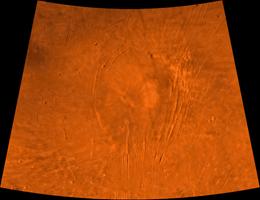
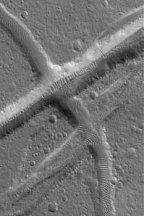
The Tharsis volcanic regions are the highest areas on
Barsoom, and extend far into the north, up to the sixtieth parallel.
The two highest Tharsis regions in that area, including the volcano, Alba
Patera and Tempe Terra, form a sort shallow midland or lowland cup between
them. Thus, we would have here a relatively sheltered area,
constantly draining the run off moisture from the sheer cliffs in the distance.
Moisture from the cliffs would collect into rivers, it would support forests
and plant life, and eventually collect into a small sea or large lake.
Eventually, of course, the lake would drain down into
the ancient sea beds, but up around the area between Tharsis and the poles,
the sea beds are at their shallowest. So you might well get
a river that reached the outer limits of the glaciers.
Such an area would be almost invisible to explorers, unless
you knew where to look. The Tharsis region would be impassible
and fierce for flyers and likely well avoided. It would be
too far north for the Green Men to visit habitually. And if
the sea was salt, then the river would be considered unuseable, being a
salt river. Worse than useless for Barsoomians seeking fresh
water. There would be little incentive for Barsoomians to seek
the source of a useless saltwater river, no matter how many frozen corpses
floated down it.
And, we should note, that before John Carter, Barsoomians
seemed to show little inclination to explore. They might wander
about freely, but many Barsoomians showed a profound obliviousness to,
and indifference to, foreign lands. Even lands not too far removed
from their own. So its entirely likely that Barsoomians did
not go out of their way to wander into a region that had been previously
judged poisonous, inhospitable, dangerous and barren in order to see if,
by some off chance, there was still a garden of eden there.
And of course, there may be another reason.
The Thern cult of Iss may well have been active here. In fact, their
presence of a sacred river to the afterlife all but guarantees the presence
of the Therns. The Thern society may well have kept this last
dwindling refuge of Orovars a secret, seeing it as a northern reflection,
perhaps, of their own blessed valley and river. Certainly the
Therns are the one people who could have gone among the Hither and escaped
notice.
The lack of technology and technical sophistication is
unusual for Barsoom, but not unheard of. The Manator kingdom,
very nearly as remote, also lacks flyers and radium rifles.
But there are other oddly archaic features of the Hither. They
appear to be polytheists, although we don’t receive much detail.
In addition to the ‘Iss Cult’ faith of the river of death, there is also
evidence of Sun (Tur?) worship and allusion to multiple Gods.
The Hither people are undoubtedly an isolated leftover remnant living off
of past glory and cut off from the outside world by geography and by the
Thither people, so its not surprising that they are not up on modern Barsoomian
technology.
And indeed, it seems likely that the hairy hybrid race
of red men and okars is itself, almost as isolated as the Hither, with
similar religious traditions and a similar lack of technology.
The hybrids society, like the Hithers, seem focused on the sea and its
tributary rivers and forests, with little interest in the inhospitable
deserts beyond.
Now, on to the final and most important question:
Why is it so warm, so far north? The simplest reason
of all. Volcanism. Mars has cooled down substantially,
and the volcanoes are no longer highly active. But Tharsis was the
most active volcanic region on Earth, and the residual heat warms the bowel
shaped midland between its peaks, creating a warm temperate microclimate
in this isolated region.
It is remarkable, of course, but remember, Barsoom has
other such hidden micro-environments, from the Lost Sea’s of Korus and
Omean, to hidden valleys and forests like Invak, Ghasta and Kamtol, to
far more bizarre regions, such as the Kaldane’s land, Bantoom.
Thus, the hidden lands of the Hither and Thither, with
their forests, rivers and small sea, and their relic white race, and their
hybrid red race, are not so unusual or abnormal as to be beyond the ranges
of what we have already seen on Barsoom. Rather, it is just
one more forgotten corner of the dying world.
And there you have it, we’ve found Gulliver Jones upon
Barsoom, sketched out his home, and defined his stomping grounds.
We hope you’ve enjoyed....
Postscript
There is another, slightly less satisfactory, but perhaps
equally valid explanation. Gulliver Jones may simply be further
into the past than John Carter. It’s been suggested by
some that John Carter did not only travel through space, but through time
as well, in reaching Barsoom. If this is correct, then the fate of
Barsoom is written, it will sometime after the Warlord, become our Mars.
 ...
...
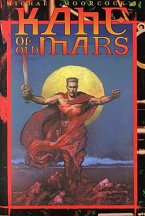
Moorcock’s Michael Kane ~ Bracket’s Matt Carse
If our heroes travel through time as well as space, then
it is quite possible that they have different stops.
Thus, Carter travels back to the dying world. Gulliver travels
back even further to the twilight of the Orovars. In
support of this, we might consider Moorcock’s Michael Kane, who definitely
travels into Mars past, as well as Bracket’s Matt Carse, who also ventures
into the Martian past (though he gets to the planet itself by normal enough
means).
Of course, the trouble with that theory is that John Carter
does not actually seem to travel into the past, his adventures on Barsoom
appear to be contemporary, and in fact, there is occasional real time communication
between Barsoom and Earth, as noted in the use of the Gridley Wave to chronicle
certain Barsoom adventures, and later in the Moon Maid. Barsoomians
even build a spaceship to reach Earth in the 21st century.
In short, in the Burroughs universe, Barsoom is contemporary with Earth.
And further, there seems little evidence for actual time
travel in the Burroughs universe, at best, there is a facility to access
the memories of ancestors or descendants through some line of reincarnation,
but that falls far short.
Nor is there any indication of time travel in Gulliver
Jones. When he commands the carpet, there are explicit orders as
to locations, but he makes no suggestion or hint relating to time, nor
says anything which can be construed as referring to time.
There is no evidence that the carpet has moved through time.
Indeed, quite the opposite, it appears that when the carpet returns him
to Earth, an equivalent period of time has passed since his departure.
This suggests that the Carpet remained in normal time throughout.
So, despite the examples of Matt
Carse and Michael Kane, and the speculations of fans, I would be inclined
to reject the ‘time travel’ theory.
And, as noted, if such a person as Allan
Moore chooses to unite the two.... Well, that settles it for
all other intents and purposes.
Post
Postscript
Refining
the Opal Sea
For the record, the most likely single spot for Gulliver's
Opal Sea is probably at Tempe Terra.
If you look on the maps, you'll see that the Tharsis uplift
region in the north has two distinct horns. One is Alba Patera, an
immense shield volcano.
The other is Tempe Terra, which seems to be a rugged hill/highland
area marked by straight grooves (canals?) and apparent river structures.
The territory seems close to what Arnold describes for Gulliver.
Tempe Terra also forms a sort of bowl or crescent at its
top, which would form the shore of the opal sea. The downside is that it
seems to slope steadily. But even a shallow rise on the northern
rim would trap waters in a shallow sea or lake.
I suspect that the Opal Sea is a relatively shallow body
of water less than 100 feet deep, and quite likely, only dozens, or even
a dozen feet deep. It's probably more like Lake Chad, Lake Winnipeg
or the Aral Sea than it is like Lake Victoria, the Caspian or Black Sea,
or the Great Lakes.
The Opal Sea is almost certainly not a stable body of
water. Left to its own devices, it would have evaporated long ago.
And in fact, its likely simply a geological anomaly, a fragment of the
polar ocean stranded by a trick of topography when the rest of the ocean
receded.
The Lost Sea of Korus is, in comparison, a stable body
of water. Its moisure is trapped by the Otz Mountain ranges which
surround it, and its waters are continually replenished by the Iss River.
In contrast, the Opal Sea has no ringing mountains to
secure it, particularly on its northern lee. So it should be in a
constant state of drainage and evaporation.
Its existence comes from being constantly replenished
by waters running or drifting down from the edges of the Tharsis uplift.
Essentially, Tharsis, like a mountain range, is above
the levels of the moisure bearing clouds. So, when air is moving
clouds along, wind currents eventually bring them up against Tharsis, and
they pile up like rush hour traffic. The density of the clouds and
the density of the moisture in them increases, and eventually this precipitates
as rain or run off down the side of Tharsis in the form of mountain streams.
This is why, likely, some of the most fertile remaining
regions of Barsoom, like Bantoom or the Kaolian forest, are clustered around
Tharsis.
Of course, as the water vapour in the atmosphere, or the
water bearing clouds slide up against Tharsis, they'll tend to move along
its length, sliding north or south. That's as long as there's a relatively
straight surface. If on the other hand, Tharsis geography cups or
forms a crescent or wedge, then you'll get a collection point for moisture
far more effective than we see. These geographical areas literally
form a kind of pocket or trap for moisture. Tempe Terra is one such
area where you would expect to see a lot of moisture getting trapped.
In addition to normal planetary moisure, Tempe Terra is
also probably collecting any moisture coming off the North Pole, one of
the major repositories of water left in the northern hemisphere.
So, as you can see, there'd be plenty of water continually
flowing in to sustain the Opal Sea, even though it must be losing its water
at an astounding rate.
The
Ice Valley of the Dead
As a further thought, I'm not sure that the glacier full
of corpses that Gulliver encounters is actually at the north pole.
There are two problems. If we locate the Hither and Thither at the
opposite arms of Tempe Terra's shoreline crescent, then the North Pole
ice cap still seems too far away by some hundreds of miles, to match up
with Gulliver's journey. Secondly, the north polar cap is a
glacial highland surrounded by lowlands, so in order for it to work, the
river of death would have to flow upwards.
On reflection, I'm inclined instead to think that the
Valley of Death that Gulliver finds is actually a glacial outlier to the
north pole, but not actually part of the north pole ice. It's located
on the sea bed, so it may have actually begun as an ancient iceberg calving
off the pole, trapped in a lowland as the seas dried up. It's likely
sustained by cold polar area temperatures, remnant ice/sea water, by moisture
leaching off the north pole, and by waters from the river of death.
The sub-polar regions of Barsoom are probably spackled
with these little remnant outlier glaciers, much as some parts of the subpolar
regions of North America are.
The
Cult of Iss and the Therns
Oddly, in one of those 'stepping on your grave' moments,
Gulliver actually does contain a direct reference to Isis.
The moment comes when Gulliver and Heru are in a library,
and she comes across what she says is a book chronicling Earth's legendry,
Isis is mentioned, as is Phra (the Phoenician, immortal hero of an earlier
Arnold book and according to some, the inspiration for John Carter).
The Phra bit is obvious self referencing, and the Isis referred to is clearly
an Earth goddess. Nevertheless, if Earthly Gods and Heroes are known
of on Gulliver's Mars, then we might infer a borrowing or inspiration of
names. It's an odd little coincidence.
It's almost certain by the way, that the region has some
sort of cosmological significance to the Therns. For one thing, it
is on almost exactly the opposite side of the planet from Korus.
For another, while the Iss River drains into Korus, the River of
Death drains out of the Opal Sea. In short, in geographical
terms, the Opal Sea would appear to the Therns as a sort of exact reverse
mirror image of their sacred land. They would probably have
some metaphysics on the subject.
And its likely that the Therns are aware of the Opal Sea.
If they're aware of Okar which is even more remote and inaccessible, it
seems almost certain that they'd be familiar with the region.
The
Burning Star Reconsidered
In Gulliver Jones, the climax of the novel seems
based around a close encounter with a meteor or asteroid, which blazes
through the atmosphere, causing a ferocious heat wave and drought through
the region, before withdrawing.
In astronomical terms, of course, that's pure rubbish.
Asteroids and even comets are relatively inert bodies. They don't
heat things up from a long way off. Indeed, while an asteroid or
meteor's approach might well heat things up, this would be for, at best,
only minutes before it hits. Gulliver's heat wave lasts for several
days, even weeks, drying out the region almost completely, and in fact,
drying out underground wells.
So, if we accept that physics in Gulliver's world has
even the most half-assed resemblance to our world, then clearly, Gulliver
has completely misinterpreted events.
What's really going on? Two things. First,
there is likely a close approach of a comet. On Earth, Comets were
considered evil signs, harbingers of doom, and carried with it a lot of
bad karma. Gulliver's carrying on that baggage. And Mars, being
closer to the asteroid belt and more likely the victim of more frequent
rockfalls from the sky, probably has its own 'anti-comet' baggage.
So, its likely that the appearance of a comet in the sky is taken as a
bad omen, and everything bad that happens gets attributed to the comet.
The second thing is equally straightforward. Remember
that the Opal Sea and its peoples are in the extreme north, in a sub-arctic
region. They should be frozen solid. The reason that they are
not is volcanic warming, like Iceland in our own north, geological or volcanic
heat is making the area far warmer and more liveable than it should be.
Well, the thing with geological or volcanic heating is
that occasionally it gets a little unstable. Volcanoes occasionally
heat up, sputter, cough, or ratchet up the temperatures. So the heat
wave that Gulliver experiences, and the drought, are all attributable to
a mild uptick in volcanic activity, one which dries up the streams running
down Tharsis, and dries out the underground water.
The comet which happens to be appearing at the time is
considered the ill omen, and is blamed for the heat wave. But in
reality, the heat is rising up, not coming down.
A
Final Odd Coincidence
This one does not involve Burroughs at all, but rather,
myself. Referring back to the Library scene, Gulliver persuades Princess
Heru to read him a bit of some treatise on philosophy, which she herself
finds stuffy and boring:
"....And from the midst
of that natal splendour, behind which was the Unknowable, the life came
hitherward; from the midst of that nucleus undescribed, undescribable,
there issued presently the primeval sigh that breathed the breath
of life into all things. And that sigh thrilled through the empty
spaces of the illimitable: it breathed the breath of promise over the frozen
hills of the outside planets where the night-frost had lasted without beginning:
and the waters of ten thousand nameless oceans, girding nameless planets,
were stirred, trembling into their depth. It crossed the illimitable
spaces where the herding aerolites swirl forever through space in the wake
of careering world, and all their whistling wings answered to it. It reverberated
through the grey wastes of vacuity, and crossed the dark oceans of the
Outside, even to the black shores of the eternal night beyond."
This seems a version of the 'let there be light' shtick of
genesis. But reading it, I found strange echoes of my own theories
of Earth's life force or biomagnetic field, sweeping outwards, transforming
worlds in our solar system and beyond, as expressed in essays ranging from
the "Are Barsoomians Human"
to the "Secrets of Va-Nah" and "Eurobus
Revisioned."
Of course, its all fluff and coincidence, sound and fury,
signifying nothing more than to imprint our own designs upon the void.
But interesting nevertheless, n'est ce pa?