Official Edgar Rice Burroughs Tribute and Weekly Webzine Site
Since 1996 ~ Over 15,000 Web Pages in Archive
Volume 8289

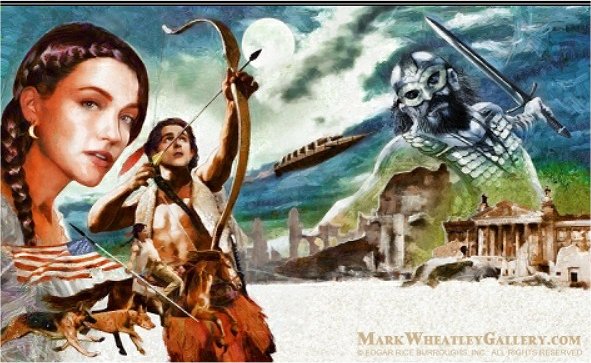
My Moon Maid revisited series will run at least four parts. This article is part two and it begins to explore the names of people, places, and things used by Edgar Rice Burroughs in the trilogy of stories that make up THE MOON MAID. While it is impossible to know how Burroughs chose the names he used in his novels, we know that no one lives in a vacuum. Burroughs was well educated and an avid reader. It’s possible that he may have come across the sources listed herein as he wrote the novel, but he may not have. His choices could have been conscious or unconscious. I name the heroines, heroes, and even the bad guys in my stories after my friends as often as I can. So, here we go. Person, Place, or Thing, in the order they appear in the magazine editions of the novel. Speculation and conjecture to be sure, but the research taught me a few things.
The
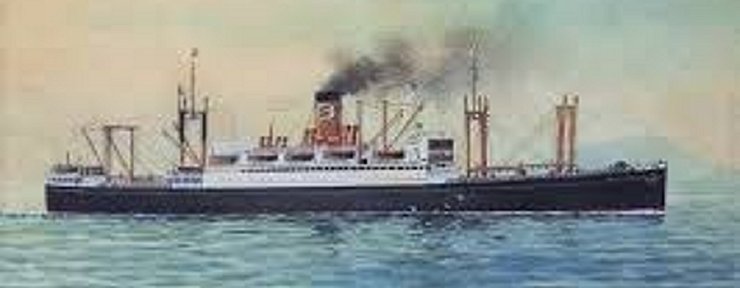
Transatlantic Liner mentioned in the first sentence of the novel was real. The SS President
Harding (originally the Lone Star State and
later President Taft) was a United States Lines ocean liner
that served primarily during the 1920s and 1930s. It was named the SS
President Harding in 1922. Its last voyage was in 1939. It was documented as
one of the last U.S. passenger ships to sail from a war zone (Southampton) with
refugees. Note: The President Harding should not be confused with the
WWII-era destroyer USS Harding (DD-625).
Julian, no
last name, appears in chapter one, but is not identified until chapter two. Julian
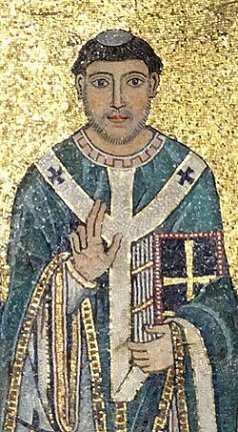
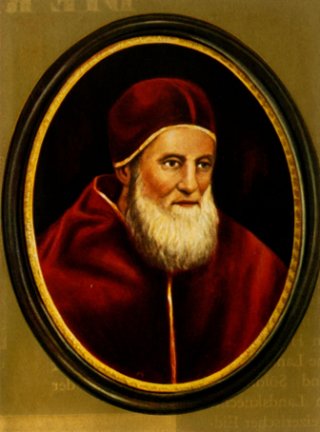
has many historical sources. The first that comes to mind are Popes Julius the
1st and Julius the 2nd. Julius the second was a warrior
pope in the 16th century, who was informally called Julian. Pope
Julius the 1st, a 4th century Pope, is credited as
choosing December 25th as Christmas day. He’s responsible for
inspiring the first line of the Kris Kristofferson song, “Jesus Was a
Capricorn.” The second line goes “and he ate organic food,” but didn’t
everyone in those bygone days. I digress.
 .
. .
.Famous
people named Julian born before 1900 include the 4th-century Roman Emperor Julian the Apostate (331–363), the 14th-century
mystic Julian
of Norwich (1343–1416), and
19th-century figures such as American industrialist Julian Shakespeare Carr (1845–1924) and French
painter Julien
Dupré (1851–1910). There were five Confederate officers with the
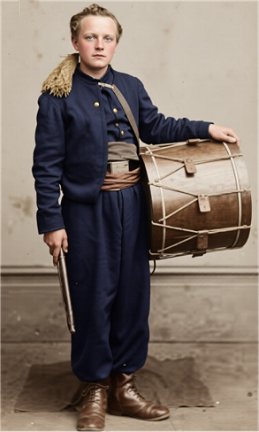
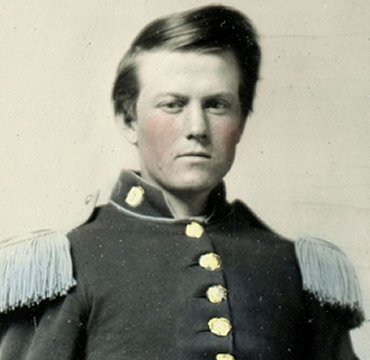
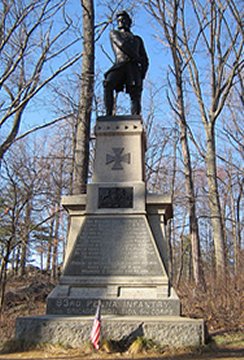
first name Julian. With all that being said, my personal choice is Julian A. Scott, a 16-year-old fifer and drummer in the 3rd Vermont Infantry who
earned the Medal of Honor for braving heavy fire to rescue wounded soldiers at
the Battle of Lee’s Mill. He became an artist, best known for his Civil
War paintings. Scott's 1872 masterwork, the Battle of Cedar Creek,
is located at the Vermont State House. The painting illustrates the contributions of
his home state of Vermont in the American Civil War and is significant for its
absence of glorification of war and instead shows the suffering and human
sacrifice associated with war. Scott traveled west as part of a census party, painting Native Americans in New
Mexico, Arizona, and Oklahoma. Many of his works from this expedition now hang in the University of Pennsylvania Museum of Art.
Edgar Rice
Burroughs, John Carter and Barsoom are introduced in Chapter one. Even the
casual reader of this article needs no additional information the genesis of
those names.
LIEUTENNAT
COMMANDER ORTHIS was a former classmate of Julian’s at AIR
SCHOOL. No location for air school
is mentioned and the Air Force Academy is thirty years in the future. No first
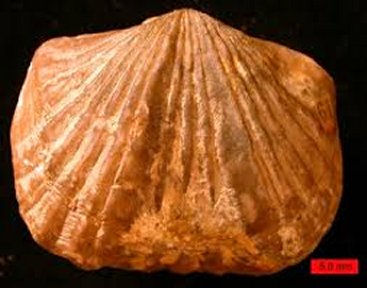
name is given for Orthis, who would be called Or-tis by the Kalkars. An Orthis
is a genus of articulate brachiopods, shellfish, abundant during the Paleozoic.
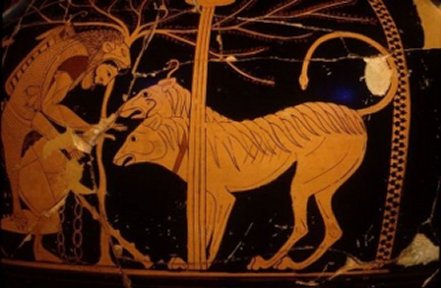
Orthos in Greek mythology was a two-headed dog, Cerberus’s brother. As a
surname, the US Census of 1920 showed one person with the surname Orthis living
in New York. The surname Ortis,
common in Louisiana in the 19th century, also appears as a variant of the
Spanish surname Ortiz. Couldn’t find anyone of historic significance named
Orthis or Ortis. Revolutionary War patriot James
Otis Jr., who coined the phrase, “No taxation
without representation,’ and the
elevator inventor William Otis come
to mind, but it’s doubtful that ERB would name a villain for either of these
two men. With no evidence to support the
conclusion, let’s go with a two-headed devil dog and an extinct clam.
 .
.
.
The other
crew are Lieutenants Jay and West. Last names aren’t provided for any of the
three. All three names are quite common and determining likely sources of
inspiration for them would be an endless quest. However, just some quick
comments. Jay Gatsby was the protagonist in the novel, The Great
Gatsby, published in 1925, so it can’t be him. John Jay was the
first Chief Justice and a William
Jay served
as a lieutenant colonel in the
Union Army. West is even more ubiquitous. Honey West hadn’t been written and
Adam West wasn‘t born, but William
Henry West, an African American soldier who fought for the
Union Army in Company K, 30th United States Colored Infantry, became a D.C.
police officer known for arresting President Ulysses S. Grant for speeding in a
horse-drawn carriage in 1872. I expect that
these three names are basically throwaways.
During their
exploration of the lunar surface, Julian
and crew are captured by a herd of centaur-like creatures. The chief is
Ga-va-go, the tribe is the No-vans, the species, Va-gas.
In Spanish,
vagas is the plural of vaga, and it implies being lazy and having no purpose.
Hence the term vagabond for a hobo. The surname Vagas has its historical roots
in the Iberian Peninsula, particularly in regions that are now part of
modern-day Spain and Portugal. The name is believed to derive from the Latin
word vagus, meaning wandering or vagrant, which may have originally referred to
individuals who were itinerant or had a nomadic lifestyle. Over time, the
surname evolved, with its bearers associated with various occupations,
including those of merchants, travelers, or even laborers who moved from place
to place in search of work. The surname's meaning reflects a certain
adaptability and resilience, traits that were essential for survival in the often-tumultuous
historical landscape of medieval Europe. The surname is common in India and is
unrelated to the Iberian use of the name. Almost 80% of the people in India
with that last name are located in the state of Gujarat. Here’s ERB’s original
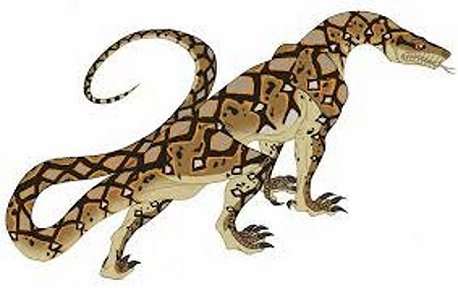
drawing of a Va-gas.

No-vans begs
the oblivious interpretation. The Vagas were centaur-like, and did all of their
travel on foot. They had no vans, or other vehicles for that matter. The Novans
appear in the Stargate Universe as the descendants of the Destiny crew. Perhaps
the writers borrowed the name from Edgar Rice Burroughs. The word, Novan, has a
Latin root and means new or fresh. It is a very uncommon surname. ERB probably
made this name up entirely, although one could guess that the Va-gas, being a
new race, could have a tribe called the No-vans, a new and fresh creature.
That brings
us to the chief, Ga-va-go. This was hard to research. Govago is used as some
automotive related company names these days combining the English word “go”
with the Latin word vago meaning to wander, but certainly not when ERB was
writing The Moon Maid. Gago means a person who stutters in Portuguese
and an ignorant person in Tagalog. Both definitions could apply to Ga-va-go.
I’d love to give credit to the Gavagai Thought Experiment. In the
experiment, a rabbit runs past two people. One person says the undefined word,
Gavagai! The other person has to figure out it the term means rabbit, run,
scurry, furry, big ears, or let’s go to dinner. The experiment wasn’t
postulated until 1960, so perhaps the name of the nonsense word was inspired by
Ed. No way to know.
The next new
name to appear is Zo-al, a great beast and the god of the Va-gas. Zo-al
controls the weather, lightning, thunder, and storms. He is a vengeful god. It
would be easy to say the Zo-al’s name was inspired by Zeus, but even though the
two gods have similar powers, that’s a stretch.
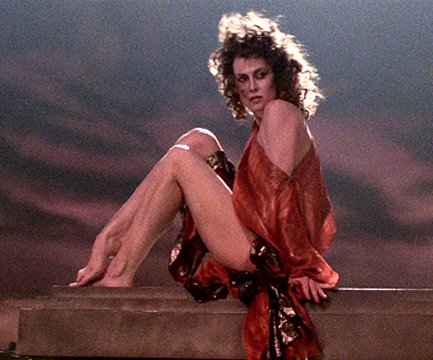
In Dutch, the word zoal means similar. In Ghostbusters, Zuul, is
a minion god aka the Gatekeeper, and Zuul is close enough to Zo-al for me to
wonder. Similar pronunciation, but with enough spelling difference to avoid being
accused of outright theft from The Moon Maid. Harold Ramis, Zo-al knows
what you did, and he his vengeance will be terrible.
The next moon creature to appear
was an U-ga, an artificially-winged humanoid. It crashed near the No-vans
and was devoured in seconds. U-ga could be pronounced OOO-gah or Ugh-a, and
either way it gives rise to a plethora of meanings and usages. We’ll ignore the
fact that the name for the University of Georgia’s mascot is Uga, a bulldog,
but that brings us back to the line in Ghostbusters, “Yes, I know. My
girlfriend is a dog.” Sorry, I just couldn’t resist. Uga has several unrelated
meanings in several languages, it means silent in Marathi, village square in
Swahili, a good idea in Indonesian, inattention is Icelandic, wet in Cebuano
and wealth in German. My personal favorite is the Uga plant in India, commonly
known as the toothbrush tree. I expect
the Va-gas could have used a toothbrush tree after eating the downed U-ga. Feathers
get caught in your teeth. I don’t believe any of these definitions were Ed’s
inspiration for the name. I’m going with something simpler, Ed was writing and
searching to name the artificially-winged moon people and he heard an
automobile horn outside. It went ooo-ga, ooo-ga, and the name was born.
In chapter six, an U-ga female is captured, her name is Nah-ee-lah, she’s the daughter of Sagroth, Jedamar of Lythe. She calls Ga-va-go a rympth, a four-legged snake, the lowest and most disgusting of the moon creatures. That’s five new words to consider. Two seem obvious. Jedamar is likely a variation of Jeddak, a term for ruler that ERB made famous in his Barsoom books. Sagroth is simply too close to sagoth, the ape-like servants of the Mahars in the Pellucidar novels, to consider any other inspiration for the name. Lythe is village in England and a Scottish term for the fish, pollack. Since Lythe is a place name, I’m going to go with the village in England, any other option would be too fishy to consider.
Rympth is a common
misspelling of rhythm. I’ve known some two-legged snakes, but I’ve never met a
four-legged one. The term rympth has no meaning in any language I could find,
nor is it associated with any person, place of thing. My effort to pronounce
the word reminds me of a drum riff. Words
should have an occasional vowel, don’t you think. RIMP is an acronym for a Respectfully
Intellectual and Magnificent Person, not unlike the author of the novel. (Drum
riff, please.)
Va-nah is the name
of the lands inside of the moon. The name has nothing to do with she who turns
the letters on Wheel of Fortune. The surname Vanah has its roots in the
historical and cultural tapestry of the Netherlands, particularly associated
with the Dutch language and culture. It
is a surname in both the United Sates and Great Britain that peaked in
popularity in Maine during the 1880s and is often interpreted as a name
signifying a strong and brave spirit, embodying leadership and resilience. In
Sanskrit, the name refers to trees or forests. Vanah-patih means king of
the forest, although Tarzan might disagree.
It sometimes refers to a place with a peaceful atmosphere. That
certainly wasn’t the case inside the moon. ERB was well read and he may have
encountered the term or he may have known a Vanna, Vannah, or even corresponded
from a person named Vanah from Amherst, Maine.
Nah-ee-lah,
the woman with wings, artificial wings, but wings nonetheless, is the final person
I’ll cover in this installment, the second of however many installments it
takes. Naheelah is a primarily female name of Arabic origin, commonly
interpreted to mean "attainer,"
"successful," or "one who achieves". It is
derived from the Arabic word na'il, signifying success or
accomplishment. It is often used to represent someone who reaches their goals,
representing a high-achiever. Nah-ee-lah sounds
like a corruption of the name Neela, primarily a feminine name of Sanskrit
origin, meaning "dark blue," "indigo," or
"sapphire". It represents the color of the sky and water, often
associated with depth and tranquility in Indian culture. The name is popular in
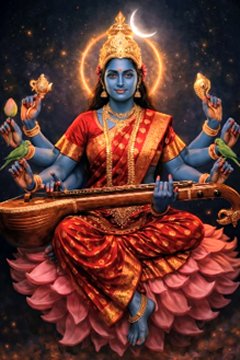
South Asia with spiritual connotations as a goddess consort. The first image below is of the goddess
consort, Neela Saraswatyamba also called Neela Saraswati, the deep-blue
manifestation of the Goddess of Knowledge. She represents the union of
intellect, intuition, and Tantric wisdom beyond ordinary learning. Her blue
form symbolizes infinite consciousness, hidden spiritual currents, and the
ocean of esoteric knowledge that unfolds through inner realization. She governs
clarity of speech, mantra power, creative brilliance, and the awakening of
subtle perception that transcends conventional education. In Tantric tradition,
Neela Saraswati presides over higher wisdom, insight, and liberation through
compassion and transformative power. Neela Saraswati illuminates the path with
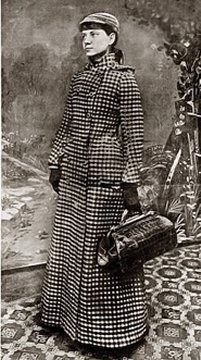
awakened intelligence and intuitive discernment. The second image is of Nellie
Bly, aka Elizabeth Jane Cochran, who went around the world in seventy-two days
and was certainly famous in the first years of the 20th century.
Nah-ee-lah from Nellie. Probably not, but it could have been. I do like the
part about the goddess governing creative brilliance. I expect ERB would have
appreciated that too.
 .
. 
The next installment of the exciting, but irreverent and
somewhat irrelevant, The Moon Maid Revisited, is Part Three and it will
begin with chapter seven of The Moon Maid, A Fight and a Chance. My hope is that this project will take
six installments, but it could take more. Two down and hopefully four more to
do.
As I write this, the crew of the Artemis Two is on
their way to circumnavigate the moon. I watched the first moon landing on a
black and white TV with a screen smaller than the one on my laptop. I know this
mission won’t put people on the moon, but it’s one small step in ensuring that
future missions will do so. My thoughts and hopes go with them. Astra nostra sunt, the stars are ours.
BACK TO MOON MAID MUSINGS PART ONE
https://www.ERBzine.com/mag82/8238.html

BILL HILLMAN
Visit our thousands of other sites at:
BILL and SUE-ON HILLMAN ECLECTIC STUDIO
ERB Text, ERB Images and Tarzan® John Carter® Priness of Mars® are ©Edgar Rice Burroughs, Inc.- All Rights Reserved.
All Original Work ©1996-2026 by Bill Hillman and/or Contributing Authors/Owners
No part of this web site may be reproduced without permission from the respective owners