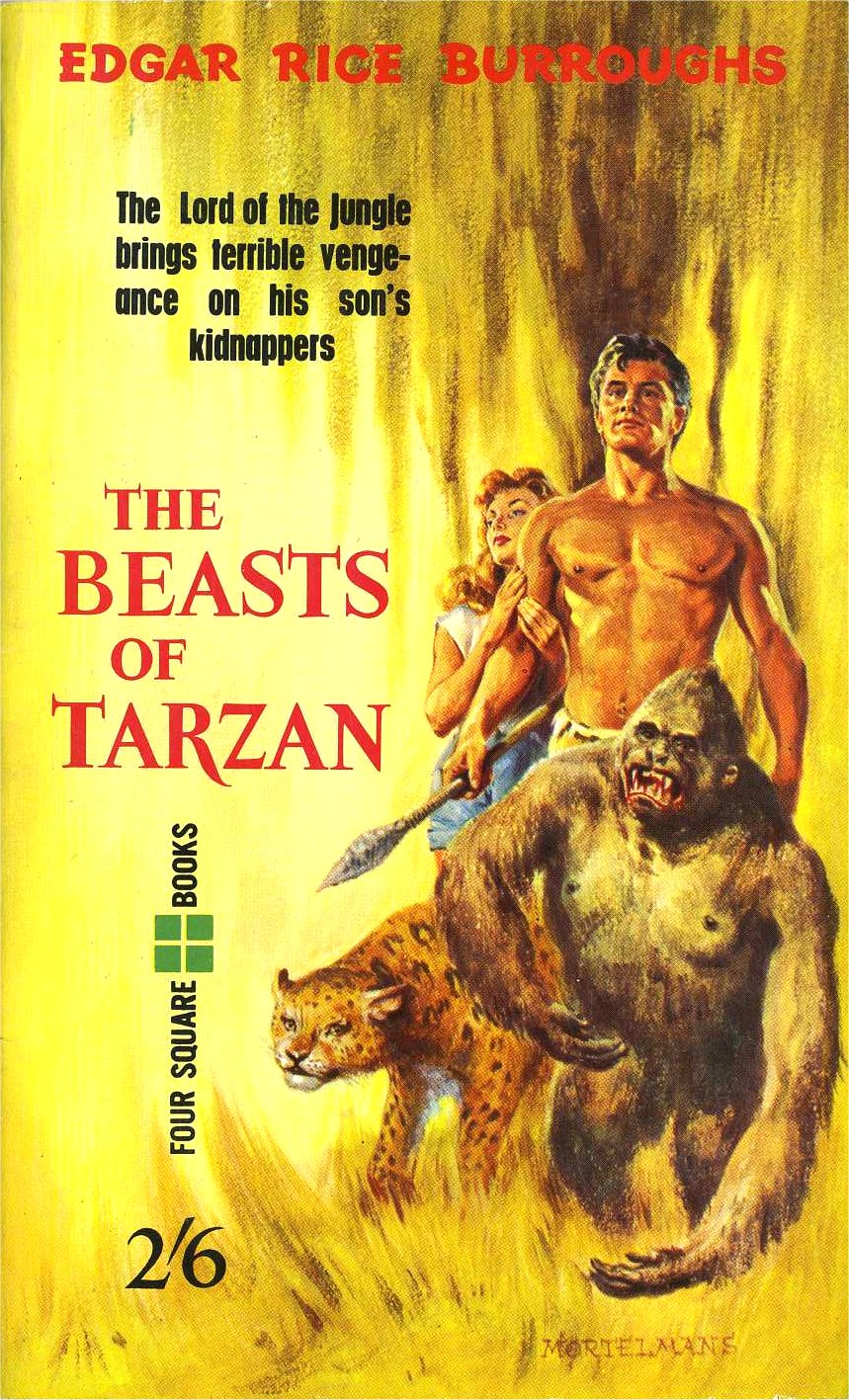
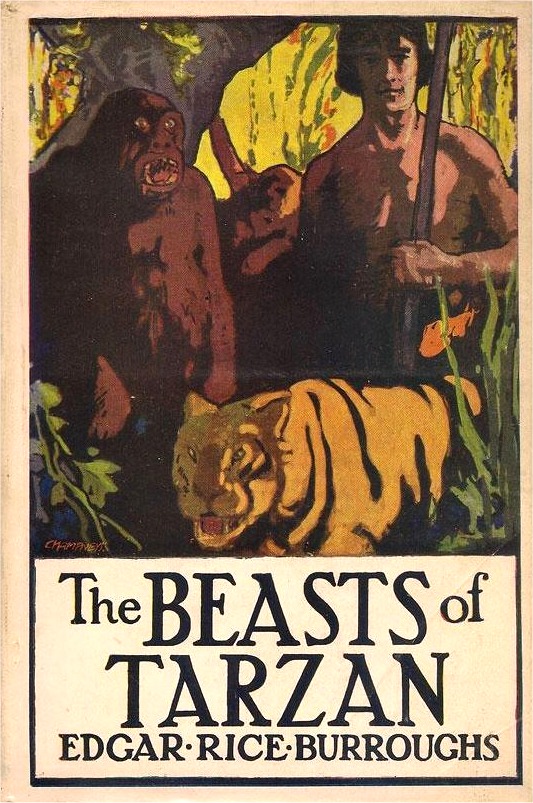
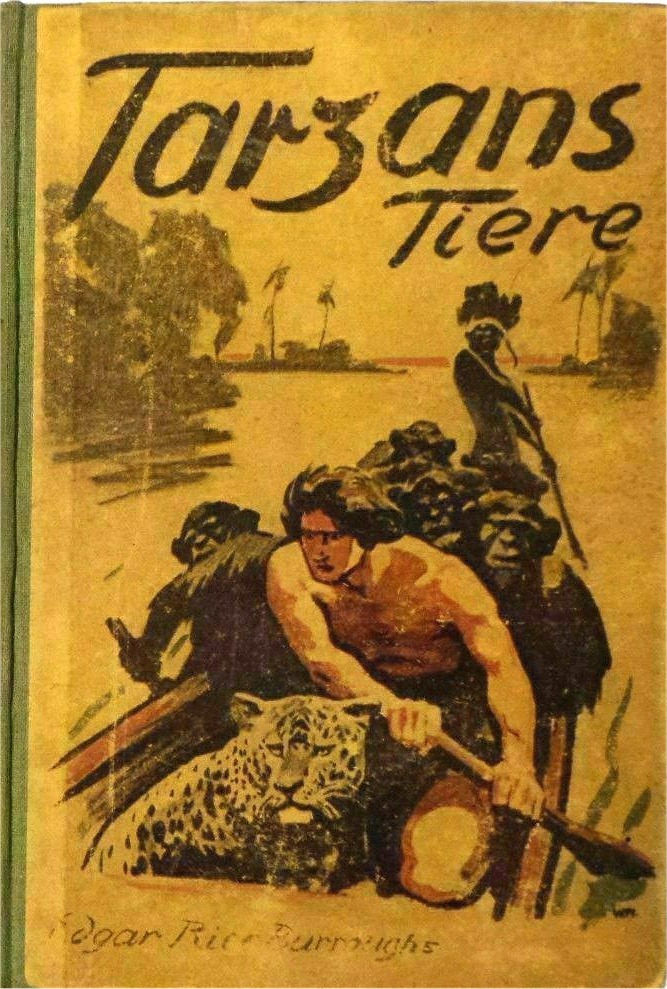
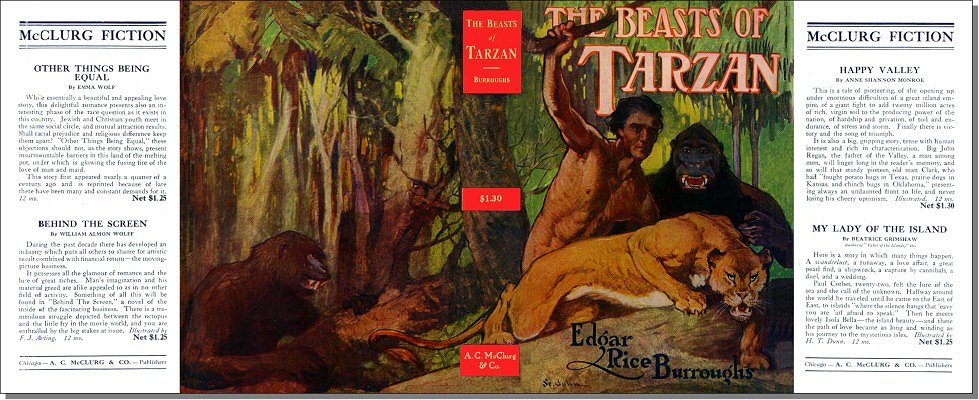
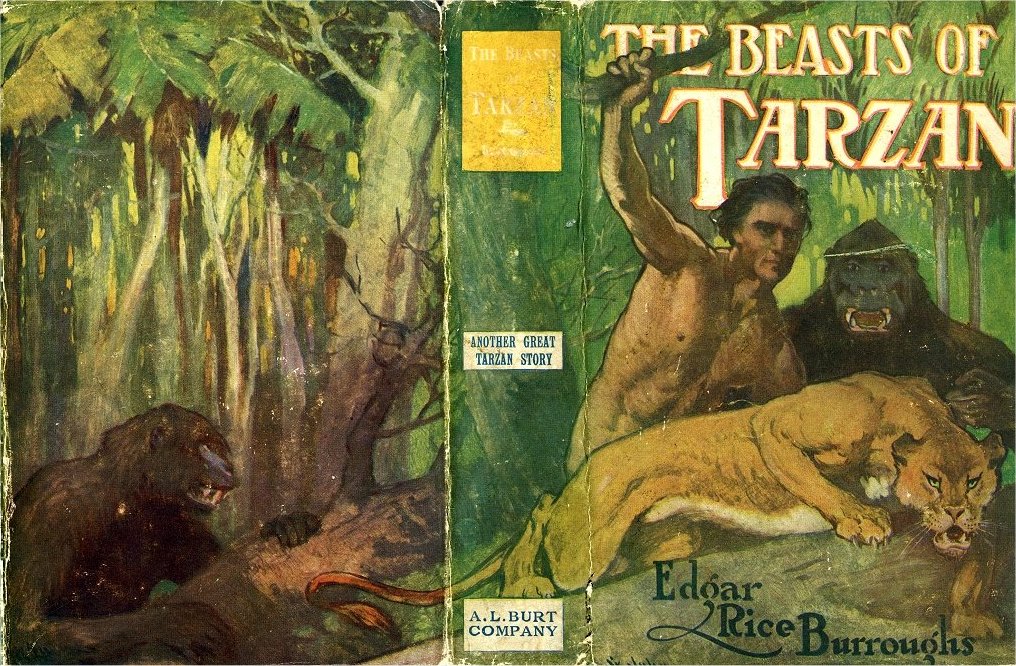
THE BEASTS OF TARZAN
Review contributed by
Doc
Hermes ERB Reviews
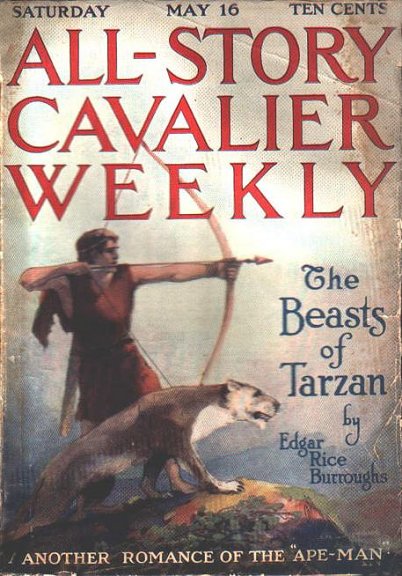
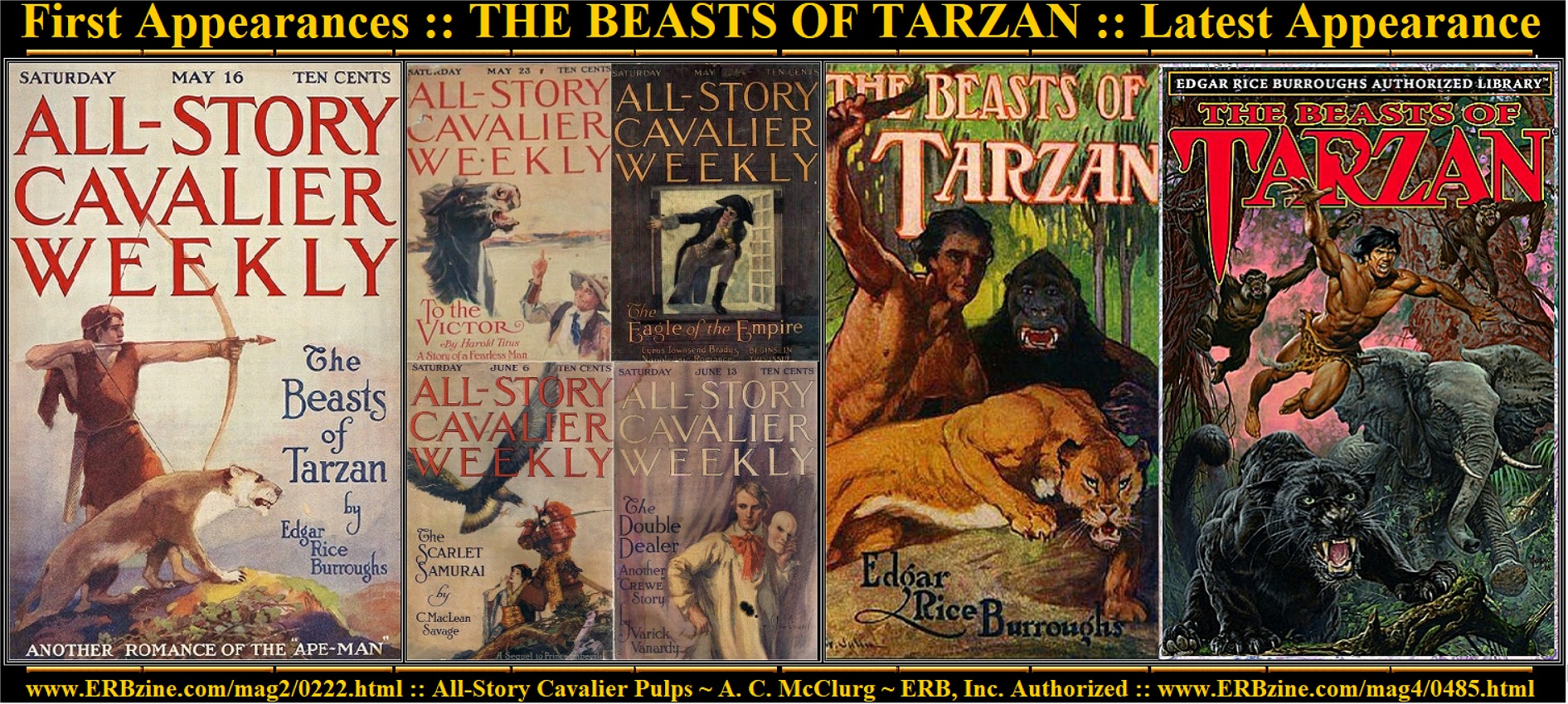
From ALL-STORY CAVALIER WEEKLY,
where it ran as a serial in May and June 1914, this ended up as the third
Tarzan book. In many ways, THE BEASTS OF TARZAN is the least well known
or mentioned of the early books. The first two, of course, give the
Apeman`s origin story and are most often discussed. THE SON OF TARZAN introduces
Korak and Meriem and also has its internal chronological problems which
have been the subject of much speculation by Philip Jose Farmer and the
Wold Newton school.
But THE BEASTS OF TARZAN
is usually neglected, which is a shame as it`s lively and brisk, and way
over the top. It does introduce Mugambi and Akut, finishes off a
couple of villains and naturally has its full share of thrills and spills.
Still, it seems to have an air of an early filler in the saga and winds
up with the characters pretty much as they were on the fist page, except
for some wear and tear.
The story itself is an old-fashioned
melodrama, with the hateful villain Nikolas Rokoff going to considerable
expense and great effort to get a convoluted revenge on the Apeman. Once
he escapes from the French prison where Tarzan had sent him, Rokoff
might be expected to hire a thug with a rifle to simply shoot his enemy
down but noooo, that would not be twisted enough. Just as master criminals
are compelled to explain their plans before leaving the hero in the death
trap, so Rokoff arranges for little Jack Clayton to be kidnapped and raised
by cannibals ("His little boy a savage maneater! It was too horrible to
contemplate!") and for Jane to end up in a harem (you know, I have to wonder
if maybe she didn`t have some kind of karma involving harems from an earlier
life, she ends up on her way there so often).
As for Tarzan himself, does
Rokoff leave him dead in a pit or dropped overboard with a rock tied to
his neck? Or maybe abandoned deep in the Arctic to freeze to death? Nah.
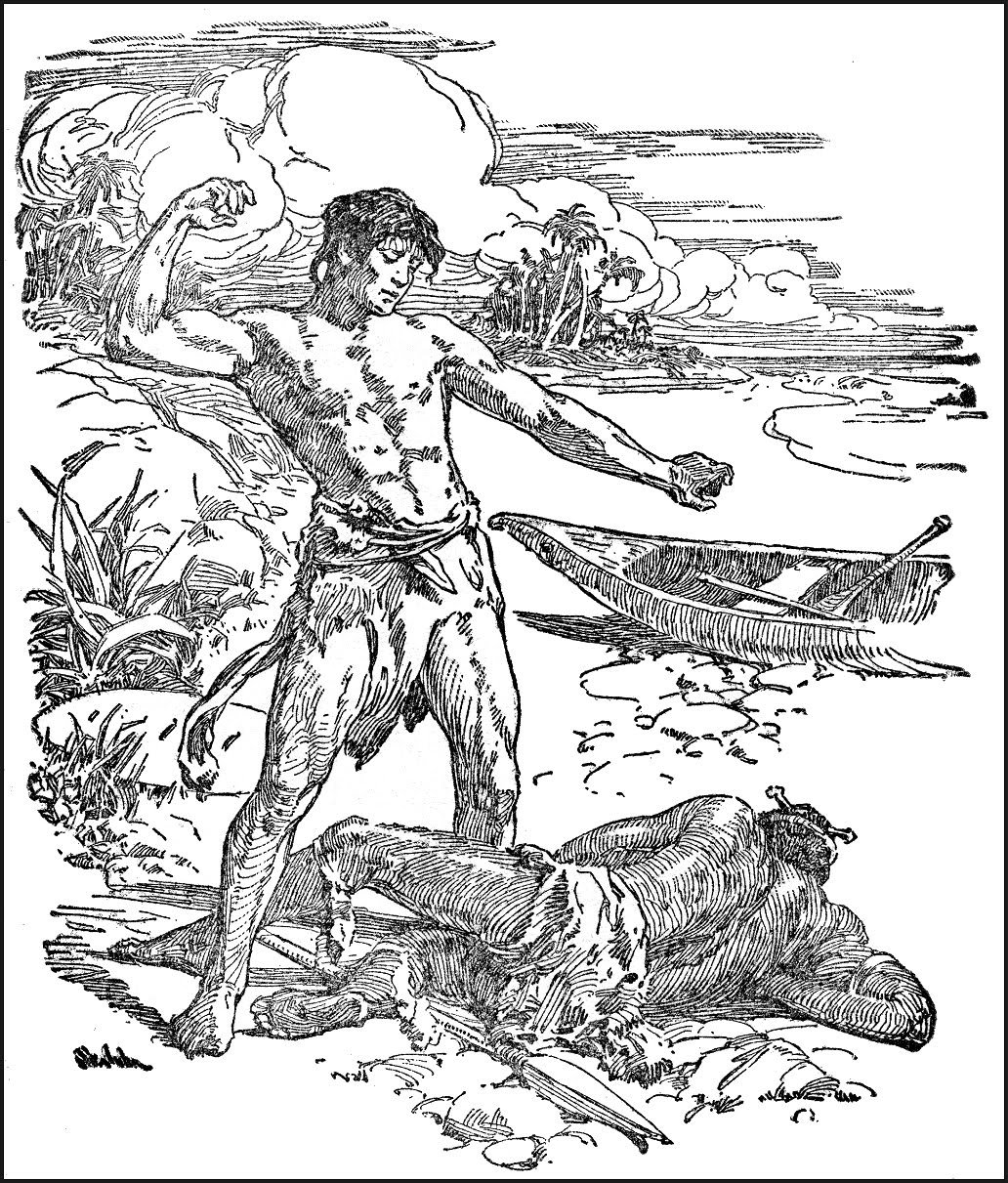
He maroons the perfectly healthy and furious Apeman on a large island within
easy sailing distance of Africa! Duh.As you might expect, this is like
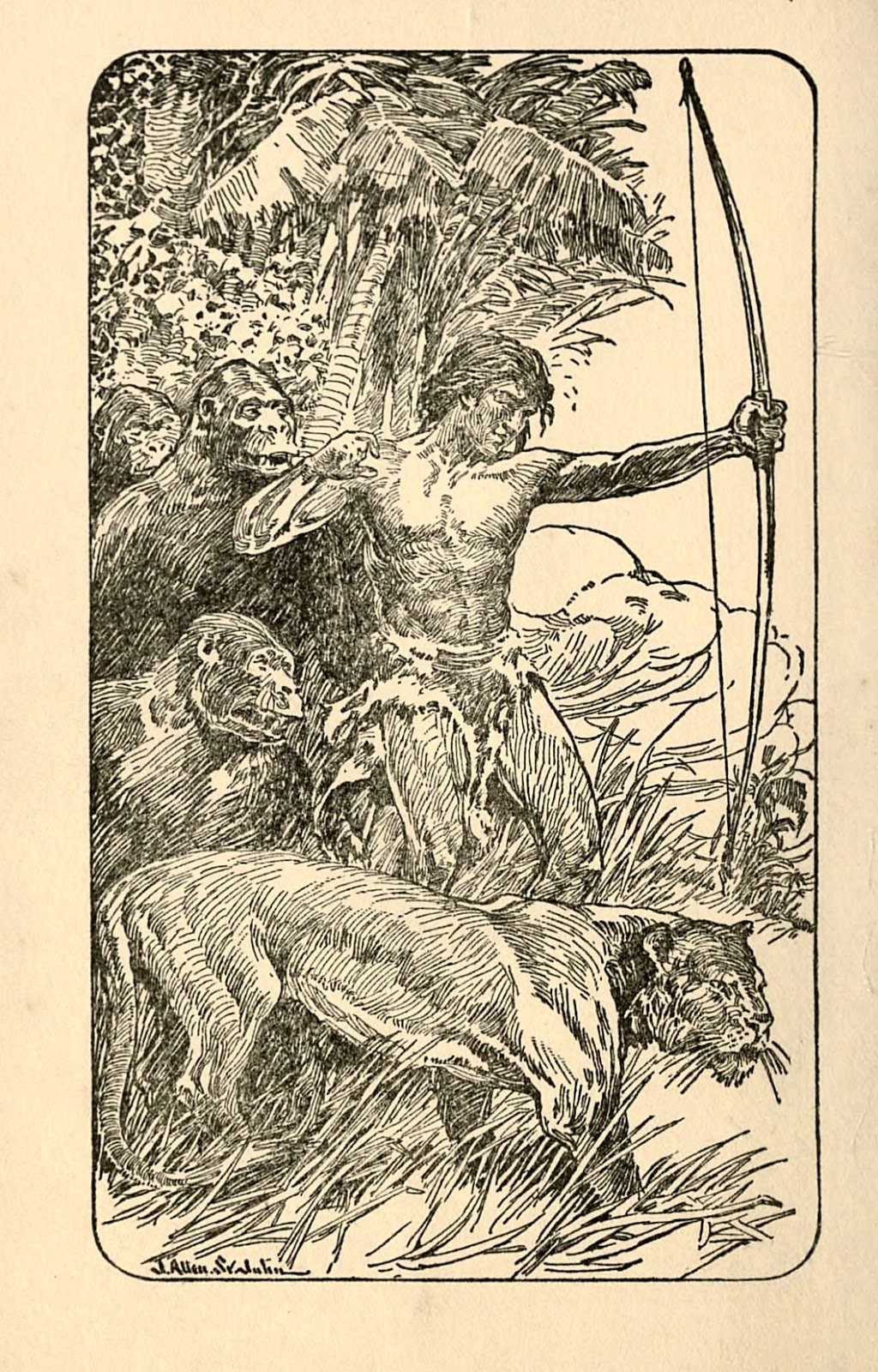
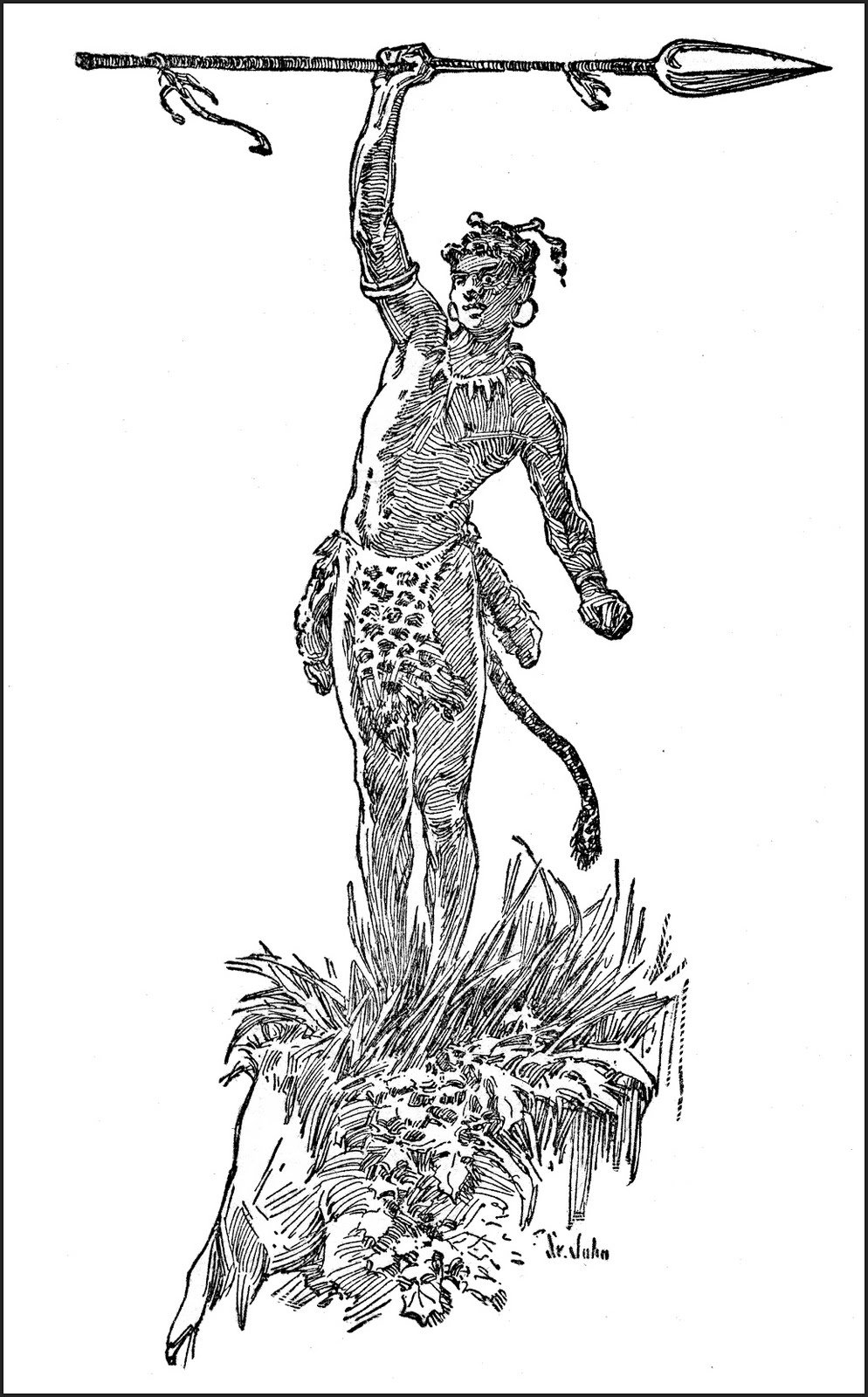
stranding a pulp fan in a used book store. In no time, Tarzan has whipped
up a stone knife, bow and arrows, grass rope, loincloth and treehouse,
and is feasting on raw deer carcass while he figures out how to get on
Rokoff`s trail.
What gives this book much
of its appeal is that our hero assembles the All Beast Squadron to help
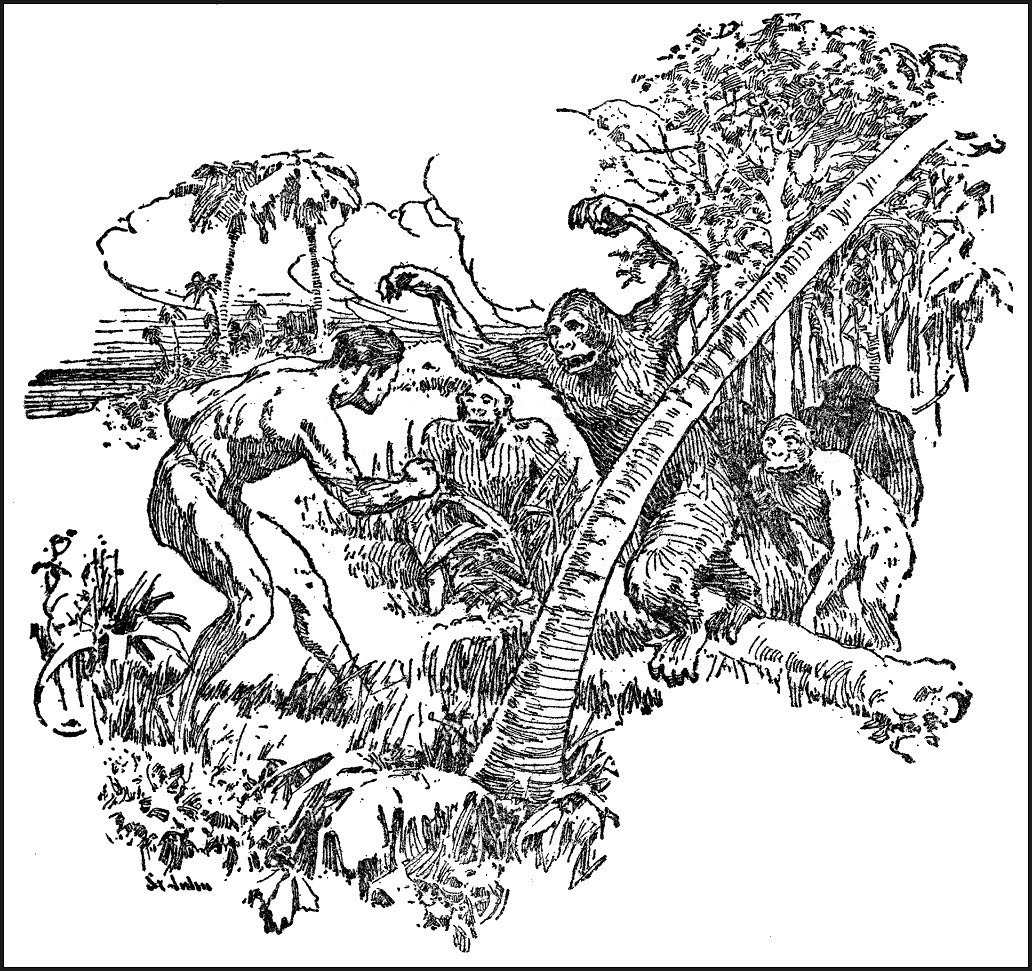
him. Luckily there are a colony of the Great Apes on the island and he
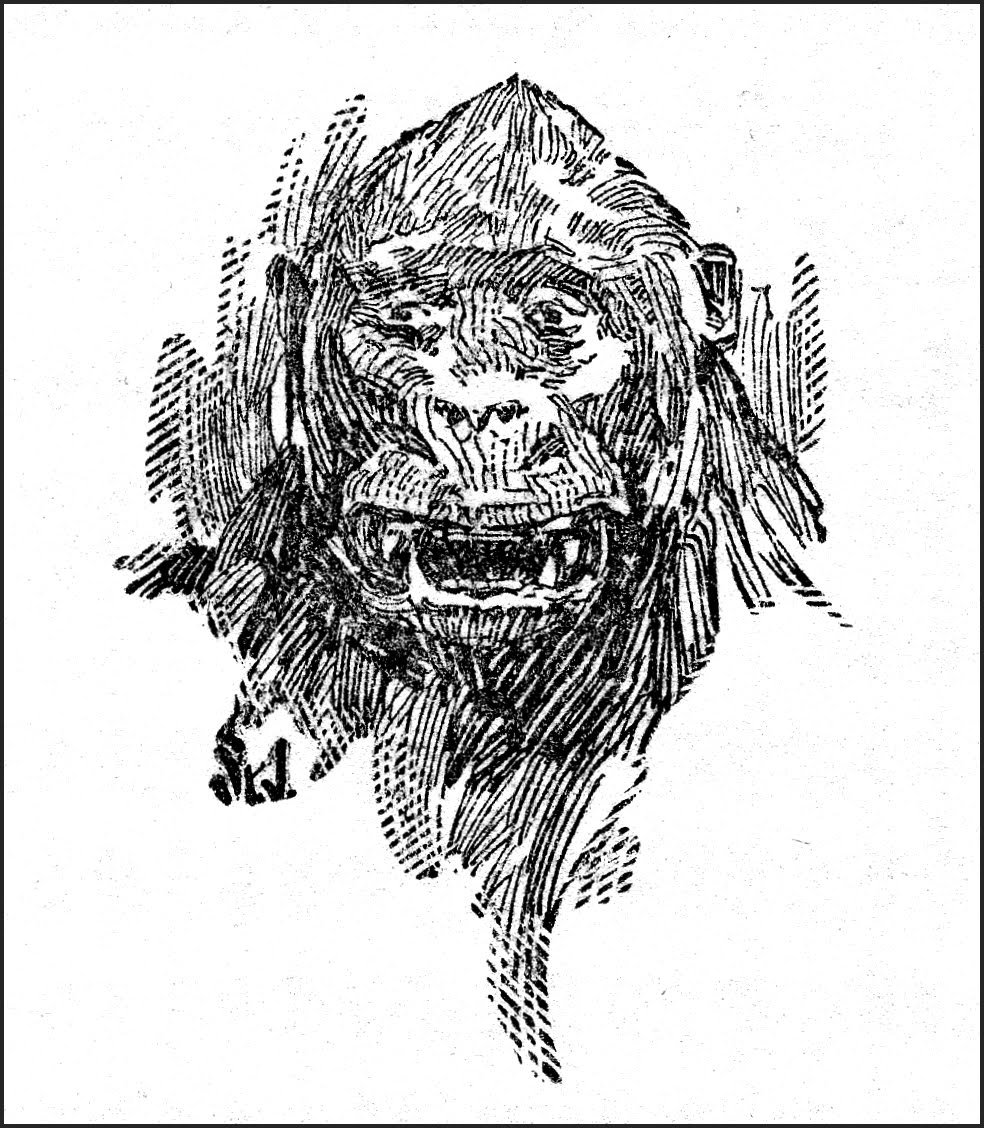
quickly kills their leader and sets up Akut, a mangani of unusual insight,
as the leader of the pack under Tarzan`s command. (It`s interesting that,
although these huge seven foot tall apes understand his lingo, they are
actually a slightly different species than the mangani who raised the boy.
I don`t think it`s been emphasized that there are two different species
of mangani in the books.) With Akut as his lieutenant, Tarzan has a commando
squad of a dozen surly apes following him. We will meet Akut again, disguised
as Korak`s grandmother (!) in the next book.
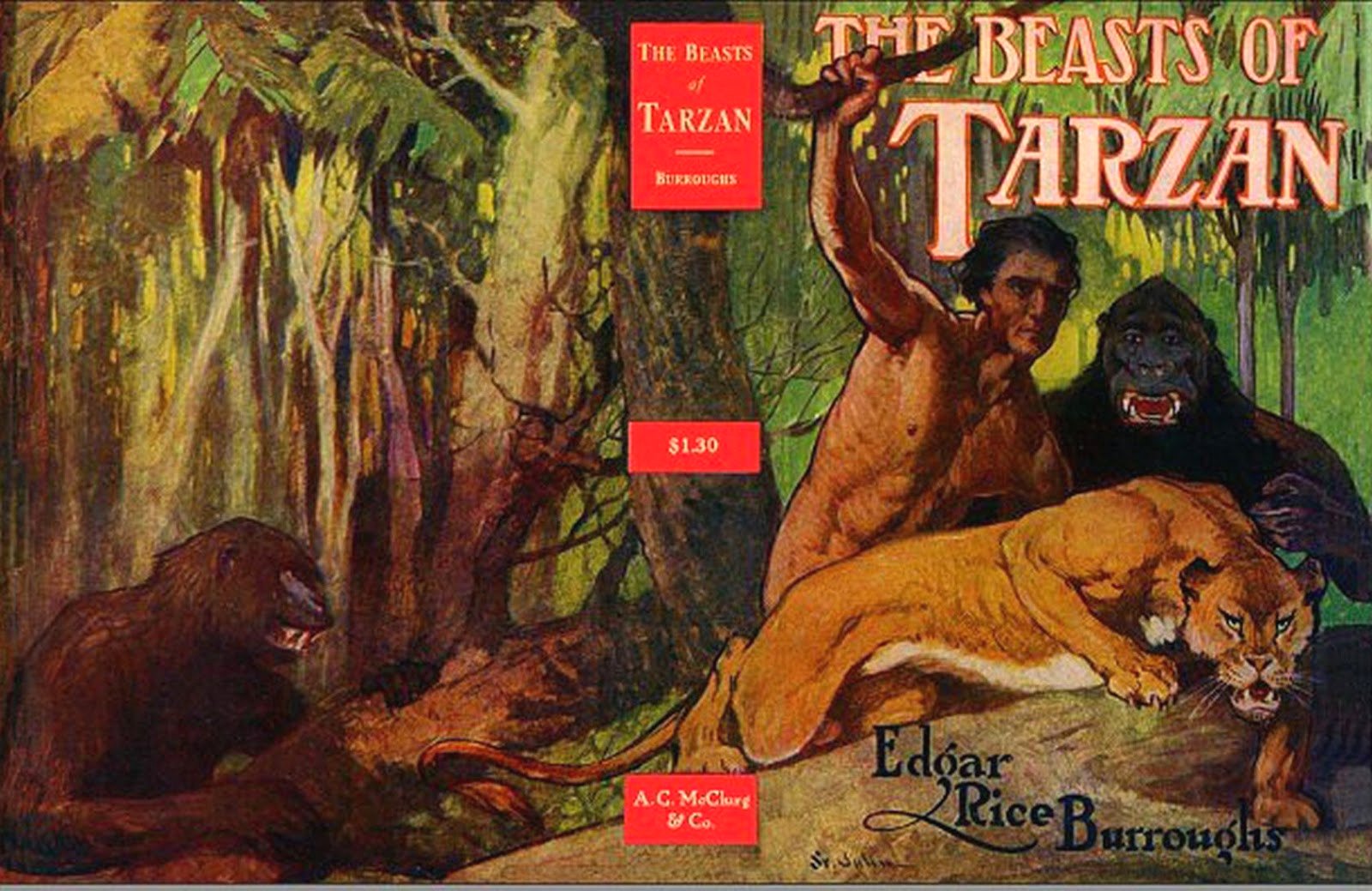
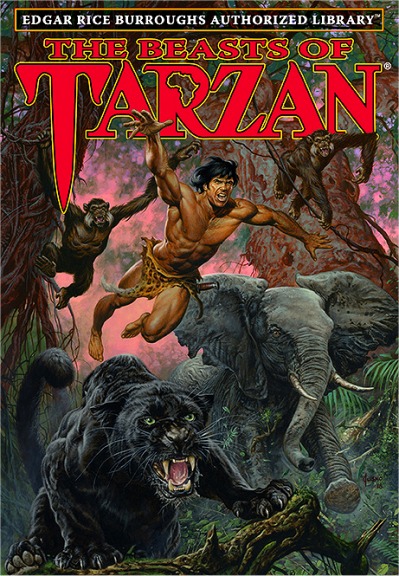
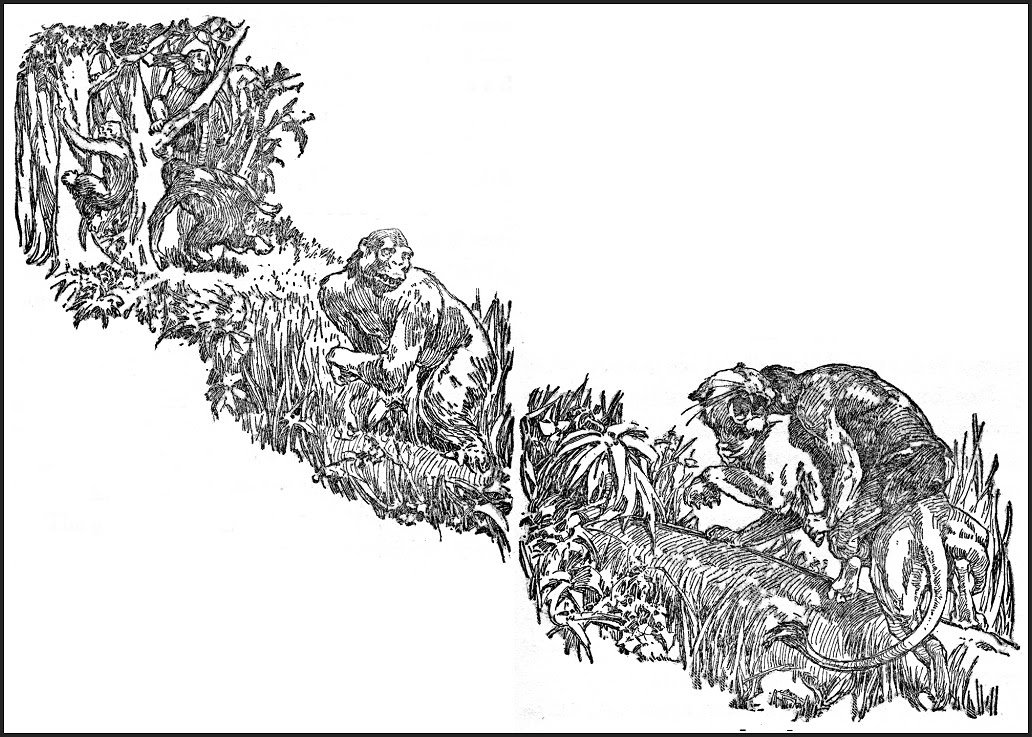
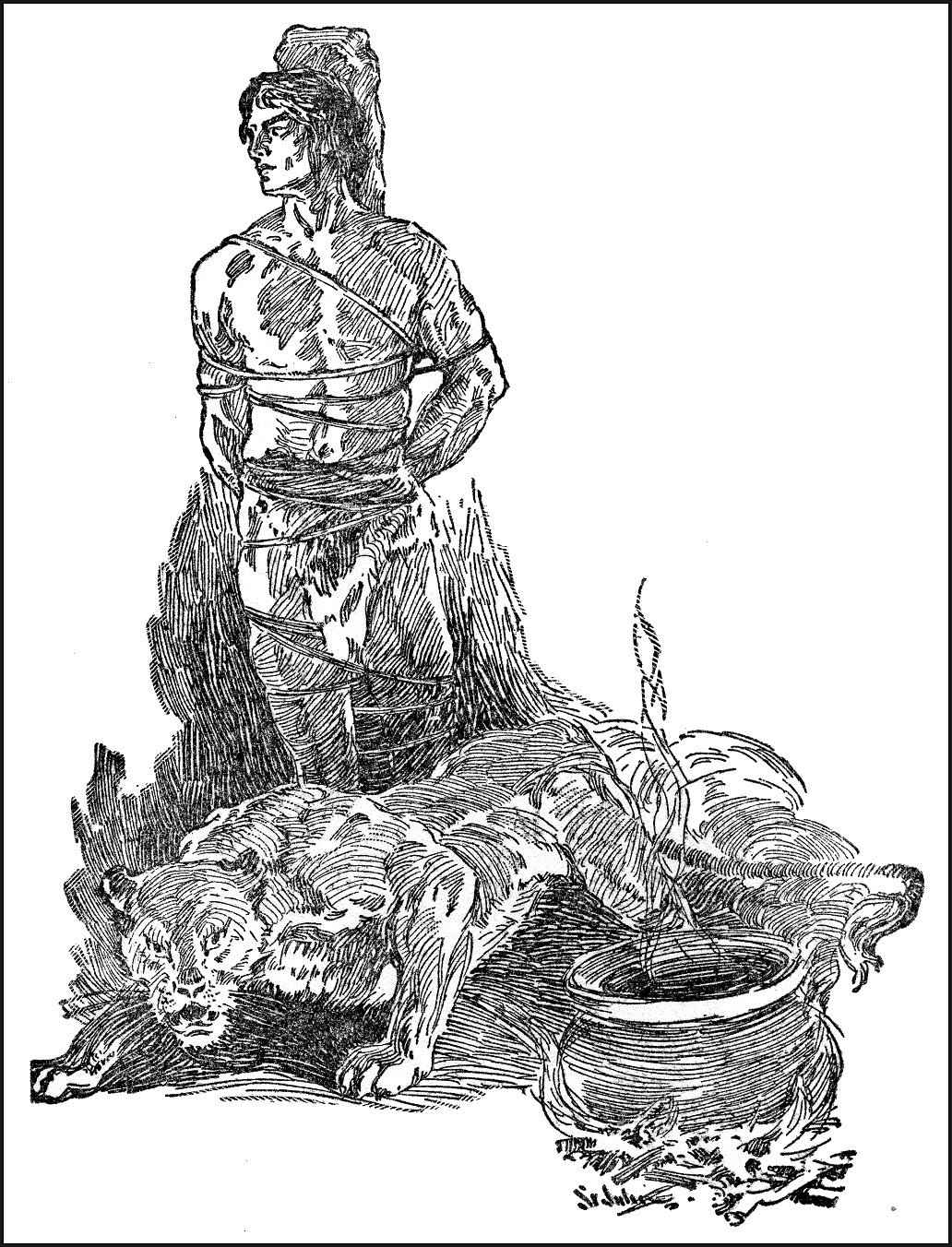
Tarzan also befriends a panther.
Pause for a second while I crank my suspension of disbelief up a few notches.
Okay, this isn`t a cub he raises and trains like Jad-Bal-Ja the Golden
Lion. This is a fullgrown wild panther that Tarzan frees from being pinned
under a fallen tree. That`s all it takes for Sheeta to decide he likes
this human and start trotting alongside and hunting with the Apeman. The
only explanation I can see is that Tarzan must be giving off unique and
very potent body language and signals that the cat responds to. In a short
time, Sheeta not only is devouring the kill alongside his new master, he
refrains from attacking the apes and humans when told not to. (What makes
this more plausible is that Sheeta is always dangerous and unpredictable,
barely under Tarzan`s control; he`s not a trained police dog or anything.)
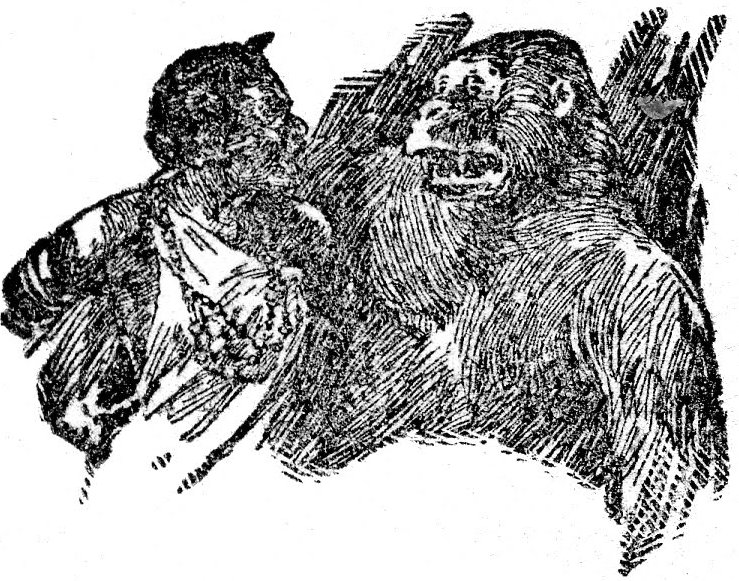
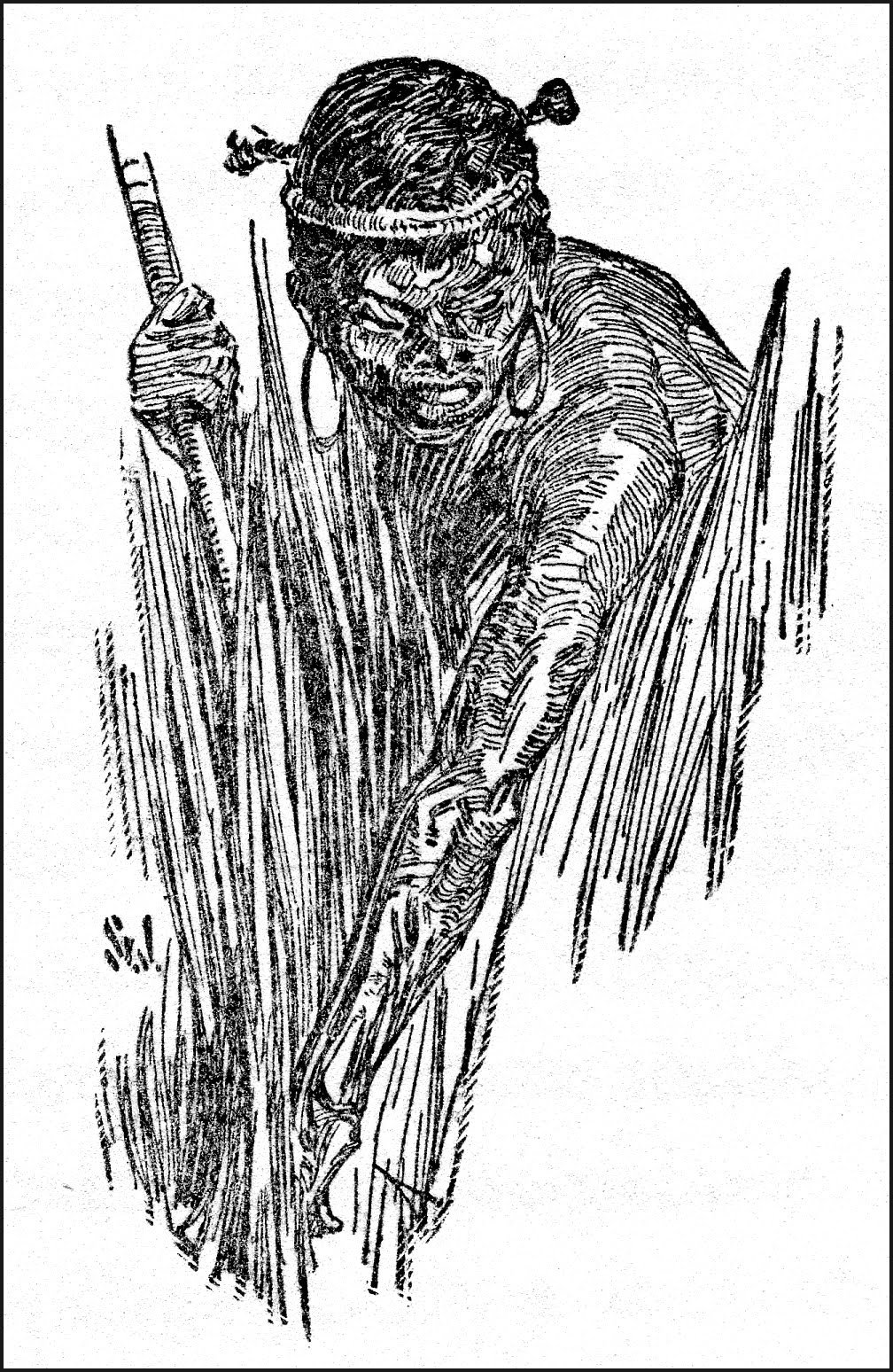
Finally, Tarzan meets and
befriends Mugambi, the only survivor of a party of natives who have the
misfortune to encounter the panther and the apes. Mugambi will be a lifelong
friend and companion to Tarzan`s family; in JEWELS OF OPAR we learn that
he has spent time in London museums and art galleries, soaking up culture,
and he sets out on a brave quest of his own to rescue Jane. Now, it`s true
that the African natives in these books are often shown as craven, mean-natured
and brutal, but then so are most of the white Europeans. There are only
a few decent humans in Burroughs` Tarzan books and actually more of them
are black than white. Like the Waziri (into which tribe he will be inducted),
Mugambi is as noble and heroic as anyone could wish.("The fellow was a
magnificent specimen of manhood... a black counterpart in physique to the
splendid white man whom he faced.")
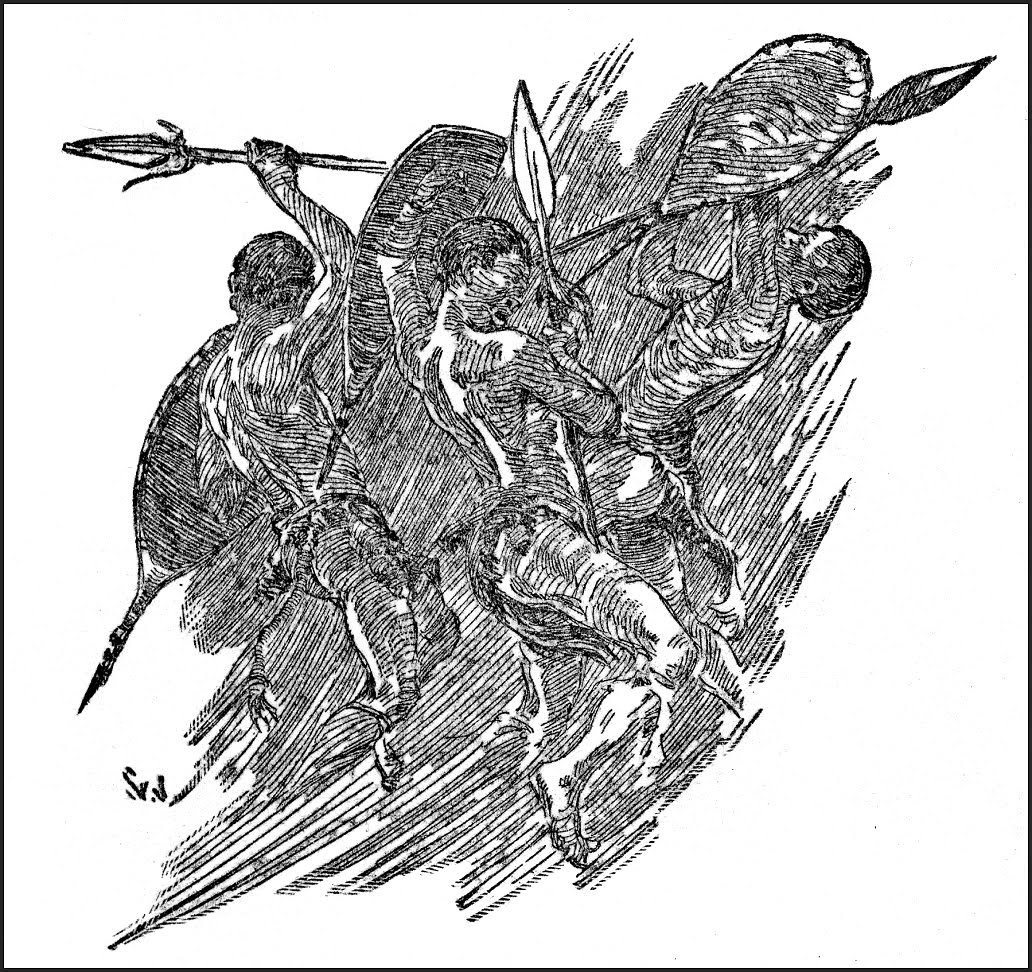
After that, we`re off on
a typical Tarzan adventure as the various characters chase each other all
over the jungle for chapter after chapter. Burroughs shows a lot of enthusiasm
for details and asides to the reader, and the narrative only slackens a
wee bit before building up to a strong finish (the bit about the mutineers
could be skipped to give a more unified story). Tarzan takes a lot of punishment
this time, including being dragged by a crocodile to its underwater lair,
leaving his leg pretty chewed up. All the agita really infuriates the Apeman,
and that famous scar on his forehead is pretty much blazing red continously.
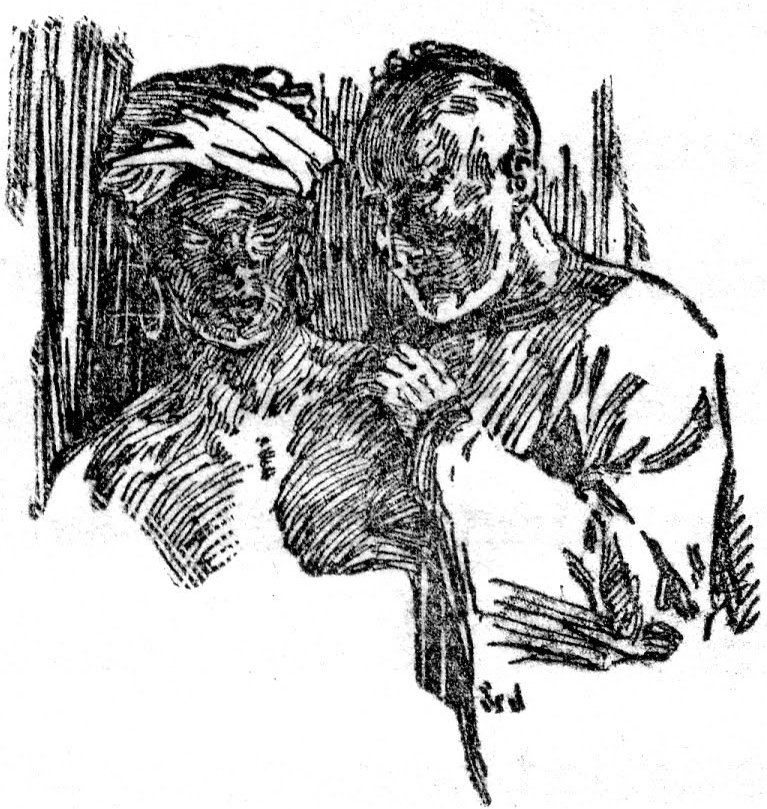
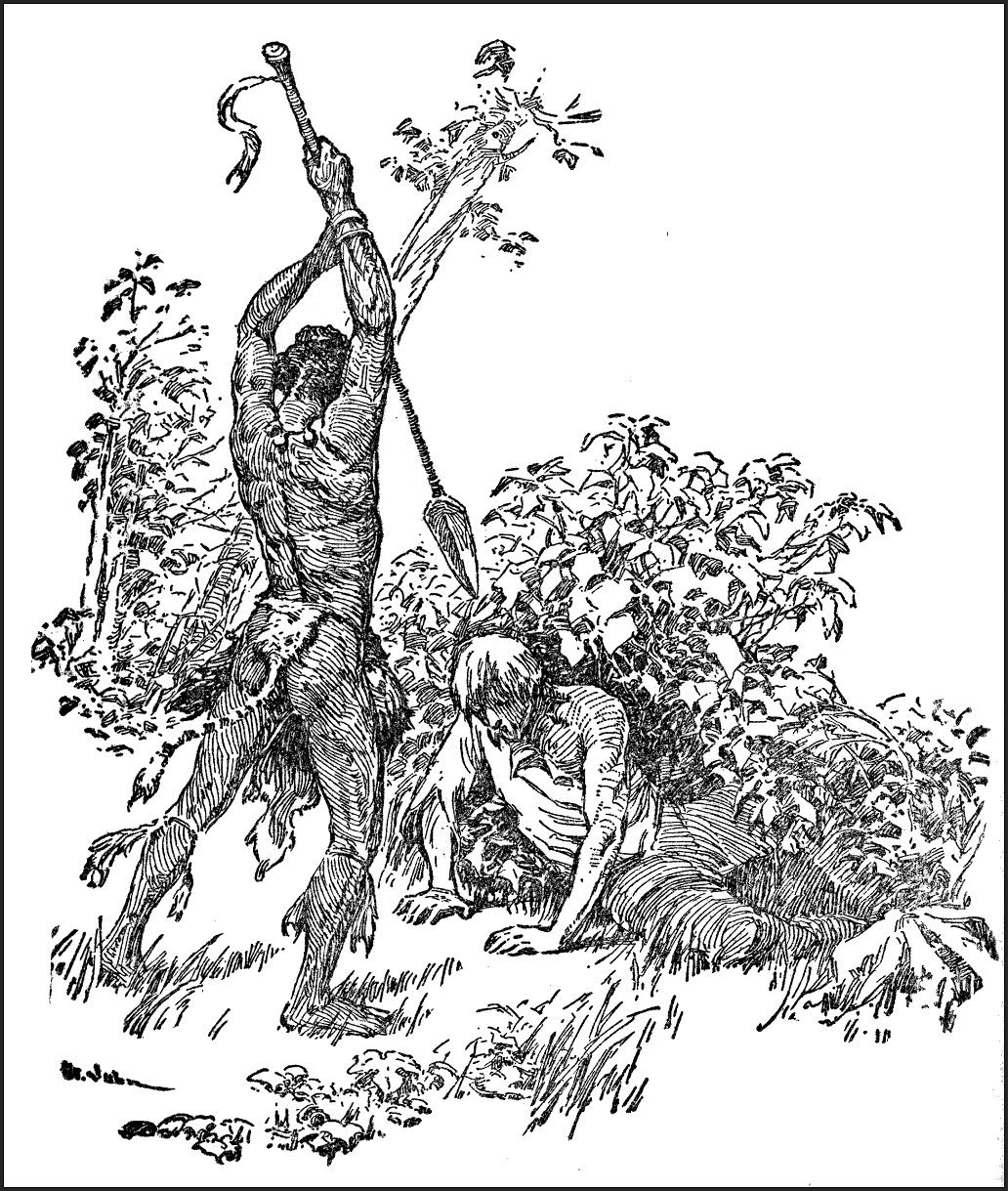
At one point, Tarzan is throttling
one of the bad guys while Jane pleads for his life. "Not again. Before
have I permitted scoundrels to live, only to suffer and to have you suffer
for my mercy," he replies as he twists the man`s neck like a bottle cap.
You know if this were in a movie, he would stop at last second and mutter
something about how the man's not worth killing.