JANE – Interview with Robin
Maxwell
by Jan Ostegard ~ EntertainmentVine.com
~ August 31, 2012
Everyone knows that famous Tarzan yell (and I would bet
anything you are attempting an impression right at this very moment). Well,
what about Jane? How much do you know about the love of Tarzan’s life?
For the first time in history, a woman author writes the story of Tarzan
and Jane. How do you top that? Robin Maxwell tells the story from Jane’s
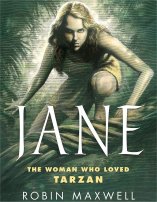
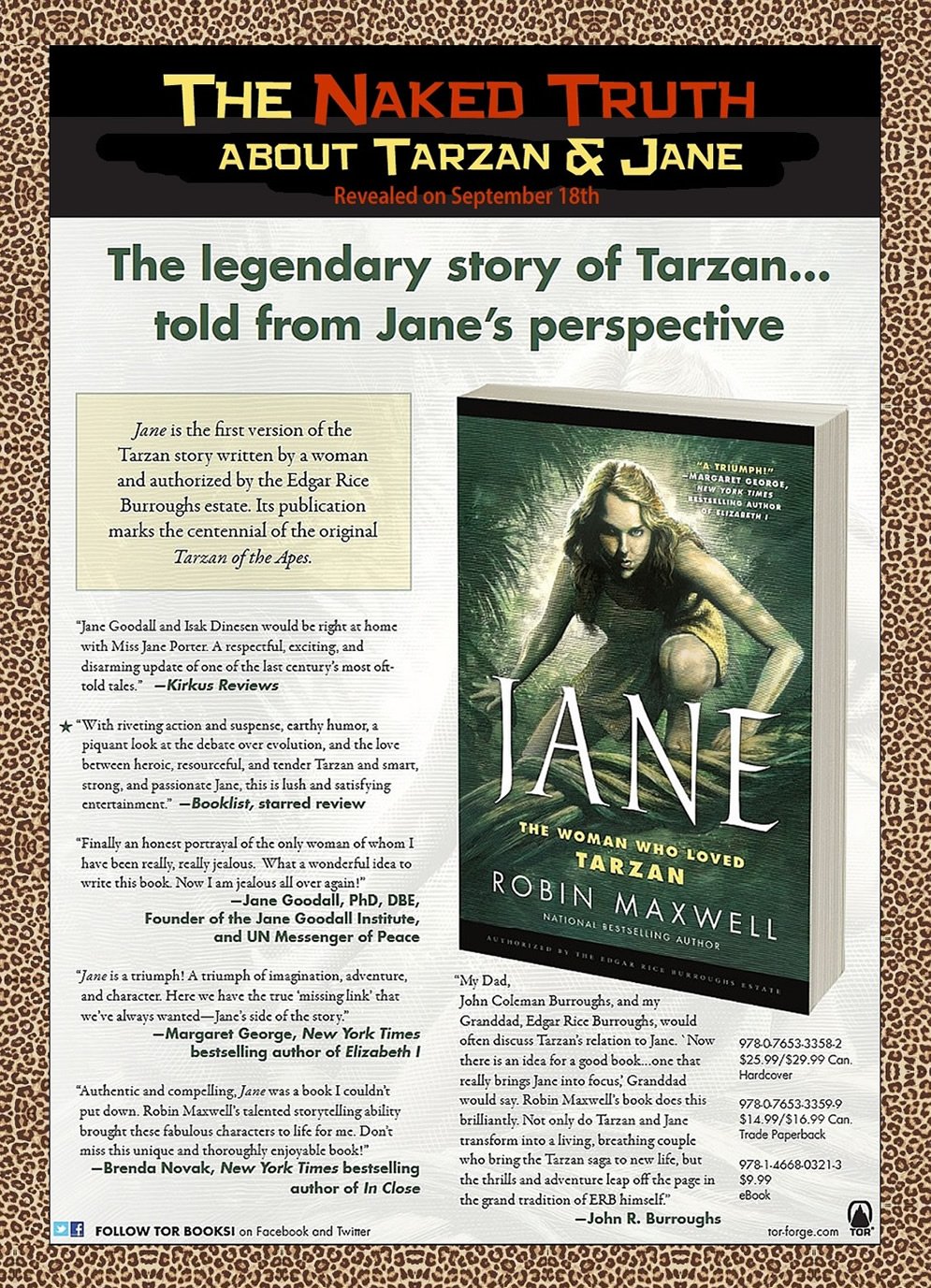
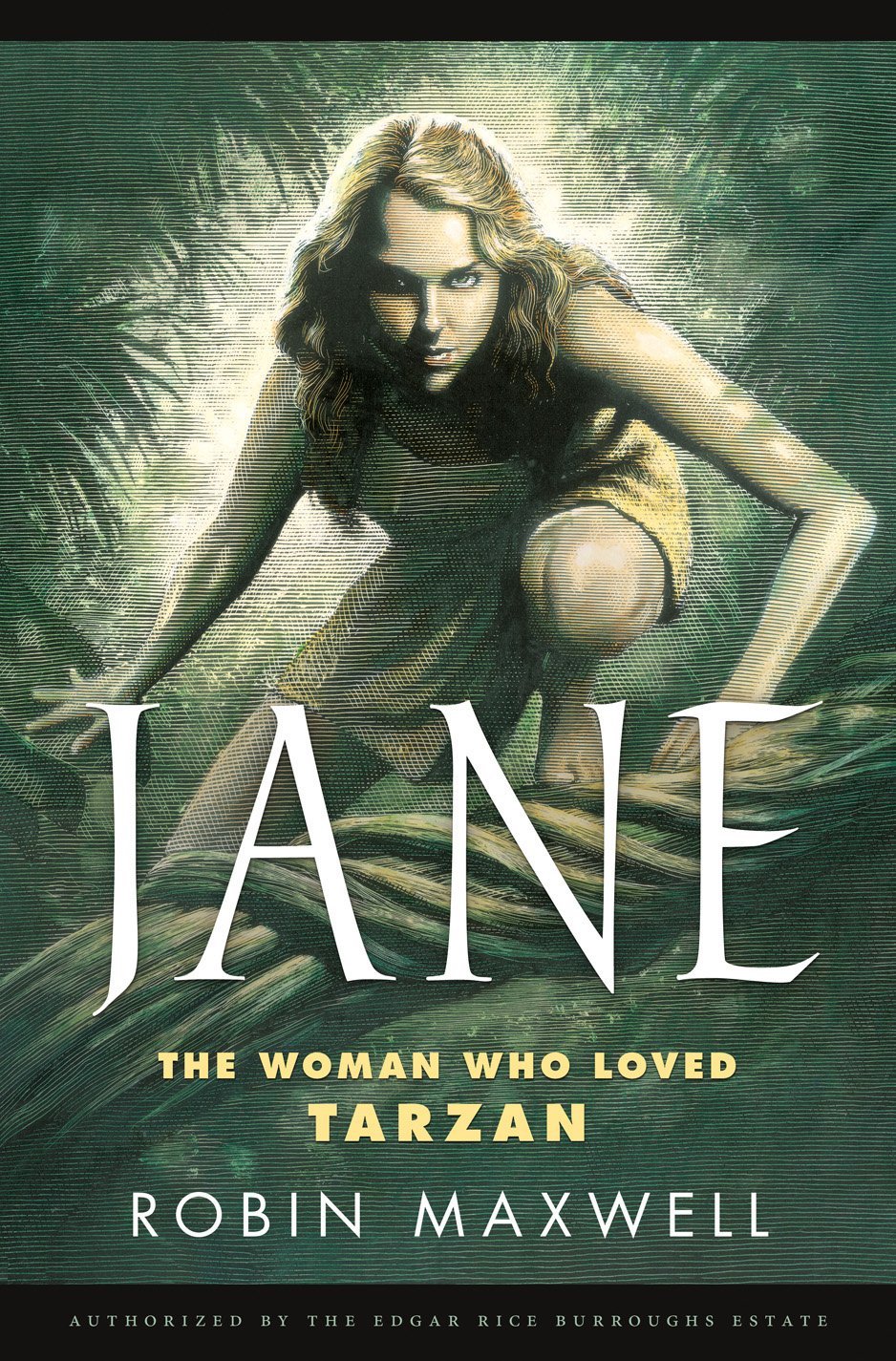
point of view. Robin’s much anticipated book JANE: The Woman Who
Loved Tarzan will be swinging onto bookshelves in a matter of days.
Join us in celebrating the 100th anniversary of the creation of Tarzan.
EV: Welcome to Entertainment Vine, Robin.
Robin: Thanks so much for giving me the opportunity
to talk about my ninth novel. It’s a really important one because I’ve
“jumped genres” for the first time in my writing career. While JANE is
still set in an historical period and I had to do lots of research like
I’ve always done, it’s as much “women’s fiction” as it is a “romance” as
it is a rip-roaring adventure (how could it not be? It’s a Tarzan classic).
EV: Your latest novel JANE: The Woman Who Loved Tarzan
will be released on September 18th. How did you come up with the idea of
writing this story from Jane’s point of view?
Robin: Tarzan was my first heartthrob. After all,
what girl wouldn’t crave the undying affection of a gorgeously muscled,
scantily clad he-man (and an English lord at that) living free from the
confines of civilization in a lush paradise? Though I’d read Tarzan comic
books, I’d never dipped into a single Edgar Rice Burroughs novel. Yet Tarzan
and Jane were as hard-wired into my fantasy life and consciousness as any
characters in popular culture.
“Sheena Queen of the Jungle” was my favorite TV show.
And who didn’t love the Johnny Weissmuller Tarzan films with the peppery
sophisticate Maureen O’Sullivan as his “mate,” Jane. I waited breathlessly
for the film “Greystoke,” but was sorely disappointed by the filmmakers
decision to keep their Jane (Andie MacDowell) from setting foot in Africa
till the last frame of the movie. By 1999 when Disney made their animated
“Tarzan” I’d stopped caring, and didn’t even bother going to see it.
I’d just completed my manuscript of O, JULIET when
the question arose as to the subject of my next novel. I’d had a ball with
my take on Shakespeare’s “Romeo and Juliet,” fleshing out the characters,
their world and families, and expanding the timeline from three days to
three months. Riding down the road one day with my husband, Max, he wondered
if I might want to choose another pair of literary lovers rather than historical
characters. When I told him I liked the idea he asked who they would be.
Not three seconds passed before I blurted out, “Tarzan and Jane!”
“Where did that come from?” Max wanted to know. At the
time I had no memory of Sheena or the old Weissmuller/O’Sullivan movies,
but the images must have been bubbling in the depths of my subconscious
just waiting to erupt like magma from a dormant volcano. The more I thought
about it, the better the idea became.
EV: You are the first woman to write a novel about
Tarzan and Jane. Were you aware that this was uncharted territory?
Robin: Actually, no. I knew next-to-nothing about
ERB’s novels (twenty-four of them) when the idea popped into my head. It
was more about writing the book from a woman’s perspective than anything
else. It wasn’t until I met with Jim Sullos, the president of the Burroughs
estate and he filled me in on the history of the Tarzan books that I realized
how few novels by writers other than Burroughs (of either sex) had been
authorized. Unauthorized ones without the ERB copyright and trademark might
get as far as bookstore shelves, but the estate would swoop in and have
them removed. They were simply closed to the idea of adding any more books
to the legacy. Jim told me that if I’d pitched the idea even the year before,
I’d have had the door slammed in my face. New leadership at the company
had only recently determined that the Tarzan legacy needed invigorating.
It was then that I realized the luck of my timing and the very good fortune
of being the very first woman allowed to tread on such hallowed ground.
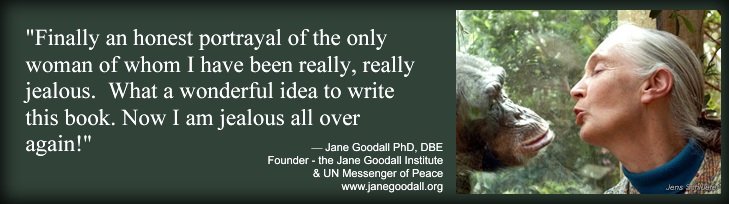
EV: The beloved Jane Goodall celebrated your book as:
Finally an honest portrayal of the only woman of
whom I have been really, really jealous. What a wonderful idea to write
this book. Now I am jealous all over again!
What went through your mind when you heard this statement?
Robin: I wasn’t thinking at all while I was shrieking
with joy and disbelief, reading that blurb because Jane Goodall has for
so long been my real-life (and still living) heroine. The endorsement was
incredibly difficult to get because she travels three hundred days a year.
I’d actually given up hope of getting a quote at all. I knew that she considered
Burroughs’s Jane “a wimp” and that she believed that she would have made
a far better mate for Tarzan than the Jane Porter of the ERB novels. So
for her to say what she did about my book — calling it an “honest portrayal”
and using the word “jealous” twice…well, I thought I’d died and gone to
Heaven.
EV: Edgar Rice Burroughs created Tarzan a century ago
and now has generations of fans. What is it about the primitive side of
human nature that fascinates us still to this day?
Robin: I think the primitive side of human nature
is less about our fascination with it than it being hard-wired into each
and every one of us. There’s a part of the brain called the limbic system
which is sometimes called our “lizard brain.” I believe we’ve been so anesthetized
by layers and layers of civilizing effects and intellectual armoring in
our everyday lives that we are shielded from experiencing our primordial
self. But when we rip into a juicy sparerib, have wild sex or enjoy a profound
connection to nature (communing with an animal, swimming in a lake, river
or ocean, even hike in the wilderness) that ancient part of our brain reasserts
itself. We catch glimpses — body and soul – into the primitive side. We
either revel in these feelings and abandon ourselves to them, or become
uncomfortable and “pull ourselves together.” Strap on the armor.
The Jane in my novel comes from one of the most uptight
times and societies in history, but she is an aberration. Even before she
leaves for Africa Miss Porter is a tomboy who rides horses hard and rough-houses
with her hounds. She knows how to swim, not just “bathe” like proper young
ladies do, and she understand human anatomy. Because of the circumstances
of her meeting Tarzan, they are on incredibly intimate terms immediately.
So of all the women in the world she is, perhaps, the best-suited to revert
to her primordial self and go wild with Tarzan in his jungle Eden.
EV: Sometimes Jane is portrayed as a ‘too smart for
her own good’ character. What can we expect from your Jane?
Robin: I have to say that my Jane is the most “too
smart for her own good” Jane ever written (or portrayed in the movies).
Of course when this phrase is employed referring to women, it’s incredibly
sexist. My Jane is far too intelligent, outspoken and ambitious for her
time, but she wasn’t altogether alone. By this time such females were known
as “New Women,” and it was believed that if there were enough of them they
might actually bring down the British Empire. Happily, my Jane had role
models — female explorers and adventurers like Mary Kingsley, Annie Smith
Peck and Lady Jane Digby, and she voraciously read of their exploits. But
her presence on the African expedition that stumbled on Tarzan would never
had been possible without her extraordinary father, Archie Porter — a professor
of anatomy at Cambridge University and an “enthusiastic amateur” in the
field of paleoanthropology. He’s a progressive thinker who not only believes
in women’s higher education, but depends on his daughter to assist him
in his studies.
EV: Would you share a little about the importance of
having strong female characters versus the more common ‘damsel in distress’?
Robin: I’ve been writing strong women ahead-of-their-time
for so long now that I can’t imagine having a damsel in distress as a protagonist.
The gutsy women (there were so many of them in history), besides being
so much more interesting to write about, are the role models for future
generations. More than ever, people — men and women alike — need to be
strong to survive in this world. We all need to learn to stand on our own
two feet, move forward fearlessly, practice kindness and compassion, and
accomplish something in our life. That “something” can be anything from
bringing up a child well to making a beautiful garden out of your backyard
or rooftop, to teaching, to having a high-powered career, to making art,
to rescuing animals. I hope that my heroines, whether real-life or fiction,
inspire men as well as women to aspire to their personal best or perhaps
to greatness. If you want to hear about eight hundred of the greatest sung
and unsung females in history, read my dear friend Vicki Leon’s four volumes
of UPPITY WOMEN (of The Ancient World; The Middle Ages; The Renaissance
and The New World). They’re brilliantly researched and laugh-out-loud
funny.
EV: Your previous books display a perfect blend of
history mixed with fiction. How did you come up with this formula of storytelling?
Do you begin a project by studying the historical elements, or with the
emotional side of the characters?
Robin: Generally I find a female historical figure
with a good story. I always look for “an angle,” since many of my women
have been written about numerous times. A good example is SECRET DIARY
OF ANNE BOLEYN, about Elizabeth I and her mother, Anne Bolyen. There
had been countless renditions of both of them, but I discovered in my research
that no historian had ever linked the two of them in any more than a single
paragraph. Now here was a daughter who, by the age of twenty-five when
she became Queen of England, had not spoken her mother’s name for twenty
years, so tarnished was Queen Anne’s reputation (adulterer, whore, witch,
traitor). Yet within a few years of taking the throne Elizabeth began wearing
a locket with her mother’s miniature in it, and started honoring the Boleyn
relatives that had made it through Henry VIII’s bloody reign alive. I asked
myself: “Why did Elizabeth have that 180° change of heart? Had she
learned something about her mother that caused the shift? Had she learned
the truth about Anne? What is the best way to discover the truth about
someone? Read their diary! People don’t lie in their diaries. So I “wrote”
Anne Boleyn’s diary and put it in Elizabeth’s hands just after she’d taken
the throne. Reading it changes the course of Elizabeth’s life.
Or I find a fabulous female character that no one has
heard of, like Grace O’Malley — the Pirate Queen who was Elizabeth I’s
rival, but most importantly the “Mother of the Irish Rebellion.” Massive
research into the women’s parallel lives produced one of my proudest creations,
THE WILD IRISH.
In the case of SIGNORA DA VINCI I began by wishing
to write about Leonardo da Vinci, the most brilliant and fascinating man
in history…but my publishers wanted a book from a woman’s point of view.
Leonardo didn’t have a wife, a daughter, a mistress or a sister. He, of
course, had a mother, but history tells us next-to-nothing about Caterina
of Vinci. There’s loads to read about Leonardo and 1,080 pages of his own
writings on every imaginable subject. There’s also scads of material about
the Italian Renaissance, Florence, the Medici family, other artists of
the period like Botticelli, as well as the great philosophers. So I “extrapolated”
the character of Caterina from the facts that I DID know, particularly
about Leonardo – but largely out of thin air, and once again SIGNORA
DA VINCI is one of my favorite and most satisfying creations.
EV: How long does it typically take you to research
and write a first draft?
Robin: Anywhere between four months to eighteen
months. The shorter books are generally ones for which I’ve done research
in the period and/or about the characters (like THE VIRGIN ELIZABETH;
TO THE TOWER BORN and O, JULIET). Some just about write themselves.
EV: Do you have a special way to recover from writer’s
block?
Robin: That one’s easy. I always write a book from a detailed
outline, chronologically. If I find that I’m stuck on a particular chapter
for any length of time, I just stop writing it. I look ahead to a place
in the outline that I’m really excited about and go to work on that. I
might leave the “blocked part” till the very end. This has never failed
to solve my writers block. I’ve learned that places I bump up against and
have to skip over are scenes and chapters that involve violence, particularly
against women.
EV: What advice would you give writers who are working
toward publishing their first book?
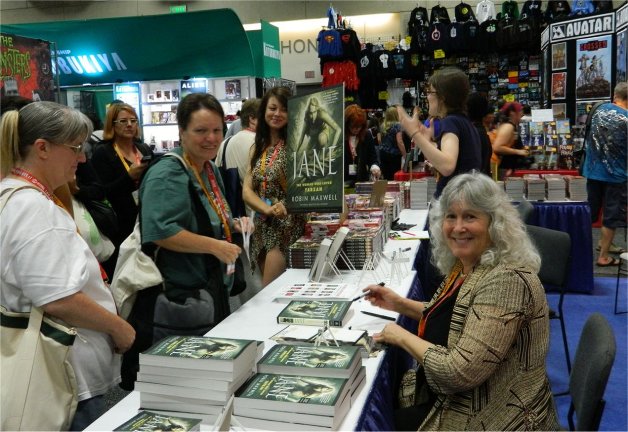
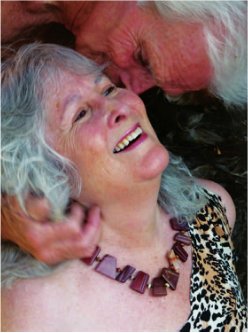
Robin Maxwell at a Book Signing for JANE at the 2012
San Diego Comic-Con
ERBzine
3918 | ERBzine
3919
Robin: In this climate, only pursue getting a book
published if you cannot live without writing. I could no more stop storytelling
than I could stop breathing. If you enjoy writing, then by all means write.
But things have gotten so difficult in the publishing world that you must
want your book published as much as life itself if it’s not going to be
a monumental waste of your time and lifeforce. If you go forward, start
developing a very, very thick skin. These days, even the best (and bestselling)
authors face scathing rejection and disappointment some of the time. It
was much easier to get published fifteen years ago when I got started.
Even then, SECRET DIARY was rejected by thirty-six publishers. The
mega-bestselling author Michael Connelly told me (after I’d bragged about
my rejections) that he’d had a hundred and twenty-three agents turn down
his first manuscript! The good news today is that if you cannot find a
“legacy publisher,” you can self-publish to eBook. There are loads of stories
of successes in that arena. In fact, I’m considering self-publishing myself.
EV: You host a “Book Club Weekend Getaway” in the California
desert. What can guests expect from their weekend with you?
Robin: I believe this is a first. So many women
enjoy their afternoon a month with their book clubs, but imagine a whole
weekend away in a high desert paradise. There are majestic vistas, perfect
quiet, wildlife abounding, the Milky Way at night, five-star accommodations,
gourmet meals, a magical mystery tour to a natural “Disneyland for adults,”
and a touch of yoga from one of the great American yogis (my husband, Max
Thomas). Add to this a long leisurely discussion one morning about a great
book that you’ve already read (perhaps mine, perhaps from another fabulous
author), and the next morning a peek inside the dynamic (some say chaotic)
but always exciting world of publishing. Bring your entire book club or
become part of a new group created especially for the weekend. You can
find out more about the “Book Club Weekend Getaway” at www.highdeserteden.com,
or about additional nearby lodgings (all friends and neighbors of ours)
at www.DestinationPipesCanyon.com.
EV: Would you tell our readers how they can participate
in the ‘You Tarzan, Me Jane’ contest?
Robin: This is an incredible opportunity for two
exquisite male and female models to become the newest jungle lovers, Tarzan
and Jane! If chosen, you will be featured as the face of my novel, JANE:
THE WOMAN WHO LOVED TARZAN as the STARS of my Hollywood book signing
at Book Soup on September 21, 2012. Winners will be chosen by an elite
celebrity judging panel. To enter, please send photos in swimsuit or “jungle
wear” to: youtarzanmejanecontest@gmail.com
or contact Eileen Koch & Company Inc. (310) 441-1000, or eileen@eileenkoch.com
EV: One last question, if you were stranded in the
jungle what is one necessity that you could not live without?
Robin: I’m tempted to say “insect repellant,” but
my primordial self would have to answer “food and water.”
EV: Thank you for taking the time to discuss Jane:
The Woman Who Loved Tarzan with us today.
*For more information on Robin please visit her official
site www.robinmaxwell.com and
pick up your copy of JANE on September 18th. You can also follow
Robin on Twitter and Facebook.